
Intro
Diaper care is one of the most repeated forms of infant health care, and it can feel surprisingly technical when you are tired, healing, or trying to interpret every cry. The basics are reassuringly consistent: change promptly, clean gently, dry thoroughly, protect the skin barrier, and reduce the spread of germs from stool and urine to hands, surfaces, and other family members.
Because the diaper area is warm, moist, and exposed to friction, urine enzymes, stool enzymes, and microorganisms, small lapses can quickly irritate fragile infant skin. Good diaper hygiene does not mean scrubbing or using many products. It means using a calm, repeatable routine that supports skin barrier function, prevents irritant contact diaper dermatitis, and helps caregivers notice changes that may need professional advice.
Highlights
Frequent diaper changes reduce prolonged contact with urine and stool, which helps protect the infant skin barrier.
Gentle cleansing, front-to-back wiping, and careful hand hygiene are central infection-prevention steps.
Barrier ointments such as petroleum-based products or zinc oxide barrier cream can reduce friction and moisture exposure.
Persistent, severe, bleeding, or unusual diaper-area rashes should be discussed with a pediatric clinician rather than treated by guesswork.
Why diaper hygiene matters
The diaper region has several risk factors for irritation: occlusion, moisture, friction, elevated local pH, and contact with fecal enzymes such as lipases and proteases. In infants, the stratum corneum is thinner and still maturing, so the skin barrier can be disrupted more easily than adult skin. Once irritated, the area may sting during cleaning, making routine changes stressful for both baby and caregiver.
Diaper hygiene also matters for infection control. Stool can contain organisms that spread through hands, changing pads, clothing, toys, and bathroom surfaces. A clean sequence reduces the chance of transferring fecal microbes to the baby’s mouth, other children, food-preparation areas, or caregiver skin. This is why the routine includes both baby-focused steps and environment-focused steps: clean the child, contain the dirty diaper, wash hands, and clean the diapering surface.
Set up before you open the diaper
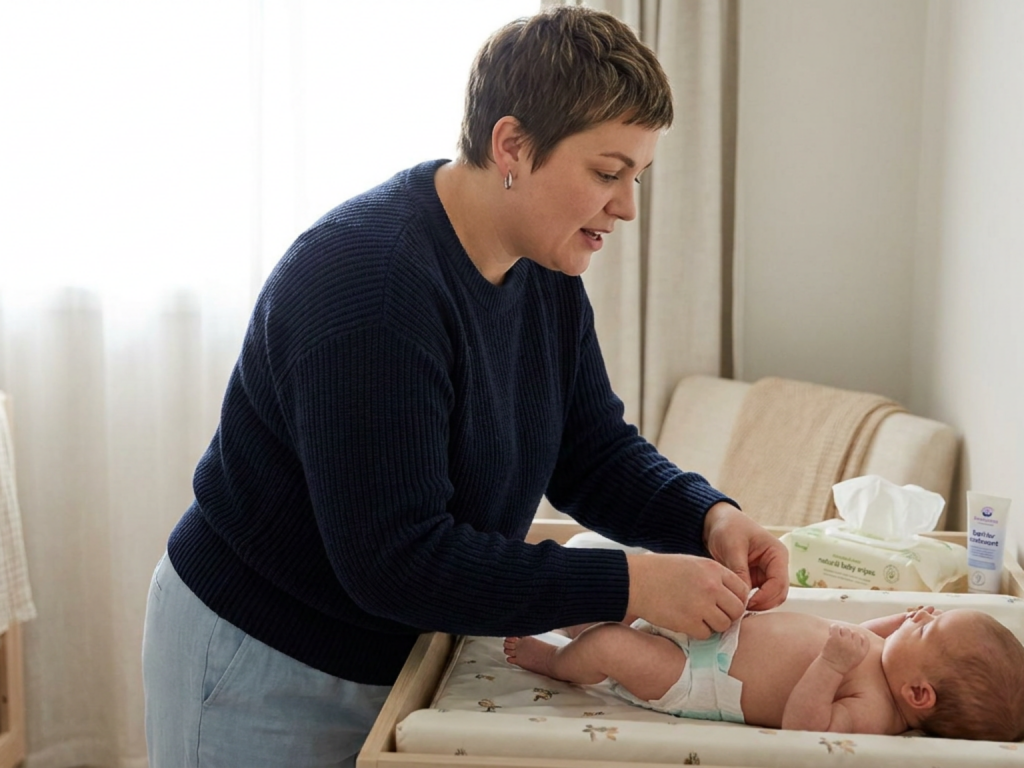
A smooth diaper change begins before the tabs are opened. Gather a clean diaper, wipes or soft cloths, diaper cream if used, a disposal bag or covered bin, and a clean changing surface. This prevents the common problem of holding a partially cleaned baby while reaching for supplies. Always keep one hand on a baby who is on an elevated surface, even a newborn who has not yet rolled intentionally.
- Use a washable changing pad or a disposable liner that can be replaced when soiled.
- Keep creams and wipes within caregiver reach but outside the baby’s reach.
- Avoid changing diapers on food-preparation surfaces.
- If possible, have a separate diapering zone with handwashing or sanitizer nearby.
For nighttime or a morning diaper change, simplicity helps. A dim light, pre-opened clean diaper, and fragrance-free diaper wipes can make the process faster while still hygienic. If you track intake and output, the diaper change is also a practical moment to note stool pattern and wet diapers in newborns, especially in the early days when clinicians may ask about hydration.
A step-by-step clean change
The safest routine is consistent and unhurried. Place the baby on the prepared surface, open the dirty diaper, and use the front portion of the diaper to remove excess stool if needed. Wipe from front to back, especially for babies with vulvar anatomy, to reduce transfer of stool toward the urethra. Lift the baby gently by the ankles or roll the hips side to side rather than pulling hard on the legs.
- Clean visible urine or stool using gentle wipes, damp cotton, or a soft cloth.
- Pay attention to skin folds, but do not forcefully scrub; newborn skin fold cleaning should be careful and light.
- Slide the dirty diaper away, fold it inward, and secure it before disposal or cloth-diaper storage.
- Allow the skin to dry fully, using air time or a soft patting motion.
- Apply barrier ointment if the skin is irritated, stooling is frequent, or a clinician has recommended it.
- Fasten the clean diaper snugly enough to prevent leaks but not so tightly that it marks the skin.
After the diaper is secure, clean the baby’s hands if they touched the diaper area, then wash your own hands with soap and water. If soap and water are not available, alcohol-based hand sanitizer can be useful for the caregiver, but visibly soiled hands should be washed as soon as possible. Finally, disinfect or clean the diapering surface according to the product instructions and the surface material.
Cleansing without overcleaning
Many diaper-area problems worsen when caregivers try to clean too aggressively. The goal is to remove irritants while preserving the skin barrier. Plain water with a soft cloth may be enough for urine-only diapers. For stool, use gentle wipes or damp cloths, ideally without fragrance or harsh additives if the baby is prone to irritation. Rubbing until the skin looks shiny, red, or abraded can amplify inflammation.
If dried stool is stuck to the skin, soften it with warm water or a damp cloth rather than scraping. Pat dry instead of rubbing. Drying matters because applying ointment over wet skin can trap moisture against the skin. Brief diaper-free time on a washable towel can help the area dry and reduce occlusion, as long as the baby is warm and supervised.
Bathing can support hygiene, but frequent full baths are not required solely for diaper care. When stool has spread into folds, gentle cleansing and thorough drying newborn skin folds are more important than using stronger soaps. If a product stings, causes redness, or seems to worsen discomfort, stop using it and ask a pediatric clinician for guidance.
Preventing diaper dermatitis
Diaper dermatitis prevention rests on reducing moisture, friction, irritant contact, and skin barrier disruption. Change stool diapers promptly. Urine-only diapers should also be changed regularly, because prolonged wetness increases friction and can alter skin pH. Newborns and young infants may stool frequently, so caregivers often need more frequent changes than they expected.
Barrier products are useful because they create a physical layer between skin and irritants. Petroleum jelly and zinc oxide barrier cream are common examples. A thin layer may be enough for routine protection; a thicker layer is sometimes used when the skin is already irritated. During changes, you do not need to scrub off every trace of barrier cream if doing so would traumatize the skin. Remove stool and loose ointment gently, then reapply as needed.
Some rashes need professional assessment. Diaper rash causes and treatment can vary: irritant dermatitis, allergic contact dermatitis, yeast overgrowth, bacterial infection, psoriasis-like eruptions, and other conditions can look different and require different approaches. Avoid using topical antibiotics, antifungals, corticosteroids, herbal preparations, or adult medicated creams on an infant unless a qualified healthcare professional has advised it.
Disposable and cloth diaper hygiene
Both disposable and cloth diapers can be used hygienically. The best choice depends on fit, skin tolerance, laundry access, cost, environmental priorities, and caregiver capacity. Disposable diapers are designed to wick moisture away from skin, but they still need regular changes. A diaper that is too small can increase friction and leakage; a diaper that is too large may gap and allow stool to spread.
Cloth diapers require careful handling because urine and stool remain in fabric until washed. Remove solid stool into the toilet when developmentally appropriate and according to local sanitation guidance. Store used cloth diapers in a designated container, wash them separately from other laundry when possible, and use a detergent and wash cycle that reliably removes residue. Inadequate rinsing can leave detergent or ammonia-like buildup that irritates skin, while underwashing can leave microbial and stool residue.
For either diaper type, watch the baby’s skin response. If redness repeatedly appears where elastic, tabs, dyes, or wipes touch the skin, discuss possible irritant or allergic contact dermatitis with a clinician. Product switching can help some babies, but severe or persistent symptoms deserve medical evaluation rather than repeated experimentation.
What to observe during diaper changes
Diaper changes are also brief health checks. Notice urine output, stool frequency, stool consistency, skin color, swelling, odor, and the baby’s pain response. In the newborn period, fewer wet diapers, lethargy, poor feeding, or signs of dehydration should prompt timely medical advice. Stool color and pattern change with age, feeding method, and illness, and clinicians can help interpret what is normal for your baby’s stage.
Skin findings to observe include redness limited to convex surfaces, erosions, bleeding, pustules, satellite papules in diaper rash, sharply demarcated plaques, swelling, or rash extending beyond the diaper area. These observations do not diagnose the cause, but they help your healthcare professional decide whether an in-person visit, testing, or specific treatment is needed.
Caregivers should also pay attention to their own routine. If diaper changes feel overwhelming, simplify the station, reduce unnecessary products, and ask for help. Good hygiene is not about perfection; it is about a repeatable pattern that protects the baby and reduces caregiver stress.
When to seek medical advice
- A diaper rash with fever, lethargy, poor feeding, or a baby who seems very unwell needs prompt medical guidance.
- Bleeding, open sores, pus, rapidly spreading redness, or significant swelling should be evaluated by a healthcare professional.
- Persistent diaper dermatitis that does not improve with gentle hygiene and barrier protection should not be self-treated indefinitely.
- Very few wet diapers, especially in a young infant, can signal inadequate intake or dehydration and deserves timely advice.
- Do not use steroid, antifungal, antibiotic, or adult medicated creams on an infant unless a clinician recommends them.
Tools & Assistance
- Create a stocked diaper-changing station with clean diapers, wipes, barrier ointment, and a washable surface.
- Use a simple diaper log if your clinician asks about feeds, stools, or wet diapers.
- Ask your pediatrician or family doctor about persistent rash, unusual stool patterns, or hydration concerns.
- Contact a lactation consultant or infant-feeding professional if low diaper output is paired with feeding difficulty.
- Use local urgent care or emergency services for severe illness signs, dehydration concerns, or rapidly worsening skin infection signs.
FAQ
How often should a baby’s diaper be changed?
Change stool diapers as soon as practical and urine-only diapers regularly to reduce moisture and friction. Newborns often need frequent changes because they feed and stool often.
Are wipes safe for every diaper change?
Many babies tolerate gentle wipes well, but babies with irritation may do better with water and a soft cloth or fragrance-free diaper wipes. Stop products that appear to sting or worsen redness.
Should barrier cream be used every time?
It depends on the baby’s skin, stool frequency, and rash tendency. Barrier ointment is commonly used for prevention or irritation, but persistent or severe rash should be discussed with a clinician.
Is diaper-free time useful?
Brief supervised diaper-free time can help skin dry and reduce occlusion. Keep the baby warm, protect the surface underneath, and avoid unsafe sleep or unattended situations.
Can diaper rash be treated at home?
Mild irritation often improves with frequent changes, gentle cleansing, thorough drying, and barrier protection. If the rash is severe, unusual, spreading, painful, or persistent, seek professional advice.
Sources
- PubMed Central — Art of prevention: The importance of proper diapering practices
- Centers for Disease Control and Prevention — Healthy Habits: Diaper Changing at Home
- Nemours KidsHealth — Diapering Your Baby
Disclaimer
This article is for general medical information and does not replace care from a qualified healthcare professional. Seek pediatric advice for concerning symptoms, persistent rash, or questions about your baby’s health.














Please log in to leave a comment.