
Intro
Choosing a reusable water bottle can feel like a small purchase with a surprisingly long list of concerns: chemical exposure, leaks, hygiene, independence, school rules, and whether your child will actually use it. A thoughtful choice can support hydration without adding unnecessary stress to your daily routine.
This guide is written for caregivers who are comfortable with medical terminology but want practical, child-centered advice. It focuses on risk reduction, usability, and when to seek individualized guidance from a pediatrician, dentist, allergist, occupational therapist, or other qualified clinician.
Highlights
The safest bottle is not only made from an appropriate material; it is also cleaned well, dried fully, and replaced when damaged.
Children are more likely to drink regularly when a bottle is easy to open, comfortable to carry, and acceptable at school or childcare.
Plastic, stainless steel, glass, and silicone components each have trade-offs involving durability, weight, cleaning, and exposure concerns.
Heat, sunlight, scratches, cracks, mold, and lingering odors are practical warning signs that a bottle may need replacement.
Start with the child, not the product
A reusable water bottle should fit the child’s age, motor skills, sensory preferences, school setting, and health needs. A toddler who chews spouts, a preschooler learning independence, and a school-age child carrying a backpack all place different demands on a bottle. Thinking in terms of developmentally appropriate child products helps shift the decision away from trends and toward real-life safety.
For younger children, the main priorities are spill control, easy grip, and avoiding small detachable parts. For school-age children, capacity, durability, backpack compatibility, and a lid that can be opened without adult help often matter more. Age-based child product choices should also account for how the bottle will be used: bedside overnight, sports practice, classroom, car travel, summer camp, or daily lunchbox use.
Medical context may change the decision. A child with oral-motor delay, dysphagia history, dental appliances, sensory aversions, food allergy concerns, or recurrent oral thrush may need a more individualized plan. A pediatric clinician, dentist, speech-language pathologist, or occupational therapist can help assess whether a straw, open-flow spout, bite valve, or cup-style lid is most appropriate. The goal is not perfection; it is a bottle your child can use safely, consistently, and hygienically.
Compare materials: plastic, stainless steel, glass, and silicone
Plastic bottles are lightweight and often inexpensive, which makes them appealing for children. If choosing plastic, look for products labeled BPA-free and inspect recycling symbols when available. UPMC HealthBeat describes a simple approach for common plastics and notes that BPA-free labeling is preferable. Avoid using bottles that are cracked, heavily scratched, cloudy, warped, or have a persistent odor, because damaged plastic is harder to clean and may raise exposure concerns.
Stainless steel is durable, usually resists odors, and tolerates rough school use. It can dent, however, and dents around the mouthpiece, threads, or insulated layers may interfere with cleaning or closure. Insulated stainless steel keeps water cool, which can encourage drinking, but these bottles may be heavier. Check whether internal seams, caps, or gaskets are accessible for washing.
Glass has the advantage of being chemically inert for typical water storage, but breakage is the major limitation for children. If glass is used, a protective sleeve and a setting where breakage can be managed are essential. Some childcare centers and schools restrict glass entirely.
Silicone often appears in straws, seals, sleeves, and bite valves. It is flexible and useful, but it can trap residue if not removed and cleaned. For any material, the practical safety question is: can the caregiver and child wash, dry, inspect, and replace the parts reliably?
Design details that affect safety and daily use
A bottle’s lid design often matters more than its label. Straw lids can be convenient and support drinking without tipping the bottle, but narrow straws and bite valves can retain biofilm if not cleaned thoroughly. Flip-top spouts reduce spills but may encourage chewing in some children. Wide-mouth bottles are easier to scrub and dry, though they may spill more readily unless paired with a suitable insert or lid.
Choose a bottle with parts that are large enough to avoid obvious choking hazards and simple enough to reassemble correctly. Removable gaskets should fit securely and should not tear, stretch, or disappear into a lunchbox. If the bottle has a handle, strap, or clip, consider whether it could snag during playground activity or become a distraction in class.
Capacity should match the child’s day without creating an unnecessary carrying burden. A large insulated bottle may look practical but become too heavy when full, leading to dropping, dents, or refusal to carry it. A smaller bottle that a child refills may work better if safe drinking water is reliably available.
Also consider taste and temperature. Some children reject water from bottles that smell like detergent, retain flavors, or allow water to become warm. If the child dislikes the bottle, hydration goals may fail even when the material is technically ideal.
Cleaning, drying, and microbial risk
Reusable bottles can be safe when washed well with warm, soapy water and dried completely. The drying step is often underestimated. Moist, closed spaces support microbial growth, including bacteria and fungi that can contribute to odor, visible slime, or mold-like material. While most healthy children tolerate everyday environmental microbes, contaminated bottle parts are unnecessary exposure points, especially for children with immune compromise or recurrent oral infections.
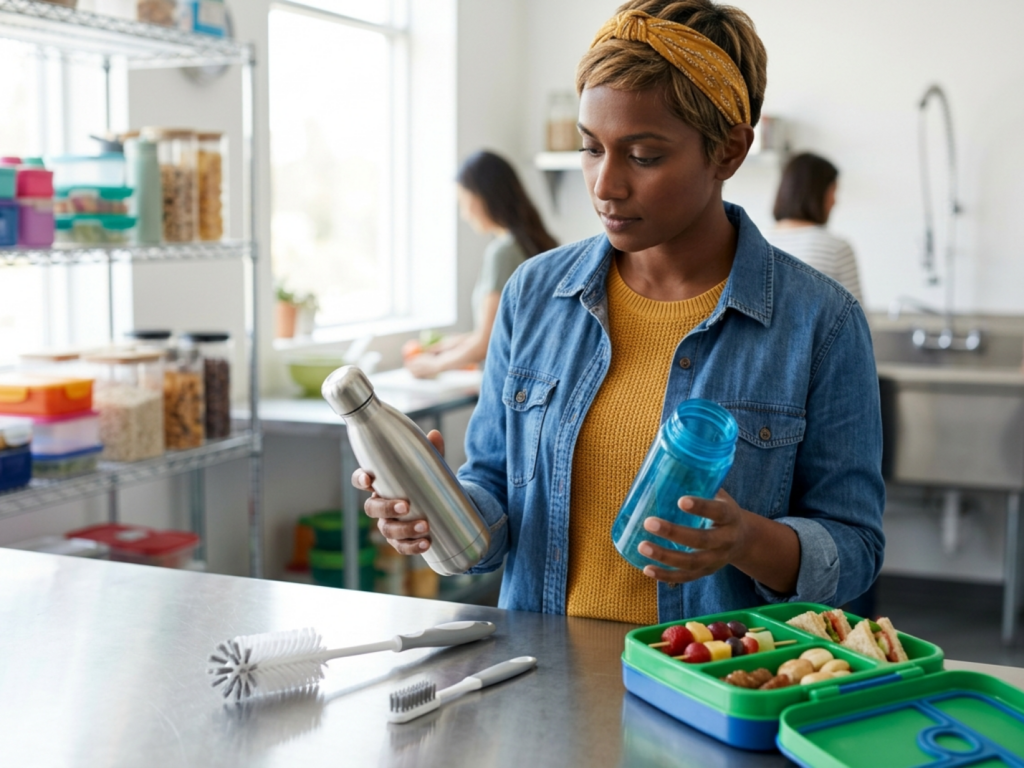
A practical routine is to wash the bottle daily, disassemble the lid, clean straws or valves with an appropriate brush, rinse thoroughly, and air-dry all pieces fully before reassembly. If the manufacturer states that parts are dishwasher-safe, place small components where they cannot fall into the heating element or deform. If dishwasher guidance is absent, handwashing is the safer default.
- Inspect silicone seals, straws, and bite valves for black spots, cloudiness, tears, or trapped debris.
- Use a dedicated bottle brush and straw brush rather than relying only on rinsing.
- Store bottles with lids off when possible so residual moisture can evaporate.
- Avoid leaving water, juice, milk, or sports drinks in a bottle for prolonged periods.
Water is the best routine beverage for most children unless a clinician has recommended otherwise. Sugary drinks increase residue, odor, and dental caries risk, especially if sipped over many hours.
Heat, sunlight, damage, and replacement decisions
Heat and sunlight deserve special attention. Today’s Parent includes a physician’s caution about replacing plastic bottles after sun exposure. A conservative approach is to avoid leaving bottles in hot cars, direct sun, or near heaters, particularly plastic bottles and lids. Heat can deform components, alter seals, and make cleaning less reliable.
Replacement is appropriate when a bottle has deep scratches, cracks, warping, damaged threads, persistent odor, visible residue that cannot be removed, mold-like staining, or missing components. BabyGearLab emphasizes practical concerns such as damage, cleaning, and child-specific use patterns. A bottle that survives product testing may still become unsafe if a child chews it, drops it repeatedly, or uses it in ways the design did not anticipate.
Do not rely on a single calendar rule for replacement. Instead, inspect weekly during washing. Pay attention to the mouth-contact area because it receives saliva, friction, and sometimes tooth pressure. If a child frequently bites silicone straws or spouts, consider a more durable design and discuss persistent chewing with a dentist or occupational therapist if it is intense, injurious, or associated with sensory regulation concerns.
For secondhand bottles, be especially cautious. Unknown heat exposure, missing manufacturer instructions, worn seals, and old plastic can make cleaning and material assessment difficult. When in doubt, prioritize a new, simple, easy-to-clean bottle over a complicated used one.
Matching the bottle to school, sports, and medical needs
Before buying, check the rules of the environment where the bottle will be used. Some classrooms require leakproof lids, clear bottles, name labels, or specific sizes. Sports settings may favor one-handed opening and higher capacity, while childcare may require bottles that staff can sanitize easily. A bottle that violates the setting’s rules may stay unused in a cubby, which defeats the purpose.
For children with asthma, diabetes, kidney conditions, constipation, migraine susceptibility, or medications that affect thirst or fluid balance, hydration routines may need to be individualized. The bottle is only one tool; the amount and timing of fluid intake should be discussed with a healthcare professional when medical conditions are present. Avoid using bottle size alone as a prescription for how much a child should drink.
Children with food allergies may need bottles that are easy to identify and not easily shared. A clear name label and a design distinct from classmates’ bottles can reduce mix-ups. Children with eczema or contact dermatitis may react to certain rubbers, dyes, adhesives, or cleaning residues; if lip or hand irritation appears, stop using the suspected bottle and consult a clinician.
Finally, involve the child within safe boundaries. Offer two or three caregiver-approved options and let the child choose. Autonomy can improve adherence, and a bottle the child feels ownership over is more likely to return home, be used regularly, and become part of a healthy routine.
When to be extra cautious
- Replace bottles that are cracked, warped, deeply scratched, moldy, or persistently foul-smelling.
- Avoid leaving plastic bottles or lids in hot cars, direct sun, or other high-heat environments.
- Do not give young children bottles with loose small parts, torn valves, or detachable pieces that may be mouthed.
- Consult a clinician if drinking, swallowing, oral pain, recurrent thrush, or dehydration concerns are present.
- Follow school, childcare, and manufacturer cleaning instructions when they are stricter than general advice.
Tools & Assistance
- A bottle brush and narrow straw brush for daily cleaning
- Manufacturer care instructions for dishwasher safety and replacement parts
- Weekly inspection checklist for lids, seals, straws, dents, cracks, and odors
- Pediatrician, pediatric dentist, occupational therapist, or speech-language pathologist for individualized concerns
FAQ
Is stainless steel always safer than plastic for children?
Not always. Stainless steel is durable and odor-resistant, but it may be heavier and can dent. BPA-free plastic can be practical if it is intact, cleaned well, and kept away from heat.
How often should a child’s reusable bottle be washed?
Daily washing is a good routine for bottles used at school or outings. Disassemble lids and straws, wash with warm soapy water, rinse well, and dry completely.
Can my child use a bottle for milk or juice?
Occasional use may be possible if the bottle is designed for it, but milk and sweet drinks leave more residue and increase odor and dental caries risk. Clean promptly and thoroughly.
When should I replace a reusable water bottle?
Replace it if there are cracks, deep scratches, warping, persistent smells, visible residue that will not clean off, damaged seals, or parts your child has chewed through.
Sources
- UPMC HealthBeat — Choosing Safe Water Bottles for Kids
- BabyGearLab — The Best Water Bottle for Kids
- Today's Parent — Are Plastic Water Bottles Safe For Kids?
Disclaimer
This article is for general informational purposes only and does not replace medical advice. Consult a qualified healthcare professional for concerns about hydration, swallowing, allergies, oral health, or a child’s specific medical needs.













Please log in to leave a comment.