
Intro
Jealousy between friends can feel very big to a child. A friend plays with someone else, shares a secret, gets chosen first, or seems closer to another classmate, and the child may suddenly feel replaced, excluded, or not important anymore. That experience can lead to tears, anger, clinginess, or withdrawal. It does not mean the child is selfish or “bad.” It usually means the child is struggling with belonging, attachment, and social comparison.
Research on peer relationships in child development shows that jealousy often appears when children compare attention, closeness, and access to friendships. The good news is that jealousy is a manageable emotion. With steady adult support, children can learn to name what they feel, slow down their reactions, and build healthier ways of staying connected to friends.
Highlights
Jealousy in friendship is common in childhood and usually reflects a fear of being left out, not a character flaw.
Naming the feeling helps children move from impulsive reactions to calmer choices.
Adults help most when they listen first, validate the feeling, and avoid comparisons between children.
Children usually do better when they have more than one friendship and a chance to practice repair after conflict.
Why jealousy shows up between friends
Jealousy is a normal emotion in childhood. In friendships, it often appears when a child believes that attention, closeness, or belonging is being taken away. The feeling can be triggered by a friend spending time with someone new, choosing another playmate, or sharing something private with another child. From a developmental view, this makes sense: children are still learning how friendships work, how to share attention, and how to tolerate disappointment.
In peer relationships in child development, jealousy is closely connected to social comparison. Children notice who gets praised, who gets invited, and who seems to matter most in a group. That comparison can be especially strong when children are still building emotional regulation skills. A child may know, in an abstract way, that friends can have more than one friend, but still feel threatened in the moment.
How friendships develop by age also matters. Younger children may expect friendship to mean constant togetherness, while older children may understand that friendships can be flexible and shared. That is why jealousy can look different at different ages, even though the underlying fear is often the same: “What if I am not special anymore?”
How jealousy may look from the outside
Children do not always say, “I feel jealous.” Instead, the feeling often shows up through behavior. A child may become controlling, follow a friend around, interrupt conversations, or try to keep a friend from playing with anyone else. Another child may become quiet, sulky, tearful, or suddenly want to leave a group. Some children complain of stomachaches, headaches, or tiredness when the stress of friendship feels overwhelming. These are not proof of a deeper problem by themselves, but they can be clues that the nervous system is under strain.
Jealousy can also lead to quick thinking that is not fully accurate, such as “She likes me less now” or “He will forget me.” Children can become highly focused on one event and overlook the bigger picture of a stable friendship. That narrow attention is part of why adult reassurance matters. A child who is upset needs help stepping back from the emotional alarm response so the situation does not feel like an emergency.
It is also important to remember that jealousy is not always about the friend alone. Tiredness, hunger, stress at home, school pressure, or difficulty with transitions can lower a child’s coping reserve and make social disappointment feel much larger.
What children can do in the moment
Children handle jealousy better when they have a simple plan. The goal is not to erase the feeling, but to notice it, label it, and choose a safer response. A child who can say, “I feel jealous right now,” is already using a strong regulation skill, because naming an emotion can reduce its intensity and make space for thinking.
Adults can teach children a short sequence to use when friendship jealousy starts to rise:
- Pause and take one slow breath.
- Say the feeling out loud or in the head: “I feel jealous” or “I feel left out.”
- Check the story: “What do I know for sure, and what am I guessing?”
- Choose one calm action, such as joining another game, asking for a turn, or taking a brief break.
- Use words instead of grabbing, arguing, or trying to control the friend.
Children also benefit from practicing phrases ahead of time. For example: “Can I play too?”, “I felt sad when you left without me,” or “I want to sit with you after lunch.” These are small language tools, but they help children move from reaction to communication. That shift is at the heart of conflict repair in childhood friendships.
How adults can help without making jealousy worse
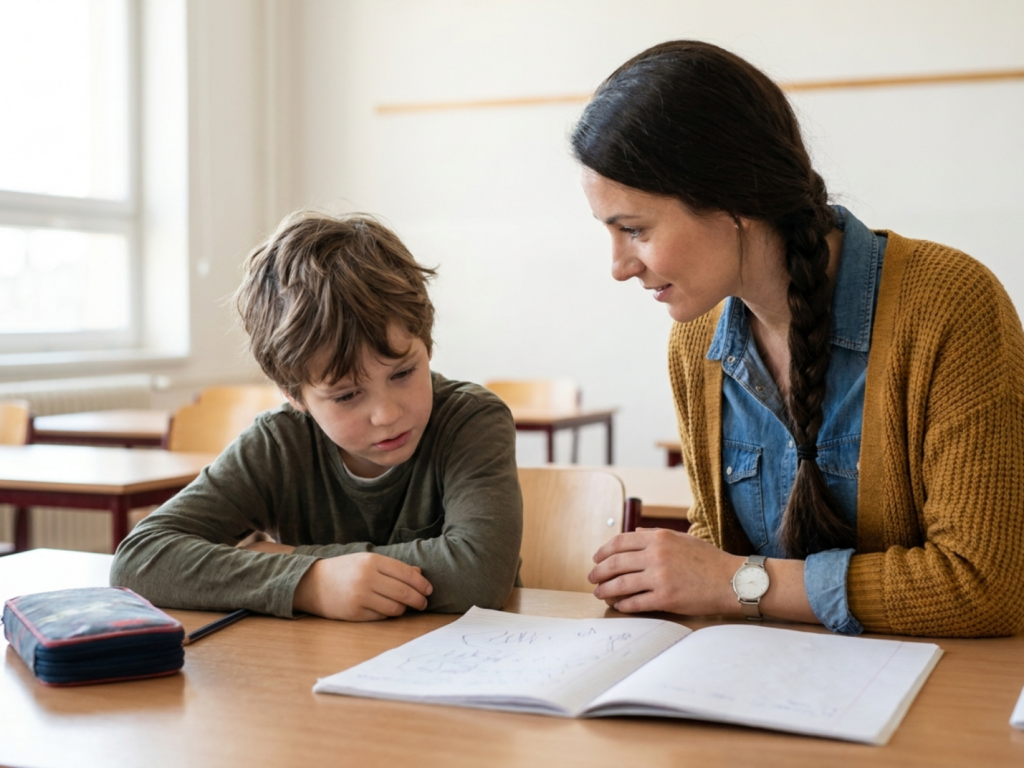
Adults often want to fix the problem quickly, but children usually calm down faster when they feel understood first. The most helpful response is often to listen, reflect the feeling, and avoid rushing to a lesson or a comparison. Saying “You are fine, it is no big deal” can make a child feel unseen. Saying “It sounds hard to watch your friend choose someone else” helps the child feel understood enough to think more clearly.
The practical advice in Helping child build friendships begins with empathy. Ask open-ended questions such as “What happened?” or “What felt hardest about that?” rather than assuming the whole story. Avoid comparing children with siblings, classmates, or cousins, because comparison can intensify shame and defensiveness. Instead, point out effort, kindness, flexibility, and problem-solving.
Adults can also model the language they hope children will use: “I felt disappointed when plans changed, so I took a breath and asked for another time.” That kind of modeling shows that feelings can be strong without becoming harmful. When children see adults regulate disappointment, they are more likely to copy the pattern.
If a child needs support repairing a friendship, guide them toward simple, concrete steps: naming the hurt, listening to the other child, apologizing if needed, and finding a way back into play. This is how healthy childhood friendships become more durable over time.
Building confidence and a wider friendship network
Children often cope better with jealousy when their whole social world is not concentrated on one friend. A wider social network reduces the pressure on any single relationship and gives the child more chances to feel included. That does not mean a best friend is unimportant. It means the child learns that one friendship can be meaningful without carrying all of the child’s belonging needs.
How children make friends explained reminds us that friendship is built through repeated, ordinary experiences: shared play, turn-taking, small repairs after conflict, and the feeling that both children matter. Children need many chances to practice these skills. Some may still rely on preschool friendship skills such as simple turn-taking, even when they are older, because those early skills remain useful when emotions rise.
Adults can encourage varied peer experiences: different play partners, clubs, sports, art groups, library activities, or neighborhood play. These settings help children learn flexibility and reduce the sense that one disappointment means total rejection. They also support social confidence by showing the child that connection is possible in more than one place.
Over time, this broader pattern supports long-term resilience. Friendships become less fragile when children know how to enter play, recover from misunderstandings, and keep going after a disappointing moment.
When jealousy may need professional support
Most jealousy between friends is temporary and improves with coaching, practice, and time. Still, some patterns deserve closer attention. If jealousy is intense, persistent, or leads to frequent aggression, major withdrawal, or repeated conflict across settings, it may be useful to talk with a pediatrician, school counselor, child psychologist, or other mental health professional. They can help look at the full picture, including anxiety, stress, bullying, family changes, or social difficulties.
Seek support sooner if the child becomes physically unsafe, talks about hurting a friend or themselves, refuses school often because of friendship fears, or seems unable to recover from even small social setbacks. These signs do not automatically mean a diagnosis, but they do suggest that the child may need more structured help with emotional regulation and social coping.
Children should not be left alone with overwhelming shame. Calm support, predictable routines, and skilled professional guidance can make a real difference. The goal is not to label the child. The goal is to help the child feel secure enough to learn, connect, and recover after disappointment.
When to get extra help
- The child becomes aggressive, threatening, or physically unsafe during friendship conflicts.
- Jealousy causes repeated school refusal, panic, or severe distress that does not ease.
- The child withdraws from most play or friendships for weeks at a time.
- There is talk of self-harm, harming others, or feeling worthless.
- Bullying, trauma, or major family stress may be intensifying the reaction.
Tools & Assistance
- School counselor for peer conflict and social skills support
- Pediatrician for a broad check-in if stress symptoms are affecting daily life
- Child psychologist or therapist for emotional regulation and coping strategies
- Trusted teacher, coach, or club leader who sees peer interactions in real time
- Feelings chart or emotion wheel to help a child name jealousy and related emotions
FAQ
Is jealousy between friends normal in children?
Yes. It is a common childhood emotion, especially when a child fears being left out or replaced.
What should I say when my child feels jealous?
Start with empathy: name the feeling, listen to the story, and avoid comparing the child with others.
Can jealousy hurt a friendship?
It can if it leads to control, exclusion, or repeated conflict, but it can also become a chance to learn repair and communication.
When should I ask for professional help?
If the jealousy is intense, persistent, linked to aggression or withdrawal, or affecting school and daily life, seek professional guidance.
Sources
- American Psychological Association — Peanut Butter and Jellyous: Help Kids Navigate Jealousy in Friendships
- International Society for Human Ethology — Functional aspects of jealousy across the lifespan
- Mental Health Center Kids — How to Handle Jealousy in Children
Disclaimer
This article is for educational purposes only and is not a diagnosis or treatment plan. If jealousy is severe, persistent, or linked to safety concerns, please consult a qualified pediatric or mental health professional.















Please log in to leave a comment.