
Intro
Friendship is one of childhood’s most powerful developmental experiences. Through friends, children practice communication, empathy, self-regulation, conflict repair, shared attention, and the subtle social rules that adults often take for granted.
Children do not all make friends in the same way or at the same pace. Temperament, language, neurodevelopment, family culture, school environment, and previous peer experiences all shape how a child approaches others. A supportive adult can help without taking over, especially when a child is shy, impulsive, excluded, or unsure how to join play.
Highlights
Children’s friendships begin with shared activity and gradually include loyalty, intimacy, trust, and emotional support.
Prosocial behaviors such as helping, sharing, and comforting are strongly connected with being chosen as a friend by peers.
Children often befriend peers who are similar in play style, activity level, prosocial behavior, or even aggressive behavior, a pattern known as homophily.
Adults are most helpful when they coach skills, model respectful relationships, and support problem-solving rather than controlling every peer conflict.
Friendship starts before children can explain it
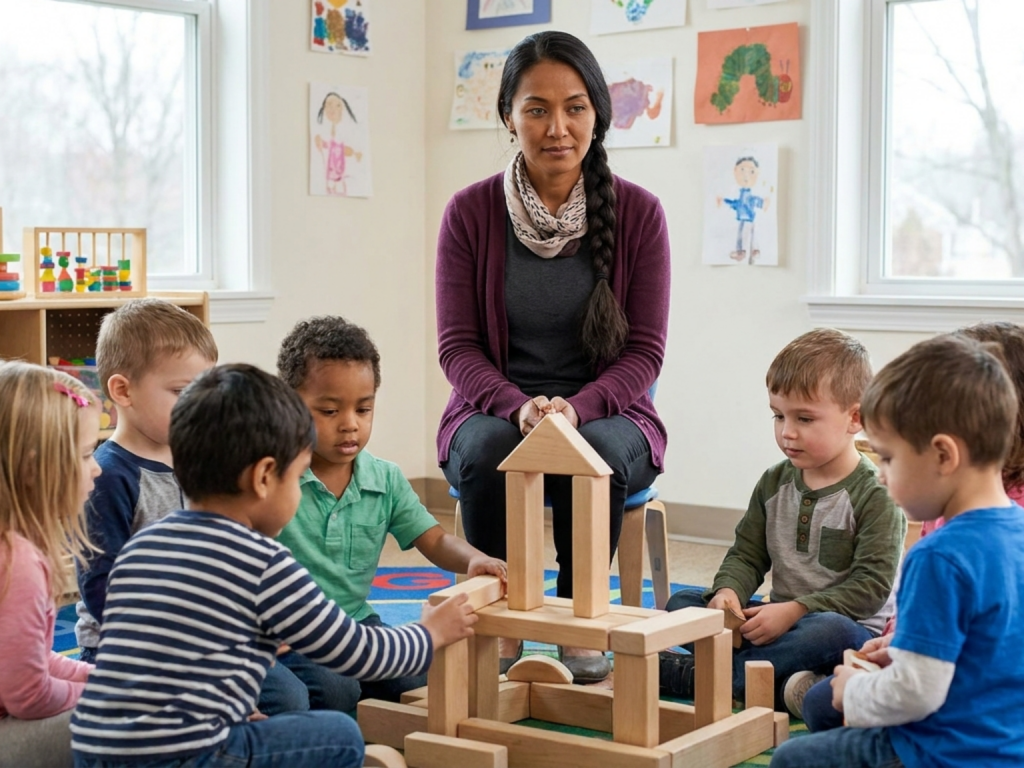
Very young children often show social interest before they can define friendship. Infants watch faces, respond to vocal tone, and learn early turn-taking through serve-and-return interaction. Toddlers may play beside another child, copy an action, offer a toy, protest when a peer leaves, or seek the same playmate repeatedly. These moments may look simple, but they are early building blocks of reciprocal play in early childhood.
At this stage, friendship is often concrete and activity-based. A toddler or preschooler may call someone a friend because they share blocks, run together, sit nearby at lunch, or enjoy the same pretend game. The child is learning that other people have desires, emotions, and intentions, but this understanding is still immature. Frustration, possessiveness, and sudden shifts in preference are common and do not automatically mean a child is unkind or socially delayed.
Children also rely heavily on adult scaffolding. A caregiver might translate emotions, narrate another child’s perspective, or help two children take turns. This is not artificial; it is how the nervous system learns social regulation. Co-regulation before self-regulation is especially important for children who become overwhelmed by excitement, noise, competition, or disappointment.
How children’s idea of a friend changes with age
Research on children’s conceptions of friendship suggests a clear developmental shift. Younger children commonly define friends by observable behaviors: playing together, helping, sharing, and doing the same activities. By early elementary school, many children have well-established expectations that friends help each other and spend time together. As children move through elementary school, less visible qualities such as loyalty, intimacy, trust, and emotional closeness become more important.
This change is linked to cognitive and language development. A preschooler may know, “She is my friend because we play dinosaurs.” A school-age child may add, “He is my friend because he keeps my secret and stands up for me.” The child’s theory of mind, autobiographical memory, moral reasoning, and emotion vocabulary all contribute to this deeper understanding.
It is helpful for adults to match expectations to developmental stage. A 4-year-old who announces a new “best friend” every week may be experimenting with social categories, not being disloyal. A 9-year-old who feels hurt by exclusion may be responding to a more advanced expectation of loyalty and belonging. The emotional intensity of friendship grows as children become more aware of status, fairness, rejection, and group membership.
The behaviors that help children connect
Friendship is not only about personality; it is also about observable social behaviors. Studies of young children show that prosocial behavior ratings are associated with receiving more friendship nominations. Prosocial behavior includes helping, sharing, comforting, cooperating, inviting others into play, and responding when someone is distressed. These behaviors make a child feel safer and more enjoyable to be around.
Several skill clusters support friendship formation:
- Social entry: watching play first, choosing a good moment to join, and offering an idea rather than grabbing materials.
- Reciprocity: taking turns, asking questions, listening, and allowing the other child’s ideas to influence the game.
- Emotion regulation: tolerating losing, waiting, disappointment, and not always being in charge.
- Repair: apologizing, clarifying misunderstandings, and trying again after conflict.
- Pragmatic communication: using facial expression, tone, gesture, personal space, and context-appropriate language.
Children develop these abilities unevenly. A child may be kind but socially hesitant, verbal but poor at turn-taking, generous but easily dysregulated, or imaginative but controlling in play. This is why global labels such as “antisocial” or “bossy” can be unhelpful. It is more constructive to identify the specific missing skill and practice it in a low-shame way.
Why similarity matters in children’s friendships
Children often choose friends who are similar to them. In developmental science, this is called homophily. Similarity may involve age, language, interests, activity level, humor, classroom grouping, temperament, or behavioral style. Recent research on young children has found evidence that children may identify friends who are similar to them in prosocial conduct and aggression.
Similarity can be positive. Two quiet children may feel safe reading side by side. Two highly active children may bond through running games. Children with shared interests, such as animals, construction toys, fantasy stories, sports, or music, often find conversation easier because the activity provides structure.
However, similarity can also reinforce unhelpful patterns. If two impulsive children escalate each other, or if a peer group normalizes exclusion or aggressive behavior, friendship may become stressful even when it feels exciting. Adults do not need to panic over every intense friendship, but they can observe whether the relationship leaves the child more regulated, confident, and kind, or more anxious, secretive, dysregulated, or hurtful toward others.
Rather than forbidding a friendship without explanation, adults can ask reflective questions: “How do you feel after playing together?” “What happens when one of you says no?” “Does this friend help you make good choices?” These questions build social judgment over time.
The role of parents and caregivers
Parents and caregivers influence friendship most effectively through coaching, modeling, and creating opportunities. The goal is not to manage a child’s social life like a schedule, but to help the child develop durable skills. The American Psychological Association emphasizes that parents can support children by teaching communication, emotional regulation, and conflict resolution while avoiding unnecessary over-intervention.
Practical support may include arranging play opportunities, helping a child rehearse how to invite someone, talking through what happened after a difficult interaction, and modeling respectful disagreement at home. Children learn a great deal from watching how adults greet neighbors, repair conflict, include others, set boundaries, and apologize.
For children who struggle to enter groups, role-playing social skills can be useful. An adult might practice phrases such as, “Can I play too?” “What are you building?” or “I can be the shopkeeper.” For a child who dominates play, coaching might focus on asking, “What should happen next?” For a child who withdraws, the first goal may be parallel participation near peers rather than instant conversation.
Adults should also validate feelings. Friendship pain can be physiologically real: rejection and exclusion may activate stress responses, sleep disruption, stomachaches, headaches, or school avoidance. Validation is not the same as catastrophizing. A balanced response might be, “That really hurt, and we can think about what you want to do next.”
Conflict is part of friendship learning
Many friendships include arguments, jealousy, competition, and misunderstandings. In childhood, conflict is not automatically a sign that a friendship is unhealthy. It can be a learning context for perspective-taking, negotiation, boundaries, and repair. The key question is whether conflict can be resolved safely and respectfully.
Adults can help children separate normal conflict from harmful patterns. Normal conflict may involve disagreement about game rules, hurt feelings after a mistake, or needing help to take turns. Concerning patterns include repeated humiliation, coercion, threats, physical aggression, social exclusion used as control, or a persistent power imbalance. If bullying, intimidation, or safety concerns are present, adults should involve school staff or appropriate professionals promptly.
For everyday conflict, coaching works better than interrogation. Useful prompts include: “What did you want?” “What do you think they wanted?” “What could you say next time?” and “Is there a way to fix part of it?” This supports social problem-solving in school-age children without forcing premature forgiveness or ignoring the child’s boundaries.
It is also important not to demand that every child be friends with everyone. Children can be taught kindness and inclusion while still being allowed to choose close companions. Healthy friendship includes both empathy and consent.
When making friends is harder
Some children have persistent difficulty making or keeping friends. Causes can be varied and overlapping, including anxiety, language delay, hearing problems, attention-deficit/hyperactivity traits, autism-related social communication differences, developmental coordination difficulties, trauma exposure, chronic illness, sleep problems, or environmental mismatch. A child may also struggle after moving schools, experiencing family stress, being bullied, or feeling different from peers.
Medical and developmental caution is important: friendship difficulty alone is not a diagnosis. Still, patterns deserve attention when they are persistent, distressing, or impairing. Consider speaking with a pediatrician, child psychologist, school counselor, speech-language pathologist, or developmental specialist if a child rarely shows interest in peers, has severe distress around social situations, is repeatedly rejected, often uses aggression, cannot recover from minor peer conflict, loses previously acquired social communication skills, or avoids school because of peer problems.
Support should be individualized. One child may need anxiety-informed gradual exposure; another may need pragmatic language support; another may benefit from occupational therapy strategies for sensory regulation; another may need a safer classroom plan. The most helpful question is not “Why can’t this child just make friends?” but “What skill, support, environment, or protection does this child need?”
When to seek extra support
- Seek help promptly if peer conflict involves threats, coercion, physical injury, or bullying.
- Discuss concerns with a healthcare professional if social withdrawal is persistent, worsening, or paired with anxiety, sleep changes, or school refusal.
- Ask for developmental or speech-language input if a child struggles to understand social cues, conversation rules, or pretend play compared with peers.
- Do not label a child as “bad” or “antisocial” based on friendship difficulty; look for specific skills and stressors.
- If a child talks about self-harm, hopelessness, or not wanting to live, seek urgent mental health or emergency support.
Tools & Assistance
- Practice short friendship scripts through play before a social event.
- Ask teachers what they observe during unstructured times such as recess and lunch.
- Create low-pressure play opportunities around shared interests.
- Use emotion vocabulary to help children name disappointment, jealousy, embarrassment, and loneliness.
- Consult a pediatrician, child psychologist, school counselor, or speech-language pathologist when concerns are persistent or impairing.
FAQ
At what age do children make real friends?
Early friendship-like preferences can appear in toddlerhood, but children’s understanding of friendship becomes more stable and reciprocal through preschool and elementary school.
Should parents intervene when children argue with friends?
Intervene for safety, bullying, or major distress. For ordinary disagreements, coaching problem-solving and repair is usually more helpful than taking over.
Is it a problem if my child has only one friend?
Not necessarily. One warm, reciprocal friendship can be healthy. Concern rises if the relationship is controlling, the child is isolated against their wishes, or social distress is persistent.
Can shy children still make friends?
Yes. Shy children often do well with predictable, low-pressure settings, shared activities, and gentle rehearsal of social entry skills.
When should I ask a professional about friendship struggles?
Seek guidance if difficulties are persistent, cause significant distress, affect school attendance, involve aggression or bullying, or occur alongside developmental, language, attention, or anxiety concerns.
Sources
- Taylor & Francis Online — Friendships among young children: links with social behaviour
- National Center for Biotechnology Information / PubMed Central — Children's Conceptions of Friendship: A Multimethod Study of Developmental Changes
- American Psychological Association — How to help kids navigate friendships and peer relationships
Disclaimer
This article is for general educational purposes and is not a diagnosis or treatment plan. Consult a qualified healthcare or mental health professional for concerns about a child’s development, behavior, safety, or emotional wellbeing.

















Please log in to leave a comment.