
Intro
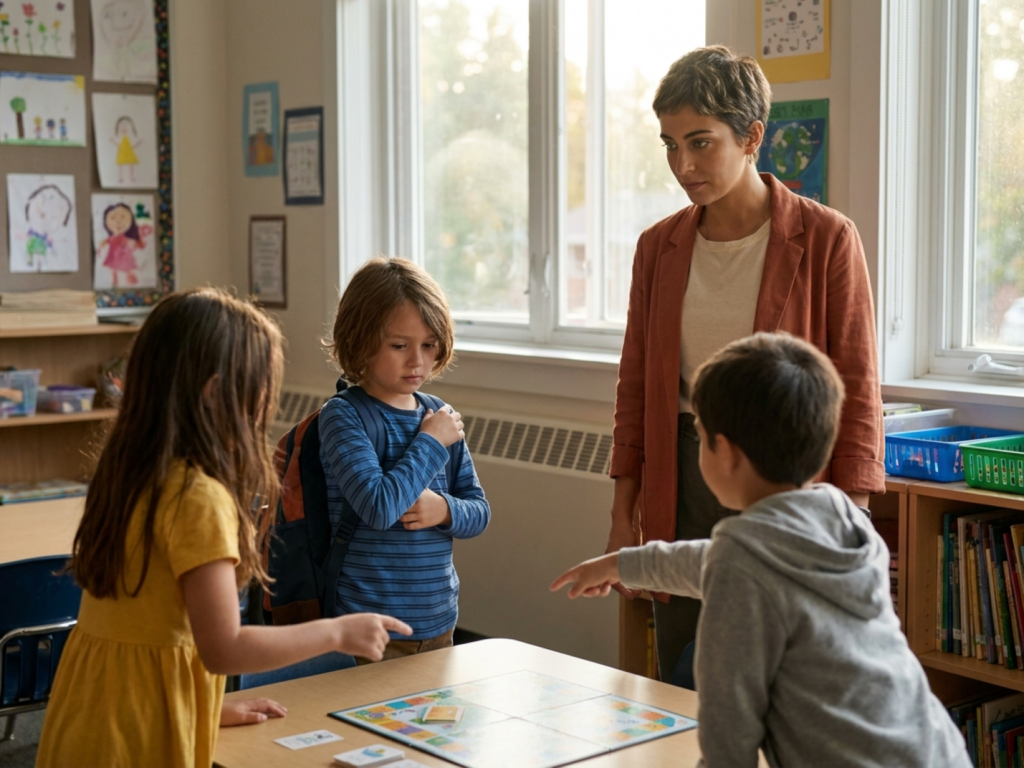
Peer pressure is not only a teenage issue. It can begin much earlier, sometimes in the preschool years, when children start watching what classmates do, say, and choose. In everyday life, it may look like copying a game, clothing choice, language, or a rule-breaking dare simply to fit in.
For many children, peer pressure is less about defiance and more about social survival. Children are learning how to belong, how to read group cues, and how to balance their own preferences against the need for acceptance. Understanding this process can help adults respond with calm, skill-building support rather than shame or alarm.
Highlights
Peer pressure can start in early childhood, not just in adolescence. Even preschoolers may conform publicly to a group while privately thinking differently.
The need to belong is normal. Children are neurologically and socially wired to seek acceptance, which makes peers increasingly influential over time.
Not all peer influence is negative. Friends can encourage kindness, cooperation, healthy routines, and problem-solving.
A child who seems "easy to pressure" is often showing a skill gap, anxiety, or a strong desire to avoid rejection rather than a character flaw.
Adults can help most by teaching refusal skills, practicing language for tough moments, and keeping communication open and nonjudgmental.
What peer pressure means in childhood
Peer pressure is any influence children feel from classmates, friends, teammates, or other children in their social circle. It may be direct, such as a child saying, “Do this or you cannot play with us.” It may also be indirect, such as noticing that everyone else is laughing, wearing the same style, or using the same slang and deciding to copy them.
In childhood, peer pressure often operates through social learning: children observe what gets approval, what gets attention, and what seems to protect membership in the group. That means the pressure is not always loud or dramatic. Sometimes it is subtle, and a child may not even label it as pressure. They may simply feel that going along is the safest way to avoid embarrassment, exclusion, or conflict.
This is one reason a child may behave differently at home and with peers. The home setting usually feels more predictable, while the peer setting can feel faster, more public, and more emotionally loaded. A child who resists at home may still fold under a group dynamic at school or on the playground.
Why peer influence can begin so early
Research shows that conformity to peers can appear in preschool children, which may surprise many adults. At this age, children are still developing self-regulation, perspective-taking, and the ability to separate what they personally believe from what they think the group wants. A preschooler may copy a peer’s choice in front of others while privately preferring something different. That difference between public conformity and private judgment is important: the child may be trying to fit in without truly changing their beliefs.
As children grow, peers matter more because friendships become deeper and group status begins to shape self-concept. In middle childhood and especially in the years often called , acceptance can feel deeply linked to identity. Children become more sensitive to approval, teasing, and exclusion, and this can shift decision-making toward what protects belonging.
Developmentally, this makes sense. A growing child is learning how to navigate social hierarchies, rules, and unspoken expectations. The challenge is that these skills are still immature, so children may know the “right” answer but struggle to act on it in the moment. That is why peer influence in early adolescence often looks stronger, but the roots are present long before then.
When peer pressure is helpful and when it becomes harmful
Peer influence is not always negative. Children often learn a great deal from other children: how to share, how to take turns, how to cooperate, how to solve problems in play, and how to recover after conflict. This is one reason positive models matter. A supportive friend group can normalize reading, sports practice, honesty, or inclusive play. In that sense, positive peer influence for children can reinforce healthy behavior and confidence.
Problems arise when the group rewards risky, aggressive, secretive, or exclusionary behavior. Harmful pressure may push a child to lie, steal, bully, break rules, take unsafe dares, or hide distress. It may also be emotional rather than behavioral, such as pressure to laugh at cruelty, tolerate meanness, or silence personal values in order to stay included.
Children do not always need a direct command to feel pressured. Sometimes they interpret silence, eye contact, teasing, or “everyone is doing it” as instructions. The goal is not to isolate children from peers, but to help them recognize which social influences support their growth and which ones put them at risk.
Signs a child may be feeling pressured
Children rarely announce peer pressure in a neat way. More often, the signs appear as behavior changes, mood shifts, or vague distress. A child may become unusually worried about what others think, bring home new language or attitudes that seem out of character, or show sudden resistance to activities they once enjoyed if those activities are no longer popular in the group.
- Frequent statements like “Everyone will laugh at me” or “I have to do it.”
- Sudden secrecy about friends, messages, or games.
- New aggression, rule-breaking, or rude language that is unusual for the child.
- Withdrawal, tearfulness, stomachaches, headaches, or school refusal linked to social situations.
- Strong panic about being left out, mocked, or excluded.
These signs do not prove a problem by themselves, and they are not a diagnosis. They simply suggest that social stress may be overwhelming the child’s coping skills. A calm conversation can reveal whether the issue is a one-time conflict, ongoing bullying, or pressure from a group that is shaping decisions in unhealthy ways.
How adults can help children respond
Children do best when adults treat peer pressure as a skill-building issue, not a moral failure. A child who gives in may need practice more than punishment. Start by asking what happened, who was present, what the child felt in the moment, and what they thought might happen if they refused. This helps identify the emotional trigger: fear of rejection, curiosity, excitement, or confusion.
Simple peer pressure refusal skills are often more effective than long lectures. Children benefit from short, rehearsed phrases such as “No thanks,” “I’m not into that,” “I need to check with my parent,” or “Let’s do something else.” Role-playing these lines at home can make them easier to use under stress. Pair that practice with assertiveness training in age-appropriate form: standing steady, making eye contact if comfortable, and repeating a boundary without overexplaining.
Adults can also help by strengthening decision-making before the pressure appears. Ask, “What kind of friend do you want to be?” or “What choices fit your values?” That kind of values-based decision-making gives children a mental script to fall back on when the group is moving quickly. For some children, especially those with anxiety or social skills gaps, repeated social skills practice is just as important as the refusal phrase itself.
When to seek extra support
Most peer pressure situations can be addressed through coaching, supervision, and school collaboration. However, if a child seems persistently distressed, increasingly isolated, or pulled into unsafe behavior, it is reasonable to seek help from a pediatrician, school counselor, or child mental health professional. These professionals can help sort out whether the issue is typical social stress or part of a larger concern such as anxiety, bullying, or a relationship pattern that needs intervention.
Seek prompt support if the child is being threatened, coerced, humiliated, or exposed to substances, sexualized behavior, violence, or repeated online harassment. Also pay attention if peer-related stress is affecting sleep, appetite, attendance, mood, or safety. In those situations, the goal is not to wait and see indefinitely; it is to protect the child while building coping skills.
Most importantly, keep the conversation open. Children are more likely to ask for help when they believe adults will respond with curiosity and protection rather than overreaction. A steady, nonjudgmental adult presence can be one of the strongest buffers against harmful peer influence.
When peer pressure needs urgent attention
- The child is being bullied, threatened, or humiliated by peers.
- The child is pushed toward unsafe dares, violence, sexual activity, or substance exposure.
- The child’s mood, sleep, appetite, or school attendance changes significantly.
- The child seems frightened to talk about friends or messages.
- The child mentions feeling hopeless, trapped, or unable to say no.
Tools & Assistance
- Pediatrician or family doctor for a general assessment and guidance
- School counselor, teacher, or school psychologist for peer and classroom concerns
- Licensed child therapist for anxiety, self-esteem, or social coping support
- Parent education resources from a local extension office or family service program
- If immediate safety is at risk, contact emergency services or a local crisis line
FAQ
At what age can peer pressure start?
It can begin in preschool. Young children may copy peers publicly even when their private preferences are different.
Is all peer pressure bad?
No. Peers can model kindness, cooperation, healthy routines, and confidence. The concern is pressure that pushes unsafe or unhealthy behavior.
What is the best way to help my child say no?
Practice short refusal phrases, role-play common situations, and talk about values before the pressure happens.
How do I know if my child is struggling with peer pressure?
Watch for secrecy, sudden behavior changes, strong fear of rejection, or distress around friends and social situations.
Should I contact a professional if I am unsure?
Yes. A pediatrician, school counselor, or child therapist can help you decide whether the situation needs more support.
Sources
- National Institutes of Health / PubMed Central — Peer Influence in Children and Adolescents
- PubMed — Conformity to peer pressure in preschool children
- North Dakota State University Extension — Talking to Children About Peer Pressure
Disclaimer
This article is for general educational purposes only and is not a substitute for medical or mental health advice, diagnosis, or treatment. If you are concerned about a child’s safety, behavior, or emotional well-being, please speak with a qualified healthcare professional.













Please log in to leave a comment.