
Intro
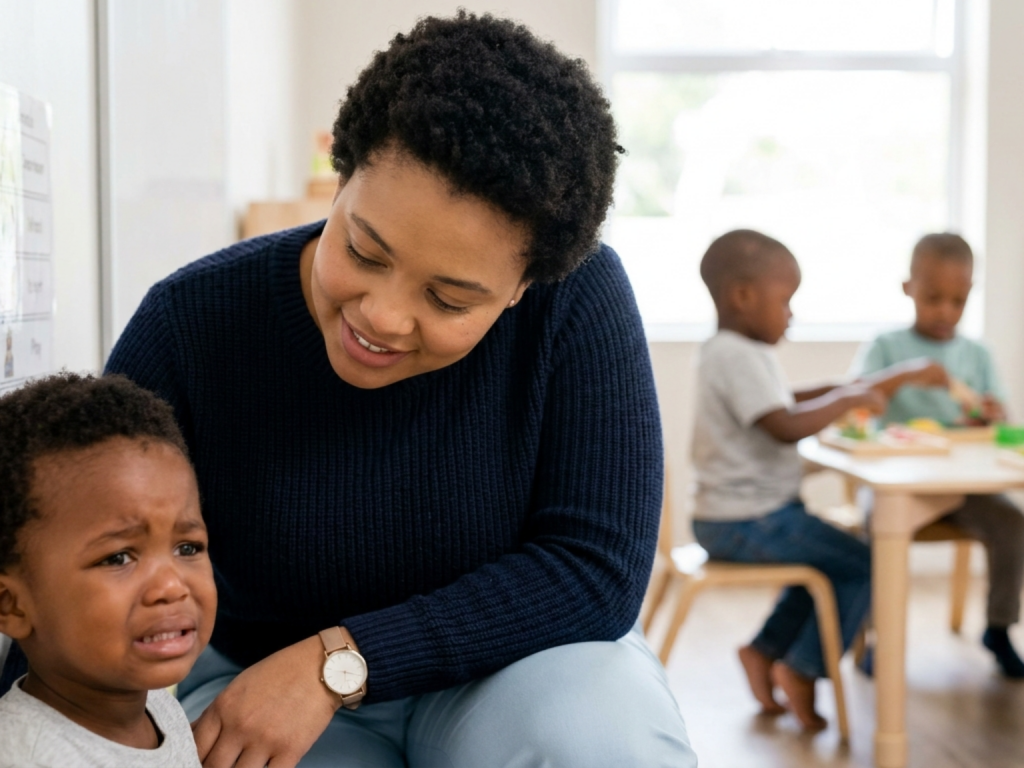
Preschool behavior can feel intense because young children are learning emotional regulation, language, social rules, impulse control, and body awareness all at once. Hitting, refusing, screaming, running away, or melting down may be disruptive, but these behaviors are often communication: a child may be overwhelmed, tired, seeking connection, avoiding a difficult task, or lacking the words to ask for help.
Effective preschool behavior solutions are supportive, structured, and developmentally informed. They do not rely on shame or fear. They focus on prevention, teaching replacement skills, consistent adult responses, and timely consultation when behavior is severe, persistent, unsafe, or accompanied by developmental, medical, sleep, sensory, or family stress concerns.
Highlights
Preschool behavior is best understood as a signal, not simply defiance. Adults can look for patterns in timing, triggers, communication demands, sensory load, and transitions.
Evidence-informed strategies include functional assessment, positive attention for desired behavior, teaching replacement skills, and calm, predictable responses.
Teacher-child interaction quality matters. Structured coaching, including classroom video review, has been shown to reduce challenging behavior in preschool settings.
Medical or developmental consultation is appropriate when behavior is dangerous, escalating, associated with regression, or interfering with learning, relationships, sleep, or family functioning.
Start with a developmental lens
Preschoolers are not small adults with fully formed self-control. Their prefrontal cortical networks, language systems, sensory processing, and stress-response regulation are still maturing. A child may understand a rule in a calm moment but lose access to that knowledge when hungry, overstimulated, frightened, or rushed through a transition. This does not mean all behavior should be excused; it means adult expectations should be realistic and teachable.
Common preschool challenges include tantrums, aggression, noncompliance, elopement from the group, difficulty sharing, toileting resistance, separation distress, and disruptive attention-seeking. These behaviors may overlap with typical development, but frequency, intensity, duration, and context matter. A brief protest at cleanup is different from repeated unsafe behavior that prevents participation in school or family routines.
Adults should also consider communication and developmental factors. Delays in speech and language development can make frustration look like defiance, especially when a child cannot explain pain, fear, confusion, or a need for help. Developmental surveillance and screening can help identify concerns that are not obvious during day-to-day caregiving. When a child loses previously acquired skills, stops using words, becomes unusually withdrawn, or shows marked changes in sleep, appetite, coordination, or play, professional evaluation is important.
Identify the function of the behavior
A practical behavior plan begins with asking what the behavior accomplishes for the child. Functional assessment does not require blaming the child or the adult; it means observing the pattern. Many challenging behaviors serve one or more functions: gaining attention, escaping a task, obtaining an object or activity, seeking sensory input, avoiding sensory overload, or communicating distress.
A simple ABC log can be useful: antecedent, behavior, consequence. The antecedent is what happened just before the behavior, such as a transition, a denied request, a noisy room, or a difficult fine-motor task. The behavior should be described objectively, such as “threw blocks” rather than “acted bad.” The consequence is what happened afterward: adult attention, removal from the activity, access to a toy, or a long negotiation.
Patterns often appear quickly. A child who screams only during group time may be overwhelmed by sitting still, receptive language demands, or social proximity. A child who hits when another child reaches for a toy may need direct teaching in turn-taking and requesting space. A child who becomes dysregulated late in the day may need sleep, nutrition, or sensory supports assessed. Once the function is clearer, adults can design support that teaches the child a safer, more adaptive way to meet the same need.
Prevent problems before escalation
Prevention is usually more effective than reacting after a child is already dysregulated. Predictable routines, visual schedules, brief transition warnings, smaller task steps, and clear environmental boundaries reduce cognitive load. Preschoolers often do better when adults state what to do rather than what not to do: “Feet stay on the floor” is more actionable than “Stop climbing.”
Positive adult attention is a powerful preventive tool. Specific praise should name the behavior: “You put the marker cap back on” or “You waited while I helped Sam.” This is different from vague approval and helps the child understand exactly what worked. Research-informed early childhood behavior management frequently includes praise for appropriate behavior, planned ignoring for minor attention-seeking behavior, and consistent responses for unsafe behavior.
Adults can also adjust the environment. Place highly desired toys in quantities that reduce conflict, create a calm space that is not used as punishment, shorten waiting periods, and offer choices within limits. For children with sensory sensitivity, noise reduction, movement breaks, or alternative seating may help. For children with preschool coordination development challenges, tasks such as cutting, dressing, or playground climbing may need adaptation so frustration does not repeatedly trigger avoidance or outbursts.
Teach replacement skills directly
Stopping a behavior is rarely enough. The child needs a replacement behavior that is easier, safer, and effective. If a child screams to escape a hard task, adults can teach “help please,” “break please,” or a picture card for assistance. If a child grabs toys, adults can teach a short script: “Can I have a turn?” If a child runs away during transitions, adults can teach holding a ring, walking with a peer, or moving to a marked spot.
Replacement skills should be practiced when the child is calm, not only during crisis. Role-play, puppets, visual cue cards, and brief rehearsal before predictable triggers can help. Preschoolers learn through repetition and embodied practice. Symbolic thinking in preschool children also allows adults to use pretend play to rehearse social problem-solving: a toy figure can ask for a turn, feel angry, take a breath, and try again.
Emotion coaching is another core strategy. Adults can label feelings without surrendering boundaries: “You are angry that the blocks are closed. Blocks are closed. You can stomp here or squeeze this cushion.” This teaches interoception and emotional vocabulary while preserving the limit. Over time, the goal is co-regulation first, then self-regulation. A child borrows the adult’s calm nervous system before they can reliably generate their own calm response.
Respond consistently and calmly
When challenging behavior occurs, the adult response should be brief, predictable, and matched to risk. Unsafe behavior such as hitting, biting, throwing heavy objects, or running toward danger requires immediate physical safety measures and close supervision. The adult can use a low voice, few words, and a clear limit: “I will not let you hit. I am moving the blocks.” Long explanations during escalation often increase overload.
For minor inappropriate behavior that appears attention-seeking and is not unsafe, planned ignoring may help when paired with immediate attention to appropriate behavior. This is not emotional withdrawal. It means the adult briefly withholds reinforcement for a minor behavior while staying present and ready to notice the desired alternative. For example, whining may receive minimal response, while a calm request receives prompt attention.
Consequences should be logical and related when possible. If water is dumped intentionally, the child helps clean with adult support. If a toy is used to hurt someone, the toy is removed temporarily and the child practices a safer action later. Forced apologies are often less useful than repairing harm in a developmentally appropriate way, such as getting an ice pack, rebuilding a tower, or checking whether the other child is okay.
Coordinate home and preschool supports
Children benefit when caregivers and teachers use the same language and expectations. A shared behavior support plan can identify triggers, prevention strategies, replacement skills, adult responses, and data to track. The plan should be short enough to use in real life. It should include what adults will do before, during, and after behavior, not just what the child should stop doing.
Evidence from preschool classroom interventions supports structured, data-driven approaches. The BEST in CLASS study reported reductions in child problem behaviors and improvements in teacher-child interactions, showing that coaching and intentional teacher practices can change classroom behavior. Other educational work has found that reviewing classroom video with coaches can help teachers notice interaction patterns, reduce disruptive behavior, and intervene earlier.
Parents can ask practical questions: What time of day is hardest? Which transitions trigger problems? What adult responses seem to help or worsen the behavior? What skill is being taught instead? Teachers can ask about sleep, morning routines, major family stress, medical issues, language concerns, and what works at home. This exchange should be collaborative, not accusatory. The child is more likely to improve when adults treat behavior as a shared problem-solving task.
Know when to seek professional guidance
Some preschool behavior concerns warrant timely professional input. Consult a pediatrician, developmental-behavioral pediatrician, child psychologist, licensed mental health clinician, occupational therapist, speech-language pathologist, or early childhood special education team when behavior is severe, persistent, unsafe, or impairing. Evaluation may consider sleep disorders, pain, constipation, hearing or vision concerns, neurodevelopmental differences, trauma exposure, anxiety, language delay, sensory processing difficulties, and family stressors.
It is important not to diagnose a child based only on a checklist or a difficult week. Preschool development is variable, and behavior can change with illness, disrupted sleep, new siblings, moves, grief, or classroom mismatch. At the same time, waiting too long can allow patterns to harden and strain adult-child relationships. Early support is not a label; it is a way to reduce distress and teach skills while the brain is highly plastic.
Urgent help is needed if a child repeatedly tries to seriously harm themselves or others, runs into unsafe areas, shows sudden behavioral change with confusion or altered consciousness, or has behavior accompanied by possible abuse, neglect, poisoning, seizure, head injury, or severe pain. In those situations, behavioral strategies are not a substitute for medical or safety assessment.
When behavior needs extra attention
- Seek urgent help for behavior that creates immediate danger to the child or others.
- Consult a healthcare professional if behavior changes suddenly or occurs with sleep, appetite, pain, developmental regression, or altered awareness.
- Do not use physical punishment, humiliation, threats of abandonment, or isolation that frightens the child.
- Ask for developmental or speech-language evaluation when communication difficulties seem to drive frustration.
- Behavior plans should be individualized; a strategy that helps one child may worsen another child's distress.
Tools & Assistance
- ABC behavior log for tracking antecedents, behavior, and consequences
- Visual schedule with pictures for daily routines and transitions
- Shared home-school behavior support plan
- Pediatrician or developmental-behavioral pediatric consultation
- Speech-language pathologist evaluation or early childhood special education referral when indicated
FAQ
Is preschool aggression always a sign of a disorder?
No. Some aggression can occur during normal development, especially when language and impulse control are immature. Persistent, severe, escalating, or unsafe aggression should be discussed with a qualified professional.
What is the first step when a child keeps having tantrums?
Track patterns. Note what happens before the tantrum, what the child does, and what happens afterward. This helps identify whether the behavior is linked to escape, attention, sensory overload, communication difficulty, fatigue, or another factor.
Should adults ignore preschool behavior problems?
Only minor, non-dangerous attention-seeking behaviors may be briefly ignored as part of a plan. Unsafe behavior, distress, developmental concerns, or repeated disruption needs active support and skill teaching.
Can behavior improve without punishment?
Yes. Many children improve with prevention, specific praise, consistent limits, replacement-skill teaching, and coordinated adult responses. Consequences can be calm, logical, and instructional rather than punitive.
When should a child be evaluated for speech or developmental concerns?
Consider evaluation if behavior is strongly linked to communication frustration, the child is not meeting expected milestones, skills are lost, or concerns are present across home and school.
Sources
- ScienceDirect (Elsevier) — Reducing child problem behaviors and improving teacher-child interactions in preschool: The BEST in CLASS study
- University of Virginia School of Education — Study Uses Classroom Video to Improve Preschool Behavior
- IRIS Center (Vanderbilt University) — Case Study - Early Childhood Behavior Management
Disclaimer
This article is for educational purposes only and does not diagnose, treat, or replace care from a qualified healthcare professional. Seek medical, developmental, or mental health guidance for persistent, severe, unsafe, or concerning behavior.















Please log in to leave a comment.