
Intro
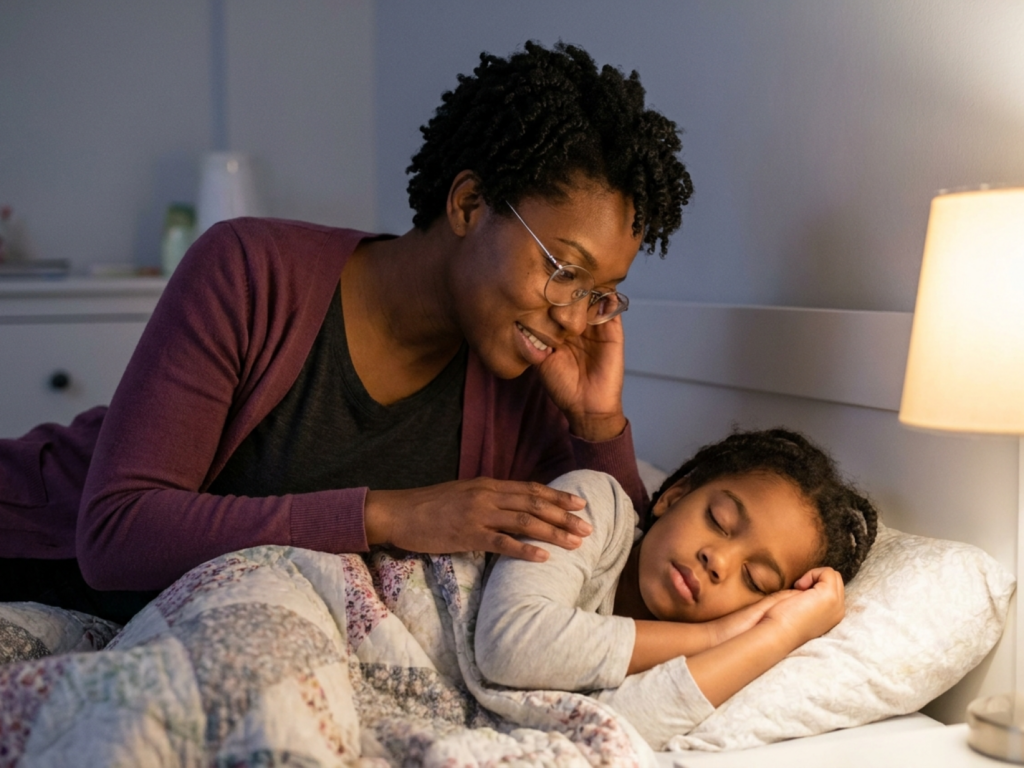
Sleep talking is a common childhood sleep behavior, and for many families it is more startling than harmful. A child may mutter, answer a question that was never asked, laugh, or speak in short bursts while still asleep. In most cases, the child is not aware of it and remembers nothing the next morning.
That said, sleep talking is not always something to ignore completely. Sometimes it is simply one expression of normal development, but in other cases it can appear alongside snoring, restless sleep, stress, or other concerns that deserve a closer look. The key question is not whether a child sleep talks at all, but how often it happens, what else is happening during sleep, and whether the child is otherwise well during the day.
Highlights
Sleep talking is usually a benign parasomnia and often fades as children grow.
Most children do not need treatment for sleep talking alone.
Frequent episodes, snoring, daytime sleepiness, or dangerous behaviors deserve medical attention.
Sleep talking can sometimes coexist with other sleep problems or emotional stressors.
A calm sleep diary and, if needed, a clinician’s evaluation can help clarify the picture.
What sleep talking is
Sleep talking, also called somniloquy, is a parasomnia: a sleep-related behavior that happens during partial arousal rather than full wakefulness. The child may produce single words, fragments of conversation, laughter, or a long stream of speech that seems meaningful but is not tied to conscious awareness. Most children have no recall of the event in the morning.
In practical terms, the brain appears to be in a mixed state. Speech networks may activate while other systems remain asleep, which is why the content can sound oddly organized even though the child is not truly awake. This is one reason sleep talking is often grouped with other parasomnias in preschool children, such as sleepwalking and night terrors.
Development matters. Younger children have more unstable sleep architecture than adults, with more frequent arousals and transitions between sleep stages. That makes short sleep-related behaviors more likely, especially in the early years. A child who sleep talks occasionally is often showing a common developmental pattern rather than a disorder.
How common it is and what it can sound like
Sleep talking can range from a barely audible mumble to an elaborate monologue. Some children speak once or twice in a night, while others do so more often during periods of lighter sleep or after being overtired. It may occur in the first part of the night, when deep non-REM sleep is more prominent, but it can also happen at other times depending on the child’s sleep pattern.
The tone can be calm, laughing, irritated, or confused. Children may answer a question, repeat a phrase, or seem to be having a one-sided conversation. Importantly, the words themselves are not a reliable indicator of emotional truth. A child who seems upset in sleep is not necessarily experiencing the same feeling in waking life.
Transient triggers can make episodes more noticeable. Sleep deprivation, irregular schedules, fever, and general illness can all fragment sleep and increase parasomnias. Stressful transitions may also make episodes more frequent, although the presence of sleep talking alone does not prove an emotional cause.
When it is usually harmless
In most children, occasional sleep talking does not need testing or treatment. If the child is otherwise healthy, sleeps reasonably well, and functions normally during the day, the behavior is often just part of the broad range of normal sleep phenomena. Many families only become aware of it because a sibling or parent hears it through a closed door.
Reassurance is appropriate when the episodes are brief, infrequent, and not associated with injury, fear, or disruption. Parents do not need to decode the content or worry that a child is revealing hidden thoughts. Sleep speech is often disjointed, automatic, and unrelated to waking cognition.
It also helps to avoid reinforcing the event with anxiety. Children can become self-conscious if adults react as though something is wrong. A calm response, a steady bedtime routine, and enough sleep are usually more helpful than focusing on the talking itself.
When sleep talking deserves a closer look
Sleep talking becomes more relevant when it is frequent, newly intense, or paired with other symptoms. Nationwide Children’s Hospital and other pediatric resources note that attention is more appropriate if episodes become more frequent, continue beyond puberty, or occur with snoring or dangerous behaviors. Loud snoring, gasping, or pauses in breathing may suggest sleep-disordered breathing rather than simple sleep talking.
Daytime functioning also matters. If a child has daytime impairment from poor sleep, such as sleepiness, irritability, inattention, or school difficulties, the sleep talking may be part of a broader sleep problem. In that situation, the question is not whether the talking itself is dangerous, but whether sleep quality is being disrupted enough to affect the child’s health or learning.
Emotional context is another reason to ask more questions. A short report in PubMed on sleep talking and mental health in children suggested that a history of sleep talking may warrant evaluation for mental health concerns during the clinical interview, and that co-occurring sleep problems should be assessed in both typically developing children and children with developmental problems. That does not mean sleep talking equals a mental health disorder; it means the symptom can be one clue among many. Stress, anxiety, trauma, neurodevelopmental differences, and developmental changes may all be relevant in the right clinical context.
What clinicians may ask and look for
If a family brings this concern to a pediatrician, the first step is usually a careful sleep history rather than an immediate test. Clinicians may ask how often the child talks in sleep, what it sounds like, when it happens in the night, whether the child snores, and whether there are other nighttime behaviors such as sleepwalking, teeth grinding, or repeated awakenings. A sleep diary or brief home recording can be useful.
A review of the child’s general health is also important. Fever, recent illness, medications, caffeine exposure, and sleep schedule irregularity can all affect sleep quality. In some cases, the clinician may ask about mood, anxiety, trauma exposure, developmental history, and school functioning, especially if the episodes are persistent or part of a broader pattern.
If there is concern for habitual snoring in children, breathing pauses, or significant restless sleep, the clinician may consider sleep-disordered breathing as a contributor. The goal is not to label sleep talking itself as a disease. Rather, it is to decide whether something else is fragmenting sleep or making arousals more likely.
Supportive steps parents can take
For most families, the most helpful approach is observation plus healthy sleep habits. Aim for a consistent bedtime and wake time, because sleep deprivation can increase partial arousals and make parasomnias more obvious. A predictable wind-down routine, a calm bedroom environment, and enough total sleep for age are practical foundations.
It can also help to keep notes for a few weeks: the time of night, how long the episode lasts, whether the child was ill or overtired, and whether anything stressful happened that day. If the child is old enough, a nonjudgmental conversation during the day may reveal worries, schedule changes, or school stress that are worth addressing even if they are not the sole cause.
Do not try to diagnose the content of what the child says while asleep. Sleep talking is not a reliable window into hidden thoughts. Focus instead on patterns: frequency, timing, associated symptoms, and daytime functioning. If the pattern changes or the child seems unwell, that is the point to seek advice.
Seek medical advice sooner if you notice
- Sleep talking that becomes frequent, intense, or continues beyond puberty.
- Snoring, gasping, pauses in breathing, or very restless sleep.
- Daytime sleepiness, mood change, or daytime impairment from poor sleep.
- Dangerous behaviors, injuries, or episodes that resemble sleepwalking.
- Signs of significant stress, anxiety, trauma, or a sudden change in behavior.
Tools & Assistance
- Pediatrician or family doctor for an initial sleep discussion
- Sleep diary with dates, times, and triggers
- Brief home audio or video recording of episodes
- Pediatric sleep clinic if breathing or parasomnia concerns persist
- Mental health professional if stress, anxiety, or trauma may be contributing
FAQ
Is sleep talking normal in children?
Yes. Occasional sleep talking is common in childhood and often improves with age.
Should I wake my child when they are sleep talking?
Usually no. Most episodes are brief and harmless, and waking is not necessary unless safety is an issue.
Does sleep talking mean my child has a mental health problem?
Not by itself. It can sometimes be one clue among many, so clinicians may ask about stress, anxiety, trauma, and other sleep problems.
When should I ask a doctor about it?
Ask if episodes are frequent, continue beyond puberty, are linked to snoring or breathing pauses, or come with daytime sleepiness or behavior changes.
Sources
- PubMed — Short report: Sleep talking and mental health in children with typical development or developmental problems
- Nationwide Children's Hospital — Sleepwalking and Talking: What You Need to Know
- Raising Children Network — Sleeptalking in children and teenagers
Disclaimer
This article is for general information only and does not replace care from a qualified clinician. If you are worried about your child’s sleep, breathing, behavior, or safety, please seek medical advice.

















Please log in to leave a comment.