
Intro
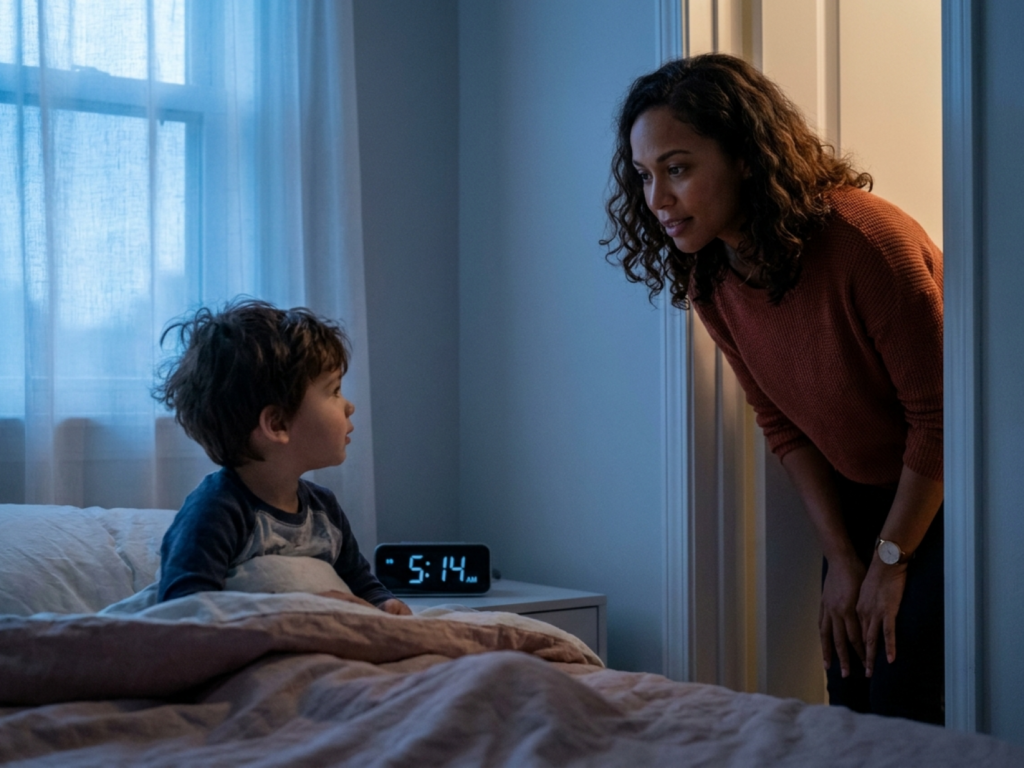
Many parents expect sleep to be continuous, so it can be unsettling when a child wakes repeatedly at night or starts the day before dawn. In many cases, a brief arousal is part of normal sleep architecture: children move through lighter and deeper stages, and some will stir, call out, or briefly open their eyes before settling again.
The important question is not whether a child ever wakes, but how often it happens, how long it lasts, and whether it affects daytime mood, behaviour, growth, or family functioning. Recurrent night waking and early waking can be behavioural, environmental, developmental, or medical, and the right response depends on the pattern.
Highlights
Brief night arousals can be normal if the child resettles quickly and does not seem distressed.
Early waking is often related to sleep timing, light exposure, naps, or an inconsistent schedule rather than one single cause.
A dark, quiet sleep environment and a consistent wake time are simple but often effective first steps.
Persistent waking, loud snoring, gasping, pain, or daytime impairment deserves medical review.
What counts as normal waking during the night?
Sleep is not perfectly continuous. Children, like adults, cycle through lighter and deeper stages, and they may briefly rouse between cycles. A child who turns over, mutters, opens their eyes, or calls out once and then settles again may simply be showing normal sleep fragmentation rather than a disorder.
The pattern becomes more concerning when waking is frequent, prolonged, or difficult to settle without substantial help. If the child is fully awake, seeks repeated reassurance, or remains up for long stretches, the issue may fall into the category of behavioural sleep maintenance difficulty. The difference matters because a single short arousal is usually not a problem, while repeated awakenings can gradually erode sleep quantity and quality for the whole household.
It also helps to think in terms of daytime impact. A child who wakes sometimes but is alert, emotionally regulated, and functioning well during the day may not need intervention beyond reassurance and good sleep routines. In contrast, daytime sleepiness, irritability, hyperactivity, or trouble concentrating suggest that the sleep pattern may be clinically meaningful.
Why children wake at night
There is no single reason children wake at night, and the cause is often mixed. One common mechanism is a learned sleep association: if a child falls asleep only with a parent present, feeding, rocking, or another specific cue, they may need the same cue after each normal arousal. That pattern is often described as night wakings and sleep associations, and it can make ordinary arousals look like a major sleep problem.
Other contributors include discomfort from illness, nasal congestion, pain, hunger, an uncomfortable room temperature, noise, or light. Stress and changes in routine can also increase night waking. In some children, the issue is more about sleep timing than sleep depth; if bedtime is too late, the child may be overtired and more likely to fragment during the night. Conversely, a bedtime that is too early can leave the child with enough sleep pressure relieved before dawn, making waking more likely in the early morning hours.
Age matters too. Toddlers often need predictable routines to consolidate sleep, while older children may wake more because of stress, worries, or a mismatch between sleep need and the family schedule. Repeated waking is worth reviewing in context rather than treating all children the same way.
Why some children wake too early
Early waking means the child rises well before the family’s desired wake time and cannot easily return to sleep. In some children, this is simply the morning end of the same sleep-maintenance pattern that causes night waking. In others, it reflects circadian timing: the internal body clock is effectively set too early, so the child is ready for morning before the household is.
Early waking in preschoolers is common enough to be a familiar behavioural sleep complaint. Preschoolers may be especially sensitive to early morning light, long daytime naps, and a bedtime that no longer matches their sleep need. If naps are too long or too late, the child may not have enough sleep drive by the end of the night. If the room becomes bright at sunrise, that light can signal the brain to fully wake up even if the child is still tired.
It is also worth asking whether the child is actually getting enough sleep overall. A child who wakes early after a very late bedtime may look as though they are waking “too soon,” when in fact the schedule has drifted and the total sleep opportunity is too short. In that situation, adjusting timing is usually more useful than focusing only on the wake-up itself.
Sleep habits and bedroom setup that often help
Behavioural sleep problems usually respond best to consistency. The most useful foundation is a predictable routine: the same bedtime sequence, similar bedtime and morning wake times, and a sleep environment that cues the brain for rest. The RACGP review on sleep problems in children emphasizes regular bedtimes, a dark quiet bedroom, and consistent morning wake times as core sleep-hygiene measures.
For many families, that means making the bedroom boring in a good way. Keep the room dark, limit noise as much as possible, and avoid bright screens before bed. If the child wakes at night, a brief and calm response is often better than a long conversation or a highly stimulating interaction. The goal is not to ignore the child, but to avoid accidentally teaching the brain that waking is a time for engagement.
A sleep diary can be very helpful. Write down bedtime, time to fall asleep, night wakings, early wake-ups, naps, and any unusual events for one to two weeks. Patterns often emerge: a late nap, a weekend schedule shift, early morning light, or a bedtime that is no longer age-appropriate. With that information, a healthcare professional can help decide whether the issue is mainly behavioural, environmental, or more complex.
For some children, the most effective first adjustment is not a dramatic change but a small one: shifting bedtime, shortening a nap, making the room darker, or bringing the wake time back to the same point each day. These changes work best when they are done steadily rather than in a stop-start way.
When waking may signal a medical or sleep disorder
Not every child who wakes at night has a behavioural sleep issue. Some patterns deserve medical assessment because they may reflect a sleep disorder or another health problem. Recurrent loud snoring, gasping, pauses in breathing, mouth breathing, or very restless sleep can suggest sleep-disordered breathing and should not be dismissed as simple fussiness. In school-age children, recurrent waking may look like school-age sleep maintenance problems, but the underlying driver still needs assessment if it is persistent or associated with daytime consequences.
Medical review is also important if waking is linked with pain, vomiting, fever, eczema itch, reflux symptoms, chronic cough, or obvious anxiety. A child who is losing weight, growing poorly, or becoming increasingly tired, irritable, or behaviourally dysregulated also needs a closer look. In these situations, the wake-ups may be a symptom rather than the main diagnosis.
Clinicians typically start with the story: when the child falls asleep, how often they wake, whether they can resettle, what the room and schedule are like, and whether there are breathing or pain symptoms. That history often points toward the next step, which may be reassurance, sleep-hygiene work, or further evaluation.
The key is not to overreact, but also not to normalize a pattern that is clearly affecting the child. A child who wakes briefly and falls back asleep is different from one who is repeatedly distressed, noisy, or unwell.
How to respond at night and during the early morning
When a child wakes at night, the immediate response should match the child’s age, safety, and level of distress. In many cases, the best approach is calm, brief, and predictable. Keep lights low, use few words, and return the child to bed without turning the wake-up into a long event. This reduces stimulation and supports the child’s ability to reconnect sleep cycles independently.
For early waking, try to separate “awake” from “morning.” If the child is safe and developmentally able to wait, keep the environment quiet and dark until the chosen wake time, then start the day consistently. Over time, this helps stabilize circadian timing and can reduce the habit of treating the earliest light as the signal for full waking.
It is also sensible to review weekend sleep, travel, illness, and naps before making bigger changes. Children often need a short period of steadiness to reset. If you have already tried a consistent routine and the problem still persists, or if you feel unsure about the cause, ask a healthcare professional. A paediatrician, family doctor, or sleep specialist can help distinguish normal developmental waking from a pattern that needs treatment.
Seek medical review sooner if you notice:
- Breathing pauses, gasping, loud habitual snoring, or mouth breathing during sleep.
- Severe distress, repeated prolonged wake periods, or a child who cannot settle at all.
- Daytime sleepiness, behavioural change, poor concentration, or growth concerns.
- Pain, vomiting, fever, chronic cough, or another illness linked to the waking.
- A new or worsening pattern that persists despite a consistent sleep routine.
Tools & Assistance
- A 1 to 2 week sleep diary
- A consistent bedtime and wake-time plan
- A dark, quiet sleep environment
- A review with a paediatrician or family doctor
- Referral to a sleep specialist if advised
FAQ
Is it normal for a child to wake briefly at night?
Yes. Brief arousals can be part of normal sleep, especially if the child settles back down quickly and functions well during the day.
What is the most common reason for early waking?
Often it is related to timing, such as an early bedtime, long naps, light entering the room, or an inconsistent schedule.
Should I respond right away every time my child wakes?
A calm, brief response is usually better than extended interaction. The exact approach depends on the child’s age and whether there are safety or medical concerns.
When should snoring be checked?
Loud habitual snoring, gasping, or pauses in breathing should be discussed with a healthcare professional.
Sources
- Nationwide Children's Hospital — Nightwakings
- Royal Australian College of General Practitioners — Sleep problems in children
- Cleveland Clinic — Toddler Waking Up Too Early? Reasons and Tips
Disclaimer
This article is for general informational purposes only and does not replace medical advice. If sleep problems are persistent, severe, or accompanied by other concerning symptoms, please consult a qualified healthcare professional.
















Please log in to leave a comment.