
Intro
Many families hear that a child is a visual learner, an auditory learner, or a kinesthetic learner. The idea sounds comforting because it offers a simple answer to a hard question: how does this child learn best? In real life, children usually learn through a blend of seeing, hearing, talking, moving, and practicing.
This article explains what the visual-auditory-kinesthetic, or VAK, model is, what research says about it, and how adults can support learning in a way that is flexible and kind. It also explains when persistent school difficulty may call for a fuller evaluation by health or education professionals.
Highlights
VAK labels describe common learning preferences, but they do not reliably predict which teaching method will improve outcomes.
Children often use different learning routes for different tasks, so a child may prefer pictures in one subject and spoken explanation in another.
Research and professional guidance do not support rigid matching of instruction to a single learning style.
Helpful support usually includes clear instruction, repetition, practice, movement breaks, and multimodal teaching rather than fixed labels.
What the visual, auditory, and kinesthetic model means
The VAK model divides learners into three broad categories. A visual learner is said to understand better through images, diagrams, written words, color coding, or demonstration. An auditory learner is thought to benefit most from listening, discussion, and verbal explanation. A kinesthetic learner is usually described as learning through movement, hands-on materials, and physical practice.
The model became popular because it feels intuitive. Many adults can think of a time when a child seemed to respond especially well to drawing, talking, or building something. That experience can be real, but it does not automatically mean the child has a fixed learning type. Often, the task itself matters. Reading a map, learning a poem, and solving a math problem may each call on different skills.
For that reason, it may be more helpful to think in terms of learning preferences and task demands rather than a permanent category. A child is not a single modality. Children are developing, and their needs can change with age, fatigue, attention, motivation, language ability, and prior knowledge.
What research says about learning styles
Scientific reviews have found little experimental evidence that teaching a child in a preferred style improves educational outcomes. In other words, the idea that a visual learner will learn better only from visual material, or that a kinesthetic learner will learn better only by moving, has not held up well under careful testing. The American Psychological Association has also noted that the popular meshing hypothesis is not supported by strong research.
This does not mean that children have no preferences. It means that preference is not the same as proof. A child may say, quite honestly, that diagrams feel easier than long verbal instructions. Another child may enjoy talking through a problem. Those responses are useful clues for teaching, but they are not enough to justify a fixed label or a one-size-fits-all assumption.
It is also important to separate short-term engagement from learning. A lesson may feel more fun when it includes movement or pictures, yet still not improve retention unless the teaching method also supports understanding, practice, and recall. Good instruction works because it is clear and well designed, not because it matches a supposed type.
Why the labels feel so convincing
Parents and teachers are often drawn to learning-style labels because they can reduce uncertainty. If a child struggles with reading instructions but loves building with blocks, it is natural to conclude that the child is a hands-on learner. If another child remembers songs easily, it may seem obvious that listening is the best route. These observations are not silly; they are part of careful noticing. The problem comes when a small pattern is turned into a strict identity.
Several other factors can make VAK labels feel true. A child may have stronger attention for one kind of task than another. Some activities place a high load on working memory and cognitive load, meaning they require a child to hold many steps in mind at once. A child may also be responding to interest, not modality. A child who loves dinosaurs may remember a spoken lesson about dinosaurs better than a written one simply because the topic is exciting.
There is also a developmental issue. Children are still building language, executive function, and self-regulation. What seems like a learning style at age 7 may look very different at age 10. That is one reason fixed labels can be limiting.
What helps children learn more reliably
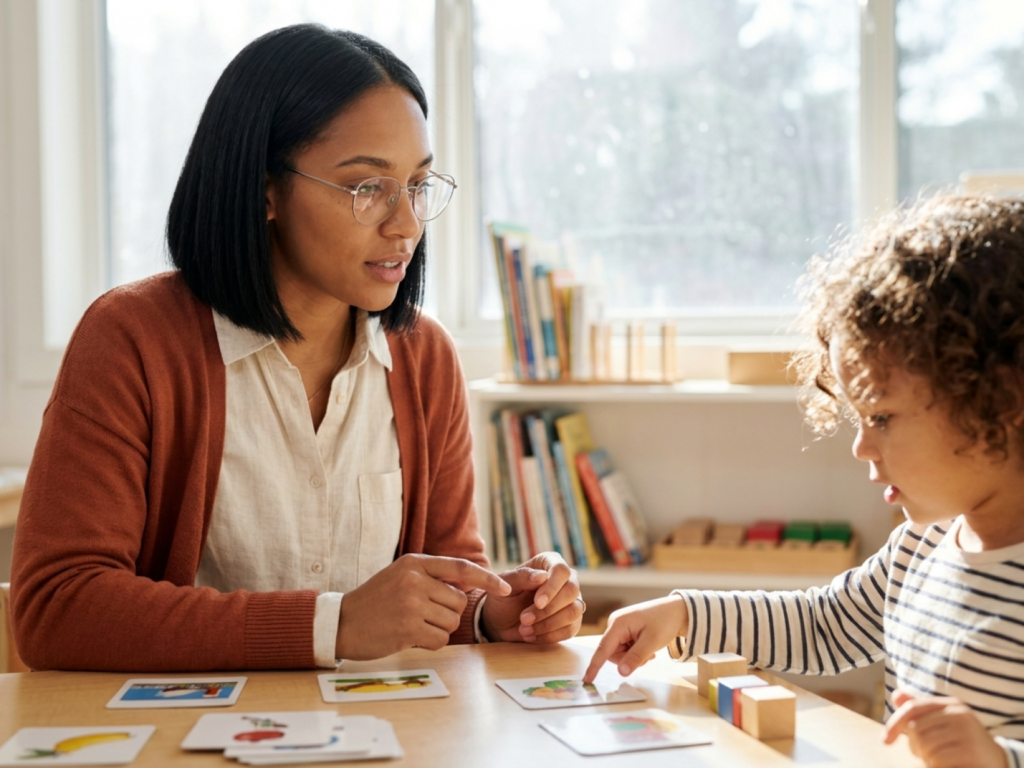
Instead of trying to sort children into types, educators often get better results from evidence-informed teaching strategies. One useful idea is multimodal instruction for children. This means presenting information in more than one way, such as speaking while showing a diagram, writing key words on the board, or using objects alongside explanation. Multimodal teaching does not mean trying to cover every sense at every moment. It means giving children multiple pathways into the same idea.
Other helpful strategies include short step-by-step directions, modeling, guided practice, repetition, and retrieval practice. A child may need to hear a rule, see it demonstrated, say it aloud, and then use it independently. For many children, especially those who are younger or who have slower processing speed, reducing working memory and cognitive load can make learning easier. That may mean breaking a task into smaller parts, keeping directions brief, and using visual reminders for sequence.
Movement can also support attention and memory when it is tied to the task. For example, acting out vocabulary words, using counters in math, or tracing letters while saying sounds can be useful. The key is not to choose one style forever, but to choose the right method for the goal.
How to support a child without rigid labels
Caregivers and teachers can support children best by observing patterns without locking them into learning-style labels in children. A good question is not, “What type is this child?” but, “What seems to help this child understand this lesson right now?” That shift keeps the focus on problem-solving.
Try offering choices. Some children may want to read directions silently first, then hear them explained. Others may want to sketch an idea before talking about it. A homework routine with planned breaks can help children sustain attention, especially for tasks that require sustained effort. When a child seems stuck, ask what part feels confusing: the words, the order, the memory load, or the speed of the task.
It also helps to praise strategy use rather than type. For example: “You used the diagram and then explained it back to me,” or “You broke the problem into steps.” This keeps learning flexible. Children benefit from knowing that there are many ways to approach a task and that needing support does not mean something is wrong with them.
When ongoing difficulty may need professional evaluation
If a child continues to struggle across settings, the issue may be more than a preference mismatch. Ongoing trouble with reading, writing, number skills, language, attention, memory, or organization can be related to learning difficulties in children, vision or hearing problems, anxiety, sleep loss, or another developmental concern. In those situations, a more complete picture is important.
A psychoeducational evaluation for learning concerns can help identify strengths and weaknesses in areas such as reading comprehension, phonological processing, attention, and written expression. The right referral may come from a pediatrician, school psychologist, special education team, or other qualified professional. The goal is not to attach a label for its own sake. It is to understand what is getting in the way so that supports are appropriate.
Families should seek guidance sooner rather than later if a child is falling behind, avoiding schoolwork, becoming distressed, or showing a sudden change in performance. Careful assessment can prevent unnecessary blame and can open the door to practical support.
When to take a closer look
- Do not use visual, auditory, or kinesthetic labels as a diagnosis.
- A child who struggles is not simply being difficult or lazy; there may be an underlying learning, attention, sensory, or emotional issue.
- If problems persist across subjects or settings, ask a qualified professional about evaluation.
- Sudden academic decline, headaches, hearing concerns, or vision complaints should be assessed medically.
Tools & Assistance
- Pediatrician or family doctor
- School psychologist or special education team
- Vision and hearing screening services
- Psychoeducational evaluation through school or clinic
- Teacher-parent planning meeting
FAQ
Are visual, auditory, and kinesthetic learners real?
Children do show preferences, but strong evidence does not support teaching only to one learning style. Most children benefit from several ways of learning.
Should I stop using the labels altogether?
It is usually better to treat them as loose observations, not fixed identities. Focus on what helps with a specific task.
What kind of teaching usually works best?
Clear explanation, modeling, practice, feedback, and multimodal instruction for children are often more useful than style matching.
When should I ask for an evaluation?
If a child has persistent difficulty with reading, writing, math, attention, or organization, speak with a pediatrician or school team about assessment.
Sources
- PubMed — Learning Styles: Concepts and Evidence
- PubMed — The long origins of the visual, auditory, and kinesthetic learning style model
- American Psychological Association — Learning Styles: Out of Fashion
Disclaimer
This article is for general information only and is not a substitute for medical, psychological, or educational evaluation. If you are concerned about a child’s learning, please consult a qualified professional.














Please log in to leave a comment.