
Intro
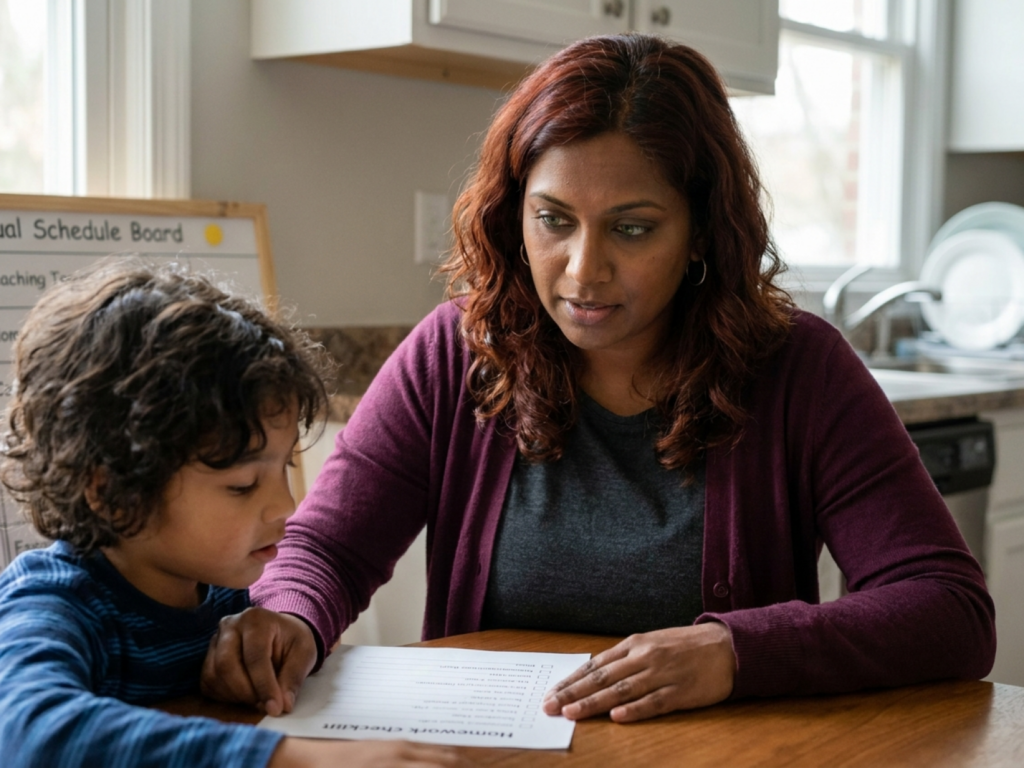
Many families reach a point where a child seems to be trying hard, yet learning still feels bumpy. Sometimes the issue is not a lack of ability or effort, but a mix of too much pressure and too little structure. When expectations keep rising and daily routines stay unclear, a child may become anxious, avoidant, forgetful, or emotionally overwhelmed.
This topic matters because stress can change how the brain pays attention, stores information, and uses memory during learning. At the same time, children often need predictable routines and clear steps to organize their thinking. The result is not a simple behavior problem or a simple academic problem. It is often a support problem, and it deserves a careful, compassionate response.
Highlights
Excessive achievement pressure can raise stress and make attention, memory, and learning less efficient.
A lack of structure can overload executive functions, especially working memory and task initiation.
A child who looks unmotivated may actually be overwhelmed, anxious, or unsure what step comes next.
Supportive routines, small goals, and predictable feedback often help learning more than pressure does.
Persistent struggles should prompt discussion with teachers and healthcare professionals, not blame.
Why pushing too hard can backfire
Children usually learn best when they feel stretched but still safe. When the emotional climate becomes dominated by high stakes, criticism, or constant correction, the stress response can begin to interfere with learning. Research on pupils shows that stress can narrow attention, reduce efficient memory encoding, and make it harder to retrieve what was learned later. In plain terms, the child may be present in body but not fully available for learning.
That matters because many school tasks depend on calm, flexible thinking. Reading comprehension, math reasoning, planning a project, and remembering instructions all draw on attention and working memory. If pressure keeps a child in a heightened arousal state, the brain may shift toward self-protection rather than exploration. The child may freeze, rush, avoid, or become tearful, not because they do not care, but because the task feels too threatening.
This does not mean all challenge is harmful. Healthy challenge builds resilience. The problem is chronic pressure without enough support, rest, and emotional safety. Children need adults who can notice the difference between motivation and strain, then adjust expectations before learning becomes linked with fear.
What lack of structure does to learning
Structure is not the same as strictness. It is the predictable framework that helps a child know what to do, when to do it, and how to finish it. For children who are still developing executive functions, structure acts like an external support system. It reduces the amount of planning, self-monitoring, and decision-making the child must do alone.
Without that framework, even capable children can struggle. A homework assignment may feel huge because the child cannot easily break it into steps. Mornings may become chaotic because no one has clarified the order of tasks. Transitions can trigger meltdowns because the child does not know what comes next. In these moments, the problem is often not defiance. It is cognitive overload.
Common forms of helpful structure include:
- consistent wake, meal, homework, and bedtime routines
- short, concrete instructions instead of multiple directions at once
- visual reminders, checklists, and timers
- same place, same time, same first step for repetitive tasks
These supports do not remove responsibility. They make responsibility more reachable.
How pressure and disorganization interact
Pressure and lack of structure often create a damaging loop. The child is told to do better, but the environment gives too little guidance to help success happen. As stress rises, attention becomes less stable, working memory gets weaker, and task initiation becomes harder. Then the child falls behind, which invites more pressure. The cycle can look like laziness from the outside while actually reflecting repeated failure under strain.
Recent research on parental achievement pressure suggests that this kind of pressure can negatively affect school adjustment. School adjustment includes not only grades, but also motivation, belonging, confidence, and the ability to manage daily demands. When a child feels evaluated instead of supported, they may become perfectionistic, avoidant, or emotionally flat. Some children stop trying because trying no longer feels safe.
This interaction is especially hard for children who already have fragile attention, language, or organization skills. They may need more scaffolding, not more criticism. A calm routine and realistic goal can be more therapeutic for learning than a long lecture or a bigger consequence.
Signs the child may be overloaded rather than defiant
It is worth slowing down when a child consistently struggles despite clear effort. Warning patterns can include starting work but not finishing it, forgetting instructions moments after hearing them, crying over small corrections, refusing tasks that once felt easy, or melting down after school because the day has used up all available coping capacity. Some children seem capable in one setting and helpless in another, which can suggest that environment and structure are major factors.
Other clues include physical signs of stress such as stomachaches, headaches, sleep problems, irritability, or frequent reassurance seeking. A child may also become unusually quiet, perfectionistic, or dependent on adults for every step. These patterns do not prove a single diagnosis. They do suggest that the child may be carrying more emotional or cognitive load than they can manage alone.
It is also important to consider other contributors such as ADHD, anxiety, learning disorders, sleep deprivation, vision or hearing problems, and language difficulties. A careful assessment can help separate pressure-related strain from other underlying issues. That distinction matters because the right support depends on the real cause.
What helps: small goals, clear routines, and confidence-building
Children usually respond better to encouragement that is specific and manageable. Expert guidance from child development clinicians often recommends small achievable goals, visible progress, and support that builds confidence. Rather than demanding a perfect outcome, it can help to define the next step and celebrate completion of that step. Small wins restore a sense of competence, which is essential for learning.
Practical structure can also lower the mental burden of everyday work. A visual checklist for homework can reduce dependence on working memory. Short movement breaks before homework can improve readiness and reduce restlessness. A focus-friendly workspace for children, with fewer distractions and the same materials available each day, can make starting easier. Calm consistent limit-setting can protect the routine without turning the whole process into a battle.
Useful strategies include:
- choose one routine to stabilize first, such as bedtime or homework
- break tasks into one or two steps at a time
- offer praise for effort, strategy, and persistence, not only grades
- use predictable rewards for follow-through when appropriate
- keep expectations realistic for the child’s age and current skill level
The goal is not to lower standards forever. The goal is to make standards teachable.
When to involve professionals
If a child continues to struggle despite better structure and lower pressure, it is sensible to ask for help. A pediatrician can review sleep, development, attention, and medical contributors. A school team can look at classroom demands, learning supports, and whether the child needs accommodations. Depending on the pattern, evaluation by a psychologist, occupational therapist, or speech-language pathologist may clarify executive function, motor, language, or learning needs.
Seek timely support if the child is avoiding school, losing confidence, showing intense anxiety, having repeated meltdowns, or drifting further behind academically. Early intervention can prevent years of frustration. Just as importantly, it can help parents move from a blame-based model to a support-based one. That shift often changes the emotional tone in the home and creates better conditions for learning.
If the situation feels stuck, do not wait for a crisis. Bring notes about routines, stress triggers, school reports, and what helps the child calm down or stay engaged. Concrete examples make it easier for professionals to see the pattern and recommend the right next step.
When to be concerned
- The child is becoming more anxious, withdrawn, or tearful around schoolwork.
- Homework or routines regularly end in shutdowns, conflict, or prolonged distress.
- The child is losing sleep, appetite, or confidence because of academic pressure.
- There is a sudden drop in grades, refusal to attend school, or frequent somatic complaints.
- You suspect a learning, attention, language, or emotional problem needs assessment.
Tools & Assistance
- Pediatrician or family doctor for an initial developmental and medical review
- School counselor, psychologist, or teacher conference for learning and routine support
- Child psychologist or neuropsychological evaluation when attention, anxiety, or learning concerns persist
- Occupational therapy or speech-language evaluation if executive function or language issues are suspected
- Home visual schedule, homework checklist, and consistent bedtime routine
FAQ
Can pushing a child too hard cause learning problems?
It can interfere with learning by increasing stress, reducing attention, and making school feel unsafe or overwhelming. It does not usually create a simple one-cause problem, but it can make existing difficulties much worse.
What is the difference between structure and pressure?
Structure gives predictable steps, routines, and support. Pressure adds threat, urgency, or criticism without enough help. Children usually need more of the first and less of the second.
How do I know if my child is lazy or overloaded?
A child who is overloaded often wants to succeed but cannot consistently organize, start, or tolerate the task. If the pattern is persistent, look for stress, attention, learning, sleep, or anxiety contributors rather than assuming laziness.
What should I try first at home?
Start with one predictable routine, one small goal, and one clear visual reminder. Keep instructions brief, praise effort, and reduce distractions before making demands more complex.
When should I ask for a professional evaluation?
If the problems are ongoing, causing distress, affecting school performance, or not improving with better routines and encouragement, a professional evaluation is appropriate.
Sources
- PubMed Central — Stress and Learning in Pupils: Neuroscience Evidence and its Relevance for Teaching and Learning
- PubMed Central — The effect of parental achievement pressure and self ...
- Child Mind Institute — When to Push Your Children
Disclaimer
This article is for educational purposes only and is not a diagnosis or treatment plan. If you are worried about a child’s learning, behavior, or emotional well-being, please consult a qualified pediatric or mental health professional.

















Please log in to leave a comment.