
Intro
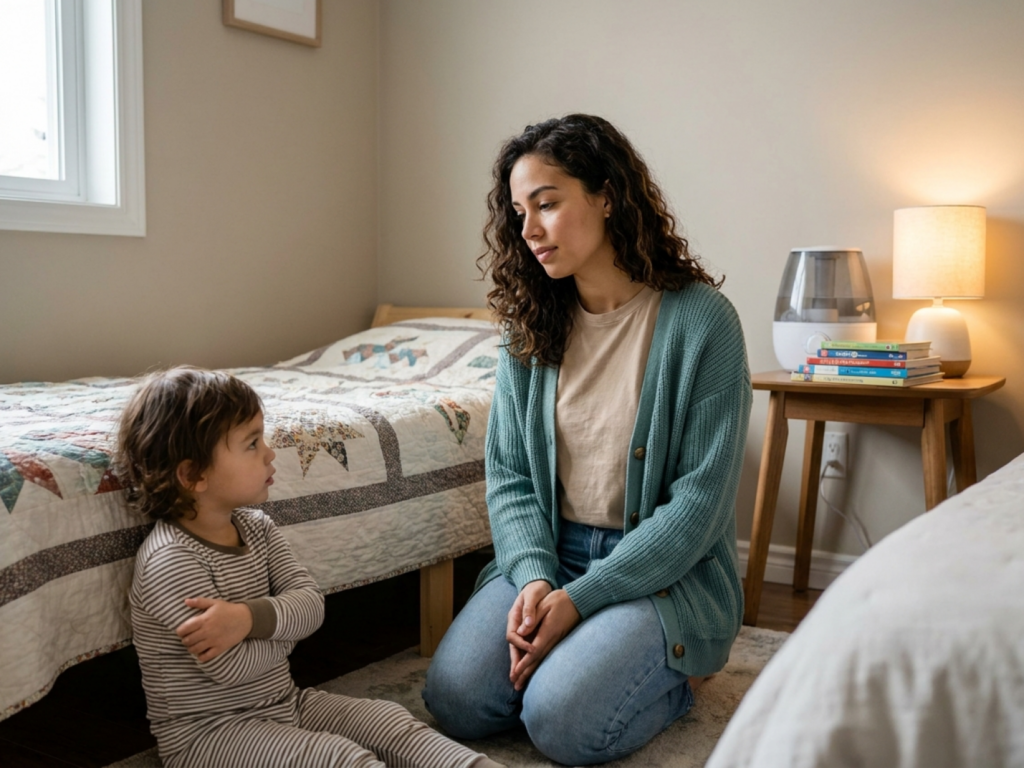
When a child refuses to go to bed, the evening can quickly become exhausting for everyone. Parents may feel pushed into repeated negotiations, and the child may seem oppositional, anxious, or simply impossible to settle. That experience is common, and it does not automatically mean there is a major problem. In many children, bedtime resistance reflects a mix of habit, developmental stage, and a nervous system that is not yet ready to switch off.
A helpful approach is to separate a single difficult night from a persistent pattern. Repeated resistance, delayed sleep onset, or staying out of bed after lights out can point to a behavioral bedtime problem, but sleep timing, anxiety, and medical issues can also contribute. The goal is not to force sleep. It is to understand why bedtime is hard and to respond in a way that is calm, structured, and medically thoughtful.
Highlights
Bedtime refusal is often behavioral, but it can also reflect delayed sleep onset, anxiety, or an underlying sleep disorder.
The most effective home strategies usually rely on consistent bedtime routines, predictable boundaries, and a calm return to bed.
A bedtime pass can help some younger children who repeatedly call out, leave the room, or seek extra reassurance after bedtime.
Persistent snoring, breathing pauses, daytime sleepiness, or major distress deserve medical review rather than repeated household battles.
What bedtime refusal usually means
Bedtime refusal is not one single behavior. A child may delay getting ready, argue about stories, leave the room repeatedly, ask for more drinks or bathroom trips, or become tearful the moment lights go out. In sleep research, these patterns are often grouped as bedtime resistance or behavioral bedtime problems. In practical terms, the issue is that the child is not cooperating with the transition from wakefulness to sleep.
That distinction matters because not every child who resists bed is being intentionally difficult. Some children are genuinely not sleepy at the family’s chosen bedtime, which is why clinicians think about delayed sleep onset and circadian timing. Others are overtired, which can paradoxically make it harder to fall asleep. Still others have learned that bedtime is the one part of the day where negotiation continues, so the behavior is reinforced. The response is usually more effective when adults focus on the pattern rather than on the last argument of the evening.
Common reasons a child does not want to sleep
Several factors can overlap. An inconsistent schedule is one of the most common. If bedtime shifts from night to night, the child’s internal clock may not have a stable cue for sleep. Evening stimulation also matters: bright light, active play, late snacks, and emotionally charged family interactions can all delay the transition into sleepiness. For some children, bedtime is also the hardest separation of the day, so separation distress at bedtime shows up as repeated requests for comfort or proximity.
Medical contributors should stay on the radar. Sleep-disordered breathing can fragment sleep and leave a child tired, irritable, or resistant the next evening. Pain, reflux, eczema itch, restless movements, medication effects, and anxiety can all disrupt sleep quality. In a medically literate framework, the key question is not only how the child refuses, but what is driving the refusal. Bedtime resistance in children is often a surface behavior with several possible upstream causes.
One useful concept is routine refusal in children: the child pushes back at the exact moment a transition is required. Bedtime is a common place for that pattern to emerge because it combines fatigue, separation, and limits.
What usually helps at home
The foundation is consistent bedtime routines. That means roughly the same sequence, at roughly the same time, most nights. The routine does not need to be long. In fact, a short predictable routine is often better than a drawn-out one because it lowers arousal and reduces opportunities for negotiation. A bath, teeth brushing, pajamas, a brief story, and lights out may be enough for many children.
It also helps to keep the response to resistance boring and predictable. If a child gets up, the adult can calmly return them to bed with minimal conversation. If the child asks for one more thing, the answer should be brief and consistent. Controlled choices during routines can reduce power struggles: for example, allowing the child to choose between two pajamas or two books without reopening the whole bedtime decision. That kind of structure can lower conflict while still preserving a sense of autonomy.
Screen exposure deserves attention as well. A screen-free bedtime routine is often easier on the nervous system because it avoids highly stimulating content and late-evening light exposure. Even when screens are not the main problem, removing them from the final part of the evening tends to make the rest of the routine more predictable.
Behavioral tools with evidence behind them
For some children, especially younger ones who repeatedly call out or leave the room, a structured behavioral approach can help. One studied option is the bedtime pass. In this method, the child receives one clearly defined pass that can be used once after bedtime for a brief request or a single exit from the room. After the pass is used, further requests are redirected with little discussion. The appeal of the method is that it sets a concrete limit while giving the child a small, predictable amount of control.
Evidence from behavioral sleep research suggests that interventions work best when the family uses them consistently, not selectively. That means every adult responding the same way, every night, for long enough to establish a new pattern. Praise also matters. When a child stays in bed, settles with less help, or completes the routine without arguing, specific positive reinforcement is more effective than vague approval. The goal is to reward the behavior you want to see again.
Merck Manuals and pediatric sleep reviews also emphasize schedule reset as a core step when bedtime has drifted late. A gradual reset toward an earlier, regular bedtime is often easier than trying to force an abrupt change, especially if the child is already overtired.
When bedtime refusal may signal a larger sleep problem
It is worth looking beyond behavior when the pattern is persistent, severe, or associated with daytime symptoms. If a child snores loudly, gasps, has breathing pauses, wakes unrefreshed, or seems unusually sleepy during the day, a sleep disorder should be considered. If bedtime refusal is paired with frequent nightmares, night waking episodes, marked anxiety, or visible distress around sleep, the issue may be broader than simple noncompliance.
A clinician may ask about sleep timing, evening routine, naps, medications, stressors, and family sleep habits. That history helps distinguish behavioral insomnia from problems such as sleep-disordered breathing or circadian misalignment. In some cases, a brief sleep diary is useful because it shows the actual pattern rather than the parent’s exhausted memory of a difficult week. The point is not to label the child quickly, but to identify the most likely driver of the problem.
Medication or sleep aids are not first-line for most children. A healthcare professional may occasionally discuss them, but only after a careful assessment of the cause, the child’s age, and the family context.
How families can lower conflict without giving up boundaries
Bedtime can become emotionally loaded because it is repeated every day and often happens when adults are tired. The most helpful mindset is usually steady, not forceful. Try to keep language brief, tone neutral, and expectations clear. Long explanations often increase stimulation rather than helping the child settle. A child who is already dysregulated rarely benefits from a debate about why sleep matters.
It can also help parents remember that progress is not measured by a perfect night. One easier evening does not fix the pattern, and one hard night does not mean the plan failed. Families usually do best when they protect the relationship while holding the limit. The adult’s job is to create safety, predictability, and a boring pathway back to bed. The child’s job is to gradually learn that bedtime is consistent and that sleep will come.
If the problem has been going on for weeks, or if the household is already running on exhaustion, it is reasonable to ask for professional help. A pediatrician, pediatric sleep specialist, or behavioral health clinician can help sort out whether this is mainly a routine problem or something that needs more targeted evaluation.
Seek medical review sooner if you notice:
- Loud snoring, gasping, or pauses in breathing during sleep.
- Marked daytime sleepiness, irritability, or falling asleep inappropriately.
- Pain, reflux symptoms, eczema itch, or restless leg-type discomfort at night.
- Severe bedtime anxiety, panic, trauma-related distress, or sudden sleep regression.
- A major change in sleep after a new medication or recent illness.
Tools & Assistance
- A 1 to 2 week sleep diary with bedtime, wake time, naps, and night wakings
- A pediatrician or family doctor for initial assessment
- A pediatric sleep specialist when sleep-disordered breathing or chronic insomnia is suspected
- A behavioral therapist or child psychologist for persistent bedtime resistance and anxiety
FAQ
Is it normal for a child to refuse to go to bed?
Yes, especially during developmental stages when bedtime resistance and separation distress are common. Repeated or severe refusal, however, deserves closer attention.
Does letting a child stay up later solve the problem?
Usually not. A later bedtime can worsen overtiredness and make sleep onset even harder, especially if the child’s schedule is already inconsistent.
What is a bedtime pass?
It is a behavioral tool that gives the child one limited, pre-set opportunity to leave the room or make a request after bedtime, then redirects further calls or exits.
When should I ask a doctor about bedtime refusal?
Seek medical advice if the problem persists, affects daytime functioning, or occurs with snoring, breathing pauses, pain, anxiety, or other concerning symptoms.
Sources
- Merck Manuals Professional Edition — Sleep Problems in Children - Pediatrics
- PubMed Central — Treating Bedtime Resistance with the Bedtime Pass: A Systematic Evaluation of a Behavioral Intervention
- PubMed Central — Assessment and treatment of common pediatric sleep disorders
Disclaimer
This article is for educational purposes only and does not replace individualized medical advice, diagnosis, or treatment. If a child’s sleep problem is persistent, severe, or concerning, please consult a qualified healthcare professional.

















Please log in to leave a comment.