
Intro
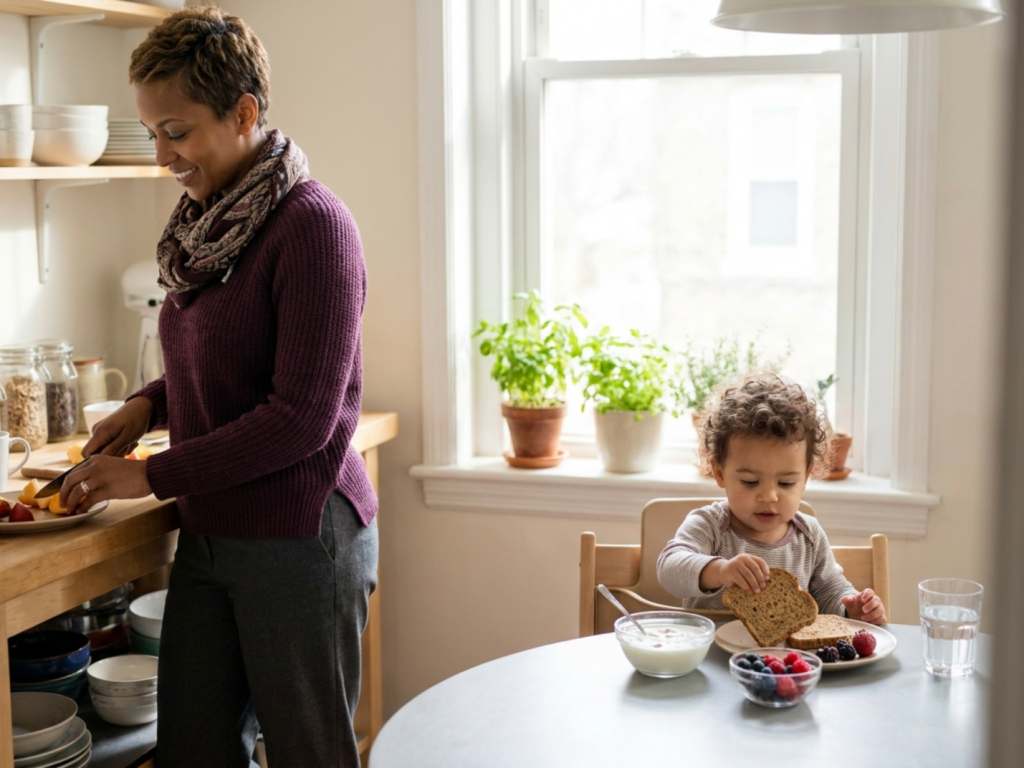
Healthy eating habits are built little by little. For children, the goal is not a perfect diet every day, but a calm, repeated pattern that makes nourishing food feel familiar, safe, and ordinary. When meals are predictable and pressure is low, children are more likely to listen to hunger and fullness cues, try new foods, and develop a stable relationship with eating.
This matters because childhood is a period of rapid growth, brain development, and changing energy needs. A supportive food environment can help protect nutrition, reduce mealtime conflict, and make healthy choices easier at home, at school, and on busy days.
Highlights
Children usually eat better when healthy food is routine, visible, and offered without pressure.
A healthy pattern is built around whole foods, fiber, and regular meals, not around strict rules or punishment.
Repeated exposure to new foods works better than forcing a child to eat them once.
Persistent food refusal, weight concerns, or distress around eating deserves professional attention.
Why healthy eating habits matter in childhood
In childhood, nutrition supports growth, immune function, cognitive development, and physical activity. It also helps children learn internal regulation: the ability to notice hunger, fullness, and satisfaction. Over time, those patterns can shape eating behavior in adolescence and adulthood. That is why a healthy diet for children is less about isolated meals and more about the daily pattern around food.
From a medical perspective, the quality of the overall diet matters more than any single food. A pattern that emphasizes vegetables, fruits, legumes, whole grains, and other minimally processed foods usually provides more fiber, vitamins, minerals, and satiety. Fiber helps with bowel regularity and can make meals more sustaining. In contrast, diets heavy in ultra-processed products may be energy dense but less satisfying, which can push children toward frequent snacking without enough nutrient variety.
For families, this means a child does not need to eat perfectly to be healthy. The goal is steady, repeated exposure to nourishing options, along with enough structure that food does not become a constant negotiation. When adults stay calm and consistent, children often feel more secure and eventually more willing to participate.
Create a predictable food environment
Children usually do better when meals and snacks happen at roughly consistent times. Predictability reduces grazing, helps appetite build between meals, and makes it easier for children to recognize real hunger. A regular rhythm also supports family life, because everyone knows when food is coming and does not need to bargain all day.
Try to make the environment work for the child instead of against the child. Keep water easy to reach. Offer meals at the table when possible. Limit screens during eating so the child can notice taste, texture, and fullness cues. When snacks are needed, choose ones that include some combination of protein, fiber, and healthy fat, such as yogurt, fruit, nut butter if age-appropriate and safe, beans, cheese, or whole-grain crackers.
Model the behavior you want to see. Children often copy what adults do more than what adults say. If caregivers eat vegetables, sit down for meals, and avoid constant snacking, those habits become the norm. Talking about food in a neutral way also helps. Food is not a reward, a punishment, or a moral test; it is part of caring for the body.
- Keep meal and snack times predictable.
- Offer water throughout the day.
- Use the table, not the sofa or car, as the usual eating place.
- Let adults model balanced portions and variety.
Build a balanced plate without overcomplicating it
Most families do best with a simple framework rather than a rigid menu. A practical plate for a child usually includes a fruit or vegetable, a source of protein, and a source of complex carbohydrate such as whole grains, potatoes, or beans. Healthy fats from foods like avocado, olive oil, seeds, nuts, or fatty fish can also support growth and satisfaction. Dairy or fortified alternatives may add calcium, vitamin D, and protein.
The World Health Organization recommends, for the general population, at least 400 g of fruits and vegetables per day, less than 10% of energy from free sugars, and ideally less than 5% for added benefit, less than 30% of energy from fat, less than 10% from saturated fat, trans fats below 1% of energy, and salt below 5 g per day. For children, these numbers are best used as a family benchmark rather than a strict scorecard. They point toward a diet that is rich in plant foods and low in excess sugar, salt, and heavily processed items.
Parents do not need to calculate every bite. A better strategy is to keep a range of useful foods at home and to repeat them often enough that they become familiar. Example meals can be simple: oatmeal with fruit, rice with beans and vegetables, eggs with toast and tomatoes, pasta with lentils, or yogurt with berries and seeds. The most helpful meals are often the ones that are realistic to prepare again tomorrow.
- Include fruit or vegetables at most meals.
- Choose whole grains more often than refined grains.
- Use protein foods to improve satiety and support growth.
- Offer sweets occasionally, but do not make them the center of the diet.
Respond to picky eating with calm consistency
Many children go through phases of refusal, neophobia, or strong food preferences. That does not automatically mean there is a medical problem. If picky eating in preschoolers is making mealtimes stressful, the most useful response is often calm repetition. Put a small portion of the food on the plate, allow the child to decide whether to eat it, and offer that same food again in future meals without pressure. Repeated exposure can improve acceptance over time.
It helps to separate the job of the adult from the job of the child. Adults decide what foods are served, when meals happen, and where eating takes place. Children decide whether and how much to eat from what is offered. This approach reduces power struggles and supports hunger and fullness awareness. It also prevents eating from becoming tied to anxiety or control.
Avoid bribing children with dessert, threatening consequences, or praising them only when they eat a certain amount. Those tactics can unintentionally increase resistance. Instead, describe foods in neutral terms, involve children in age-appropriate tasks like washing vegetables or stirring batter, and keep expectations modest. A child may need many exposures before accepting a new food, and a small tasting counts as progress.
If a child already accepts only a narrow range of foods, gradual food chaining may help: pair a familiar food with a very similar new one, such as a different shape of pasta, another fruit, or a new brand with similar texture. Small steps are still steps.
Reduce highly processed foods and added sugar in practical ways
Highly processed foods are often convenient, tasty, and heavily marketed to children, but they can crowd out more nutrient-dense choices. The goal is not to forbid every packaged food. The goal is to shift the pattern so that ultra-processed items are not the default at every meal and snack. This is often easier when the home environment makes the healthier option the easier option.
One useful strategy is to look at the timing of eating. Children are more likely to choose less nourishing snacks when meals are skipped or delayed. Regular meals can reduce the urge to graze on sweets and chips. Another strategy is to pair less preferred but helpful foods with familiar ones. For example, serve fruit with yogurt, vegetables with hummus, or whole-grain toast with eggs.
Reading labels can help caregivers notice added sugars, sodium, and portion size, but label reading should support the overall pattern rather than create anxiety. Many foods marketed to children are high in sugar or salt even when they look healthy. Over time, it is reasonable to make swaps such as plain yogurt instead of sweetened yogurt, water instead of sugary drinks, and whole-grain snacks instead of refined pastries.
Children are more likely to accept these changes when the tone is matter-of-fact. Families do not need to label foods as good or bad. A steadier message is simpler: some foods nourish the body more often, and some foods are occasional treats.
Know when to ask for extra help
Most eating challenges improve with routine, exposure, and patience, but some signs deserve professional review. If a child is losing weight, growing more slowly than expected, becoming fatigued, dehydrated, or avoiding many foods because of pain, nausea, choking fear, or sensory distress, a pediatric clinician should evaluate the situation. Feeding problems can sometimes reflect oral-motor issues, gastrointestinal discomfort, micronutrient deficiency, or anxiety around eating.
Caregivers should also seek help if meals regularly end in severe conflict, if the child eats only a very small set of foods, or if the family feels trapped in daily negotiations. A pediatric dietitian can help assess nutrient adequacy and suggest realistic changes. In some cases, a feeding therapist, occupational therapist, or speech-language pathologist may be appropriate, especially when chewing, swallowing, or texture tolerance is a concern.
Families should not wait for a crisis. Early guidance can prevent small issues from becoming entrenched habits. The most helpful plan is the one tailored to the child’s age, medical history, development, and family context.
When to seek medical advice
- Rapid weight loss, poor growth, or persistent fatigue needs prompt evaluation.
- Choking, coughing with meals, vomiting after eating, or trouble swallowing should be assessed.
- Extreme food restriction, panic at meals, or rigid eating rituals may need specialist support.
- Signs of dehydration or frequent constipation should not be ignored.
- If meals are a daily battle, ask a pediatric clinician for guidance early.
Tools & Assistance
- A 1-2 week food and mood diary to notice patterns
- A simple weekly meal plan with repeatable breakfasts, lunches, and snacks
- A grocery list focused on fruits, vegetables, whole grains, protein foods, and water
- A pediatrician or registered dietitian for growth and nutrition review
- School or childcare meal coordination for children who eat away from home
FAQ
How can I encourage healthy eating without pressuring my child?
Offer regular meals, include a variety of foods, and let the child decide how much to eat from what is served. Calm repetition usually works better than force.
What if my child refuses vegetables?
Keep offering small portions in a low-pressure way and pair vegetables with familiar foods. Many children need repeated exposure before they accept a new taste.
Are treats allowed in a healthy eating pattern?
Yes. Occasional sweets can fit into a balanced diet. The key is that treats do not replace most meals and snacks.
When should I worry about picky eating?
Seek advice if food refusal affects growth, energy, swallowing, or family life, or if the child eats an extremely limited range of foods.
Sources
- World Health Organization — Healthy diet
- PubMed Central — Essentials of Healthy Eating: A Guide
- MedlinePlus — Eating habits and behaviors
Disclaimer
This article is for general educational purposes and does not replace medical advice. If a child has weight loss, growth concerns, swallowing problems, or severe food restriction, consult a qualified healthcare professional.
















Please log in to leave a comment.