
Intro
Mobility after delivery is not simply about getting out of bed. It reflects how the pelvis, abdominal wall, pelvic floor, nerves, joints, wounds, circulation, sleep deprivation, and pain control all interact during recovery. For many people, movement returns steadily over days to weeks; for others, pelvic girdle pain, perineal trauma, cesarean wound pain, or pelvic floor dysfunction can make recovery slower and more emotionally demanding.
This article explains what is known about mobility after birth, why delivery type matters, how pelvic support may change, and when persistent limitations deserve professional assessment. The goal is not to set a rigid timeline, but to help you understand what recovery can look like and when to ask for help.
Highlights
Early mobility after birth varies by delivery mode, pain burden, anesthesia effects, fatigue, and complications.
Persistent pregnancy-related pelvic girdle pain is more likely when pain is severe, body mass index is higher, or generalized hypermobility is present.
Vaginal birth, especially operative vaginal delivery, may increase pelvic organ mobility and influence later pelvic floor support.
Gradual activity progression, individualized postpartum pain control, and pelvic floor assessment can support safer recovery.
New leg swelling, chest pain, shortness of breath, heavy bleeding, fever, wound problems, or neurological symptoms require prompt medical review.
What mobility means after birth
Mobility after delivery includes walking, standing from a chair, climbing stairs, lifting the baby, turning in bed, toileting, and gradually returning to exercise or work. Clinically, it is shaped by musculoskeletal recovery, cardiovascular adaptation, wound healing, pelvic floor function, neurological symptoms, and pain. A person may be technically able to walk but still have limited functional mobility if each step increases pelvic pain, bladder pressure, incisional pulling, dizziness, or fear of losing control of urine or stool.
The first postpartum days are often dominated by acute factors: uterine cramping, perineal swelling, cesarean incision pain, anemia, sleep disruption, neuraxial anesthesia effects, and the physical demand of feeding and newborn care. Later, the limiting factors may change. Some people recover steadily; others develop persistent pregnancy-related pelvic girdle pain, coccyx pain, abdominal wall weakness, scar sensitivity, pelvic heaviness, or activity-related leakage.
A supportive approach treats mobility as a graded recovery process rather than a test of willpower. The useful clinical question is not whether movement hurts at all, but whether symptoms are improving, whether function is expanding, and whether any symptom pattern suggests a complication that needs assessment.
How delivery type shapes early movement
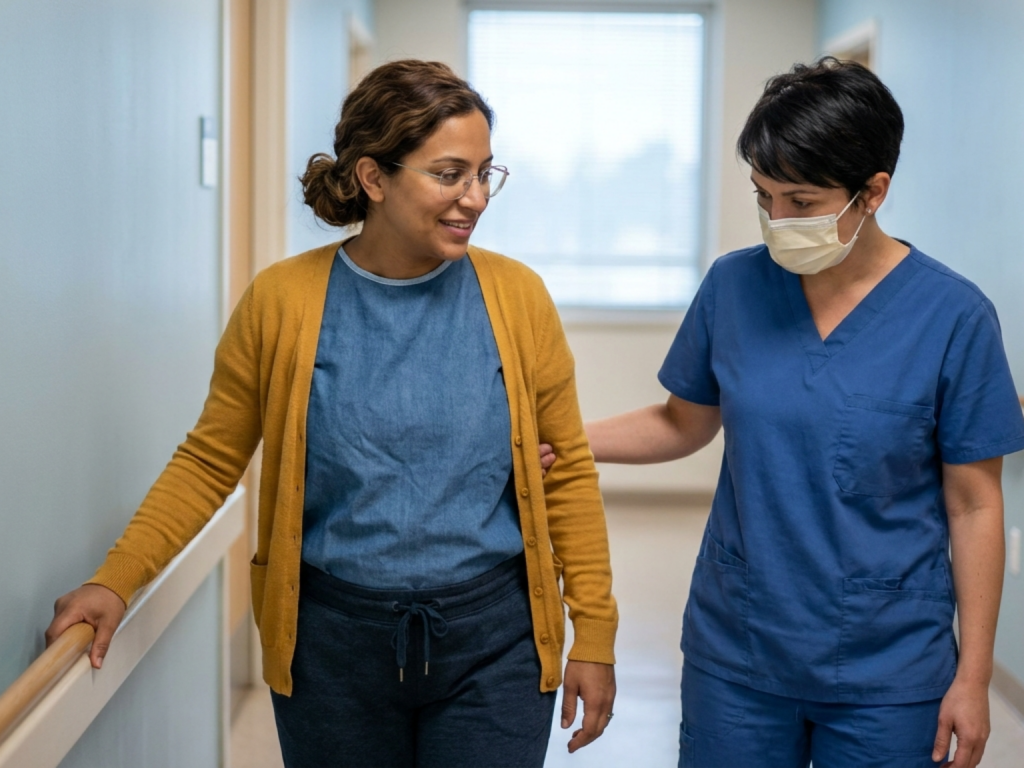
Early ambulation after delivery is often encouraged when it is safe because movement supports circulation, bowel function, respiratory mechanics, and confidence with daily activities. However, the pace is not the same for every birth. After an uncomplicated vaginal birth, many people stand and walk within hours. After cesarean birth, recovery may be slower because abdominal surgery, anesthesia, urinary catheter removal, and incision pain can affect posture, transfers, and step length. Assisted vaginal birth may involve more perineal trauma or pelvic floor loading, which can make sitting, standing, and walking feel unexpectedly difficult.
Research comparing postpartum mobility patterns has found that recovery of movement differs by delivery mode, which matters because reduced mobility can contribute to venous thromboembolism risk assessment. This does not mean that every person who moves slowly is in danger, but it does mean immobility should be noticed, documented, and discussed when other risk factors are present.
First-day postpartum pain control is also central. Under-treated pain can prevent deep breathing, upright posture, and safe walking; over-sedation can impair balance and newborn care. People recovering from operative vaginal birth may need advice specific to forceps or vacuum birth recovery, including how perineal pain, swelling, or suspected obstetric anal sphincter injury changes movement goals. Postpartum recovery after vacuum birth should be individualized rather than compared with an uncomplicated birth.
Pelvic girdle pain and persistent limitation
Pelvic girdle pain refers to pain around the sacroiliac joints, pubic symphysis, buttocks, hips, or posterior pelvis that may worsen with walking, rolling in bed, stairs, standing on one leg, or carrying weight. It can start during pregnancy and continue after delivery. For many people it improves as hormones, load, sleep, and activity patterns change. For some, it becomes a long-term mobility issue that affects exercise, work, intimacy, and caregiving.
Long-term studies of pregnancy-related pelvic girdle pain suggest that persistent symptoms are not random. Higher body mass index, greater pain intensity, and generalized hypermobility have been identified as determinants of poorer long-term outcome. These factors do not diagnose an individual outcome, but they help explain why two people with similar births may recover differently. Hypermobility can mean that joints have greater range but may need more muscular control for stability; higher pain burden may limit movement enough to reinforce weakness, guarding, and reduced confidence.
Because pelvic girdle pain can overlap with lumbar spine pain, hip pathology, nerve irritation, pelvic floor overactivity, or inflammatory disease, persistent or worsening pain deserves clinical review. Helpful assessment may include gait, single-leg loading, hip strength, abdominal wall function, pelvic floor coordination, and pain behavior during real tasks such as lifting a car seat or climbing stairs. Management is usually individualized and may involve education, targeted physiotherapy, load modification, and gradual return to activity.
Pelvic floor and organ support changes
Childbirth can change pelvic floor support. The pelvic floor is a layered system of muscle, fascia, connective tissue, nerves, and coordinated reflexes that supports the bladder, uterus, vagina, rectum, and continence mechanisms. It also contributes to posture, pressure management, sexual comfort, and trunk stability. When it is painful, weak, overactive, poorly coordinated, or injured, mobility may be affected even if the legs and spine are strong.
Evidence on pelvic organ mobility suggests that vaginal birth can increase the mobility of pelvic organs, and that operative vaginal delivery may have a greater effect on pelvic support. Increased mobility does not automatically mean prolapse or disability, but it may relate to sensations of heaviness, dragging, pressure, urinary leakage, bowel urgency, or difficulty tolerating impact exercise. These symptoms can change how a person walks, lifts, coughs, runs, or carries the baby.
Pelvic floor recovery is not only about doing contractions. Some people need strengthening; others first need relaxation, scar desensitization, breathing coordination, bowel habit support, or treatment for pain. A pelvic health physiotherapist or clinician can help distinguish weakness from guarding and can advise when to resume higher-load activities. New or severe bladder or bowel control problems, vaginal bulge symptoms, or pain that prevents basic mobility should be assessed rather than normalized.
Building mobility safely over months
A practical recovery plan usually progresses from essential movement to conditioning. In the first days, the priority is safe transfers, short walks, circulation, toileting, and comfortable feeding positions. In the first weeks, walking tolerance, gentle mobility, breath work, and low-load core and pelvic floor coordination may be reasonable if cleared by the care team. Over subsequent months, people may rebuild strength, endurance, balance, and impact tolerance. The exact pace depends on bleeding, wound healing, pain, sleep, feeding demands, mood, anemia, and any birth injury.
Progress is often best judged by response over the next 24 hours. Mild muscular fatigue can be expected, but escalating pelvic pain, heavier bleeding, new pressure, urinary leakage that worsens, incision pain that sharpens, or limping that persists are signals to reduce load and seek guidance. Postpartum pain control is part of mobility care, not a separate comfort issue, because pain changes breathing, posture, sleep, and willingness to move.
Good mechanics can reduce unnecessary strain: exhale during effort, avoid breath-holding with lifts, keep loads close to the body, use both arms for heavier baby gear, and split chores into shorter sessions. Return to running or high-impact exercise is usually safer after strength, pelvic floor control, and symptom response have been assessed. For some people, especially after cesarean birth, perineal trauma after assisted birth, pelvic girdle pain, or significant deconditioning, professional rehabilitation can prevent a cycle of repeated flare-ups.
When long-term effects need review
Some long-term effects after delivery are common, but common does not mean irrelevant. Persistent pelvic heaviness, pain with walking, urinary leakage, bowel urgency, painful intercourse, scar restriction, numbness, or fear of movement can reduce quality of life and deserve care. A postpartum visit may be too brief to capture these issues unless they are named clearly, so it can help to track triggers, distance walked, pain location, bleeding changes, bladder or bowel symptoms, and what improves or worsens the problem.
Medical review is especially important when symptoms are new, severe, progressive, or asymmetric. Calf swelling or pain on one side, chest pain, shortness of breath, fainting, fever, heavy bleeding, wound opening, spreading redness, severe headache, neurological weakness, saddle numbness, or loss of bladder or bowel control should be treated as urgent. These symptoms are not explained by ordinary postpartum soreness.
For non-urgent but persistent limitations, a multidisciplinary approach may be useful. Obstetric clinicians, midwives, primary care physicians, pelvic health physiotherapists, mental health professionals, lactation specialists, and pain specialists may each address part of the recovery picture. The aim is not to medicalize every ache, but to prevent avoidable disability and help the person regain mobility in a way that respects healing, birth experience, and daily caregiving demands.
Seek urgent care for these signs
- Shortness of breath, chest pain, coughing blood, fainting, or sudden severe weakness
- One-sided calf pain, warmth, redness, or swelling, especially with reduced mobility
- Heavy bleeding, large clots, fever, foul-smelling discharge, or feeling acutely unwell
- Cesarean incision opening, pus, spreading redness, or rapidly worsening wound pain
- New saddle numbness, leg weakness, or loss of bladder or bowel control
Tools & Assistance
- Postpartum checkup with an obstetric clinician, midwife, or primary care professional
- Pelvic health physiotherapy assessment for pelvic girdle pain, prolapse symptoms, leakage, or scar pain
- Individual venous thromboembolism risk assessment if mobility is limited or other risk factors are present
- Pain management review to support safe walking, sleep, feeding positions, and daily function
- Symptom diary tracking walking tolerance, pain location, bleeding changes, bladder and bowel symptoms
FAQ
How soon should I walk after delivery?
Many people are encouraged to walk as soon as it is medically safe, but timing depends on delivery type, anesthesia, bleeding, pain, dizziness, and complications. Ask your care team before getting up for the first time if you feel weak or numb.
Is pelvic pain months after birth normal?
Pelvic discomfort can improve gradually, but pain that limits walking, stairs, sleep, work, or caregiving should be assessed. Persistent pregnancy-related pelvic girdle pain may need targeted rehabilitation.
Can vaginal birth affect pelvic organ support?
Yes. Research suggests vaginal birth, particularly operative vaginal delivery, can increase pelvic organ mobility. This does not mean everyone will develop prolapse, but pelvic heaviness, bulge symptoms, or leakage should be discussed with a clinician.
When can I return to running or high-impact exercise?
There is no single safe date for everyone. A gradual return is best after pain, bleeding, pelvic floor symptoms, strength, and impact tolerance have been reviewed, especially after cesarean birth, assisted birth, or pelvic girdle pain.
What if I feel embarrassed about bladder or bowel symptoms?
These symptoms are common enough that clinicians and pelvic health physiotherapists address them routinely. They are valid medical concerns, and early assessment can improve comfort, confidence, and mobility.
Sources
- PubMed Central (NIH) — BMI, pain and hyper-mobility are determinants of long-term outcome after pregnancy-related pelvic girdle pain
- PubMed — The effect of childbirth on pelvic organ mobility
- PubMed — Assessment of the mobility of mothers postpartum to identify those at greatest risk of venous thromboembolism
Disclaimer
This article is for general medical information and does not replace evaluation, diagnosis, or treatment by a qualified healthcare professional. Seek urgent care for severe or rapidly worsening symptoms.















Please log in to leave a comment.