
Intro
When a child is injured, even a minor accident can feel frightening. A calm, structured response helps you protect the child from further harm, recognize red flags, and decide whether home care, urgent clinical advice, or emergency services are needed.
This article explains common childhood injuries and immediate first aid principles. It is intended for medically literate readers, while still emphasizing that first aid is supportive care, not a substitute for assessment by a qualified healthcare professional.
Highlights
Start with safety, responsiveness, airway, breathing, and circulation before focusing on the visible injury.
Severe bleeding, breathing difficulty, altered consciousness, suspected spinal injury, serious burns, and possible fractures need prompt medical attention.
Children can deteriorate quickly, so reassessment after first aid is as important as the first intervention.
Prevention, supervision, and age-appropriate teaching reduce risk but never eliminate the need to know basic emergency actions.
First principles: stay safe, assess, and call for help early
The first priority is scene safety. Do not rush into traffic, fire, electrical danger, deep water, or an unstable structure. If the environment is unsafe, call emergency services and follow dispatcher instructions. Once safe, approach the child calmly, introduce yourself if appropriate, and check responsiveness. A crying child is breathing and perfusing, but still may have significant injury; a quiet, pale, confused, or floppy child warrants particular concern.
Use a rapid primary survey: airway, breathing, circulation, disability, and exposure. Look for airway obstruction, abnormal breathing, severe bleeding, cyanosis, altered level of consciousness, seizure activity, deformity, or signs of shock. Keep the child warm and avoid unnecessary movement. If the child is not breathing normally, call emergency services immediately and begin age-appropriate resuscitation if trained or guided by the dispatcher.
Ask another adult to call for help, bring a first aid kit, and supervise other children. If you are alone, call emergency services on speakerphone so your hands remain free. Give concise information: the child’s age, mechanism of injury, current breathing and responsiveness, major bleeding, suspected poisoning or choking, and exact location. First aid is a bridge to clinical care; when you are uncertain, it is safer to seek professional advice early.
Bleeding, cuts, and embedded objects
Most minor cuts can be managed with pressure, cleaning, and dressing, but uncontrolled bleeding is an emergency. Put on gloves if available. Apply firm direct pressure over the wound with a clean cloth or sterile dressing. If blood soaks through, add more material on top rather than repeatedly removing the dressing, because removal may disrupt clot formation. Elevate the injured part if this does not worsen pain or suspected fracture.
For minor wounds, rinse visible dirt under clean running water and cover with an appropriate dressing. Avoid applying powders, butter, or unverified remedies. Monitor for increasing redness, swelling, warmth, discharge, worsening pain, fever, or red streaking, which may require medical review. Tetanus status may also matter, especially with dirty, puncture, or animal-related wounds.
If an object is embedded, such as glass or a large splinter, do not pull it out. Stabilize it with padding and seek urgent medical help, because removal can worsen bleeding or tissue injury. Call emergency services for spurting blood, persistent heavy bleeding, suspected arterial injury, amputation, deep penetrating wounds to the chest, abdomen, neck, or head, or if the child becomes pale, drowsy, clammy, or less responsive.
- Apply continuous firm pressure for significant bleeding.
- Keep the child lying down if they appear faint or shocked.
- Do not give food or drink if surgery or sedation might be needed.
Burns, scalds, and electrical injuries
Burns in children are commonly caused by hot drinks, bath water, cooking surfaces, flames, chemicals, and electricity. Immediate cooling limits tissue damage. Cool the burn under cool running water for at least 20 minutes as soon as possible. Remove loose clothing or jewelry near the burn, but do not remove anything stuck to the skin. Cover the area with a clean, non-fluffy dressing or plastic film after cooling.
Do not use ice, butter, toothpaste, oils, or adhesive dressings on the burn. These can worsen injury or complicate assessment. Keep the child warm overall while cooling only the burn, especially infants and toddlers, who are more vulnerable to hypothermia. Pain can be severe; seek clinical advice about appropriate analgesia rather than improvising doses.
Urgent medical assessment is needed for burns involving the face, hands, feet, genitals, major joints, airway risk, circumferential burns, chemical or electrical burns, large or deep burns, blistering in very young children, or any burn associated with smoke inhalation. Signs of inhalation injury include soot around the mouth or nose, hoarseness, coughing, wheeze, breathing difficulty, facial burns, or exposure in an enclosed fire. Electrical injuries require evaluation even when the skin injury looks small, because deeper tissue and cardiac effects may be hidden.
Choking, suffocation risk, and airway emergencies
Choking is a time-critical emergency and prevention is central. High-risk foods and objects include whole grapes, nuts, popcorn, hard sweets, coins, button batteries, small toy parts, balloons, and pieces of food that are round, firm, or compressible. Choking prevention in young children includes close supervision during meals, seated eating, cutting foods appropriately, keeping small objects out of reach, and choosing toys by age and developmental ability.
If a child is coughing forcefully, encourage coughing and do not perform blind finger sweeps. Intervene if the cough becomes ineffective, the child cannot breathe or speak, cyanosis develops, or the child becomes weak or silent. Age-appropriate choking first aid differs between infants and older children, so caregivers should learn and refresh practical skills through reputable first aid or CPR training. If choking is severe, call emergency services promptly, or ask someone else to call while you begin first aid.
If the child becomes unresponsive, place them on a firm surface, call emergency services if not already done, and start CPR if trained or instructed. Look in the mouth only if you can clearly see an object; do not sweep blindly, as this can push the object deeper. After a significant choking episode, medical assessment may be needed even if the child appears better, particularly if coughing, wheeze, drooling, chest discomfort, fever, or persistent breathing symptoms occur.
Safe sleep suffocation prevention is also part of injury prevention in infants. Keep sleep spaces free of pillows, loose bedding, and small objects, and follow local safe sleep guidance from healthcare professionals.
Falls, head injuries, and suspected neck or spine injury
Falls are common as children learn to roll, climb, run, cycle, and play sports. Many bumps are minor, but the mechanism and the child’s neurological status matter. Seek urgent advice for loss of consciousness, repeated vomiting, worsening headache, seizure, confusion, abnormal behavior, weakness, unequal pupils, bleeding or fluid from the ear or nose, persistent drowsiness, or a high-energy mechanism such as a fall from height, road traffic injury, or impact with significant force.
If you suspect cervical spine injury, keep the child still and call emergency services. Mechanisms include diving accidents, high-speed collisions, falls with neck pain, numbness, weakness, or any head injury with altered consciousness. Do not twist the neck, sit the child up, or remove a helmet unless airway access is impossible and you are trained to do so. Reassure the child and support the head in a neutral position if you can do this safely.
For minor head injury without red flags, observe closely. A child may sleep, but caregivers should be able to rouse them and confirm normal breathing, color, and responsiveness according to clinical advice. Return for medical review if symptoms evolve. Concussion awareness in children is important because symptoms may include headache, dizziness, nausea, light sensitivity, slowed thinking, mood change, sleep disturbance, or difficulty concentrating. Return to school and sport should be gradual and guided by healthcare professionals when concussion is suspected.
Sprains, strains, fractures, and limb injuries
Children’s bones and growth plates can be injured even when swelling or bruising is initially modest. Treat visible deformity, refusal to use a limb, refusal to bear weight, focal bony tenderness, marked swelling, severe pain, numbness, or a limb that looks pale or cold as possible fracture until assessed. Keep the child still and support the injured area in the position found. Do not attempt to straighten a deformed limb.
Control bleeding with pressure if there is an open wound. Immobilize the limb with padding or a splint only if you can do so without increasing pain or delaying emergency care. Apply a wrapped cold pack intermittently to reduce pain and swelling, avoiding direct ice contact with skin. Remove tight rings, bracelets, or footwear early if swelling is likely, unless removal causes additional harm.
Call emergency services for open fractures, major deformity, loss of pulses or sensation, severe pain, suspected pelvis, femur, spine, or skull fracture, or injury associated with significant trauma. For less severe injuries, arrange urgent clinical assessment, especially if the child will not bear weight or use the limb normally. Do not give food or drink when sedation or an operation may be possible, and avoid giving medication outside professional or label guidance.
Fainting, shock, and monitoring after an injury
Children may faint from pain, fear, dehydration, overheating, prolonged standing, or seeing blood. Lay the child flat, raise the legs if there is no injury that makes this unsafe, loosen tight clothing, and ensure fresh air. If recovery is rapid and complete, seek routine advice as appropriate; however, collapse during exercise, chest pain, palpitations, persistent confusion, seizure-like activity, cyanosis, significant injury from the fall, or known cardiac disease requires urgent assessment.
Shock after injury may be hypovolemic, neurogenic, distributive, or related to pain and distress. Warning signs include pallor, cool clammy skin, fast breathing, tachycardia, weak pulse, lethargy, agitation, thirst, dizziness, or reduced urine output. Children can maintain blood pressure until late, so a normal reading does not exclude serious compromise. Keep the child warm, lying still, and reassured while awaiting help.
Reassessment is essential. Check breathing, color, pain, bleeding, swelling, mental status, and limb circulation repeatedly. Document times if possible: when the injury happened, when symptoms began, when first aid was started, and any changes. This information helps clinicians. If symptoms worsen or your concern increases, escalate care even if the initial injury seemed minor.
Prevention and a practical family first aid plan
Good prevention is developmental. Child safety basics by age include safe sleep and choking precautions for infants, stair gates and locked hazardous products for toddlers, road and water safety for preschoolers, and sports and risk-taking education for older children. Home safety for children should be revisited as soon as a child learns a new skill, such as rolling, climbing, opening containers, or riding independently.
Sports safety for children includes properly fitted protective gear, safe playing environments, hydration, warm-up routines, and an agreed response plan for head injury, heat illness, asthma symptoms, anaphylaxis, or severe bleeding. Coaches and caregivers should know how to access emergency services and where first aid equipment is stored.
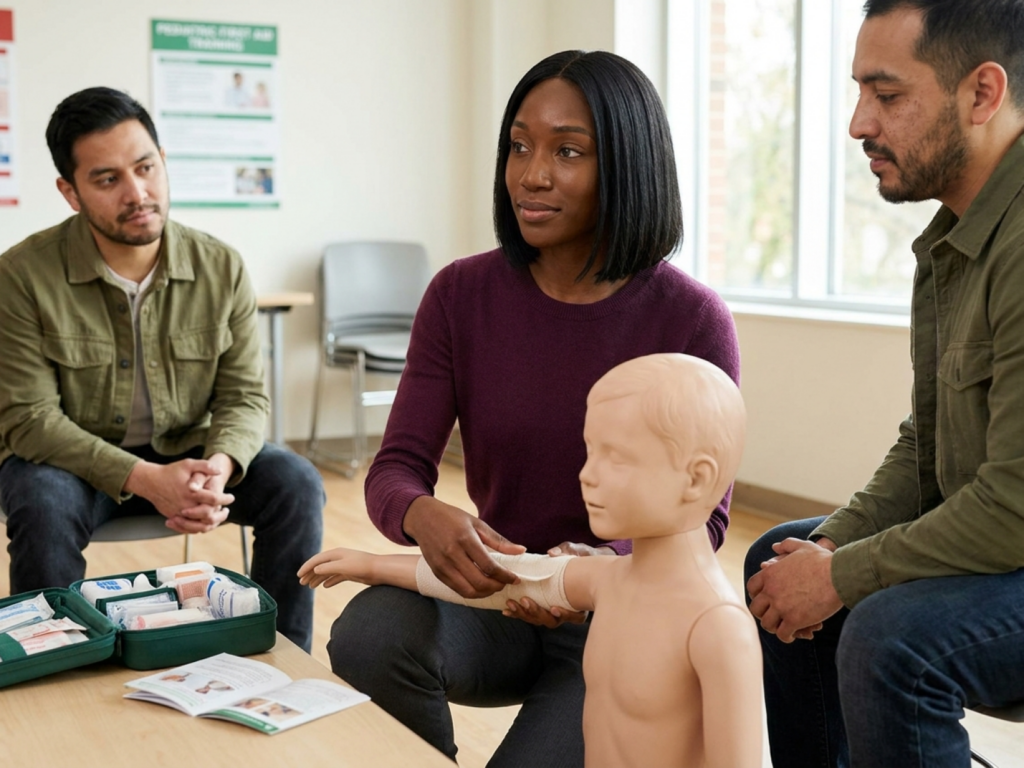
A family plan reduces panic. Keep a stocked first aid kit, emergency numbers, the child’s medical conditions, allergies, medications, and caregiver contact details accessible. Learn CPR, severe bleeding control, burn first aid, and age-appropriate choking first aid from a reputable provider. Review the plan with babysitters, grandparents, schools, and sports leaders. The goal is not to create fear; it is to give caring adults a calm, shared script for the moments when a child needs help quickly.
Seek urgent help now if
- The child is not breathing normally, is unresponsive, or has blue or grey color around the lips.
- There is severe bleeding, a deep penetrating wound, or signs of shock such as pallor, clamminess, or unusual drowsiness.
- You suspect neck, spine, skull, pelvis, femur, or open fracture injury.
- A burn is large, deep, chemical, electrical, on the face or genitals, or associated with smoke inhalation.
- The child has choking with ineffective cough, persistent breathing symptoms, or becomes unconscious.
Tools & Assistance
- Call local emergency services for life-threatening symptoms or major trauma.
- Use speakerphone for dispatcher-assisted CPR instructions if a child is not breathing normally.
- Keep a stocked first aid kit with gloves, dressings, bandages, burn coverings, and cold packs.
- Attend a pediatric first aid and CPR course and refresh skills regularly.
- Contact a pediatrician, urgent care service, or poison information service when injuries or exposures are uncertain.
FAQ
Should I move an injured child after a fall?
Avoid moving the child if there is neck, spine, head, pelvis, or major limb injury concern, unless there is immediate danger. Call emergency services and keep the child still.
Can I use ice directly on a burn?
No. Cool burns with cool running water, not ice. Ice can worsen tissue injury and increase the risk of hypothermia in children.
When should a child with a possible broken bone be assessed?
Seek medical assessment if there is deformity, severe pain, swelling, focal bony tenderness, numbness, an open wound, or refusal to use the limb or bear weight.
What if my child seems fine after choking?
If there was severe choking or ongoing cough, wheeze, drooling, chest discomfort, fever, or breathing change, the child should be assessed because an object or airway irritation may remain.
Do I need formal first aid training?
Training is strongly recommended. Reading helps, but hands-on practice improves confidence and accuracy for CPR, choking first aid, bleeding control, and emergency decision-making.
Sources
- NHS — What to do if your child has an accident
- MedlinePlus — Broken bone: MedlinePlus Medical Encyclopedia
- PubMed — Preventing choking and suffocation in children
Disclaimer
This article is for general medical education and first aid awareness only. It does not diagnose, prescribe, or replace urgent care, emergency services, or advice from a qualified healthcare professional.















Please log in to leave a comment.