
Intro
Children often grieve in waves. They may cry intensely, ask repeated questions, or seem withdrawn, then return to play, schoolwork, or ordinary conversation. This apparent shift does not mean the loss has been forgotten or that the child is grieving incorrectly. Children’s emotional reactions are often intermittent because their understanding, attention, and capacity to tolerate distress are still developing.
Support usually involves honest communication, dependable routines, room for feelings, and repeated opportunities to reconnect with trusted adults. The aim is not to eliminate grief, but to help a child feel safe enough to move in and out of it while continuing to develop, learn, and participate in everyday life.
Highlights
Grief that appears in brief, recurring waves can be a normal response in children.
Children may revisit the loss as their cognitive and emotional understanding develops.
Honest, age-appropriate answers are generally more helpful than euphemisms or forced reassurance.
Predictable routines and supportive adults can provide stability while emotions fluctuate.
Persistent impairment, safety concerns, or severe distress warrants professional assessment.
Why grief can come and go
Adult observers may expect grief to look continuous, but children often move between distress and ordinary activity. A child may become tearful when hearing a familiar song, playing with a toy associated with the deceased person, reaching a birthday, or realizing that the person will not attend a future event. At other times, the child may laugh, play, or focus intently on a task. These changes can be unsettling for caregivers, but they are not automatically evidence of denial, indifference, or emotional dysfunction.
Intermittent grief can reflect several developmental processes. Young children have limited emotional stamina and may need breaks from painful feelings. Play and routine activities can temporarily restore a sense of safety. Children also tend to understand permanence gradually. A preschool child may know that someone has died but not fully understand that death is irreversible. An older child may understand permanence but only later grasp its social, practical, or existential implications.
Grief may therefore reappear at new developmental stages or during transitions such as starting school, moving home, puberty, or forming significant relationships. Anniversaries and holidays can intensify reactions, but an emotional wave may also occur without an obvious trigger. The pattern is usually more informative than a single episode: caregivers should consider duration, intensity, recovery, and the effect on daily functioning.
Talk honestly and expect repeated conversations
Use clear, developmentally appropriate language. When discussing death, terms such as “died” and “dead” are usually less confusing than euphemisms such as “went to sleep,” “went away,” or “lost.” Euphemisms can lead some children to fear sleep, separation, or ordinary travel. Explain only what the child needs to know at that moment, then invite questions. A calm answer can be followed by reassurance about immediate safety and caregiving.
Children may ask the same question many times. Repetition can be a way to process information, check whether the answer remains consistent, or seek reassurance when a grief wave returns. Try to answer patiently, even when the question feels repetitive. If you do not know something, say so and explain how you will look for an answer. Avoid making promises that cannot be guaranteed, such as saying that nobody else will ever die.
It is appropriate to acknowledge uncertainty while offering realistic reassurance: “Most children are cared for by adults who work hard to keep them safe, and we will tell you what is happening.” If the death involved illness, explain that most illnesses do not cause death and that the child did not cause the illness. If the child witnessed traumatic events or has questions about the circumstances, a healthcare professional or bereavement specialist can help caregivers choose language that is accurate without being overwhelming.
Let the child determine how much to discuss. A conversation may last only a few minutes before the child returns to play. That transition is not disrespectful; it may be the child’s way of regulating exposure to distress. Keep the topic available by saying that questions can be asked later.
Make space for feelings and ordinary life
Children can experience sadness, anger, guilt, fear, relief, confusion, numbness, or apparent calm. Some express grief through behavior rather than words: clinginess, irritability, regression in toileting or sleep, somatic complaints, aggressive play, concentration difficulties, or changes in appetite. These responses should be interpreted in context rather than labeled immediately. A caregiver might say, “You seem very angry today. I wonder whether you are missing them,” while remaining open to correction.
Adults can model healthy grieving by naming their own feelings without making the child responsible for emotional care. “I am sad because I miss your grandmother, and I am going to take a quiet moment” demonstrates that emotions can be acknowledged and managed. Avoid presenting crying as weakness, demanding that a child be brave, or treating visible distress as something to stop quickly. At the same time, do not require a child to talk, attend every memorial event, or look at photographs before they are ready.
Practical regulation strategies may include drawing, storytelling, music, physical activity, quiet time, sensory objects, or play with a trusted adult. Caregiver co-regulation is often central: a calm voice, predictable presence, and help with naming feelings can support the child’s developing self-regulation. These activities are not substitutes for professional care when distress is severe, but they can make ordinary grief waves more tolerable.
Maintain ordinary expectations where possible. Children generally benefit from opportunities to play, learn, socialize, and enjoy themselves without feeling guilty. Joy does not cancel grief, and laughter is not evidence that the loss no longer matters.
Use routines, school support, and rituals
Predictability can reduce the additional stress created by a major loss. Keep regular mealtimes, bedtime rituals, school attendance, contact with familiar caregivers, and clear plans for transportation and supervision when feasible. Tell the child in advance about changes, visitors, ceremonies, or days that may be emotionally difficult. If routines must change, explain what will remain stable and identify a trusted adult the child can approach.
School staff should know enough to provide consistent support, while respecting the child’s privacy. With caregiver consent and according to local policies, inform the teacher, school counselor, or pastoral support lead about the loss and relevant needs. Helpful accommodations may include a quiet place to regroup, flexibility around assignments, permission to leave a difficult activity briefly, and a plan for handling questions from peers. Coordinate expectations so the child does not receive conflicting messages at home and school.
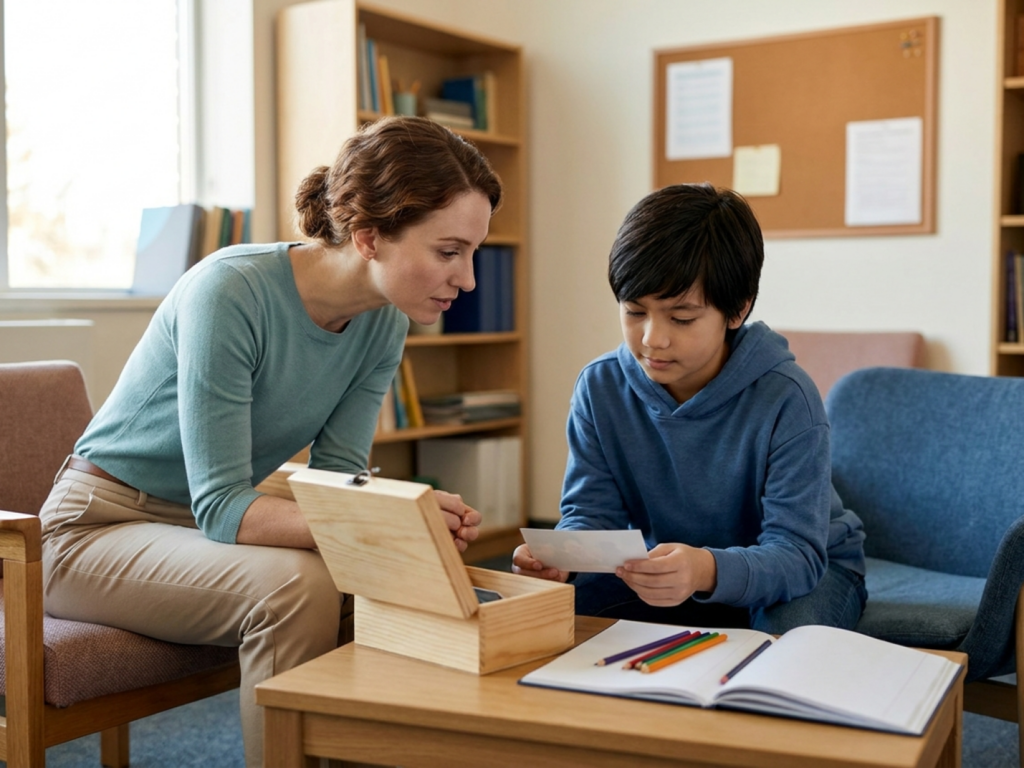
Memorial activities can give grief a concrete form. A child might make a memory box, write a letter, plant something, create artwork, participate in a cultural or religious ceremony, or mark an anniversary in a chosen way. The activity should fit the child’s developmental level and preferences. Participation must remain voluntary, particularly if the death was traumatic or family relationships are complicated.
Notice predictable trigger periods and plan extra support rather than trying to prevent all emotion. Before a birthday, holiday, or school event, ask what the child is anticipating and offer choices. A simple plan might include identifying a break space, arranging a supportive phone call, or deciding whether to include a remembrance activity. Planning communicates that grief is expected and manageable, not dangerous or shameful.
Respond to guilt, fears, and changing understanding
Children may believe that their thoughts, behavior, or arguments caused the death. This is especially common in younger children, who may use magical thinking to explain events they cannot control. Ask gently what the child thinks happened rather than assuming you know. Correct misconceptions directly: “Nothing you said or did caused the death.” Avoid vague explanations that leave room for self-blame.
Some children become preoccupied with the safety of surviving caregivers or themselves. Provide truthful information about what adults are doing to manage health and safety, while avoiding detailed reassurance that cannot be maintained. A written or visual caregiving plan can help, particularly after a sudden loss. If the child repeatedly seeks reassurance, has panic-like episodes, refuses separation, or develops persistent physical complaints, discuss the pattern with a pediatrician or qualified mental health professional.
Older children and adolescents may ask philosophical, medical, or ethical questions and may prefer private conversations, online resources, peers, or journaling. Respect increasing autonomy while checking in regularly. Adolescents may conceal distress to avoid burdening family members or may express grief through irritability, risk-taking, withdrawal, or academic decline. A nonjudgmental invitation to talk, combined with attention to safety, is more useful than interrogation.
When additional help is needed
There is no single timetable for childhood grief. However, professional input is appropriate when distress is intense, persistent, worsening, or interfering substantially with sleep, eating, school attendance, relationships, development, or basic daily activities. Concerning patterns may include sustained hopelessness, severe anxiety, prolonged withdrawal, recurrent traumatic re-experiencing, persistent guilt, marked behavioral regression, self-injury, substance use, or inability to function in usual settings.
Persistent sadness in children can have several possible explanations, including grief, depression, anxiety, trauma-related responses, medical problems, or overlapping conditions. Caregivers should not attempt to diagnose the cause from behavior alone. A primary care clinician, pediatrician, school mental health professional, psychologist, psychiatrist, or bereavement service can assess the child’s developmental history, symptoms, functioning, family context, and safety needs. Support may involve education, family-based care, psychotherapy, school accommodations, or referral to specialist services, depending on the assessment.
Seek urgent help if a child talks about wanting to die, says others would be better off without them, attempts self-harm, describes a plan to hurt themselves, cannot be kept safe, or appears severely disorganized or detached from reality. Stay with the child, reduce access to immediate means of harm, and contact local emergency services or a crisis service. Do not leave urgent safety concerns to a later routine appointment.
Caregivers also need support. Bereaved adults may be managing their own grief, financial or practical changes, and the child’s needs simultaneously. Accepting help from relatives, community organizations, faith leaders, school staff, or health professionals can improve the stability available to the child. Supporting a child does not require being composed at every moment; it requires dependable care, honesty, and willingness to seek help when the situation exceeds what the family can manage alone.
When to seek urgent support
- Talk of suicide, wanting to die, or being better off dead
- Self-harm, a suicide plan, or inability to maintain immediate safety
- Severe functional decline, school refusal, or inability to complete basic activities
- Persistent traumatic re-experiencing, extreme fear, or marked behavioral regression
- Substantial sleep, appetite, substance-use, or physical-symptom changes that do not improve
Tools & Assistance
- Keep a brief record of triggers, emotions, sleep, school functioning, and recovery after grief waves.
- Ask the child’s pediatrician or primary care clinician about age-appropriate bereavement support.
- Coordinate a practical support plan with the child’s teacher, school counselor, or pastoral care lead.
- Use drawing, memory boxes, storytelling, music, or a chosen ritual to support expression.
- Contact local bereavement organizations, community services, or crisis services when needed.
FAQ
Is it normal for a grieving child to play and laugh?
Yes. Children often move between grief and ordinary activity. Play and laughter can provide emotional recovery and do not mean the child has forgotten the person who died.
What should I say when my child asks the same question repeatedly?
Answer briefly and honestly using consistent language, then check what the child understands. Repetition may help the child process the loss or seek reassurance. Invite further questions later.
Should children attend funerals or memorial services?
There is no universal rule. Explain what will happen, offer a genuine choice when possible, prepare a supportive adult, and provide an alternative ritual if the child does not want to attend.
How long should childhood grief last?
There is no fixed duration. Grief may recur around developmental milestones and anniversaries. Seek professional advice when distress is worsening, persistent, or significantly disrupting daily functioning.
How can I tell grief from a mental health problem?
The distinction cannot be made reliably from one symptom. Consider severity, duration, context, safety, and functional impact, and ask a pediatric or mental health professional for an assessment when concerns persist.
Sources
- National Cancer Institute / NCBI Bookshelf — Grief, Bereavement, and Coping With Loss (PDQ®)
- MedlinePlus — Children and grief - Medical Encyclopedia
- NHS — Children and bereavement
Disclaimer
This article provides general educational information and does not diagnose or treat grief or any mental health condition. Consult a qualified healthcare professional for individualized advice, and seek urgent help for immediate safety concerns.


















Please log in to leave a comment.