
Intro
Flying with a baby can be stressful when changes in cabin pressure lead to crying, feeding difficulty, or visible discomfort. In most cases, the problem is temporary pressure-related ear pain rather than a dangerous condition, but infants cannot describe fullness, muffled hearing, or pain, so caregivers must rely on behavior and timing.
The most useful approach is to support swallowing during descent and, when possible, take practical precautions before travel. This article explains why airplane ear occurs, which measures may help, when medication should be discussed with a clinician, and which symptoms warrant medical assessment.
Highlights
Pressure-related ear discomfort is often greatest during descent because the middle ear must equalize with falling cabin pressure.
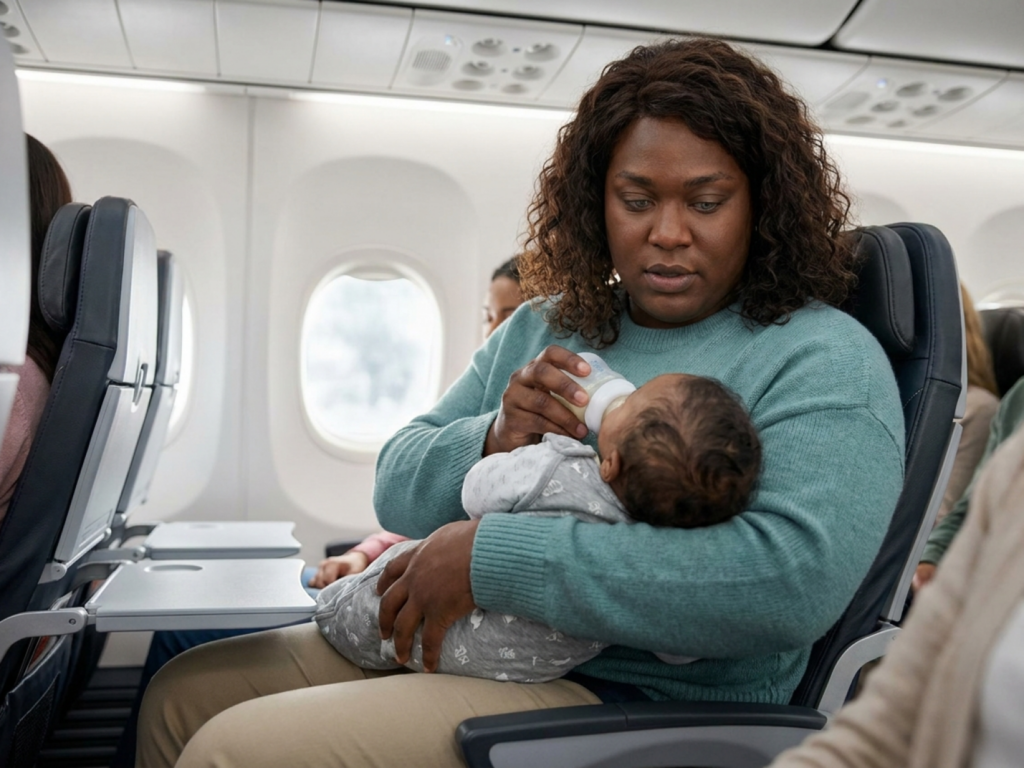
Breastfeeding, bottle-feeding, or offering a pacifier during takeoff and especially landing can encourage swallowing.
Keeping a baby awake for the pressure-changing portions of a flight may make it easier to offer feeds or a pacifier.
Decongestants and medicated nasal sprays should not be given to young children unless a healthcare professional specifically advises their use.
Persistent, severe, or unusual symptoms should be assessed rather than assumed to be ordinary airplane ear.
Why airplane ear can hurt a baby
The middle ear is an air-filled space behind the eardrum. A narrow passage called the eustachian tube connects it with the back of the nose and throat, allowing air to move in or out and equalize pressure on both sides of the eardrum. During flight, cabin pressure changes as the aircraft climbs and descends. If the pressure in the middle ear does not adjust efficiently, the eardrum can become stretched, producing pressure, pain, muffled hearing, or irritability.
Infants and young children may be more susceptible because their eustachian tubes are smaller and positioned more horizontally than those of adults. Their limited ability to perform deliberate pressure-equalizing maneuvers also matters. Swallowing opens the eustachian tube intermittently, which is why feeding or sucking can be helpful. Although discomfort may occur during ascent, descent is commonly more challenging because the surrounding cabin pressure increases relative to the middle-ear pressure as the aircraft lands.
Airplane ear is usually short-lived, but the experience can be intense for a baby. Crying, grimacing, pulling away from the breast or bottle, increased sucking, or sudden restlessness during descent may reflect discomfort. These behaviors are not specific enough to establish a diagnosis, particularly if the baby is also tired, hungry, overheated, or experiencing motion sickness.
Feeding and swallowing strategies
The central practical goal is to encourage regular swallowing while cabin pressure is changing. For an infant, this may involve breastfeeding, offering a bottle, or using a pacifier. A caregiver can begin before the descent becomes uncomfortable and continue offering opportunities to swallow through the approach and landing. The same principle can be used during takeoff if the baby shows discomfort then.
Timing is more important than forcing a particular method. Feed responsively and follow the infant’s usual safety and hunger cues. A bottle should be offered in a position consistent with safe infant feeding, and breastfeeding can be done when the caregiver and baby are securely positioned. Do not force a feed if the baby is crying too intensely, coughing, gagging, or turning away; pause, settle the baby, and try again when appropriate.
MedlinePlus also notes that fluids and pacifiers may help children swallow, and advises avoiding sleep during takeoff and landing when possible. A sleeping baby may not swallow as frequently, and waking gently before descent can make it easier to offer a breast, bottle, or pacifier. Parents should still prioritize normal safe sleep and feeding practices, and should never prop a bottle or leave a bottle in an unattended infant’s mouth.
- Keep the feeding supplies needed for the ascent and descent immediately accessible rather than packed overhead.
- Plan for a breastfeed, bottle, or pacifier shortly before and during the pressure-changing portions of the trip.
- Use the baby’s normal milk or feeding method; do not dilute formula or substitute unfamiliar products to manage ear pressure.
Preparing for the flight
Preparation can reduce the number of problems competing for attention during boarding and landing. Pack enough usual feeds, diapers, wipes, spare clothing, and a pacifier if the baby uses one. Review airline policies for carrying expressed milk, formula, water, and feeding equipment. If traveling with another adult, agree in advance who will manage the baby and who will retrieve supplies during descent.
Consider the baby’s health in the days before travel. Nasal congestion can interfere with eustachian tube ventilation, and an acute upper-respiratory infection may make pressure equalization more difficult or increase discomfort. A baby with recent ear surgery, known middle-ear disease, persistent middle-ear fluid, or a history of severe symptoms during flights may need individualized advice before departure.
Contact the baby’s clinician before flying if there is a current illness, significant congestion, fever, ear drainage, marked irritability, or a recent diagnosis involving the ears. The question is not simply whether flying is permitted; it is whether the timing of the trip, the child’s current condition, and any underlying problem alter the safest plan. A clinician can also explain whether a planned medical review is needed before travel.
During the flight, hold the baby securely and keep the environment as calm as possible. Cabin noise, hunger, fatigue, and unfamiliar surroundings can amplify distress. Comforting contact, a familiar routine, and a quiet feeding setup may help even though they do not directly equalize ear pressure.
Medication questions and what to avoid
Caregivers often ask whether a decongestant, antihistamine, or nasal spray can prevent airplane ear. These products are not automatically safe or effective for infants. The Mayo Clinic specifically warns against decongestants for young children, and medication dosing in babies depends on age, weight, formulation, and clinical circumstances.
Do not give an over-the-counter cold medicine, oral decongestant, sedating medicine, or medicated nasal product to make a flight easier unless the baby’s healthcare professional has advised it. Sedation can interfere with feeding, arousal, and monitoring, while inappropriate products can cause adverse effects. Do not place oil, drops, or other substances in the ear unless a clinician has recommended a specific product for a known reason.
MedlinePlus indicates that medications or nasal sprays may sometimes be discussed with a provider when appropriate. That wording matters: a clinician should decide whether a product has a role for this particular infant. Ask about the exact product, dose, timing, contraindications, and what to do if symptoms worsen. For many healthy infants, non-drug measures centered on swallowing and comfort are the main approach.
Acetaminophen or another analgesic should also be discussed with a healthcare professional rather than administered automatically for an unexplained cry. If a clinician recommends a medicine, use the supplied dosing instructions and an appropriate measuring device. Never use aspirin in a child unless specifically directed by a specialist.
What to expect after landing
Pressure-related discomfort should generally improve as the middle-ear pressure equalizes, but a baby may remain unsettled briefly after landing. Offer the usual feeding and comfort routine, observe whether the baby returns to normal behavior, and note whether feeding, sleep, and responsiveness improve. Temporary muffled hearing may be difficult to recognize in an infant, so changes in response to familiar voices or sounds should be considered in context rather than interpreted alone.
Persistent distress should not automatically be attributed to the flight. Ear infection signs in babies can overlap with pressure-related discomfort and may include fever, unusual irritability, reduced feeding, disrupted sleep, or ear drainage. Ear pulling by itself is nonspecific, but persistent ear digging in babies combined with fever, significant pain, or a change in behavior deserves medical advice.
Arrange an evaluation if pain appears severe, symptoms do not settle, the baby develops fever, there is fluid or blood from the ear, hearing or responsiveness seems reduced, or feeding remains poor. A clinician can examine the eardrum and distinguish pressure effects from otitis media, middle-ear fluid, an external-ear problem, or another cause of distress.
When to seek urgent medical help
Most babies with uncomplicated pressure discomfort do not need emergency care. However, urgent assessment is appropriate when symptoms are severe, rapidly worsening, or accompanied by signs of systemic illness. Seek prompt medical help for breathing difficulty, bluish or gray coloration, unusual limpness, difficulty waking, repeated vomiting with inability to keep feeds down, or signs of dehydration such as substantially fewer wet diapers and very poor intake.
Urgent evaluation is also warranted for significant bleeding or drainage from the ear, severe swelling around or behind the ear, facial weakness, a new balance problem, or persistent inconsolable crying that cannot be explained. A very young infant with fever should be managed according to the age-specific guidance of a healthcare professional, because fever thresholds and urgency vary with age.
If symptoms are mild but recur on every flight, discuss them with the child’s primary clinician or a pediatric otolaryngologist before the next trip. Keep a brief record of the flight phase, feeding or pacifier use, duration of distress, congestion, fever, and recovery. This information can help the clinician decide whether further assessment is appropriate and whether the travel plan should be modified.
Warning signs
- Do not give infant decongestants or sedating medicines without specific professional guidance.
- Seek medical advice for fever, ear drainage, persistent severe pain, or ongoing poor feeding after the flight.
- Get urgent help for breathing difficulty, unusual difficulty waking, dehydration, facial weakness, or swelling behind the ear.
- Do not assume every episode of crying during landing is airplane ear, especially when symptoms continue afterward.
Tools & Assistance
- Accessible breastmilk, formula, bottle, or pacifier for descent
- A written list of the baby's medications, allergies, medical conditions, and clinician contact details
- A digital thermometer and sufficient diapers to monitor illness and hydration
- A pre-travel consultation with the baby's primary healthcare professional when illness or ear disease is present
- Airline guidance for infant feeding supplies and safe seating arrangements
FAQ
Is landing usually worse for a baby's ears than takeoff?
It often is. During descent, rising cabin pressure can make it harder for the middle-ear pressure to equalize, which may stretch the eardrum and cause discomfort. Swallowing during descent may help.
Should I wake my baby for landing?
When possible, avoiding sleep during takeoff and landing can make it easier to offer a feed or pacifier. Wake the baby gently and follow normal safe feeding practices; do not force feeding.
Can I use a decongestant to prevent airplane ear?
Do not give a decongestant to a young child unless the child's healthcare professional specifically recommends it. These medicines can be unsafe, and the appropriate plan depends on the infant's age and health.
How long should airplane ear discomfort last in a baby?
Mild pressure discomfort often improves after the pressure equalizes. If distress persists, is severe, or is accompanied by fever, drainage, poor feeding, or reduced responsiveness, contact a healthcare professional.
Can a baby fly with a cold or congestion?
The answer depends on the severity of illness and the baby's age and medical history. Discuss significant congestion, fever, an ear condition, or recent surgery with the baby's clinician before travel.
Sources
- Mayo Clinic — Airplane ear - Symptoms & causes
- MedlinePlus, U.S. National Library of Medicine — Traveling with children: MedlinePlus Medical Encyclopedia
- PubMed Central, National Institutes of Health — Air travel and children's health issues
Disclaimer
This article is for general educational information and does not diagnose, treat, or replace advice from a qualified healthcare professional. Seek individualized medical guidance for your baby, especially before travel during illness or when warning signs occur.

















Please log in to leave a comment.