
Intro
Flying with a baby can make an ordinary travel day feel like a carefully coordinated clinical procedure: feeding, sleep, diapering, security screening, boarding, and unexpected delays all compete for your attention. A realistic plan can reduce stress without requiring you to predict every detail. The goal is not a perfectly quiet flight; it is a safer, more manageable journey with enough flexibility for your baby's needs.
Airport routines vary by airline, airport, and destination, so confirm current policies before leaving home. Consider your baby's age, medical history, feeding method, sleep needs, and tolerance for stimulation, and discuss individual concerns with your pediatrician before travel.
Highlights
Arrive with enough time for feeding, diapering, security screening, and unexpected delays.
A properly installed, airline-approved rear-facing car seat is generally the safest way for an infant to travel on an aircraft.
Use a baby carrier, stroller, or both according to your airport route and airline policy.
Plan for pressure changes by offering breast milk, formula, or a pacifier during takeoff and descent if your baby is willing.
Pack accessible essentials in small, clearly organized groups rather than placing everything in one large bag.
Start with a low-stress airport plan
Begin by mapping the airport sequence: curb or parking area, check-in, baggage drop, security, gate, restroom, nursing or family room, and boarding area. Check the terminal map in advance and identify elevators, accessible routes, family facilities, and a quiet area near the gate. A short mental route can prevent unnecessary backtracking when you are carrying a baby and several bags.
Arrive early enough to absorb ordinary delays. The right amount depends on the airport, season, destination, baggage, and whether you are traveling alone with the baby. Build time for a diaper change and feeding before boarding rather than treating every minute before departure as usable packing time. Early arrival also gives you a chance to ask the airline whether family boarding, stroller handoff, or a seat change is available.
Keep essential documents together but accessible. Depending on the itinerary, you may need identification, the baby’s travel documents, consent documentation for international travel, medical information, and reservation details. Confirm the airline’s rules for lap infants, assigned seats, checked equipment, carry-on liquids, breast milk, formula, and car seats before travel because policies can differ.
Pack for access, not just quantity
Organize the carry-on into small, predictable groups: feeding supplies, diaper supplies, spare clothing, comfort items, medications or medical equipment prescribed for your baby, and adult essentials. Place the items needed most often at the top or in an external pocket. A simple packing system matters more than bringing every possible product.
- Carry more diapers and feeding supplies than the flight duration alone suggests, allowing for delays and misplaced checked luggage.
- Pack at least one complete change of clothes for the baby and a spare top for the caregiver most likely to be holding the baby.
- Use sealed bags for clean clothing, used diapers, wet items, and prepared feeding equipment.
- Bring hand sanitizer for situations when soap and water are not immediately available, while still using soap and water when possible.
- Keep feeding supplies within reach and follow safe storage and preparation guidance for breast milk or formula.
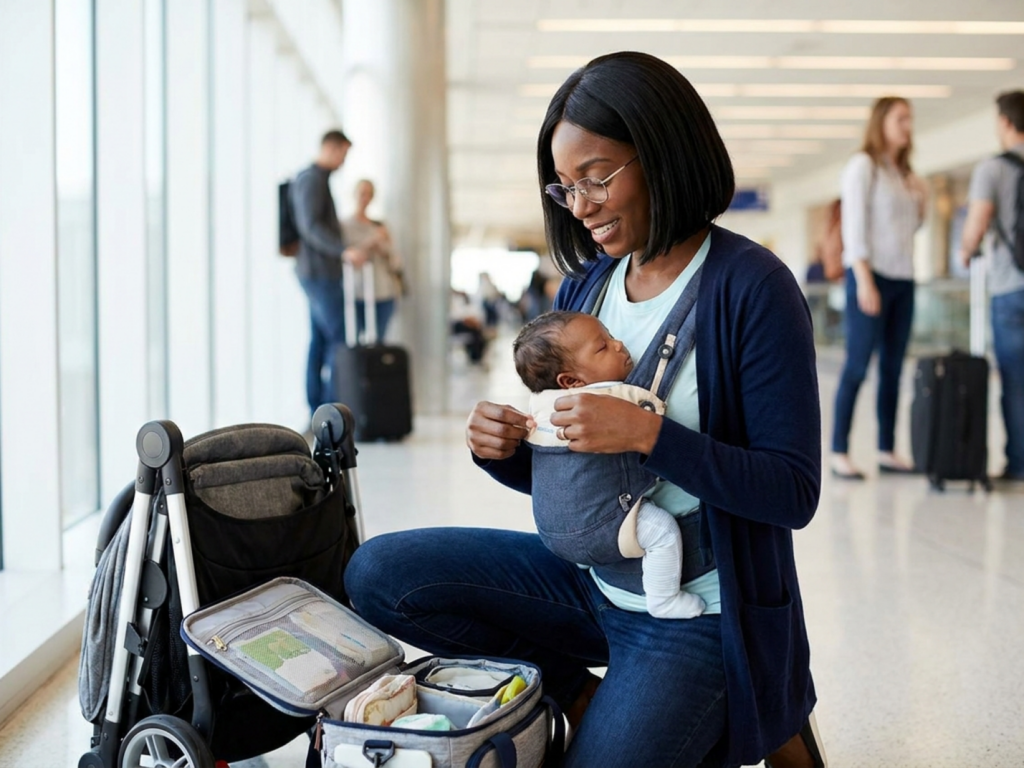
A portable changing pad and a compact travel diaper kit can make diaper changes more predictable. The kit may include diapers, wipes, barrier cream if your baby already uses one, disposable bags, spare clothing, and a clean cloth. Do not leave a baby unattended on an elevated changing surface, even for a moment.
Choose the safest way to move through the terminal
A baby carrier can keep both hands available for documents and luggage and may be useful on long walks between the gate and security area. Use it according to the manufacturer’s instructions, keeping the baby’s face visible, airway unobstructed, and chin lifted away from the chest. A carrier is a transport aid, not a substitute for an approved aircraft restraint or a safe sleep surface.
A stroller can reduce carrying strain and provide a place to move the baby through the terminal, but airport and airline procedures differ. Ask whether the stroller can be taken to the gate, where it will be tagged, and whether it will be returned at the aircraft door or at baggage claim. A collapsible stroller may be easier to handle, but the smallest model is not automatically the best choice if it lacks stability or does not meet your baby’s developmental needs.
At security, explain that you are traveling with an infant and ask staff how they want the stroller, carrier, milk, formula, and other supplies screened. Avoid assuming that a baby must be separated from a caregiver in every setting; procedures vary, and security personnel provide the operational instructions. Keep your hands free by placing loose items in a bin before you reach the front of the line.
For a longer discussion of Travel safety with baby explained, prepare a separate checklist covering transportation, restraint use, and the destination environment.
Use feeding and comfort strategically
Feed or offer a pacifier during ascent and descent if your baby accepts it. Sucking and swallowing may help with the sensation of changing cabin pressure, although it cannot guarantee that discomfort will be prevented. Watch your baby’s cues rather than forcing a feed. If your baby is congested, has an ear condition, or has recently undergone a procedure, ask a healthcare professional whether travel plans need modification.
Do not rely on sedating medication to make a baby sleep during a flight. Never give a medicine specifically for air travel unless your child’s clinician has advised it for that individual child and explained appropriate use. Some medicines can cause paradoxical agitation, respiratory complications, or impaired arousal.
Airport stimulation can accumulate quickly. Bright lights, announcements, crowds, temperature changes, and interrupted naps may produce crying even when a baby is well. A familiar cloth, feeding routine, quiet voice, and brief time in a less busy area may help. Keep comfort items clean and avoid loose objects that could obstruct the airway during sleep.
For babies who use expressed milk or formula, plan the logistics before departure: what will remain chilled, what will be used first, how feeding equipment will be cleaned, and what you will do if the trip is delayed. Airport staff can clarify screening procedures, but caregivers remain responsible for safe storage and preparation.
Make the aircraft seat a safety decision
If you can choose an adjacent seat, keeping the baby next to a caregiver makes monitoring and care easier. The American Academy of Pediatrics and other pediatric guidance support using an airline-approved car seat or child restraint system rather than holding an infant on a caregiver’s lap during turbulence. Confirm that the specific restraint is approved for aircraft use, fits the airline seat, and can be installed according to both the manufacturer’s and airline’s instructions.
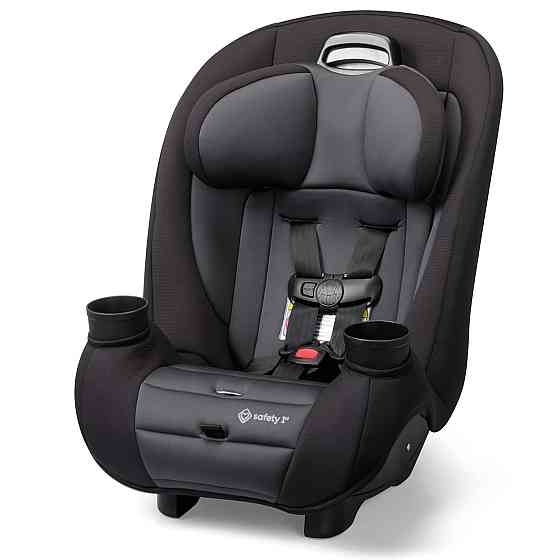
Use the restraint exactly as directed. For a young infant, this generally means a rear-facing configuration when the seat permits it, with harness straps positioned correctly and tightened without bulky clothing beneath them. Do not improvise with an unapproved device, place the car seat in an exit row, or assume that a stroller attachment is suitable for aircraft seating.
Ask the airline about seating restrictions before travel, especially if you are flying with more than one infant, using a bassinet, or traveling with another child restraint. A bassinet may be useful while the aircraft is cruising, but it is not a replacement for a restraint during taxi, takeoff, landing, or turbulence. Follow crew instructions promptly.
Guidance about an airline-approved child restraint system can help you prepare, but the final decision should account for your baby’s size, the restraint’s labeling, and the carrier’s current policy.
Handle diapering, hygiene, and sleep safely
Change your baby’s diaper shortly before boarding when practical, but expect that another change may be needed during the trip. Use designated changing facilities rather than an airport floor, terminal seat, or tray table. Clean your hands before and after the change, and use a clean barrier on the changing surface. If your baby has frequent loose stools, vomiting, fever, or fewer wet diapers than usual, seek medical advice rather than assuming the symptoms are simply travel-related.
Clean high-touch surfaces around your seat if that helps you feel prepared, but avoid harsh chemicals near your baby’s skin, mouth, or feeding equipment. Hand hygiene, safe food and milk handling, and keeping pacifiers from contacting contaminated surfaces are more useful than attempting to sterilize the entire environment.
During sleep, continue to prioritize airway safety. Hold your baby only when you are awake and able to monitor them, and use the approved restraint or other airline-provided arrangement according to instructions. Do not place a sleeping baby on a soft, unstable, or improvised surface. If the baby falls asleep in a carrier, check positioning regularly and move them to an appropriate firm sleep surface when feasible.
For related preparation, a travel diaper kit and a safe sleep surface are useful concepts to include in your broader travel checklist.
Prepare for delays, connections, and changing plans
Delays are easier to manage when one caregiver handles logistics and the other focuses on the baby, although a solo traveler can assign tasks to airline staff or a trusted companion. Keep the diaper and feeding kits together, recharge essential devices before boarding, and identify water, food, restrooms, and family facilities as soon as you reach the gate.
For a connection, avoid relying on the shortest legal transfer time if you have a choice. Allow time to deplane, collect a stroller if required, change a diaper, feed the baby, and walk to the next gate. Ask the airline whether your stroller will be transferred automatically and whether the next gate has changed. If the connection is missed, request assistance with rebooking while keeping the baby with you and maintaining access to essential supplies.
Babies may sleep, feed, or cry at times that do not match the planned schedule. Treat the itinerary as a framework rather than a test. A quiet reset, a diaper change, feeding, or a short walk may be more useful than trying to force a nap. Monitor for signs of overheating, respiratory difficulty, unusual lethargy, persistent inconsolability, or dehydration and seek urgent medical care when concerning symptoms occur.
Before departure, discuss any special circumstances with your pediatrician, including prematurity, chronic cardiopulmonary disease, recent illness, oxygen requirement, significant feeding difficulty, or a history of severe ear problems. Medical clearance may be appropriate in some situations, but it is individualized.
When to pause and seek medical advice
- Ask your pediatrician before flying with a medically complex infant, recent surgery, significant respiratory disease, or oxygen requirement.
- Seek urgent care for breathing difficulty, blue or gray discoloration, marked lethargy, repeated vomiting, or inability to keep feeds down.
- Watch for dehydration indicators such as substantially fewer wet diapers, a very dry mouth, or unusual sleepiness.
- Do not use sedating medication for flight comfort unless specifically directed by your child's clinician.
- Never leave a baby unattended on a changing table, in a stroller, or in a carrier with an obstructed airway.
Tools & Assistance
- Airline customer-service contact and current infant travel policy
- Airport terminal map showing elevators, family rooms, restrooms, and nursing areas
- Portable changing pad and organized travel diaper kit
- Airline-approved rear-facing infant car seat or child restraint system
- Insulated feeding-supply bag with safe storage plan
FAQ
Should I use a car seat on the plane for my baby?
A properly installed, airline-approved car seat or child restraint generally offers better protection than holding a baby on a lap during turbulence. Confirm the restraint's aircraft approval and the airline's current requirements before departure.
Can a baby carrier be used during security screening or the flight?
Airport screening procedures vary, so follow the instructions of security personnel. A carrier may help in the terminal, but during flight the baby must be secured according to the airline's safety instructions and an approved restraint should be used when available.
What should I do if my baby cries during takeoff or landing?
Offer feeding or a pacifier if your baby accepts it, and use calm, familiar soothing strategies. Crying is common, but seek medical advice before travel if your baby has a significant ear, respiratory, or other medical concern.
How early should parents arrive at the airport?
Arrive early enough for check-in, baggage, security, feeding, diapering, and possible delays. The appropriate buffer depends on the airport, airline, itinerary, and whether you are traveling with checked equipment.
Can I bring breast milk or formula through airport security?
Many airports have procedures for screening breast milk, formula, and infant feeding supplies, but requirements vary by country and airport. Check the current rules before travel and tell security staff what you are carrying.
Sources
- HealthyChildren.org (American Academy of Pediatrics) — Flying With Baby: Parent FAQs & Tips for Safer, Easier Air Travel
- Cleveland Clinic — Flying With a Baby: Your Questions Answered
- Capital Area Pediatrics — Flying with a Baby: Tips for a Smoother Trip
Disclaimer
This article provides general educational information and does not diagnose, treat, or replace advice from your pediatrician, airline, or airport authorities. Seek professional medical guidance for your baby's individual travel and health needs.















Please log in to leave a comment.