
Intro
Cradle cap can look dramatic, but it is usually a common and manageable scalp condition in infants. Many caregivers worry that the flakes or greasy scale mean something is wrong or that the scalp is not clean enough. In most cases, that is not the case at all.
The main goal of cradle cap cleaning is to soften scale, lift it gently, and protect the skin barrier without irritating the scalp. A calm, consistent routine usually works better than aggressive scrubbing, and it is reasonable to ask a pediatrician or other clinician for guidance if the scalp looks inflamed or if you are unsure what you are seeing.
Highlights
Cradle cap is usually a benign infant scalp condition, and it is not a sign that a baby is dirty or poorly cared for.
Gentle scalp cleansing is the foundation of home care; the aim is to soften and remove scale without scratching the skin.
Mild baby shampoo, soft brushing, and careful rinsing are typically preferred over harsh cleansers or forceful scrubbing.
For stubborn scale, mineral oil or petroleum jelly may help loosen flakes, but residue should not be left on the scalp.
If the scalp becomes red, weepy, painful, or unusually widespread, medical review is the safer choice.
What cradle cap is and why cleaning helps
Cradle cap, also called infantile seborrheic dermatitis, typically presents as greasy, yellowish, or white scale on the scalp. It may extend to the eyebrows, hairline, or behind the ears. The condition is common in early infancy and is usually not painful, dangerous, or contagious.
Cleaning does not need to be forceful. The purpose of care is to reduce buildup, keep the skin comfortable, and make it easier for loose scale to come away on its own. In many babies, a simple routine of gentle scalp cleansing is enough. Improvement is often gradual, and some days the scale will be more noticeable than others. That fluctuation can be frustrating, but it does not usually mean the scalp is worsening.
It can help to think of cradle cap care as skin support rather than a battle against every flake. The skin barrier is delicate, so the safest approach is one that softens scale, avoids friction, and leaves the scalp clean but not stripped.
A gentle cleaning routine that usually works best
Most home routines begin with lukewarm water and a mild baby shampoo. The phrase warm not hot water matters because very hot water can irritate infant skin and make the scalp feel drier. Wet the scalp, add a small amount of shampoo, and massage it in with the fingertips using light pressure rather than nails.
After a brief lather, rinse the scalp thoroughly so no cleanser remains in the hair or at the hairline. Pat dry gently. If the baby has very little hair, it may still help to wash the scalp itself, not just the strands. Some clinicians suggest daily washing during active cradle cap, while others recommend adjusting the frequency based on how the skin responds. If the scalp seems dry or irritated, discuss the schedule with your child’s clinician.
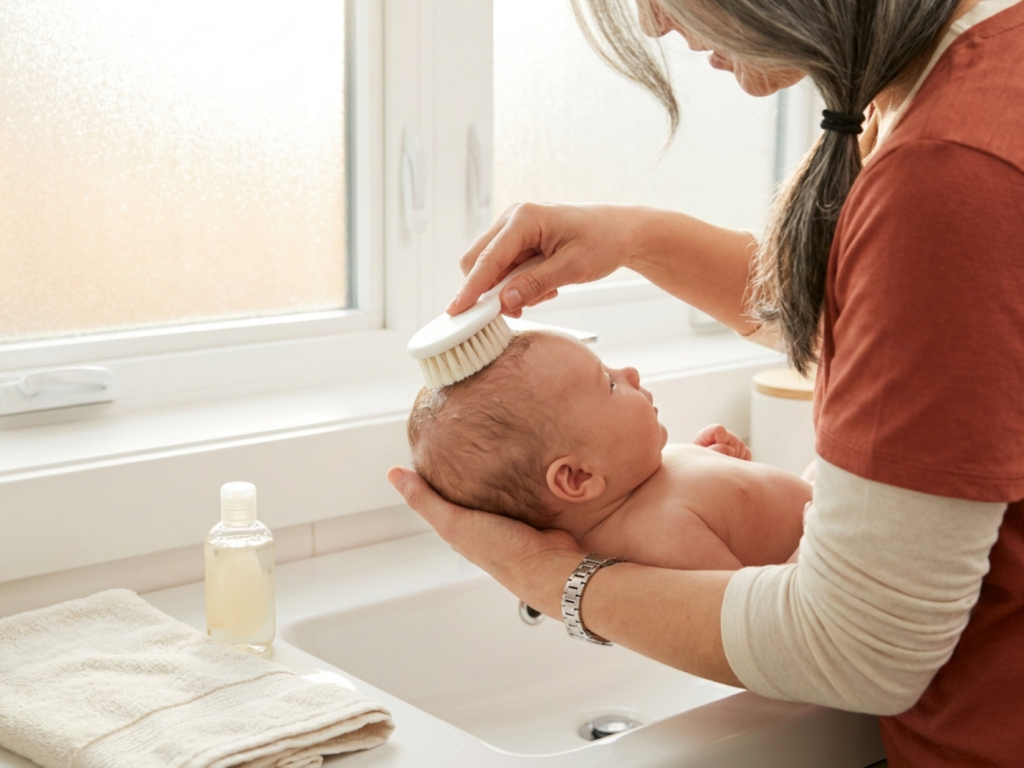
After washing, use a soft brush after the bath or a very soft baby brush to lift flakes that have already loosened. The key is timing: brushing works best after cleansing, when scale is softer and less attached. If the baby resists, keep the session short and calm. Gentle, repeated care is usually more effective than trying to remove everything in one sitting.
How to loosen thicker scale safely
Some babies develop thicker, more adherent plaques that do not lift easily with shampoo alone. In those cases, a clinician may suggest softening the scale before washing. The commonly recommended options are mineral oil or petroleum jelly applied in a thin layer to the affected area. This can help loosen scale so that it washes away more easily afterward.
It is important not to leave oil sitting on the scalp indefinitely. The goal is to soften the debris, not to keep the hairline coated. After a short period, wash the scalp with mild shampoo and rinse well. Residue can make the scalp feel greasy and may trap flakes rather than clear them.
For especially stubborn scale, a warm wet cloth can be used carefully to help lift softened flakes. Keep the cloth warm, not cold, and make sure the baby stays comfortable and warm during the process. Avoid any rough rubbing or repeated scraping. If the scale remains tightly stuck, it is safer to let it be and revisit it later rather than risk damaging the skin.
What to avoid when cleaning cradle cap
Several common habits can irritate an infant scalp. Try not to pick at scale with fingernails, comb teeth, or other sharp edges. Cradle cap is attached to living skin, so forcible removal can cause redness, tiny breaks in the skin, and unnecessary discomfort.
It is also wise to avoid products that are more likely to sting or irritate. The NHS specifically advises against peanut oil, olive oil, soap, and fragranced products for cradle cap care. These substances may sound harmless, but they can be irritating or may not rinse away cleanly from a baby’s scalp. Harsh adult dandruff shampoos and medicated preparations should not be used unless a clinician recommends them for a particular reason.
If the scalp looks more inflamed after a product is used, stop that product and ask for medical advice. A gentle routine should make the scalp more comfortable over time, not more reactive.
When to ask a clinician to review the scalp
Cradle cap usually stays localized and improves gradually, but some scalp findings deserve a closer look. Ask a clinician to review the baby if the skin becomes very red, swollen, tender, oozing, crusted in a concerning way, or if the rash spreads well beyond the scalp. Fever, poor feeding, marked fussiness, or signs of infection also warrant medical attention.
Medical review is also sensible if you are not sure the rash is cradle cap. Conditions such as eczema, psoriasis, or a fungal infection can sometimes resemble it, and the distinction matters because management differs. A pediatrician can usually tell whether the appearance fits a typical cradle cap pattern or whether another diagnosis should be considered.
Another helpful time to bring it up is at a well-child visit. If the condition is lingering, recurrent, or causing you stress, showing the scalp in person can be reassuring. You do not need to wait for a crisis to ask. Early guidance often prevents overcleaning, overtreatment, and a lot of worry.
What to expect over time
Cradle cap often improves on its own, even when the process is slow. The condition can wax and wane, and that can make it feel as though care is not working. In reality, the skin may simply need time plus a consistent routine. The goal is not to force the scalp to look perfectly clear overnight.
Many families find it helpful to keep the approach simple: gentle scalp cleansing, soft brushing after washing, and selective use of scale-softening products only when needed. That low-pressure routine usually protects the skin barrier better than repeated aggressive cleaning. If you notice that the scalp is getting more irritated instead of less, step back and ask a clinician how to adjust the plan.
Most importantly, cradle cap is not a reflection of parenting or hygiene. It is a common infant skin issue, and thoughtful care is usually enough to keep it under control while the baby grows out of it.
When to stop home care and seek medical advice
- Do not scrape, pick, or peel off scale if it is firmly attached.
- Do not use peanut oil, olive oil, soap, or fragranced products on the scalp.
- Do not leave mineral oil or petroleum jelly on the scalp longer than advised.
- Seek review if the scalp becomes red, swollen, oozing, painful, or suddenly more widespread.
- Get medical advice if your baby seems unwell, feeds poorly, or has fever.
Tools & Assistance
- Mild baby shampoo
- Soft baby brush or very soft comb
- Warm water and a clean washcloth
- Mineral oil or petroleum jelly if a clinician suggests it
- Pediatrician or family doctor follow-up
FAQ
How often should I wash a baby’s scalp with cradle cap?
Many clinicians recommend gentle daily washing during active cradle cap, but the right frequency depends on how the scalp responds. If the skin becomes dry or irritated, ask your clinician to help you adjust the routine.
Is it okay to use oil on cradle cap?
Mineral oil or petroleum jelly may help loosen thick scale, but they should be used carefully and not left on the scalp longer than advised. Avoid peanut oil and olive oil.
Should I pick off the flakes if they are loose?
It is better not to pick or scrape. Use gentle washing and a soft brush after the bath so the scale can lift without injuring the skin.
When should I worry that it is not cradle cap?
If the rash is very red, painful, oozing, spreading, or accompanied by fever or poor feeding, seek medical review. A clinician can also help distinguish cradle cap from eczema or another scalp condition.
Sources
- Mayo Clinic — Cradle cap - Diagnosis and treatment
- NHS — Cradle cap
- MedlinePlus — Cradle cap: MedlinePlus Medical Encyclopedia
Disclaimer
This article is for general information only and does not replace individualized medical advice, diagnosis, or treatment from a qualified clinician. If you are concerned about your baby’s scalp, contact a pediatrician or other healthcare professional.
















Please log in to leave a comment.