
Intro
Choosing baby clothes through changing weather can feel more complicated than it looks. Infants, especially newborns, have limited capacity for thermoregulation, meaning they do not adjust to heat and cold as reliably as older children and adults. The practical goal is not a perfect outfit formula; it is comfortable, dry clothing that can be adjusted promptly for the actual environment.
Outdoor temperature is only one part of the decision. Indoor heating, air conditioning, wind, direct sun, humidity, activity, a stroller canopy, and a car seat can all change how warm a baby becomes. This guide offers a flexible, season-by-season approach while keeping safe sleep and overheating prevention in view.
Highlights
Use light, adjustable layers and reassess after moving between outdoors, cars, shops, and home.
Check the chest, back, or neck for warmth rather than relying on cool hands or feet alone.
For sleep, choose fitted sleepwear and an appropriate wearable layer instead of loose blankets.
Remove bulky outerwear and extra layers promptly in warm indoor spaces and before car-seat harnessing.
Start with temperature regulation, not a calendar
Babies lose and gain heat more readily than adults because of their relatively large surface-area-to-body-mass ratio and developing thermoregulation. A seasonal wardrobe is therefore most useful when it supports adjustment, rather than when it follows a fixed date or a single temperature chart. A mild winter day in a heated car and a cool summer evening near the coast can require very different clothing choices.
A common pediatric rule of thumb is to dress a young baby in about one more light layer than an adult would find comfortable in the same setting. Treat this as a starting point rather than a prescription. Individual needs vary with age, prematurity, recent illness, humidity, airflow, and whether the baby is moving or sleeping. Older, active infants may generate more heat than a quiet newborn in the same room.
Assess your baby directly after a few minutes in the environment. The upper chest, upper back, or nape of the neck generally gives more useful information than hands and feet, which can feel cool because peripheral circulation is still maturing. Skin that is sweaty, hot, flushed, or clammy can suggest excess warmth. A cool trunk, persistent shivering, unusual quietness, or clear discomfort may mean the baby needs a warmer setting or another layer.
Clothing is only one part of thermal comfort. Replace wet garments after milk spills, drool, rain, or diaper leakage, as moisture increases heat loss and can irritate skin. Keep a compact change of clothes available, and expect to modify the outfit as the setting changes. This approach is more dependable than trying to predict an entire day from the morning forecast.
Spring: plan for rapid changes in weather
Spring often combines cool mornings, warmer afternoons, rain, and variable wind. Flexible breathable layers make these transitions easier. A practical base may be a soft cotton bodysuit or a footed sleeper, followed by lightweight trousers and a cardigan, overshirt, or thin jacket as needed. The aim is to add or remove one layer without fully changing the baby.
Choose fabrics that feel comfortable against the skin and allow moisture to evaporate. Cotton is often a useful option for everyday layers, particularly for babies prone to heat rash or irritation, although no single fabric is right for every child. Check seams, fasteners, waistbands, and neck openings for rubbing or pressure. Clothing should allow hip and knee movement, especially in young babies who naturally rest with hips flexed and apart.
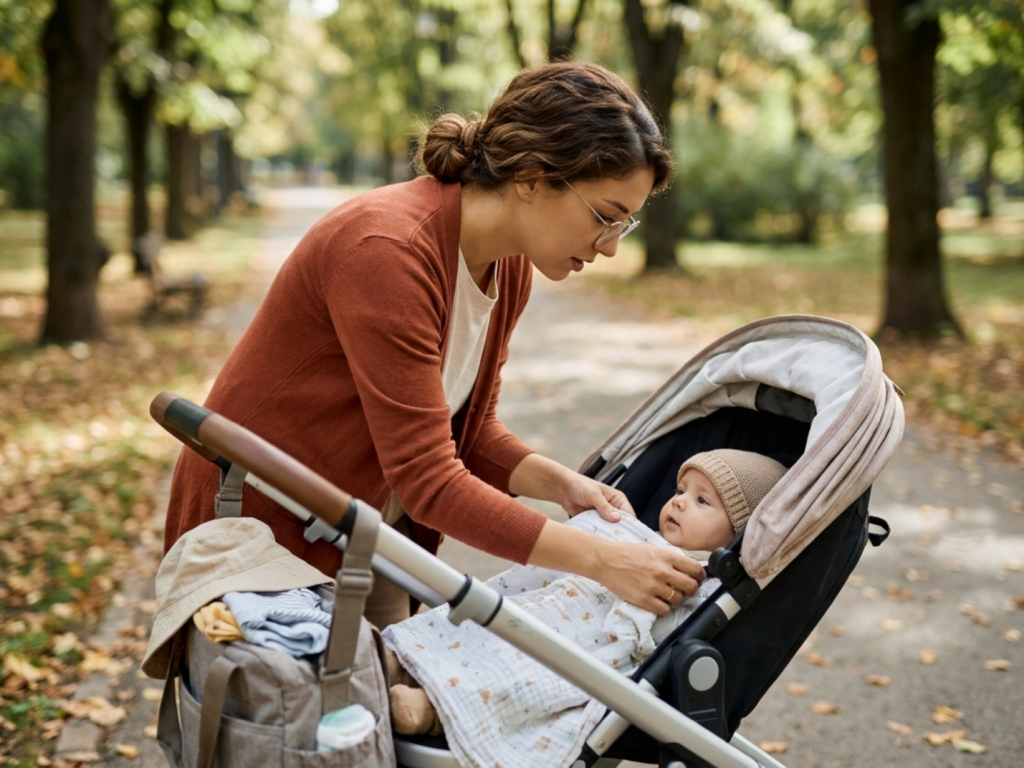
For rain, use weather protection thoughtfully. A stroller rain cover can reduce wind and rain exposure, but it may also limit ventilation and retain heat. Monitor the baby closely and remove the cover once it is no longer needed. Do not assume that a cloudy day eliminates sun exposure; use shade and a brimmed hat when outdoors, while ensuring the face remains visible and airflow is not obstructed.
- Carry one lightweight insulating layer for early and late outings.
- Keep a spare dry bodysuit and socks in the diaper bag.
- Remove hats and outer layers when entering warm shops, vehicles, or home.
- Recheck the baby’s trunk after stroller walks, particularly if the canopy and a cover reduce airflow.
Summer: prioritize airflow, shade, and hydration awareness
In hot or humid weather, the priority shifts from insulation to avoiding overheating. Lightweight, loose-fitting, breathable clothing is usually appropriate. A single cotton layer, such as a short-sleeved bodysuit, may be enough indoors when the room is warm; in very hot conditions, a diaper alone may be appropriate for short periods if the baby is supervised and protected from sun, drafts, and hot surfaces. Add a light layer if the room is strongly air-conditioned.
Direct sun is a separate risk from air temperature. Keep babies in shade where possible, use a broad-brimmed hat that does not cover the face, and choose lightweight clothing that covers the arms and legs for longer time outdoors. Avoid draping blankets over strollers or carriers to create shade. Even thin fabric can restrict ventilation and raise the temperature inside an enclosed space. Use the stroller’s designed canopy while maintaining airflow and checking the baby frequently.
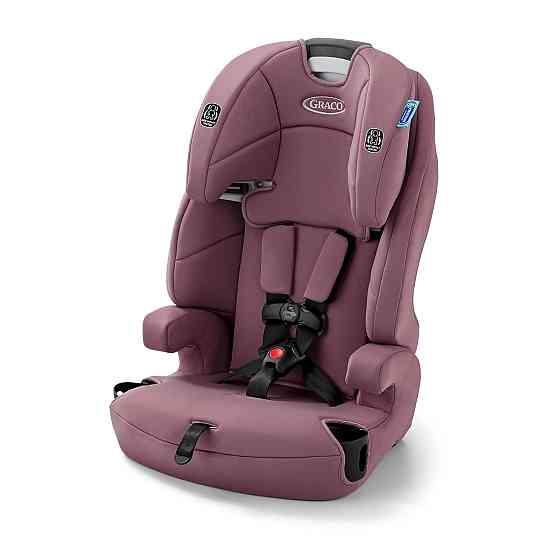
Heat can develop quickly in cars, conservatories, enclosed porches, and parked strollers. Never leave a baby unattended in a vehicle, even briefly. Before placing a baby in a car seat, check the seat surface and buckles; they can become hot enough to cause injury. For travel, secure the harness directly over ordinary clothing and remove bulky coats, snowsuits, or padded layers that interfere with a snug harness fit.
Watch for a hot chest or neck, sweating, flushed skin, unusual irritability, lethargy, poor feeding, or fewer wet diapers. These signs are nonspecific and can occur with illness as well as heat exposure. Move the baby to a cooler environment, remove excess layers, and seek prompt clinical advice if you are concerned, especially for a newborn, a premature infant, or a baby who seems unwell.
Autumn: use modular layers as indoor heating returns
Autumn brings a familiar challenge: outdoor temperatures fall while indoor heating can make rooms unexpectedly warm. A base layer plus a removable middle layer is often more useful than one thick garment. For example, a long-sleeved bodysuit with trousers and a light sweater can be adapted more easily than a heavily padded all-in-one.
Pay attention to wind chill during walks. Wind can accelerate heat loss from exposed skin, so a light wind-resistant outer layer may be helpful outdoors. However, clothing that blocks wind can also trap warmth. Open or remove it when the baby is indoors, in a warm car, or becoming active in a carrier. Check whether the carrier itself is adding insulation: the adult’s body heat, close contact, and carrier fabric may mean the baby needs fewer layers than they would in a stroller.
Fall is also a sensible time to inspect garment fit. Sleeves that are too tight, tight elastic around ankles, or clothing that rides up can reduce comfort and contribute to skin friction. Choose fasteners that are secure and intact, and avoid loose buttons, decorative attachments, cords, or drawstrings that create choking or entanglement hazards. For younger infants, clothing that opens fully at the front or has envelope shoulders can make changes less disruptive.
Maintain a simple routine: dress for the current setting, carry one changeable layer, and reassess at transitions. This reduces both over-bundling and the temptation to leave a damp or overly warm garment on simply because an outing is nearly finished.
Winter: insulate outdoors without overheating indoors
Cold weather may call for more layers, but warmth should remain adjustable. Start with a comfortable base layer, add an insulating middle layer, and use an outer layer for wind, rain, or snow exposure. Wool or technical fabrics can be useful outer or middle layers for some families, but soft breathable materials against the skin may be better tolerated by babies with sensitive skin. Whatever the fabric, change clothing promptly if it becomes wet.
Warm hats, mittens, and socks can be useful outdoors because the head and extremities lose heat readily. Remove hats indoors and during sleep, because head coverings can contribute to overheating and may shift over the face. Check that mittens and socks are not constricting and have not become damp. Avoid loose scarves, neck gaiters, and clothing with cords around a baby.
Car-seat safety deserves special attention in winter. Puffy coats and snowsuits compress under the harness during a collision, potentially leaving the harness too loose. Dress the baby in thin, warm layers, buckle the harness according to the seat manufacturer’s instructions, then place a blanket over the secured harness if additional warmth is necessary while travelling. Remove the blanket when the vehicle becomes warm, and never place it behind the baby or under the harness.
When returning indoors, take off the outer layer rather than waiting for the baby to appear sweaty or restless. Central heating can make winter rooms considerably warmer than outside. A baby asleep in a carrier, stroller, or car seat may not communicate discomfort clearly, so regular touch checks and visual monitoring matter.
Sleep clothing needs its own safety rules
Sleepwear should be based on the temperature of the room where the baby sleeps, not the outdoor season. Follow local safe-sleep guidance and your baby’s clinician’s advice, particularly for preterm babies or babies with medical conditions. In general, use fitted sleepwear and a correctly sized sleep sack or wearable blanket when appropriate, rather than loose blankets, quilts, duvets, pillows, hats, or other loose items in the sleep space.
Overheating is a concern during sleep, so avoid multiple heavy layers, overdressing, and leaving outdoor clothing on indoors. A wearable blanket should fit around the neck and arm openings so the baby’s head cannot slip inside. Select a weight appropriate to the room and follow the manufacturer’s age, size, and use instructions. Do not layer a baby heavily underneath simply because a sleep sack is being used.
Safe sleep clothing for newborn routines should remain simple: a firm, flat sleep surface; fitted sleepwear; no head covering; and no loose bedding. Swaddling has separate safety considerations. If a baby is swaddled, use a thin breathable material, avoid tight wrapping around the chest or hips, stop when the baby shows signs of trying to roll, and place the baby on their back to sleep. A sleep sack that allows free arm movement can be an alternative as the baby grows.
Check the trunk or nape after settling the baby, then adjust only if needed. Cool hands alone do not prove that sleep clothing is insufficient. Conversely, sweating, hot skin, damp hair, flushing, rapid breathing, or unusual lethargy should prompt removal of excess layers and clinical advice if the baby does not promptly appear well.
Create a practical seasonal clothing system
A small, adaptable collection is usually more effective than a large set of highly seasonal outfits. Consider several breathable base layers, a few middle layers, one or two weather-appropriate outer layers, sleepwear, hats for outdoor weather, and reliable spare clothes. Keep sizes realistic: clothes that are very large can bunch or interfere with movement, while clothes that are too small can restrict comfort and leave pressure marks.
Build checks into ordinary caregiving. At diaper changes, inspect the skin for dampness, heat rash, chafing, pressure marks, or red areas in folds. Change any sweaty or wet clothing. Launder new garments before use when practical, and choose fragrance-free detergent if a baby has known sensitive skin or a clinician has advised avoiding potential irritants. Persistent rashes, broken skin, hives, or eczema flares need individualized assessment rather than repeated clothing experiments alone.
It can help to separate clothing decisions into three questions: What is the actual environment? Is the baby dry and comfortable at the trunk? Is the outfit compatible with the activity, particularly a car seat or sleep? This prevents a weather forecast from overriding immediate safety needs. It also makes it easier for other caregivers to follow the same approach.
Contact a healthcare professional promptly when temperature concerns occur alongside fever, poor feeding, breathing difficulty, marked lethargy, reduced urine output, persistent vomiting, or a baby who is difficult to rouse. For infants younger than three months, a rectal temperature of 38 C or 100.4 F or higher requires urgent medical assessment. Clothing adjustments can improve comfort, but they should never delay evaluation of a potentially unwell baby.
Safety reminders
- Never leave a baby unattended in a parked vehicle, stroller, or enclosed outdoor space during warm weather.
- Remove bulky coats and snowsuits before securing a car-seat harness.
- Do not use hats, loose blankets, pillows, quilts, or duvets in an infant sleep space.
- Avoid covering a stroller with a blanket because airflow can be reduced and heat can build up.
- Seek urgent medical assessment for a baby under three months with a rectal temperature of 38 C or 100.4 F or higher.
Tools & Assistance
- Check the room temperature where the baby sleeps
- Keep a spare dry outfit and light layer in the diaper bag
- Review the car-seat manufacturer's harness and outerwear guidance
- Ask a pediatric clinician or health visitor about clothing needs for prematurity or medical conditions
FAQ
How can I tell whether my baby is too warm?
Check the upper chest, back, or neck. Sweating, hot or clammy skin, flushing, and unusual irritability or lethargy can indicate excess warmth. Cool hands and feet alone are less reliable.
Should a baby wear a hat indoors?
Usually not. Hats can contribute to overheating indoors and should not be worn for sleep. Use them outdoors only when weather conditions warrant, then remove them once indoors.
Can I put a blanket over my baby's car-seat harness in winter?
A light blanket may be placed over a correctly fastened harness for warmth, then removed when the car warms. Do not place bulky clothing or blankets beneath the harness.
What should my baby wear to sleep in summer?
Base the choice on the sleep-room temperature. Use fitted, lightweight sleepwear and an appropriate wearable layer if needed; keep the sleep space free of loose bedding and head coverings.
Sources
- HealthyChildren.org (American Academy of Pediatrics) — Tips for Dressing Your Baby
- NHS — How to dress a newborn baby - Best Start in Life
- Government of Canada / Public Health Agency of Canada — Dressing your baby for sleep
Disclaimer
This article is for general education and does not replace medical advice. Consult a qualified healthcare professional for concerns about your baby's temperature, feeding, skin, sleep, or illness.














Please log in to leave a comment.