
Intro
Choosing sleep clothing for a newborn can feel surprisingly high-stakes. Parents often worry about whether their baby is too cold, too warm, restricted by clothing, or uncovered after a startle reflex. These concerns are understandable: newborns have immature thermoregulation, limited ability to move away from heat, and a sleep environment that should stay free of loose bedding.
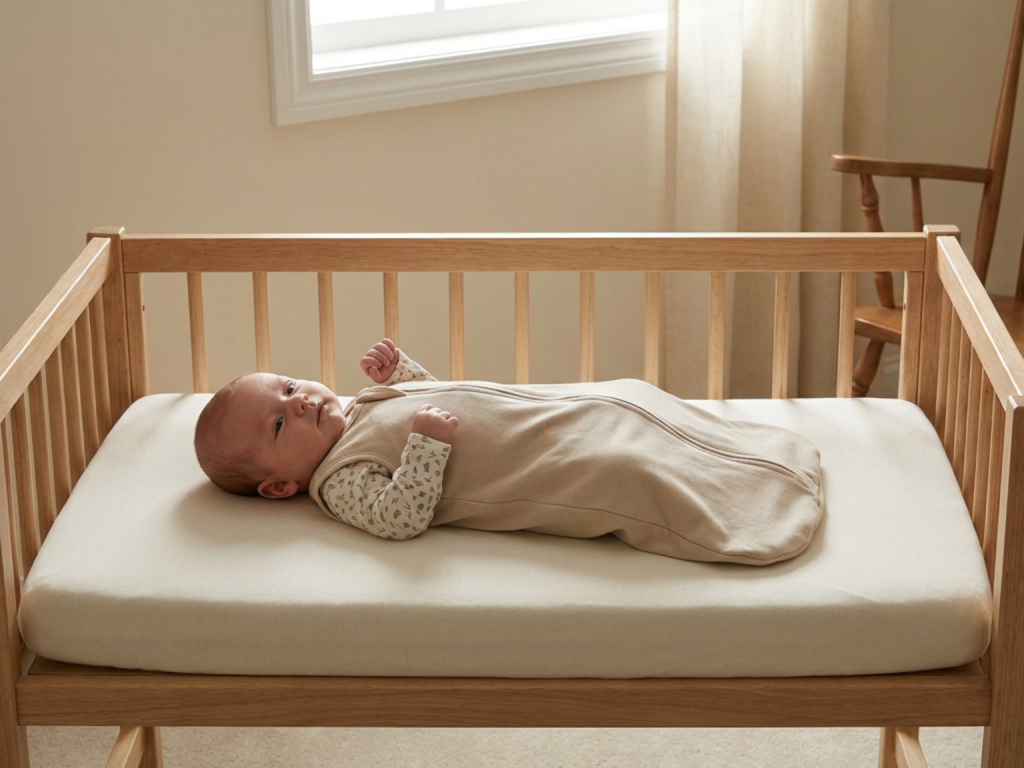
Safe sleep clothing is not about finding one perfect outfit for every baby. It is about using breathable, well-fitting layers that support safe newborn sleep: a firm, flat surface, baby placed on the back, head and face uncovered, and no loose blankets, pillows, weighted products, or soft objects in the sleep space. If your baby was premature, has a medical condition, has difficulty maintaining temperature, or has been given individualized advice by a clinician, follow your healthcare professional’s guidance.
Highlights
A wearable blanket or sleep sack is usually safer than a loose blanket when extra warmth is needed.
The baby’s head and face should stay uncovered during sleep because hats, hoods, and loose fabric can increase overheating and airway risks.
Overheating during infant sleep is a recognized safety concern; dressing should be adjusted to the room, not to adult anxiety.
Close-fitting, soft, breathable sleepwear helps reduce loose fabric while keeping the newborn comfortable.
Why sleep clothing matters for newborn safety
Newborns lose and gain heat differently from older children and adults. They have a relatively large surface area compared with body mass, immature sweating responses, and limited behavioral control over temperature. A newborn cannot remove a blanket, reposition away from a heat source, or clearly tell a caregiver that clothing feels too warm.
Safe sleep clothing therefore serves two goals at once: maintaining thermal comfort and preserving an unobstructed airway. Clothing should keep the baby warm enough without adding loose fabric that can cover the nose or mouth. This is why safe sleep basics for newborn care consistently emphasize no loose blankets, no pillows, no soft toys, and no bedding that can bunch around the face.
It is also why clothing decisions should be made together with the broader sleep environment. A firm flat infant sleep surface, back sleeping, room-sharing without bed-sharing, and a smoke-free newborn sleep environment are all part of the same prevention strategy. Clothing cannot make an unsafe sleep setting safe, but appropriate clothing can reduce the temptation to add loose bedding.
The safest default: fitted sleepwear plus a wearable blanket
For many healthy term newborns, a practical safe-sleep clothing combination is a close-fitting sleepsuit or footed pajamas with a wearable blanket, also called a sleep sack, if extra warmth is needed. The key advantage is that the warmth is worn, not loose in the crib or bassinet. A wearable blanket should fit according to the manufacturer’s size range, with an appropriate neck opening and arm openings so the baby cannot slip down inside it.
Sleepwear should be soft, non-irritating, and close-fitting rather than bulky. Very loose garments can ride up, twist, or create excess fabric near the face. Extremely tight clothing can restrict comfortable movement or leave pressure marks. Check the neck, wrists, ankles, and diaper area after dressing; clothing should allow normal breathing, hip positioning, and circulation.
Parents sometimes ask whether a newborn needs a blanket because adults often sleep better under one. For babies, the safer alternative is clothing or a wearable blanket. This approach addresses warmth while keeping the sleep surface clear. If a room is cool, add a layer to the baby’s body rather than placing a loose blanket over the baby.
Avoid hats, hoods, loose items, and weighted products
During sleep, the newborn’s head should remain uncovered. Hats may be appropriate immediately after birth or in supervised awake situations when advised, but they are generally not recommended for routine sleep at home. A hat can slip over the face, contribute to overheating, or make it harder for heat to dissipate. Hooded clothing has similar concerns because a hood can bunch behind the neck or shift near the airway.
Loose items should also stay out of the sleep space. This includes loose blankets, quilts, pillows, sheepskins, comforters, plush toys, bibs, burp cloths, and clothing accessories such as strings or detachable parts. Anything that can cover the face, compress the airway, or create entrapment risk should not be used for sleep.
Weighted sleep products deserve special caution. Weighted blankets, weighted swaddles, and weighted sleep sacks are not recommended for infant sleep. A newborn’s chest wall and respiratory mechanics are still developing, and added weight may interfere with normal breathing or arousal responses. If a product claims to improve sleep by applying pressure, discuss it with a pediatric clinician before use and consider safer alternatives.
How to judge warmth without overbundling
Newborns often have cool hands and feet because peripheral circulation is still maturing. Cool fingers alone do not necessarily mean the baby is cold. A better practical check is the chest, back of the neck, or upper back. The skin should feel comfortably warm, not hot, sweaty, clammy, or chilled.
Signs that a baby may be too warm include sweating, damp hair, flushed skin, heat rash, rapid breathing without another obvious cause, or a hot chest. Signs that a baby may be too cool include a cold chest or back, persistent mottling with a cool trunk, unusual lethargy, or poor feeding. These signs are not diagnoses; if they are persistent, severe, or accompanied by breathing difficulty, fever, low temperature, poor feeding, or reduced responsiveness, seek medical advice promptly.
- In a warm room, a diaper and lightweight sleepwear may be enough.
- In a moderate room, a cotton sleepsuit may be paired with a lightweight sleep sack.
- In a cool room, use an additional fitted layer or a warmer sleep sack rather than a loose blanket.
- After feeding or skin-to-skin time, reassess clothing before placing the baby down to sleep.
Overheating during infant sleep can happen when caregivers layer too heavily, use hats indoors, place the crib near a heater, or combine warm clothing with heavy bedding. The safer goal is neutral comfort, not extra warmth.
Swaddling and sleep sacks: benefits and cautions
Some newborns settle with swaddling because it can reduce startle-related waking. However, swaddling safety for newborns depends on correct technique and timing. A swaddle should be snug around the chest but not tight, should allow the hips and knees to flex naturally, and should not cover the head or face. The baby should always be placed on the back for sleep.
Swaddling should stop as soon as the baby shows signs of attempting to roll, and many families choose sleep sacks with arms free from the beginning to avoid transition issues. Once rolling begins, a baby needs arms available for repositioning. Never place a swaddled baby prone or on the side.
Parents should also avoid layering a swaddle under heavy sleep sacks unless specifically advised by a healthcare professional. Combining multiple insulating products can trap heat. If you use a swaddle or sleep sack, check the product size, fabric weight, and room conditions. A thin swaddle in a warm room may be enough; a thicker layer may be excessive.
Practical clothing choices for different conditions
Safe sleep clothing is easier when you think in layers. Start with a base layer that fits well, such as a short-sleeved or long-sleeved bodysuit, then add a sleepsuit or sleep sack according to the room. Choose breathable fabrics and avoid stiff seams, tight elastic, dangling cords, or decorative pieces that could detach.
In hot weather, keep clothing minimal and keep the room as comfortable as possible. A fan may help air circulation if it is positioned safely and not blowing directly on the baby. Avoid placing the crib in direct sunlight. If the baby is sweating or the chest feels hot, remove a layer and reassess.
In cold weather, focus on warming the room safely and dressing the baby in fitted layers. Do not use electric blankets, hot water bottles, heating pads, or loose quilts in the baby’s sleep space. If you are worried about persistent coldness despite appropriate clothing, especially in a premature or low-birth-weight infant, contact a healthcare professional.
For babies with eczema, reflux, medical devices, prematurity, or congenital conditions, clothing may need individual adjustment. Some babies need easier access for monitoring, feeding tubes, casts, or hip harnesses. In these situations, safe newborn sleep space principles still apply, but the clothing plan should be individualized with the baby’s clinical team.
A simple bedtime clothing check
A short routine can reduce anxiety and prevent repeated unnecessary changes overnight. Before placing your baby down, ask whether the sleep surface is clear, the baby is on the back, the head and face are uncovered, and the clothing is fitted without loose fabric near the airway.
- Check the room: not too hot, not too cold, and no direct heat source near the baby.
- Check the clothing: soft, close-fitting, dry, and appropriate for the room.
- Check the sleep sack or swaddle: correct size, no slipping, no head covering, no added weight.
- Check the baby’s trunk: comfortably warm, not sweaty or chilled.
- Check the sleep space: firm, flat, and free of loose bedding or soft objects.
This routine does not need to be perfect. New parents are often sleep-deprived, recovering from birth, and learning their baby’s cues in real time. If you are unsure, it is reasonable to ask your pediatrician, midwife, health visitor, or neonatal team to review what your baby wears to sleep.
Safety warnings
- Do not use loose blankets, pillows, quilts, soft toys, or sheepskins in a newborn’s sleep space.
- Keep the baby’s head and face uncovered during every sleep.
- Avoid hats, hoods, bibs, strings, and detachable clothing parts during sleep.
- Do not use weighted blankets, weighted swaddles, or weighted sleep sacks for newborn sleep.
- Seek urgent medical care if your baby has breathing difficulty, poor responsiveness, abnormal temperature, or poor feeding.
Tools & Assistance
- Ask your pediatrician or midwife to review your baby’s sleep clothing plan
- Use a room thermometer as a rough guide, while prioritizing the baby’s clinical appearance
- Choose sleep sacks by weight and length, not by age alone
- Keep one lightweight and one warmer sleep sack available for seasonal changes
- Check product safety information and recall notices before using infant sleepwear
FAQ
How many layers should a newborn wear to sleep?
There is no universal number. Many newborns do well in one fitted clothing layer plus a sleep sack if needed. Adjust based on room temperature, fabric weight, and whether the baby’s chest feels comfortably warm.
Can my newborn sleep in a hat?
Routine sleep at home should usually be without a hat because the head and face should remain uncovered and hats may contribute to overheating or slipping. Follow individualized medical advice if your clinician gives different instructions.
Are sleep sacks safe for newborns?
A correctly sized, non-weighted wearable blanket or sleep sack can be a safe alternative to loose bedding. It should not allow the baby to slip inside, cover the face, or restrict breathing.
What should I do if my baby’s hands are cold?
Cold hands alone are common and do not always mean the baby is cold. Check the chest or upper back instead. If the trunk is cold or your baby seems unwell, contact a healthcare professional.
When should swaddling stop?
Swaddling should stop as soon as the baby shows signs of trying to roll. A baby who may roll needs arms free to help reposition and protect the airway.
Sources
- Centers for Disease Control and Prevention — Helping Babies Sleep Safely
- The Lullaby Trust — How to dress your baby for sleep
- Pregnancy, Birth and Baby — Dressing a newborn
Disclaimer
This article is for general educational purposes and does not replace medical advice. Consult a pediatrician, midwife, health visitor, or emergency service for concerns about your newborn’s temperature, breathing, feeding, or safety.













Please log in to leave a comment.