
Intro
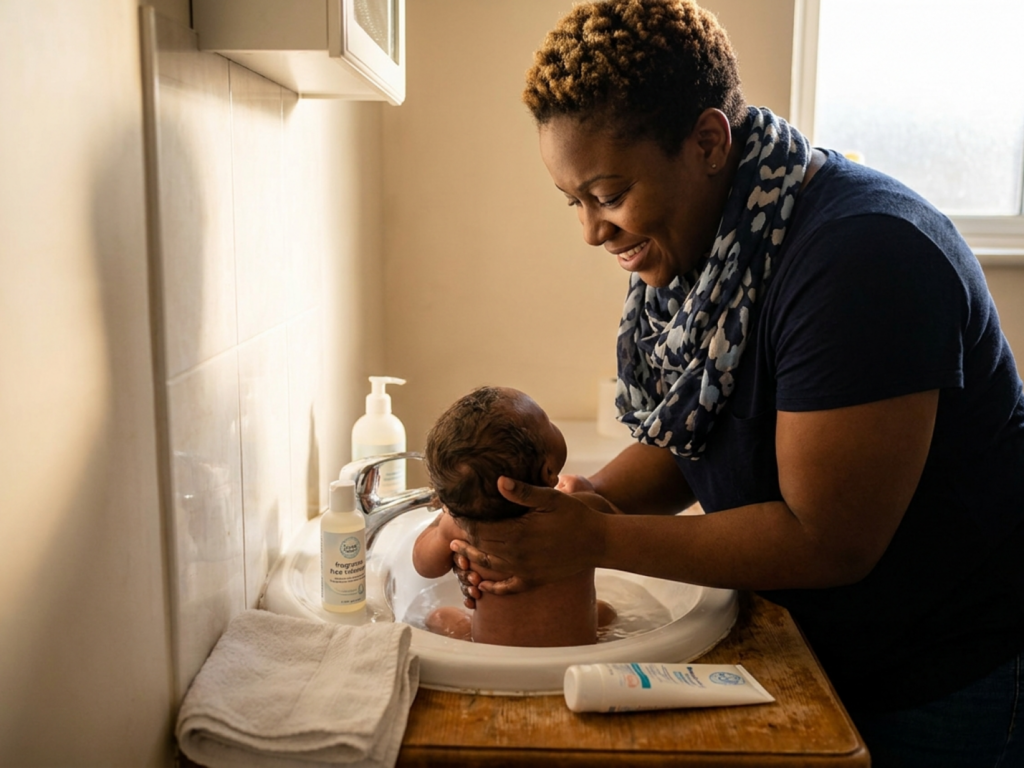
Bath time can be comforting, but for a baby with eczema-prone skin it also needs to be handled with restraint. The aim is not to scrub the skin clean; it is to reduce irritation, preserve moisture, and avoid making an already reactive barrier worse. In eczema in babies, even routine cleansing can sting if the water is too hot, the cleanser is too harsh, or the skin is rubbed dry.
Most guidance favors short lukewarm baths, mild fragrance-free cleansing, gentle patting dry, and immediate moisturization while the skin is still slightly damp. Those steps sound simple because they are simple, but they matter. They fit the biology of the infant skin barrier and can make bathing feel more predictable for families who are trying to keep flares under control.
Highlights
Bathing a baby with eczema-prone skin is usually about lowering irritation, not increasing washing frequency.
Short lukewarm baths and fragrance-free products are the main practical themes across clinical guidance.
Drying technique matters: pat, do not rub, and moisturize right away while the skin is still damp.
If the rash looks infected, is painful, or is not settling, a pediatric clinician should review the plan.
Consistency matters more than intensity; a gentle routine is usually better than a thorough one.
Why bathing needs a different approach
Babies with eczema-prone skin do not usually need less care; they need different care. The central issue is barrier dysfunction. The outer layer of the skin loses water more easily and lets irritants in more readily, so ordinary bath habits can become unnecessarily harsh. Hot water, long soaking, strong cleansers, and friction from towels can all increase transepidermal water loss and leave the skin tighter, drier, and more inflamed.
That is why many clinicians recommend short lukewarm baths rather than extended soaks. The bath should serve as a controlled cleaning step, not a cleansing marathon. A mild routine can also help parents observe the skin closely and notice early changes in redness, scratch marks, or weeping areas. If a baby already has a prescribed eczema plan, that plan should guide the routine first. The broader goal is to protect the infant skin barrier while still keeping the skin comfortable and clean enough for daily life.
Preparing the bath before the baby goes in
Preparation reduces the chance that the baby will stay in water longer than needed. Set out everything first: a soft towel, clean clothes, and the moisturizer or ointment you plan to use afterward. Check that the room is warm enough and that the bath water is tepid rather than hot. If you use a thermometer, follow your clinician’s guidance; if not, the water should feel comfortably warm, not hot, on your wrist or elbow. This is also the stage where a baby bath water temperature check matters most, because small temperature errors can make skin sting or dry out faster.
Some eczema care plans use a soap substitute before the bath instead of ordinary soap. That approach can lower the amount of detergent sitting on the skin during cleansing. If you do use a cleanser, choose a fragrance-free, hypoallergenic one and keep it minimal. There is no need to fill the tub deeply or create a long, leisurely soak. The setup should make it easy to bathe briefly, rinse gently if needed, and move on without fuss.
What to do while the baby is in the bath
Once the baby is in the water, keep the session short and calm. The skin should be washed with the lightest touch that still does the job. Many parents assume they need to clean every inch with soap, but eczema care is usually more conservative than that. Clean only the areas that truly need it, and avoid repeated rubbing over red or dry patches. If a washcloth is used, keep it soft and use it sparingly. The same logic applies to any cleanser: less is usually better than more.
Watch for signs that the bath is becoming irritating. Sudden crying, more scratching, flushed skin, or visible discomfort can mean the water is too warm, the bath is taking too long, or the cleanser is not compatible with the baby’s skin. If the baby seems settled, finish efficiently rather than extending the soak. The best bathing routine is one that respects the infant skin barrier and ends before the skin feels overexposed. In practice, that means a short, tepid bath, gentle contact, and no unnecessary scrubbing.
Drying and moisturizing after the bath
The minutes after bathing are just as important as the bath itself. Pat the skin dry gently with a soft towel; do not rub. Rubbing can worsen micro-irritation and leave already fragile skin more inflamed. Leave the skin slightly damp rather than bone dry, because moisture can help the next step work better. This is where fragrance-free emollient use becomes central. Ointments or creams are generally applied while the skin is still damp so they can trap water and reduce dryness more effectively.
Choose the moisturizer type that your clinician recommends or that your baby’s skin tolerates best. Some families do better with a thicker ointment, while others prefer a cream that spreads more easily. Whatever the product, the important point is timing: apply it promptly. That after-bath window is when the skin can lose water fastest, and immediate moisturization can make the routine feel more protective. If the skin stings when products are applied, that is useful information to bring to the pediatrician or dermatologist, not a reason to push through a painful routine without review.
Common mistakes that can make eczema worse
Several habits tend to backfire. The first is using water that is too hot, especially when a parent is trying to make the baby feel relaxed. Warmth may seem soothing in the moment, but heat can intensify redness and dryness. The second is making the bath too long. More water exposure is not always better for eczema in babies, because the skin may become more waterlogged and then lose moisture quickly afterward. The third is using scented soaps, bubble products, or strong washes that strip the skin and irritate the barrier.
- Do not scrub dry patches in an effort to remove scale.
- Do not assume a soap-heavy bath is cleaner or healthier.
- Do not delay moisturizer until the skin is completely dry.
- Do not ignore worsening itching, crusting, or weeping areas.
Another common mistake is changing too many variables at once. If a routine is not working, adjust one thing at a time so you can tell what helped. That makes it easier for your clinician to give useful advice later, and it keeps the plan organized instead of reactive.
When to ask a clinician to review the routine
Bathing advice is helpful, but it does not replace clinical judgment. Ask for medical review if the rash becomes increasingly red, painful, crusted, swollen, or oozing, or if the baby seems unusually uncomfortable during or after baths. Those can be signs of infected eczema or a flare that needs more than routine skin care. A clinician should also review the plan if the skin remains very dry despite gentle bathing and moisturizer, or if the family is unsure which products are safe to keep using.
It is also reasonable to seek guidance when eczema care is affecting sleep, feeding, or day-to-day caregiving. A practical bathing plan should fit real family life. In many cases, the goal is a repeatable routine: tepid water, a short bath, minimal cleanser, gentle patting, and prompt moisturization. That kind of consistency often matters more than any single product choice. If the baby still seems uncomfortable, the next step is not to push harder at bath time; it is to have the skin assessed and the care plan refined.
Get Medical Advice Soon If
- The skin is weeping, crusted, swollen, or increasingly painful.
- Your baby has fever, poor feeding, or seems unwell along with the rash.
- Bathing or moisturizing causes clear stinging or worsening redness.
- The eczema is not improving despite a gentle routine.
- You are unsure whether a cleanser, emollient, or bath routine is appropriate.
Tools & Assistance
- Fragrance-free hypoallergenic cleanser or soap substitute
- Soft cotton towel for patting dry
- Plain ointment or cream recommended by your clinician
- Warm room and tepid bath water setup
- Pediatrician or pediatric dermatologist follow-up
FAQ
How long should a bath be for a baby with eczema-prone skin?
Usually short. The common advice is to keep the bath brief enough to cleanse gently without prolonged soaking.
Should I use soap every time?
Not necessarily. Many care plans favor a soap substitute or a very mild fragrance-free cleanser used sparingly.
What should I do right after the bath?
Pat the skin dry gently and apply moisturizer or ointment while the skin is still slightly damp.
When should I call the doctor?
Call if the rash looks infected, becomes painful, or does not improve with a gentle bathing and moisturizing routine.
Sources
- Mayo Clinic — How to treat baby eczema
- Chelsea and Westminster Hospital NHS Foundation Trust — Skin care for children with eczema
- PubMed — Bathing advice for children with eczema
Disclaimer
This article is for general information only and does not replace assessment by a pediatric clinician. Seek medical advice for worsening rash, signs of infection, or any concern about your baby's skin.















Please log in to leave a comment.