
Intro
Finding a rash on your baby can feel worrying, especially when the skin looks sore, your baby seems uncomfortable, or sleep starts to suffer. Eczema in babies, also called atopic dermatitis, is a common inflammatory skin condition that usually reflects a sensitive skin barrier and an overactive inflammatory response, not something you have done wrong.
It often comes and goes in flares. The good news is that many babies improve with consistent skin-barrier care, trigger reduction, and, when needed, medical treatment from a healthcare professional.
Highlights
Baby eczema is common, relapsing, and usually driven by skin-barrier dysfunction rather than infection or poor care.
The main goals are to soothe inflammation, restore moisture, and reduce scratching and irritation.
Eczema is not contagious, and it is not the same as a food allergy, although they can coexist in some children.
Routine emollient use supports dry skin, but current research has not clearly shown that it prevents eczema in healthy infants.
What eczema in babies actually is
Eczema, or atopic dermatitis, is a chronic inflammatory skin disorder. In babies, it usually shows up as recurrent patches of dry, itchy, irritated skin rather than a single fixed rash. The underlying problem is thought to be a combination of impaired skin-barrier function and immune dysregulation, which makes the skin lose water more easily and react more strongly to everyday irritants.
This condition is very common in infancy and early childhood. Many babies with eczema also have a family tendency toward atopy, which means a background of eczema, asthma, or hay fever in close relatives. That does not mean a baby will definitely develop other allergic disease, but it helps explain why some children are more prone to sensitive skin.
Parents often ask whether the rash is infectious. Usually it is not. Eczema itself is not contagious, and it is not caused by lack of cleanliness. The main issue is a vulnerable skin barrier that needs gentle, repetitive care.
How eczema usually looks and feels in infants
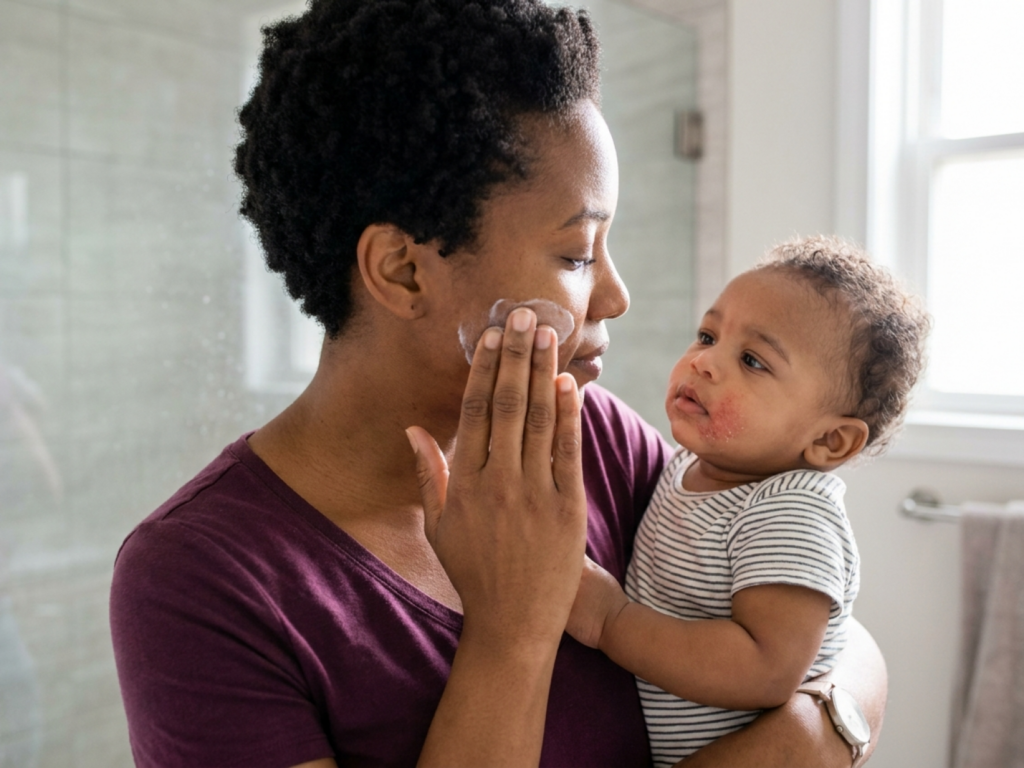
In babies, eczema often appears on the cheeks, scalp, forehead, neck, elbows, knees, wrists, or skin creases. The patches may look red, inflamed, rough, scaly, or darker and more pigment-altered depending on skin tone. The skin can feel dry and may crack, ooze, or crust if it becomes very irritated.
Itch is one of the defining features. Babies cannot describe itching, so the clue may be rubbing their face against bedding, arching, fussiness during skin care, or poor sleep. Scratching can create tiny breaks in the skin, which increases the risk of secondary infection and can make inflammation snowball.
Symptoms often flare and settle over time. A rash that looks better one week may return the next if the skin barrier is stressed by heat, saliva, soaps, rough fabrics, or frequent washing. The pattern can be distressing, but it is also a classic feature of eczema.
Why eczema happens and what can trigger flares
There is usually no single cause. Eczema develops from a mixture of inherited tendency, skin-barrier fragility, and environmental triggers. In daily life, the skin may react to soaps, bubble baths, fragranced wipes, detergents, sweat, drool, rough fabrics, and overheating. In some infants, saliva around the mouth and cheeks can be a constant irritant.
It helps to think in terms of irritation load. The more often the skin is stripped, dried, or rubbed, the harder it is for the barrier to recover. That is why a gentle baby hygiene routine matters so much. Overwashing can worsen dryness, and heavily perfumed products can trigger stinging or inflammation.
Families sometimes worry that eczema must be caused by a food allergy. That is not usually the case. Eczema is not the same as a food allergy, although both can occur in the same child. If a rash seems linked to feeding, it is safer to discuss it with a clinician than to cut foods on your own.
Prevention is not simple. A recent review of infant skin-care interventions did not show clear proof that routine emollient use in otherwise healthy babies prevents eczema or food allergy, so the focus is usually on comfort, barrier support, and prompt treatment of flares rather than blame or overpromising.
Daily skin care that can help calm the skin
For many babies, the foundation of care is regular moisturising with an emollient. These products help trap water in the skin and reduce the tight, dry feeling that drives scratching. Thick creams and ointments are often preferred over thin lotions because they usually provide better barrier support, but the best product is the one your clinician recommends and your family can use consistently.
Bathing does not have to be avoided altogether. Short lukewarm baths can be helpful if they are gentle and followed by immediate moisturiser use. The aim is to cleanse without stripping the skin. Mild, fragrance-free cleansers are usually better than harsh soaps, bubble bath, or scented wash products. Pat the skin dry rather than rubbing.
Clothing and laundry choices matter too. Soft cotton layers, fragrance-free detergents, and avoiding wool or scratchy fabrics can reduce mechanical irritation. If your baby drools a lot, gently drying the skin and applying a barrier layer around the mouth and chin may also help.
If a flare is moderate or persistent, a healthcare professional may recommend additional anti-inflammatory treatment. In babies, that decision should be guided by a clinician who can weigh potency, site of use, and duration safely.
Stopping the itch-scratch cycle and protecting sleep
Itch can be exhausting for both baby and caregiver. The goal is to break the itch-scratch cycle before the skin becomes more inflamed. Keeping fingernails short, using soft mittens only when appropriate, and covering the skin with breathable clothing can reduce damage from scratching. Some families find that cooling the room slightly and avoiding overheating lowers itching at night.
Watch for behavioural clues. Babies with itchy eczema may rub their face on sheets, wake frequently, cry when the skin is touched, or seem harder to settle after a bath. These signs matter because sleep disruption is not just a comfort issue; it can also signal that the skin inflammation is undertreated.
Wet wraps or other intensive strategies are sometimes used in more severe cases, but they should be introduced with professional advice because technique matters. Avoid tight bandaging, strong home remedies, or products that sting. When the skin is already inflamed, simple is usually better.
If itch remains intense despite good moisturising and trigger avoidance, it is worth a medical review. Ongoing scratching raises the risk of excoriations, infection, and prolonged flares.
When to seek medical advice and what clinicians look for
Seek medical review if the rash is spreading quickly, your baby is very unsettled, sleep is badly affected, or the skin is not improving with careful emollient use. You should also have the baby assessed if the diagnosis is uncertain, if the rash began very early in life, or if the pattern suggests something other than eczema.
Warning signs of infection include increasing warmth, swelling, pain, pus, yellow crusting, foul-smelling discharge, or fever. In eczema, infection can develop because broken skin is easier for bacteria to enter. In a baby who seems unwell, a clinician should decide whether antibiotics or other treatment is needed.
At a visit, the clinician will usually look at the rash pattern, ask about bathing and product use, review family history, and ask whether any foods or exposures seem to correlate with flares. They may also discuss whether a referral to dermatology or allergy is appropriate, especially if the eczema is severe, recurrent, or difficult to control.
It can be frustrating when the skin problem is ongoing, but most families do better with a clear plan. A practical routine, a low-irritant environment, and timely follow-up often make a meaningful difference.
Get urgent help if you notice these signs
- Fever, a baby who seems unwell, or rapidly spreading redness can indicate infection.
- Honey-colored crusts, pus, marked swelling, or increasing pain need prompt medical review.
- Breathing difficulty, facial swelling, or sudden widespread hives are emergencies and need immediate care.
- Do not start elimination diets or strong topical treatments without guidance from a clinician.
Tools & Assistance
- A fragrance-free emollient or ointment recommended by your baby’s clinician
- A mild, unscented baby cleanser and short lukewarm baths
- A simple flare diary for products, feeds, and symptom changes
- Your pediatrician, family doctor, or pediatric dermatologist
FAQ
Is eczema in babies contagious?
No. Eczema is an inflammatory skin condition, not an infection that spreads from one child to another.
Should I bathe my baby every day if they have eczema?
A short lukewarm bath can be fine if it is followed by emollient use and gentle cleansing. The exact frequency should be individualized with your clinician.
Will moisturising prevent eczema from starting?
Not reliably. Research in healthy infants has not clearly shown that routine emollient use prevents eczema, although moisturising can still help dry or sensitive skin.
When should I ask a doctor to look at the rash?
Seek advice if the rash is severe, keeps returning, affects sleep, looks infected, or you are unsure whether it is eczema.
Sources
- NHS — Atopic eczema
- MedlinePlus — Atopic dermatitis - children - homecare
- PubMed — Skin care interventions in infants for preventing eczema and food allergy
Disclaimer
This article is for general information only and does not diagnose or replace medical advice. If your baby has a rash, signs of infection, or any concerning symptoms, please contact a qualified healthcare professional.














Please log in to leave a comment.