
Intro
Preparing for labor involves more than arranging transport and packing a bag. Basic hygiene and personal care can improve comfort, support dignity, and make an unplanned hospital or birth-center stay feel less stressful. The aim is practical preparation, not perfection: labor may begin unexpectedly, and clinical priorities will always take precedence over grooming.
Most people can continue their usual pregnancy-safe hygiene routine unless their obstetric or midwifery team has given different instructions. If membranes have ruptured, bleeding occurs, induction or cesarean birth is planned, or you have a condition requiring special precautions, contact your maternity service for individualized guidance.
Highlights
A normal shower or bath with plain soap before labor is generally sufficient; intensive cleansing is unnecessary.
Do not shave pubic or abdominal hair routinely before birth. If hair removal is clinically needed, clipping is preferred to razor shaving.
Pack simple toiletries, lip balm, comfortable clothing, and menstrual-style or postpartum-appropriate absorbent products according to your maternity unit’s guidance.
Avoid introducing products into the vagina or applying unfamiliar creams, oils, or fragrances near the genital area.
Seek maternity advice promptly for concerning symptoms rather than delaying assessment to complete personal-care tasks.
A simple hygiene routine is usually enough
Before labor, use a familiar shower or bath routine that leaves you comfortable without irritating the skin. Wash the external genital area gently with warm water and a mild, unscented cleanser if you normally use one. The vagina is self-cleaning; douching, internal washing, deodorant sprays, antiseptic solutions, and perfumed wipes can disrupt the local microbiome and cause irritation. They do not make labor or birth safer.
Clean hands are particularly important. Wash them after using the toilet, before eating, and before touching any equipment or dressings. Keep towels, underwear, and sleepwear clean and dry. If you have limited mobility, pelvic discomfort, or fatigue, ask a support person to prepare the bathroom, bring supplies, or assist with non-intimate tasks while preserving your privacy.
WHO guidance for surgical preparation recommends bathing or showering before an operation with plain or antimicrobial soap. This advice may be relevant if a cesarean birth or another procedure becomes necessary, but your maternity team’s local protocol takes priority. An antimicrobial wash is not automatically needed for an uncomplicated vaginal birth, and it should not be used internally.
Pubic hair, skin care, and procedure preparation
Routine removal of pubic hair before labor is not required. In fact, shaving can create microscopic abrasions, irritation, folliculitis, or small breaks in the skin that may increase discomfort and potentially facilitate bacterial entry. WHO specifically advises against shaving before surgery; when hair removal is necessary, clipping is preferred and razor shaving is strongly discouraged.
If you already shave or trim, there is no need to feel concerned or to change your routine at the last minute. Avoid trying to remove hair during active labor, when balance, visibility, and concentration may be impaired. If a procedure requires access to a particular area, clinicians can assess the skin and follow their infection-prevention protocol. Do not use depilatory cream, waxing, or a new topical product close to delivery without professional advice.
For general skin care, continue using moisturizers that you know your skin tolerates, but avoid applying oils, lotions, powders, or fragranced products to the abdomen or operative area immediately before a planned procedure unless instructed otherwise. Products can interfere with skin preparation, adhesive dressings, fetal-monitoring equipment, or clinical assessment. Remove body piercings or nail enhancements only if your team requests it or if required by local policy.
Oral hygiene, hair, nails, and comfort during early labor
Brush your teeth and tongue as usual, and keep a toothbrush, toothpaste, and a small cup or bottle for rinsing in your bag. Oral care can reduce dryness and help you feel refreshed during a long admission. If you are nauseated, use a small amount of toothpaste or rinse gently rather than forcing yourself to brush vigorously. Ask your clinicians about eating, drinking, and oral medications once labor is established, particularly if an epidural, general anesthesia, or operative birth may be possible.
Hair care is mainly a comfort issue. A brush, comb, hair ties, or a soft headband may help keep hair away from your face. Avoid tight hairstyles that cause scalp pain during prolonged labor. Clean, short nails are practical for hand hygiene and newborn handling, although nail polish or artificial nails are not necessarily a problem unless your hospital has a policy or clinicians need to assess circulation or oxygenation.
Labor commonly causes sweating, dry lips, muscle tension, and fluctuating temperature. Lip balm, a washcloth, unscented deodorant, a light moisturizer, and a personal water bottle may be useful where permitted. Fragrances can worsen nausea, trigger headaches, or bother other patients, so fragrance-free products are usually the most considerate choice. A cool flannel, clean socks, and loose layers may provide more benefit than an elaborate beauty routine.
Personal-care items to pack for the birth stay
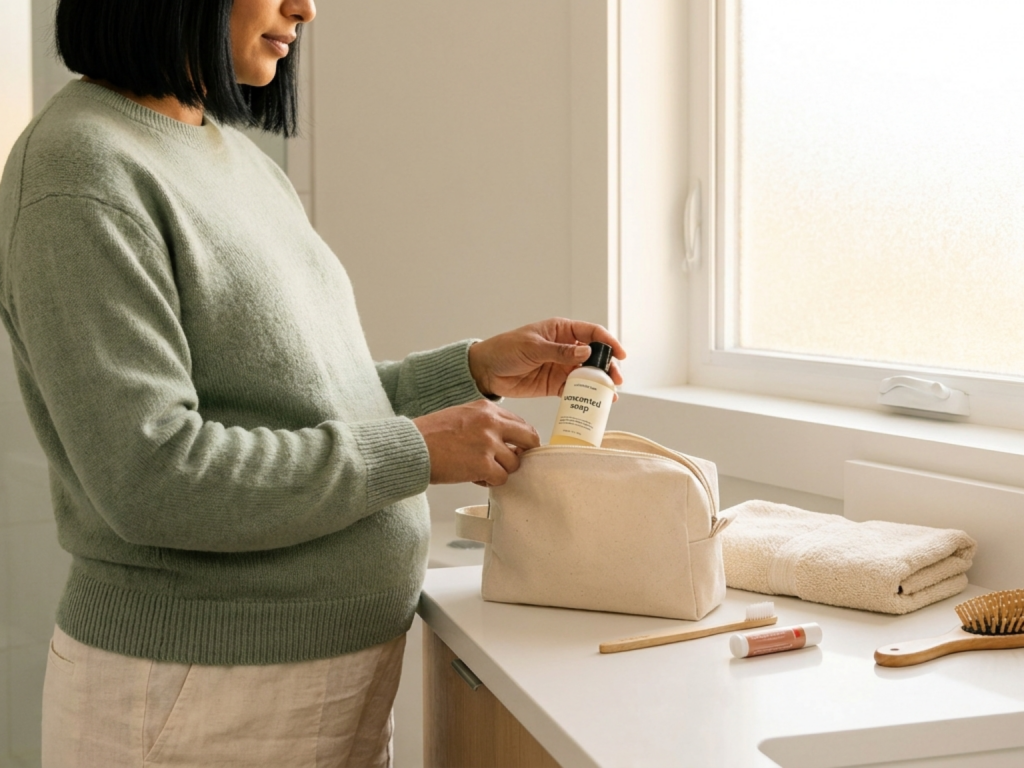
Prepare a small, clearly labeled toiletry bag before the final weeks of pregnancy. Hospital-facing maternity guidance commonly suggests bringing essentials such as a toothbrush, toothpaste, hairbrush, flannel, soap, and other familiar toiletries. MedlinePlus also lists lip balm, lotion, deodorant, and a hairbrush among useful items for labor and delivery. Check your own unit’s packing list because some hospitals provide towels, soap, sanitary products, or disposable underwear.
- Toothbrush, toothpaste, and any prescribed oral-care items
- Unscented soap or cleanser, shampoo if desired, and a small towel or flannel
- Hairbrush or comb, hair ties, and lip balm
- Deodorant and a familiar moisturizer, preferably fragrance-free
- Clean underwear, loose sleepwear, a front-opening top, and non-slip footwear
- Glasses, contact-lens supplies, hearing aids, or other daily personal-care equipment
- Absorbent maternity pads or disposable underwear if your unit asks you to bring them
Keep medications in their original containers and bring an up-to-date medication and allergy list. Do not assume that every supplement, cosmetic product, or home remedy is appropriate during labor. Tell staff about anything you have used on the skin, including essential oils, herbal preparations, or topical medicines.
When membranes rupture or labor begins unexpectedly
If you think your membranes have ruptured, note the time, the fluid’s approximate amount, color, and odor, and contact your maternity service according to your planned instructions. Use a clean sanitary pad rather than inserting a tampon or other object into the vagina. Avoid intercourse, douching, and internal products until your clinicians advise you, because the recommended plan can depend on gestational age, fetal status, group B streptococcus results, and the appearance of the fluid.
You do not need to shower before calling or traveling for assessment. If fluid is green, brown, bloody, foul-smelling, or accompanied by fever, reduced fetal movement, significant bleeding, severe pain, or feeling acutely unwell, seek urgent maternity advice. These findings require clinical assessment; personal care should not delay it.
When labor starts suddenly, prioritize communication, safety, and transport. Take only the essentials that are immediately accessible. A prepared hospital bag before labor can reduce pressure, but missing toiletries will not compromise the quality of clinical care. Staff can usually provide basic supplies, and your support person can bring additional items later if needed.
Hygiene around induction, epidural, and cesarean birth
Planned induction or cesarean birth may involve instructions that differ from routine labor preparation. Your team may tell you when to shower, whether to use a specified antiseptic product, when to stop eating or drinking, and which products to avoid on the skin. Follow those instructions exactly rather than adding extra cleansing steps. A preoperative skin preparation is performed by trained staff when indicated; it is not something to reproduce at home.
Before an epidural or other neuraxial procedure, the back must be assessed and prepared using sterile technique. Do not apply body oil, thick lotion, topical anesthetic, or other product to the intended insertion area immediately beforehand unless instructed. Tell the anesthetist about skin reactions, infections, piercings, tattoos, anticoagulant medicines, and any history of difficult procedures.
For a planned cesarean birth, ask whether you should remove jewelry, nail polish, contact lenses, makeup, or removable dental appliances. Policies vary, and some restrictions relate to anesthesia safety rather than hygiene. If you have a wound, rash, fever, or suspected infection, report it before admission. Your clinicians can determine whether additional evaluation or treatment is needed.
Personal dignity, support, and flexible preparation
Personal care before labor is also about emotional safety. Some people feel vulnerable about body hair, sweating, bowel movements, vaginal discharge, or being examined. These are normal concerns, and maternity professionals routinely provide care in situations involving bodily fluids. You can ask for explanations before examinations, request a particular level of privacy, and identify which support person may assist with washing or changing clothes.
Make a realistic plan rather than a strict checklist. A partner, friend, or doula may help pack toiletries, refill water, manage laundry, or communicate preferences when contractions make concentration difficult. Consider including hygiene supplies in a broader Birth preparation checklist for moms, alongside identification, medical information, transport details, and comfort measures.
After birth, expect vaginal bleeding, sweating, breast leakage, and perineal tenderness to affect your hygiene routine. Ask your midwife or nurse how to clean the perineum, change pads, care for a cesarean incision, and recognize signs of infection. Patting rather than rubbing may be more comfortable, and frequent handwashing remains important before touching the newborn or feeding equipment. Recovery is gradual; accepting help is a form of safe care, not a failure of independence.
When to seek urgent maternity advice
- Heavy vaginal bleeding, severe or persistent abdominal pain, or fainting
- Fever, chills, confusion, shortness of breath, or feeling suddenly very unwell
- Reduced or absent fetal movement compared with your usual pattern
- Green, brown, foul-smelling, or significantly bloody fluid after suspected membrane rupture
- A rapidly worsening rash, wound, swelling, or severe genital pain
- Any concern that labor or a medical complication is developing
Tools & Assistance
- A labeled toiletry bag prepared in the hospital bag
- The maternity triage phone number and transport plan
- A written medication and allergy list
- Clean sanitary pads and spare comfortable clothing
- A support person assigned to bring forgotten supplies
FAQ
Should I shave before labor or a cesarean birth?
Routine shaving is not recommended. Razor shaving can irritate or abrade the skin. If hair removal is clinically necessary for a procedure, the clinical team generally prefers clipping and will follow local protocol.
Do I need to use an antibacterial or antiseptic wash?
A normal shower with plain soap is usually adequate for labor. Planned surgery may involve specific preoperative instructions, so use an antimicrobial product only when your maternity or surgical team recommends it.
Can I use deodorant, lotion, or essential oils during labor?
A familiar, fragrance-free deodorant or light moisturizer may be acceptable, but policies differ and fragrances can worsen nausea. Avoid essential oils and products near procedure sites unless your clinicians approve them.
What should I do if my membranes rupture before I shower?
Contact your maternity service as instructed, use a clean pad, and record the fluid’s color and odor. Do not delay assessment to bathe, and avoid inserting anything into the vagina until advised.
What if I forget my toiletries?
This is common and not a medical emergency. Hospitals often provide basic supplies, and a support person may bring additional items. Prioritize contacting the maternity team and traveling safely.
Sources
- World Health Organization — FACT_SHEET_SEPSIS WEB
- University Hospitals Sussex NHS Foundation Trust — Preparing for the birth
- MedlinePlus, U.S. National Library of Medicine — What to bring to your labor and delivery
Disclaimer
This article provides general educational information and does not replace individualized advice from your obstetrician, midwife, anesthetist, or maternity service. Follow your local birth-unit instructions and seek urgent care for concerning symptoms.
















Please log in to leave a comment.