
Intro
Choosing toys for a baby can feel deceptively complicated. Infants explore with their mouths, have limited ability to release an object, and can rapidly gain new movement skills, so a toy that seemed harmless last week may need reassessment today.
A few practical checks can reduce the risk of choking, strangulation, ingestion, laceration, and sleep-related injury. The aim is not to remove play, but to make exploration safer and more responsive to your baby's changing abilities.
Highlights
For babies, a toy's physical design matters more than educational claims. Large, durable, non-toxic items with no detachable components are usually the safer starting point.
Choking risk is not limited to toys labeled for older children. Inspect loose eyes, squeakers, caps, stuffing, batteries, magnets, and broken pieces before every use.
Supervision remains essential because safety labels and age ranges cannot account for an individual baby's motor skills, mouthing behavior, or medical needs.
Toys do not belong in an infant sleep space. Remove them before sleep, even when a toy is marketed as soothing or comforting.
Why toy safety changes so quickly in infancy
Babies do not use toys in the way adults expect. A newborn may briefly track a high-contrast object, while an older infant may grasp, shake, bang, throw, pull, crawl toward, and mouth the same object. Oral exploration is developmentally normal, but it means every accessible surface and attachment should be considered a potential ingestion or choking hazard.
Age labels are useful screening tools, yet they are not a substitute for observing your own child. A baby born prematurely, a child with hypotonia, impaired coordination, developmental differences, or swallowing concerns may need more individualized guidance. Conversely, a highly mobile baby may reach hazards earlier than the package’s stated age suggests. Choose based on the youngest or least coordinated likely user, and reassess toys as skills change.
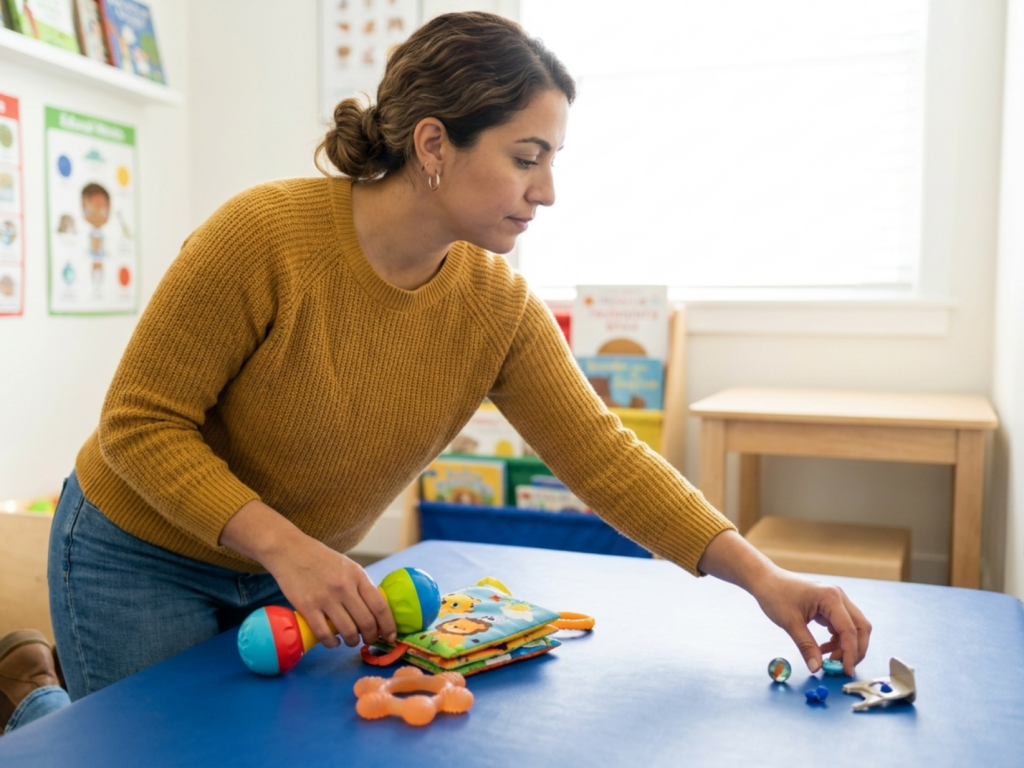
Simple objects often provide enough sensory exploration: a soft fabric book made for infants, a large one-piece rattle, or a securely constructed activity mat. More features do not automatically mean more value, and added components can create more places for a toy to loosen, break, or trap small fingers.
Choose materials and construction with care
Look for toys intended for infants and made from non-toxic materials. They should have smooth surfaces, rounded edges, secure seams, and parts that cannot be pulled off by a determined hand or mouth. Avoid toys with splintering wood, exposed staples, sharp plastic flash, peeling paint, cracked silicone, or loose decorative elements. A toy should tolerate being dropped, chewed, and repeatedly cleaned without degrading.
Soft toys deserve the same scrutiny as hard toys. Check that eyes, noses, bows, tags, ribbons, and clothing are firmly attached. Long hair, fur that sheds, bean filling, and easily accessible stuffing can become hazardous if the fabric tears. Discard a plush item if a seam opens or stuffing becomes exposed; sewing it may not restore the original structural integrity.
For age-appropriate toys, favor one-piece construction when possible. Large rings, rattles, and cloth books should be too large to fit fully into an infant’s mouth. Do not rely on a baby seeming uninterested in a component: mouthing behavior can be sudden, especially during fatigue, teething, or periods of rapid motor development.
Prevent choking and small-part injuries
Choking is a major concern because infants cannot reliably chew, cough effectively, or remove an object from their mouth. Keep toys and components that are small enough to fit through a standard small-parts test cylinder away from children under 3 years. This includes miniature figures, toy food, marbles, small balls, coins, detachable wheels, and pieces from older siblings’ sets.
Inspect new and used toys before offering them. Pull gently on attached parts, examine caps and covers, and look for wear around seams, joints, and battery doors. A toy can become unsafe after a fall, after being chewed, or after exposure to heat and sunlight. Check play areas as well as the toy itself, since small household items commonly migrate into reach.
- Choose balls that are too large to obstruct an infant’s airway.
- Remove packaging, twist ties, plastic film, foam inserts, and small promotional accessories immediately.
- Keep older children’s toys in a separate, inaccessible storage area.
- Stop using any toy that has cracked, fragmented, or developed loose attachments.
If you believe a baby is choking, follow local emergency guidance immediately. If the baby cannot breathe, cough, or cry effectively, call emergency services and begin age-appropriate first aid if you are trained to do so.
Treat batteries, magnets, cords, and water beads as high-risk hazards
Some toy hazards require particular vigilance because an internal injury may occur even when a baby initially appears well. Button or coin batteries can cause serious tissue injury if swallowed or inserted into the nose or ear. Select toys with battery compartments secured by a screw, check that the compartment remains closed, and store spare batteries out of reach. Do not let a baby play with a device whose battery cover is missing or loose.
High-powered magnets are also hazardous if more than one is swallowed. Magnets can attract across intestinal tissue, causing pressure injury, perforation, obstruction, or infection. Avoid toys with accessible magnets, and treat a suspected magnet ingestion as urgent even if there are no symptoms. Water beads, expanding toys, and other small absorbent objects should likewise be kept away from babies because they may enlarge after ingestion.
Cords, strings, loops, and straps can create an entanglement or strangulation risk. Remove long cords from play environments and do not attach toys with strings around a baby’s neck, wrist, crib, car seat, stroller, or playpen. Products designed to hang from equipment should be used only as instructed and removed if a baby can pull the toy within reach.
Keep play separate from sleep and transport
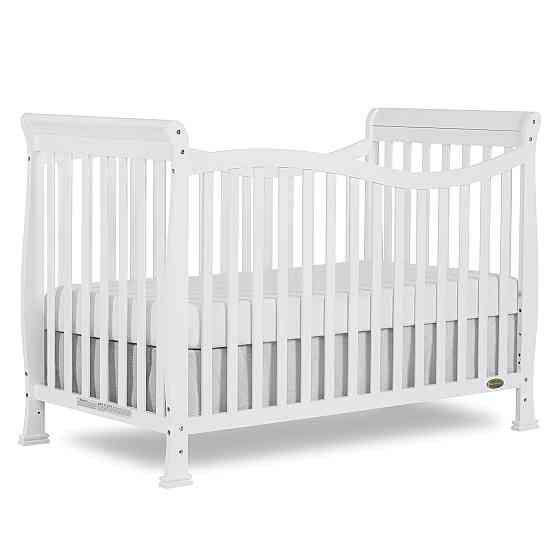
Babies may become attached to a favorite toy, but comfort does not make it appropriate for every setting. Toys, soft objects, loose blankets, and hanging attachments should be removed from a baby’s sleep space. A separate infant sleep surface should remain clear because soft or loose items can contribute to airway obstruction or entrapment. This applies during supervised naps as well as overnight sleep.
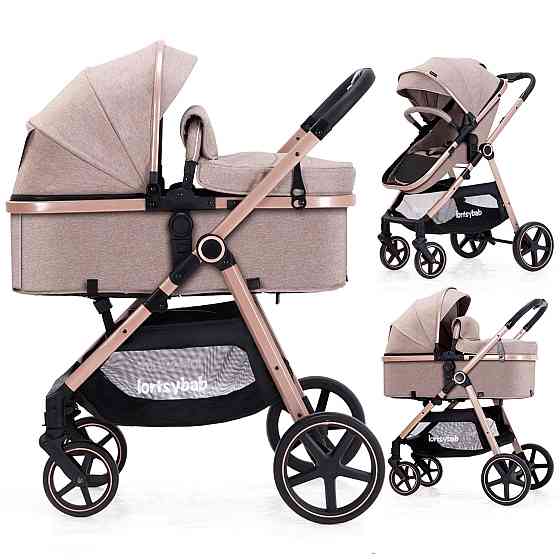
Car seats, swings, bouncers, and strollers also require attention. A dangling toy may seem entertaining during travel, yet it can become a projectile in a sudden stop or obscure a caregiver’s view of the baby. Use only accessories approved for the specific product, and remove toys that interfere with harness placement or safe positioning. Never substitute a toy for attentive supervision when a baby is in equipment.
For floor play, place a small number of safe toys on a clean, firm surface and stay nearby. This makes it easier to notice a loose piece, a toy becoming frustrating, or a baby rolling or crawling toward an unrelated hazard. Rotating a few items can support interest without filling the space with difficult-to-monitor objects.
Cleaning, maintenance, and when to ask for help
Babies share saliva with every toy they mouth, so routine cleaning is part of safe use. Follow the manufacturer’s instructions, especially for electronic toys, fabric items, and toys with internal sound components. Clean toys after illness, visible contamination, outdoor use, or sharing with other children. Let them dry completely before returning them to play, since retained moisture may promote microbial growth in seams and crevices.
Maintenance is not merely cosmetic. Replace a damaged teether, torn cloth book, cracked rattle, or toy with a loose battery door. Avoid improvised repairs involving tape, glue, staples, rubber bands, or tied string, as these can introduce new small parts or sharp edges. Teething toys safety also includes checking for punctures, stickiness, discoloration, and material breakdown after repeated chewing or washing.
Contact a healthcare professional or poison center promptly if you suspect a baby swallowed a battery, magnet, water bead, toy part, or toxic material. Seek emergency care for breathing difficulty, persistent coughing, drooling with distress, vomiting, abdominal pain, lethargy, or a sudden refusal to feed after a possible exposure. Do not induce vomiting or attempt to sweep an object from the mouth unless it is clearly visible and easily removable.
Act promptly for these hazards
- A suspected button battery or magnet ingestion requires urgent medical assessment, even without symptoms.
- Call emergency services immediately if a baby cannot breathe, cry, or cough effectively.
- Remove toys, soft objects, and loose attachments from every infant sleep space before sleep.
- Discard toys with cracks, loose parts, exposed stuffing, damaged seams, or insecure battery compartments.
- Keep small toys and toys intended for older children completely out of an infant's reach.
Tools & Assistance
- Check current toy recalls through your national consumer product safety authority
- Keep your local poison center contact information readily available
- Take an infant first-aid and choking-response course
- Ask your pediatric clinician for individualized advice when your baby has swallowing or developmental concerns
FAQ
Are wooden toys safe for babies?
They can be, provided they are designed for infants, have smooth intact surfaces, use non-toxic finishes, and have no splinters, cracks, or detachable parts.
Can my baby sleep with a soft toy?
No. Keep toys and other loose items out of the infant sleep space to reduce the risk of airway obstruction and entrapment.
What should I do if a toy breaks while my baby is playing with it?
Remove all pieces immediately and inspect the baby's mouth and hands. Seek urgent advice if any part, battery, magnet, or expanding object may have been swallowed.
How often should baby toys be cleaned?
Clean them according to manufacturer instructions and whenever they are visibly soiled, shared, used outdoors, or mouthed during an illness.
Sources
- Nemours KidsHealth — Choosing Safe Toys for Babies (for Parents)
- Seattle Children's Hospital — Toys and Play: Birth to 12 Months
- Product Safety Australia — Babies' toys guide
Disclaimer
This article provides general educational information and is not a substitute for medical advice. Contact a qualified healthcare professional or emergency service for concerns about an injury, choking, or possible ingestion.














Please log in to leave a comment.