
Intro
Car travel is often possible in pregnancy, especially when the pregnancy is uncomplicated and the trip is planned with a little extra care. What changes most is not the car itself, but how long you stay seated, how you position the seat belt, and how quickly you respond to discomfort or warning signs.
If you are feeling uncertain, that is completely understandable. Pregnancy changes balance, circulation, and comfort, and longer drives can make even small issues feel bigger. The tips below focus on practical ways to stay safer and more comfortable, while keeping medical caution front and center.
Highlights
For most people with uncomplicated pregnancies, car travel is possible with good seat belt use, regular breaks, and sensible planning.
Correct restraint positioning matters: the lap belt should sit low on the pelvis, not across the bump, and airbags should stay active.
Long journeys can increase stiffness and circulation-related discomfort, so frequent stops and gentle leg movement are important.
Any collision, even one that seems minor, deserves prompt medical advice because pregnancy symptoms can be delayed.
When pregnancy is high-risk or symptoms are present, individualized guidance from your clinician is the safest approach.
Start with the basics: most trips are about setup and pacing
For many pregnant people, car travel does not need to be avoided; it just needs more attention to detail. The safest and most comfortable trip is usually the one that is planned around your body rather than around the clock. If you are traveling for a prenatal visit, work, family commitments, or a short outing, think first about how long you will be sitting and whether you can stop if you need to.
When pregnancy is uncomplicated, the main issues are usually fatigue, nausea, back strain, and reduced circulation from sitting still too long. These are not trivial concerns. Prolonged immobility can contribute to leg swelling and may add to venous thromboembolism risk, particularly on longer journeys or if you already have risk factors. That is why practical habits matter: regular breaks, movement, hydration, and a well-set seat position.
It is also worth remembering that individual risk varies. If you have bleeding, contractions, significant pain, reduced fetal movements, placenta problems, a history of preterm birth, or another complication, ask your obstetric clinician or midwife for tailored advice before any substantial trip.
Get the seat belt and seating position right
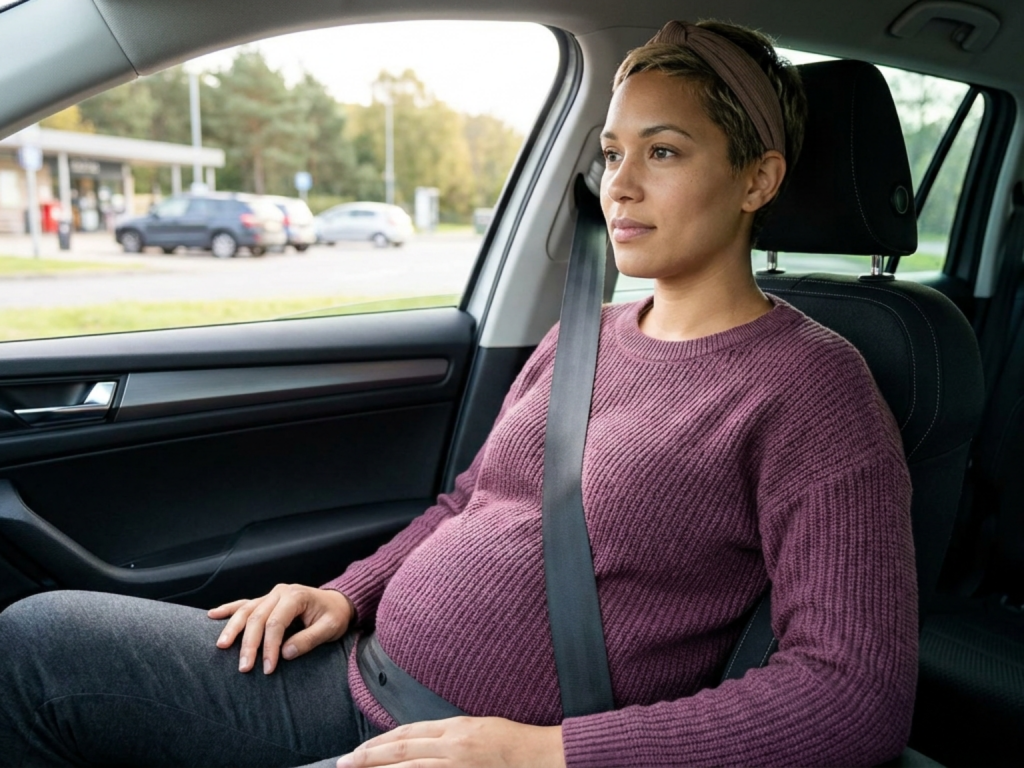
Seat belt use is one of the most important safety steps in the car. The lap belt should sit low across the pelvis and below the bump, while the shoulder belt should run between the breasts and across the chest. It should never sit over the abdomen. This placement helps reduce the chance that the restraint will press directly on the uterus if the car stops suddenly or is involved in a collision.
If you are the driver, adjust the seat so you can reach the pedals comfortably without leaning forward. Keep a sensible distance from the steering wheel while still maintaining control of the vehicle. If you are a passenger, move the seat back from the dashboard as much as practical. Airbags should remain on; they work together with the seat belt to protect you. Disabling them is not recommended unless a clinician or manufacturer has specifically advised it for a rare, individualized reason.
Before you set off, check that the belt lies flat and that bulky coats or loose items are not interfering with the fit. If you are unsure about seat belt positioning while pregnant, it is better to recheck it than to assume it is fine.
Plan for longer drives: breaks, movement, and circulation
Long car journeys in pregnancy deserve extra planning because sitting still for hours can worsen stiffness, swelling, and discomfort in the lower limbs. Aim to stop regularly so you can get out, walk briefly, and reset your posture. Even a few minutes of movement can help circulation and make the remainder of the journey easier.
Gentle leg exercises while seated or during breaks may be helpful. Point and flex your ankles, circle your feet, and stretch your calves if that feels comfortable. These are simple ways to reduce venous stasis, which is the slowing of blood flow that can contribute to clot formation in higher-risk situations.
On longer journeys, some pregnant travelers are advised to use compression stockings. If that has been suggested for you, follow the advice exactly as given by your clinician. Keep the car well ventilated, because warm, stuffy air can make nausea and fatigue worse. Water is also important: sip regularly rather than waiting until you feel very thirsty. If you develop one-sided leg swelling, calf pain, chest pain, or shortness of breath, seek urgent medical help.
Make the ride easier on your back, stomach, and energy levels
Pregnancy can change posture and shift your center of gravity, so a long car ride may expose areas of strain that you did not notice before. A small lumbar cushion, a rolled towel, or a slightly reclined seat can sometimes make a big difference for lower back comfort. The goal is neutral support, not slouching. If a position creates pressure, numbness, or worsening pain, change it rather than trying to push through.
If nausea or reflux is an issue, consider traveling when you are usually less symptomatic, and keep plain snacks available if you have been told to avoid an empty stomach. Avoid strong odors in the cabin where possible. Some people feel better in the front passenger seat because of the extra leg room and easier access to air, but the safest seat is the one that lets you sit upright, belted correctly, and relaxed enough to maintain posture.
Fatigue is also a real safety issue. If you are too tired to stay alert, delay the trip, share the driving, or ask someone else to take over. Pregnancy is not a test of endurance, and choosing rest is a sensible part of safe travel.
After a bump, crash, or sudden pain: do not wait and hope
Any collision in pregnancy should be taken seriously, even if it seems minor and even if you feel well at first. Symptoms can be delayed, and pregnancy adds reasons to be cautious about abdominal pain, bleeding, contractions, or changes in fetal movement. After a crash, seek medical advice promptly and follow local emergency guidance if the impact was significant.
If you are in an accident, the immediate priority is safety: stop the vehicle if you can, call emergency services when needed, and do not continue driving if you feel unwell or shaken. A clinician may want to assess you even when there is no visible injury. That recommendation is not about causing alarm; it is about not missing placental problems, uterine irritability, or other complications that can emerge after trauma.
Get urgent help if you notice bleeding, leakage of fluid, regular tightening or contractions, abdominal tenderness, dizziness, fainting, severe pain, or reduced fetal movements. If you are unsure whether a symptom is serious, treat uncertainty as a reason to call. It is better to be checked and reassured than to wait too long.
When to ask for individualized advice before you travel
There is no single car-travel rule that fits every pregnancy. You should ask your maternity clinician, obstetrician, or midwife for specific guidance if your pregnancy is high-risk, if you have had previous complications, or if the trip will be unusually long or remote. This is especially important if you have placenta previa, vaginal bleeding, ruptured membranes, preterm contractions, severe anemia, a history of venous thromboembolism, multiple pregnancy, or any condition that affects mobility or monitoring.
It is also sensible to ask for advice if you are uncertain about your seat belt fit, if you have pain when sitting for long periods, or if you are recovering from a recent procedure. In some cases, the advice may be simple reassurance plus practical adjustments. In others, your clinician may recommend postponing the journey or arranging a different travel plan.
Before you leave, think about where you would stop if you needed help, how you would contact care, and who would travel with you if symptoms became worse. A little planning can turn an anxious trip into one that feels calmer and more manageable.
Seek urgent care if you notice these warning signs
- Vaginal bleeding or leaking fluid
- Regular contractions, strong cramping, or increasing abdominal pain
- Reduced fetal movements or a clear change from usual movement patterns
- Chest pain, shortness of breath, fainting, or one-sided leg swelling
- Any collision with abdominal impact, even if you feel only mildly affected at first
Tools & Assistance
- Your maternity care team or obstetric clinic for personalized travel advice
- A properly fitted seat belt and a seat position that keeps you upright and comfortable
- A plan for regular rest stops on longer journeys
- Compression stockings if your clinician recommends them for long trips
- A charged phone, emergency contact numbers, and a route with medical services along the way
FAQ
Can I usually travel by car while pregnant?
Yes, many people with uncomplicated pregnancies can travel by car. The main safety steps are correct seat belt use, regular breaks, and checking with a clinician if you have complications.
Should I wear the seat belt over or under the bump?
Neither. The lap belt should sit low on the pelvis and below the bump, while the shoulder belt should cross the chest and between the breasts.
Do airbags need to be turned off in pregnancy?
No, airbags should generally stay active. They work with the seat belt to reduce injury risk in a crash.
How often should I stop on a long drive?
There is no one universal schedule, but regular breaks are recommended. Stop often enough to walk, stretch, and reset your posture, especially on longer journeys.
What should I do if I am in a minor collision?
Do not ignore it. Seek medical advice promptly, because symptoms can be delayed even after a seemingly small impact.
Sources
- NHS — Travelling in pregnancy
- American College of Obstetricians and Gynecologists — Car Safety for Pregnant Women, Babies, and Children
- Better Health Channel — Pregnancy and travel
Disclaimer
This article is for general information only and does not replace advice from your obstetrician, midwife, or other qualified clinician. If you have bleeding, contractions, pain, reduced fetal movements, or a crash, seek medical care promptly.

















Please log in to leave a comment.