
Intro
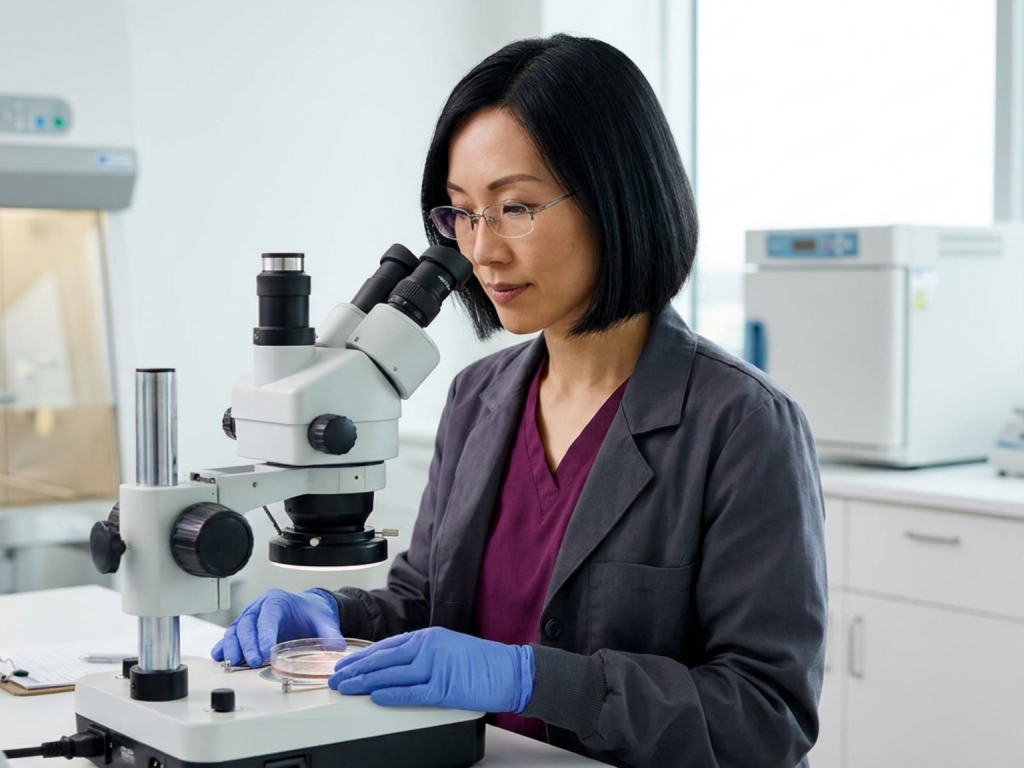
For many people, in vitro fertilization can feel both technical and deeply personal. The embryo fertilization process in IVF is the laboratory stage where an egg and sperm are brought together, either by conventional insemination or by direct sperm injection, so that fertilization can occur outside the body. What follows is a carefully observed sequence of cellular events that helps clinicians determine whether an embryo has formed and how it is developing.
This article explains that sequence in medically accurate language while keeping the focus on what patients often want to know most: how fertilization is achieved, how embryologists confirm it, what early embryo development looks like, and why outcomes can vary from cycle to cycle. It is educational information, not a substitute for individualized medical advice from a fertility specialist.
Highlights
IVF fertilization happens in the laboratory after egg retrieval, when mature oocytes are combined with prepared sperm under controlled conditions.
There are two main fertilization methods: conventional insemination, where sperm are placed around the egg, and intracytoplasmic sperm injection, where one sperm is injected directly into the oocyte.
Successful fertilization is usually confirmed the next day by the appearance of pronuclei, the visible sign that maternal and paternal genetic material has been activated.
After fertilization, the zygote begins cleavage divisions and develops into a multicellular embryo before transfer or freezing.
Fertilization is only one step in the IVF journey; egg maturity, sperm quality, embryo culture conditions, and uterine timing all matter too.
What fertilization means in IVF
In natural conception, fertilization usually occurs in the fallopian tube. In IVF, the same biological event is recreated in a laboratory dish under tightly controlled conditions. The goal is to allow a sperm cell to penetrate the egg, complete fusion of the cell membranes, and trigger the activation of the oocyte. Once that happens, the egg is no longer an unfertilized oocyte; it becomes a zygote, the first stage of a new embryo.
This stage is central to IVF, but it is only one part of a broader reproductive process. The laboratory team is trying to support a very specific set of events: sperm preparation, sperm-egg interaction, oocyte activation, and then early embryo development. Medically literate patients often find it helpful to think of this as a sequence of quality checks rather than a single moment. Mature eggs, healthy sperm, and precise lab handling all influence whether fertilization occurs and whether the resulting embryo continues dividing normally.
Because the process is so time-sensitive, embryologists monitor conditions closely. Temperature, pH, culture media, and timing are all optimized to mimic the physiologic environment as closely as possible. Even with excellent technique, not every egg will fertilize, and that does not necessarily mean the cycle has failed. It may simply reflect the biological limits of gamete quality or the complexity of early human development.
Preparing the egg and sperm before they meet
Fertilization cannot occur well unless the egg and sperm are ready. After ovarian stimulation and egg retrieval, the laboratory identifies mature oocytes, because only eggs at the right stage are usually capable of normal fertilization. On the sperm side, the sample is processed to isolate motile sperm with the best functional characteristics. This preparation helps remove seminal fluid and concentrates cells that are most likely to interact successfully with the egg.
A key concept is sperm capacitation, a functional maturation process that enables sperm to fertilize an egg. In the body, capacitation happens naturally in the female reproductive tract. In IVF, the lab environment and sperm preparation are designed to support the same change. The egg itself is protected by the zona pellucida, a glycoprotein shell that sperm must penetrate before fusion can occur. This barrier is biologically important because it helps ensure that only one sperm fertilizes the egg.
Embryologists then place the prepared gametes into culture conditions appropriate for fertilization. At this stage, the clinic is not trying to force biology; it is trying to create a stable environment where the egg and sperm can complete their natural sequence of interactions. This is why IVF is often described as assisted reproduction rather than replacement of reproduction. The biological steps are still happening, but they are happening under observation and with controlled support.
- Mature oocyte selection matters because immature eggs are less likely to fertilize normally.
- Sperm preparation improves the odds of using motile, functional sperm cells.
- Capacitation and zona pellucida penetration are essential steps in successful fertilization.
Conventional insemination and ICSI
There are two main ways the laboratory can bring sperm and egg together. In conventional insemination in IVF, a measured number of prepared sperm are added to a dish containing the oocytes. The sperm then move toward the egg, and one may penetrate the zona pellucida and fuse with the oocyte membrane. This method relies on the sperm’s own motility and fertilizing ability, so it is often used when sperm parameters are reasonably reassuring.
The second method is intracytoplasmic sperm injection, or ICSI. In this approach, an embryologist uses micromanipulation equipment to inject a single sperm directly into the egg’s cytoplasm. This bypasses several upstream steps of natural fertilization, including the need for sperm to traverse the zona pellucida on their own. ICSI is particularly useful when sperm count, motility, or morphology is a concern, or when previous fertilization results have been poor. It can also be selected for specific laboratory or clinical indications.
Although the two methods differ technically, the goal is the same: create a fertilized egg that can continue developing. The best method depends on the couple’s or patient’s reproductive history, the semen analysis, the number and maturity of retrieved oocytes, and the clinic’s judgment. Patients sometimes worry that ICSI is somehow more artificial or less viable, but in practice it is simply another tool for helping one sperm achieve what must still be a biologically normal fertilization event.
After either method, the embryology team watches for signs that the egg has responded appropriately. That next checkpoint is what tells the team whether fertilization has truly occurred.
How fertilization is confirmed
Fertilization is not judged the instant sperm enters the egg. Instead, embryologists usually confirm it the next day by looking for pronuclei. A normal fertilized egg often shows two pronuclei, one from the egg and one from the sperm, before those nuclei merge. This is one of the clearest laboratory signs that fertilization has occurred as expected.
At the same time, the team also looks for appropriate cytoplasmic changes and overall egg appearance. Abnormal fertilization can happen too. An egg may fail to fertilize, show only one pronucleus, or show more than two pronuclei, which may indicate that too many sperm entered or that the fertilization event was not normal. These findings help the clinic interpret the cycle and decide whether any laboratory adjustments may be useful in the future.
It is understandable to feel emotionally attached to this stage, because it is often the first real evidence that the cycle is moving forward. Still, the confirmation of fertilization is not the same as the promise of pregnancy. A fertilized egg must still divide, develop, and ultimately interact successfully with the uterine lining after transfer. That is why fertility teams usually explain fertilization results as part of a larger continuum, not as a final outcome.
In practical terms, the fertilization check gives patients and clinicians early information. It can reassure them that the lab step worked, but it also helps identify where a cycle may need refinement in the future if the response is unexpectedly low.
From zygote to early embryo
Once fertilization is confirmed, the zygote enters a period of rapid cleavage divisions. These are orderly cell divisions in which the embryo becomes progressively more multicellular without growing much in overall size at first. The cells formed during this stage are called blastomeres. Over the next few days, the embryo may progress from a cleavage-stage embryo to a morula and then to a blastocyst stage embryo, depending on the clinic’s culture strategy and the embryo’s intrinsic developmental pace.
This early development phase is critical because it helps embryologists assess viability. Some embryos divide in a pattern that suggests strong developmental potential, while others arrest or progress more slowly. The lab may monitor cell number, symmetry, fragmentation, and later the formation of a fluid-filled cavity in the blastocyst stage. In some settings, embryos are cultured to day 3 and transferred earlier; in others, they are grown to day 5 or 6 to see which ones reach blastocyst stage embryos.
The reason this matters is not simply academic. Embryo culture provides information that can help guide transfer timing, freezing decisions, or preimplantation genetic testing in selected cases. That said, embryo grading is not destiny. A lower-scoring embryo can still lead to pregnancy, and a visually excellent embryo does not guarantee implantation. Biology is probabilistic, not absolute.
For many patients, this stage is both hopeful and hard to wait through. It can help to remember that each division is part of a larger developmental cascade that clinicians watch closely but cannot fully control.
What this stage means for transfer and outcomes
The embryo fertilization process in IVF is important because it determines whether there is an embryo available for transfer or cryopreservation, but it does not determine the final outcome by itself. After fertilization and early development, the fertility team selects the best timing for embryo transfer based on embryo stage, uterine preparation, and the overall treatment plan. Some embryos are transferred fresh, while others are frozen for later use. In either case, the fertilization step has already done its job: it has created a viable embryo that can continue the path toward implantation process in a receptive uterus.
Several factors affect the chance of success. Egg age is a major one, because oocyte quality changes with maternal age. Sperm quality matters too, along with the laboratory method used, the number of mature oocytes obtained, and the embryo’s developmental progress. Even when fertilization occurs normally, not every embryo implants, and not every implanting embryo continues to a live birth. That reality can be emotionally difficult, but it is also a reflection of how complex human reproduction is, even in expert hands.
If fertilization does not occur or occurs in an unexpectedly small number of eggs, the clinical team may review the cycle in detail. They may consider whether a different insemination approach, such as intracytoplasmic sperm injection, would be more appropriate in a future cycle. They may also discuss sperm preparation, egg maturity, or other technical factors. These conversations are best handled with the treating fertility specialist, who can interpret the details in the context of the full medical history.
For patients, the most useful mindset is usually one of informed patience. Fertilization is a milestone, not the finish line, and each step after it provides more information about the chances of a successful pregnancy.
When to seek clinical guidance
- Do not interpret fertilization results on your own; ask your IVF team to explain the findings in context.
- A low fertilization rate does not automatically mean future cycles will have the same outcome.
- Embryo grading and fertilization status are not the same as pregnancy or implantation success.
- Any questions about egg maturity, sperm factors, or ICSI are best reviewed with a fertility specialist.
- If you feel overwhelmed by the process, ask for counseling or patient support through your clinic.
Tools & Assistance
- A reproductive endocrinologist or fertility specialist
- An embryology laboratory team
- Your clinic's patient coordinator or nurse educator
- Trusted IVF patient education materials from your fertility center
- Counseling or mental health support during treatment
FAQ
What is the difference between fertilization and embryo development in IVF?
Fertilization is the moment sperm and egg combine to form a zygote. Embryo development begins afterward, when that zygote starts dividing into multiple cells.
How do doctors know fertilization happened?
Embryologists usually check the egg the next day and look for two pronuclei, which is the standard sign of normal fertilization.
Why might some eggs not fertilize in IVF?
Common reasons include egg immaturity, sperm-related factors, or biological variability. Your clinic can help interpret the specific cycle result.
How soon after fertilization can an embryo be transferred?
Transfer timing varies by clinic and embryo development, but it is often after a few days of culture, sometimes at the cleavage stage or blastocyst stage.
Does ICSI guarantee fertilization?
No. ICSI can improve the chance of fertilization in selected cases, but it does not guarantee a successful embryo or pregnancy.
Sources
- NIH / NCBI Bookshelf — In Vitro Fertilization - StatPearls
- MedlinePlus — In vitro fertilization (IVF)
- Mayo Clinic — In vitro fertilization (IVF)
Disclaimer
This article is for general educational purposes only and is not a substitute for personalized medical advice, diagnosis, or treatment. Please consult a qualified fertility specialist or healthcare professional about your specific situation.


















Please log in to leave a comment.