
Intro
Many families worry that snacks will “spoil” a child’s appetite, while others worry that long gaps between meals leave a child too hungry to eat well. In practice, the goal is usually not to eliminate snacks, but to fit them into a predictable pattern that supports growth, energy, and a calm relationship with food.
For children, snacking is not automatically a problem. The balance depends on timing, portion size, and what the snack contains. A thoughtful pattern can help children meet nutrient needs, avoid extreme hunger, and stay steady through busy school days. It can also reduce grazing, which is eating small amounts all day without a clear meal structure.
Highlights
Snacks are most helpful when they support, rather than replace, regular meals.
A child who arrives at meals extremely hungry may need better timing, not simply bigger portions.
Protein, carbohydrate, and healthy fat can make a snack more satisfying and lasting.
Predictable meal and snack routines often work better than constant grazing.
The best plan depends on the child’s age, growth pattern, activity level, and medical needs.
Why the balance matters
Children usually do best with a rhythm that alternates between meals and snacks, rather than a pattern of constant nibbling. Research on meal patterns and snacking suggests that overall diet quality and energy balance are influenced less by the word “snack” itself and more by how often, how much, and what kinds of foods are eaten. In other words, a snack can help or hinder nutrition depending on the context.
For a growing child, a well-timed snack can prevent over-hunger, improve concentration, and make the next meal easier to manage. On the other hand, frequent grazing on low-nutrient foods can blunt appetite for meals and may crowd out iron, protein, fiber, and other important nutrients. The balance is not about perfection. It is about giving the body regular opportunities to eat enough without creating a nonstop eating pattern.
It may help to think in terms of structure. Meals are the main anchors of the day, and snacks are the smaller bridges between them. When those bridges are planned thoughtfully, children often feel more secure, less frantic around food, and more able to recognize their own hunger and fullness cues.
How to recognize real hunger
Children do not always describe hunger in a direct way. Some say they are “starving” when they are bored, tired, or hoping for a preferred food. Others become irritable, distracted, or withdrawn instead of saying they are hungry. Parents and caregivers often have to look at the pattern rather than a single request for food.
True hunger tends to build gradually and improve after eating a reasonable portion. It often shows up at predictable intervals, such as midmorning or late afternoon. Habit eating, by contrast, may happen at the same time every day even when the child recently ate well. Emotional eating can also appear during stress, transitions, disappointment, or screen time. None of this is a moral failing. It is normal human behavior, especially in children who are still learning to notice body signals.
A useful question is: “Is this child asking for food because the body needs fuel, or because something else is happening?” Sometimes the answer is not clear right away. Offering water, a brief pause, movement, or a nonfood transition can help reveal whether the request is driven by hunger or by routine. If a child consistently seems hungry very soon after eating, or seems unable to go through normal intervals without food, it is reasonable to discuss the pattern with a clinician.
What makes a snack balanced
The most useful snacks usually combine at least two of the following: carbohydrate for quick energy, protein for steadier satiety, and healthy fat for longer-lasting fullness. Fiber is also helpful because it slows digestion and supports bowel health. MedlinePlus and other clinical guidance emphasize that snack size matters as much as food choice. A snack should be small enough to protect appetite for the next meal, but substantial enough to actually satisfy.
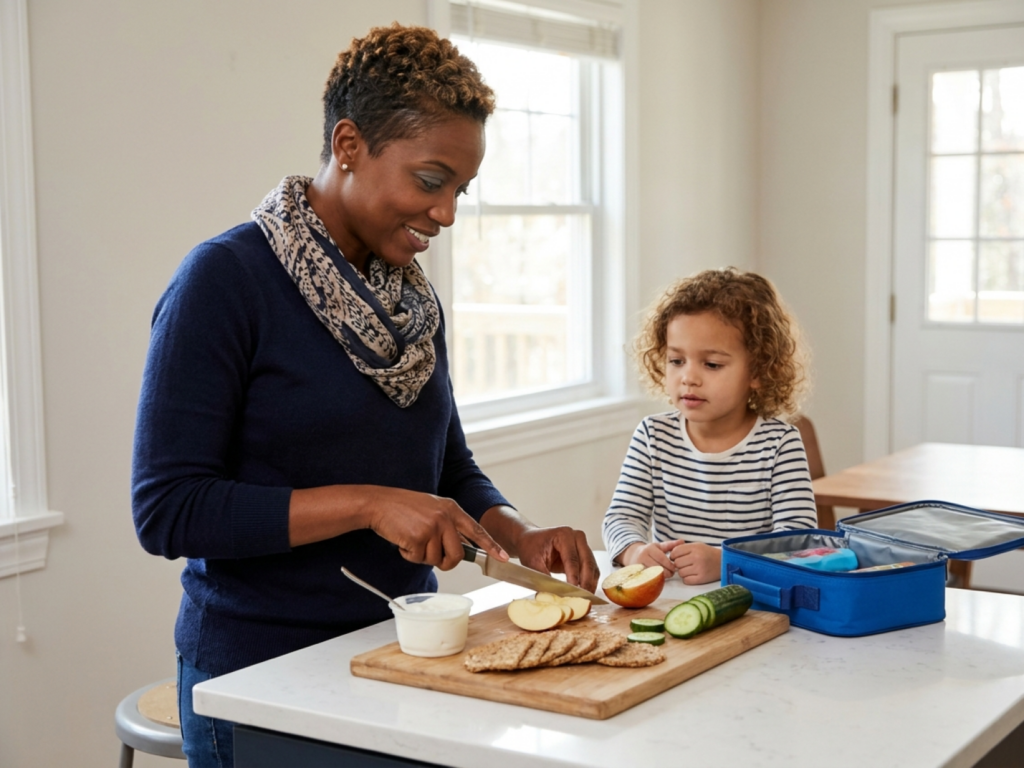
Examples of more balanced snack patterns include fruit with yogurt, whole-grain crackers with cheese, hummus with vegetables, or peanut butter on toast if that is safe and appropriate for the child. The specific foods do not need to be fancy. In fact, simple foods are often easiest to repeat and easier for families to keep on hand. A snack that is mostly candy, chips, or sweet drinks may briefly satisfy taste, but often does little for fullness or nutrient intake.
Portion size deserves special attention. A snack is not a second lunch. If the snack is too large, the child may skip dinner or eat very little at the meal. If it is too small, the child may come to the table ravenous and frustrated. The sweet spot is a modest serving that takes the edge off hunger without replacing the meal.
It can help to prepare snack foods in advance, especially for busy afternoons. When children can see a reasonable portion already set out, they are less likely to keep asking for more by default. This is one place where predictable meals and snacks can quietly reduce conflict.
Building a day around meals and snacks
Many families find that a predictable schedule works better than responding to every request in the moment. For example, breakfast, a morning snack if needed, lunch, an afternoon snack, and dinner may be enough for many school-age children. The exact timing does not have to be rigid, but the pattern should be stable enough that the child knows food is coming.
Structured meal and snack times can also support appetite. If a child knows that food is available on a dependable schedule, there is less pressure to eat whenever food appears. That predictability can reduce bargaining, grazing, and stress around the kitchen. It also makes it easier for caregivers to notice whether a child is eating enough overall.
One practical approach is to protect meals as the main eating events of the day and to treat snacks as planned supports. Snacks are most useful when they are spaced far enough from meals to allow hunger to return, but close enough to prevent extreme fatigue or irritability. For many children, a snack about two to three hours after a meal is reasonable, though individual needs vary.
Family culture matters too. Some households do well with a sit-down snack at a table, while others need a portable option between school and activities. The important point is consistency. Children do better when the message is clear: food is available, but not all day in unlimited amounts. That structure is often more comforting than it sounds.
Special situations: school, sports, and picky eating
Snacking becomes more complicated when children are in preschool, have long school days, participate in sports, or are going through a picky phase. A child who arrives home after school may genuinely need food quickly, because the gap since lunch may have been long. A child who has soccer practice may need a small pre-activity snack and then a proper meal later. In these cases, the goal is not to avoid snacks, but to time them so they support activity and growth.
For preschoolers, appetite can swing dramatically from day to day. Some children eat well at breakfast and barely touch lunch. Others do the opposite. A flexible but predictable approach usually helps more than forcing extra food at one sitting. For children with picky eating in preschoolers, repeated exposure to a variety of foods, without pressure, is often more helpful than turning snacks into a reward or a battleground.
It is also worth considering the setting. Children often snack more mindlessly in front of screens or when food is always visible. Keeping snack foods portioned and out of constant reach can make it easier to notice hunger before food is offered. At the same time, children who are physically active or have higher energy needs may legitimately need more frequent fueling. The right pattern depends on the child, not on a one-size-fits-all rule.
For background on broad nutrition patterns, many families also benefit from reviewing a healthy diet for children alongside snack planning. The two topics are linked: snacks work best when they fit into the larger day.
When to ask for extra help
Most families can improve snack-and-meal balance with routine, observation, and small adjustments. But some situations deserve professional input. If a child is losing weight, not gaining as expected, has trouble chewing or swallowing, has frequent vomiting, constipation that affects intake, or shows a very limited food range, a pediatrician or registered dietitian should be involved. Feeding problems can also reflect sensory issues, anxiety, oral-motor challenges, or other medical conditions.
Be especially careful if food rules are becoming a source of distress, if the child is fearful about eating, or if caregivers feel trapped in repeated conflict around food. A child who seems unable to tolerate normal meal spacing, or who has strong reactions to hunger, may need a more individualized plan. Children with diabetes, food allergies, gastrointestinal disease, or other chronic conditions may also need tailored guidance on timing and composition of snacks.
There is no shame in asking for help early. In fact, early support can prevent small concerns from turning into entrenched patterns. A clinician can help sort out whether the issue is appetite, routine, growth, nutrient intake, sensory sensitivity, or something else entirely. The aim is not to label the child. It is to make eating feel safer, steadier, and more workable for the whole family.
If you are unsure how much snacking is too much or too little, a short food-and-hunger diary can be useful to bring to an appointment. It gives the clinician a clearer picture of timing, triggers, and patterns across the week.
When to get medical advice
- Seek help if a child is losing weight, not growing as expected, or seems unusually fatigued.
- Get assessed if swallowing, chewing, vomiting, constipation, or abdominal pain is affecting intake.
- Talk to a clinician if food refusal, fear of eating, or severe picky eating is disrupting daily life.
- Ask sooner if the child has diabetes, food allergy, gastrointestinal disease, or another chronic condition.
- Do not use this article to diagnose a feeding disorder or to replace individualized care.
Tools & Assistance
- Pediatrician or family doctor for growth and feeding concerns
- Registered dietitian for meal and snack planning
- School nurse or school meal services for daytime eating support
- Food-and-hunger diary to track timing, portions, and triggers
- Community nutrition counseling or feeding therapy if recommended
FAQ
Should children snack every day?
Not always, but many children do well with one or two planned snacks between meals. The key is whether snacks support hunger, growth, and routine rather than replacing meals.
What if my child is never hungry at meals but always wants snacks?
That pattern can happen when snacks are too close together, too large, or too low in satiety. A clinician or dietitian can help adjust timing and portion size.
Are packaged snacks always bad?
No. Some packaged snacks can fit into a balanced pattern, especially if they are portioned and paired with protein or fiber. The overall daily pattern matters more than one food.
How do I handle a child who asks for food constantly?
Start by checking schedule, sleep, activity level, and whether snacks are satisfying. If constant requests continue, or growth is a concern, ask a pediatric professional for guidance.
Sources
- PubMed — Meals and snacking, diet quality and energy balance
- MedlinePlus — Snacks for adults: MedlinePlus Medical Encyclopedia
- Mayo Clinic Health System — Are you mindlessly munching or sensibly snacking?
Disclaimer
This article is for general educational purposes only and does not replace advice from a pediatrician, registered dietitian, or other qualified health professional.














Please log in to leave a comment.