
Intro
Preschool social skills grow through thousands of small interactions: waiting for a turn, recovering from disappointment, joining a pretend game, or noticing that another child feels sad. These milestones are not a strict checklist that every child meets on the same day, but they offer a helpful map of how social-emotional capacity usually develops between ages 3 and 5.
If a child is not yet doing something listed here, that does not automatically mean something is wrong. Temperament, language development, sleep, sensory preferences, family stress, neurodevelopmental differences, and opportunities for peer play can all shape the pace. When concerns persist or interfere with daily life, a pediatrician, developmental-behavioral specialist, early childhood educator, or speech-language professional can help clarify what support would be useful.
Highlights
Preschoolers typically move from simple interactive play toward cooperative play with shared roles, rules, and negotiation.
Skills such as sharing, turn-taking, emotional regulation, and following simple directions are closely tied to kindergarten readiness.
Pretend play is not just entertainment; it supports language, perspective-taking, problem-solving, and social flexibility.
Variation is common, but persistent loss of skills, intense aggression, or inability to engage with others deserves professional guidance.
What preschool social skills include
Preschool social skills are the observable behaviors that help a child participate in family routines, peer play, early learning, and community settings. They include joining play, using words or gestures to express needs, taking turns, sharing materials, following simple rules, tolerating frustration, showing empathy, and beginning to resolve conflict with adult support. Clinically, many of these abilities sit within social-emotional development: the integration of emotional regulation, attachment security, language, executive function, and early moral understanding.
A useful way to think about preschool social growth is that children are learning to translate internal feelings into socially acceptable actions. A 3-year-old may still grab a toy when excited, while a 5-year-old is more likely to ask, wait, bargain, or seek help. This change reflects maturation in impulse control, receptive and expressive language, and the child’s growing ability to understand that other people have separate thoughts and feelings.
Milestones should always be interpreted in context. A child who is quiet in a new classroom may be socially capable but slow to warm. A bilingual child may understand the social situation well while still searching for words. A child with sensory sensitivities may avoid noisy group play but connect beautifully in calmer settings. The pattern over time matters more than one isolated behavior.
Around age 3: moving into interactive play
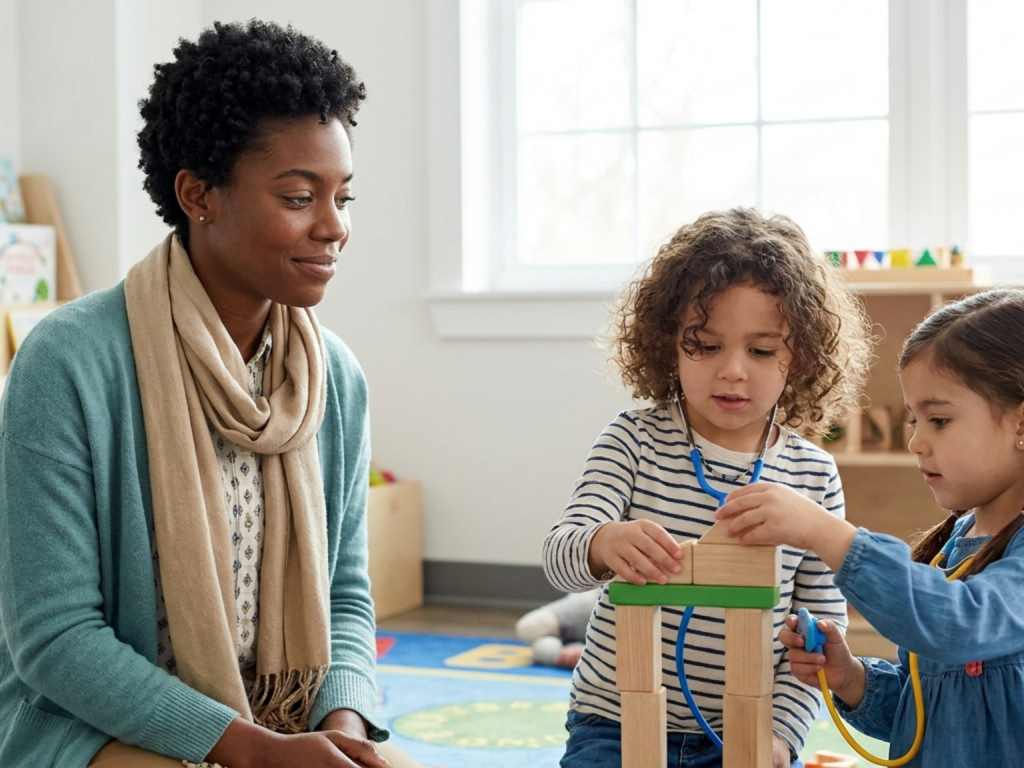
By about age 3, many children move beyond mostly parallel play, where children play near each other without much shared purpose, into more interactive play. They may join other children briefly, imitate peers, offer or request a toy, and participate in simple make-believe with dolls, toy animals, blocks, pretend food, or household objects. They often enjoy being near other children even when they still need frequent adult help to keep play going.
At this age, social behavior is often enthusiastic but uneven. A 3-year-old may say a friend’s name, chase another child joyfully, or invite someone into a pretend scenario, then moments later cry, push, or shout when the play does not go as expected. This is not simply defiance; the child’s regulatory capacity is still immature. Adults usually need to provide external regulation by naming feelings, setting limits, and offering concrete scripts such as, “You can say, ‘My turn next,’” or “Hands are not for hitting.”
Common 3-year milestones include simple pretend play, emerging turn-taking, early sharing with reminders, seeking adult comfort after conflict, and beginning to understand basic rules such as cleaning up or staying with the group. Many children can participate in short routines, but transitions may still be hard. The goal is not perfect cooperation; it is increasing recovery after frustration and more frequent use of communication instead of physical action.
Around age 4: cooperative play becomes more complex
By around age 4, many preschoolers prefer playing with peers over playing alone for at least part of the day. Their pretend play often becomes more elaborate: children assign roles, create short storylines, negotiate who will be the doctor, parent, firefighter, baby, shopkeeper, or teacher, and use objects symbolically. This kind of play supports perspective-taking because the child must hold both their own idea and another child’s idea in mind.
Four-year-olds are also more likely to practice cooperative play, though conflict remains normal. They may share materials, wait briefly, follow a game sequence, and modify a plan when another child objects. They can often identify simple emotions in others, such as happy, sad, mad, or scared, and may offer comfort in concrete ways, like bringing a toy or calling an adult. They are still learning that empathy is not only noticing distress, but responding in a way the other person finds helpful.
This is a good age to build social problem-solving language. Adults can coach children to state the problem, listen to the other child’s words, and choose from two or three solutions. For example: “You both want the truck. You can use a timer, find another truck, or build the road together.” These small scripts strengthen executive function and reduce reliance on grabbing, screaming, or withdrawal.
Some 4-year-olds are socially bold; others are observant and cautious. A child does not need to be extroverted to be socially healthy. More important signs are whether the child shows interest in connection, can recover with support, and is gradually expanding the range of people, places, and routines they can manage.
Around age 5: rules, responsibility, and independence
By age 5, many children can follow simple rules and directions, take turns in structured games, participate in group routines, and show more independence in familiar environments. They may understand that rules help a group function, not just that adults impose them. This shift can be seen when a child reminds others of the rules, waits for a turn in a board game, or accepts that everyone gets the same amount of time with a favorite toy.
Five-year-olds often show more stable friendships and may choose particular playmates. They can engage in longer pretend scenarios, collaborate on a building project, or participate in classroom jobs. They may accept small responsibilities such as putting materials away, feeding a class pet with supervision, helping set the table, or completing a short work routine. These tasks build self-efficacy, the sense that “I can do useful things,” which supports both social confidence and school readiness.
Emotional regulation is also more advanced, although not adult-like. Many 5-year-olds can use strategies such as asking for help, taking a break, using words to express anger, or accepting a compromise. However, fatigue, hunger, illness, overstimulation, or major life stress can temporarily reduce these skills. Regression during transitions, such as a new school or new sibling, can be a stress response rather than a permanent setback.
At this stage, adults can gradually step back from solving every disagreement. The most effective support is often a calm prompt: “What could you try?” or “How can you make it fair?” Children still need supervision, but they also need repeated opportunities to practice negotiation in real time.
Emotional regulation as the foundation
Social milestones depend heavily on emotional regulation. A child cannot consistently share, wait, apologize, or cooperate if their nervous system is overwhelmed. Preschoolers are developing top-down control from frontal brain networks, while strong emotions still activate rapid, body-based reactions. This is why a child may know the rule when calm but be unable to follow it during intense frustration.
Supportive co-regulation is more effective than humiliation or harsh punishment. Co-regulation means an adult helps the child return to a manageable arousal state through a steady voice, predictable limits, physical space if needed, and simple language. Once the child is calmer, the adult can teach the social repair: returning the toy, checking whether someone is hurt, trying again with words, or helping rebuild what was knocked down.
Useful adult responses include naming emotions, validating feelings without permitting unsafe behavior, and giving specific replacement actions. For example, “You were angry that the block tower fell. It is okay to feel angry. It is not okay to throw blocks. You can stomp your feet here or ask me for help.” Over time, repeated experiences like this help children internalize both the language and the behavioral sequence.
It is also important to notice positive behavior when it happens. Specific feedback such as “You waited while Maya finished; that helped the game keep going” teaches cause and effect better than general praise alone. Children learn that prosocial behavior has a real impact on the group.
How caregivers can support social growth
Preschool social skills grow best in warm, structured environments. Children need secure relationships, predictable routines, and many low-pressure chances to practice. Playdates, preschool classrooms, library groups, playground visits, sibling interactions, and pretend play at home can all become social laboratories when adults provide gentle scaffolding.
- Model the language you want the child to use: “Can I have a turn when you are done?” or “I do not like that. Please stop.”
- Use visual or concrete supports for waiting, such as timers, turn cards, or a simple first-then routine.
- Read picture books that show friendship, anger, jealousy, helping, and repair, then discuss what each character might feel.
- Practice short role-plays before challenging situations, such as joining a game or saying goodbye at school drop-off.
- Keep expectations realistic when the child is tired, hungry, ill, or overstimulated.
Adults also support social development by protecting rest, nutrition, movement, and sensory balance. A child who is chronically sleep-deprived or overwhelmed by noise may appear oppositional when the primary issue is reduced coping capacity. If social difficulties are prominent across settings, it can help to ask educators what they observe during free play, transitions, meals, and group activities. Patterns across contexts are often more informative than behavior in one environment.
When to seek extra guidance
Some variation in preschool social milestones is expected, but certain patterns deserve professional discussion. Consider speaking with a pediatrician or qualified developmental professional if a child rarely shows interest in other children by age 3, does not engage in pretend play, loses previously acquired social or language skills, has frequent aggressive episodes that injure others, seems persistently unable to recover from routine frustration, or cannot participate in basic group routines despite consistent support.
Other reasons to seek guidance include very limited eye contact or shared enjoyment in combination with communication concerns, extreme separation distress that prevents participation, persistent fearfulness, very rigid play that cannot tolerate any change, or social withdrawal associated with sadness, sleep changes, appetite changes, or major family stress. These signs do not confirm any diagnosis, but they indicate that the child may benefit from evaluation and support.
Early help is not a label or a failure. It may include hearing and vision screening, speech-language evaluation, occupational therapy assessment for sensory or motor factors, parent-child interaction support, classroom strategies, or developmental evaluation. The aim is to understand the child’s strengths and barriers, then create practical supports that make relationships and learning easier.
When to get prompt advice
- A child loses previously acquired language, play, or social skills.
- Aggression is frequent, severe, or causes injury to the child, peers, animals, or caregivers.
- The child rarely seeks shared enjoyment or interaction with familiar people.
- Emotional distress is persistent, worsening, or disrupting sleep, eating, preschool, or family life.
- Caregivers feel unable to keep the child or others safe during outbursts.
Tools & Assistance
- Discuss milestone concerns at the child’s next pediatric visit or request an earlier appointment if safety is a concern.
- Ask the preschool teacher for specific observations from free play, transitions, meals, and group time.
- Use short daily role-play to practice joining play, asking for turns, and repairing conflict.
- Consider early childhood developmental screening, speech-language evaluation, or occupational therapy assessment when concerns persist.
- Keep a brief behavior log noting triggers, setting, sleep, hunger, recovery time, and what helped.
FAQ
Should a preschooler always share?
No. Sharing is an emerging skill, not an all-or-nothing expectation. Preschoolers often need adult support, clear turn-taking systems, and practice with high-interest toys.
Is parallel play still normal in preschool?
Yes, it can still occur, especially in new settings or with shy, tired, or cautious children. The overall trend should be toward more interactive and cooperative play over time.
Does not having a best friend mean delayed social development?
Not necessarily. Many preschoolers have changing play preferences. More important signs are interest in others, ability to join some play, and gradual improvement in communication and regulation.
How can I help my child stop hitting during conflicts?
Stay calm, block unsafe behavior, name the feeling, set a firm limit, and teach a replacement phrase or action after the child is calmer. Seek professional advice if aggression is frequent or severe.
When should I worry about pretend play?
Ask for guidance if pretend play is absent, very restricted, or accompanied by major language, social engagement, or developmental concerns. A clinician can assess the pattern in context.
Sources
- Virtual Lab School — Social-Emotional Development: Preschool Children
- National Center for Biotechnology Information — Developmental Stages of Social Emotional Development in Children
- Michigan Department of Education — Social and Emotional Development For Preschoolers (3-5 Years)
Disclaimer
This article is for educational purposes only and does not diagnose or treat any child. If you have concerns about development, behavior, safety, or regression, consult a pediatrician or qualified healthcare professional.












Please log in to leave a comment.