
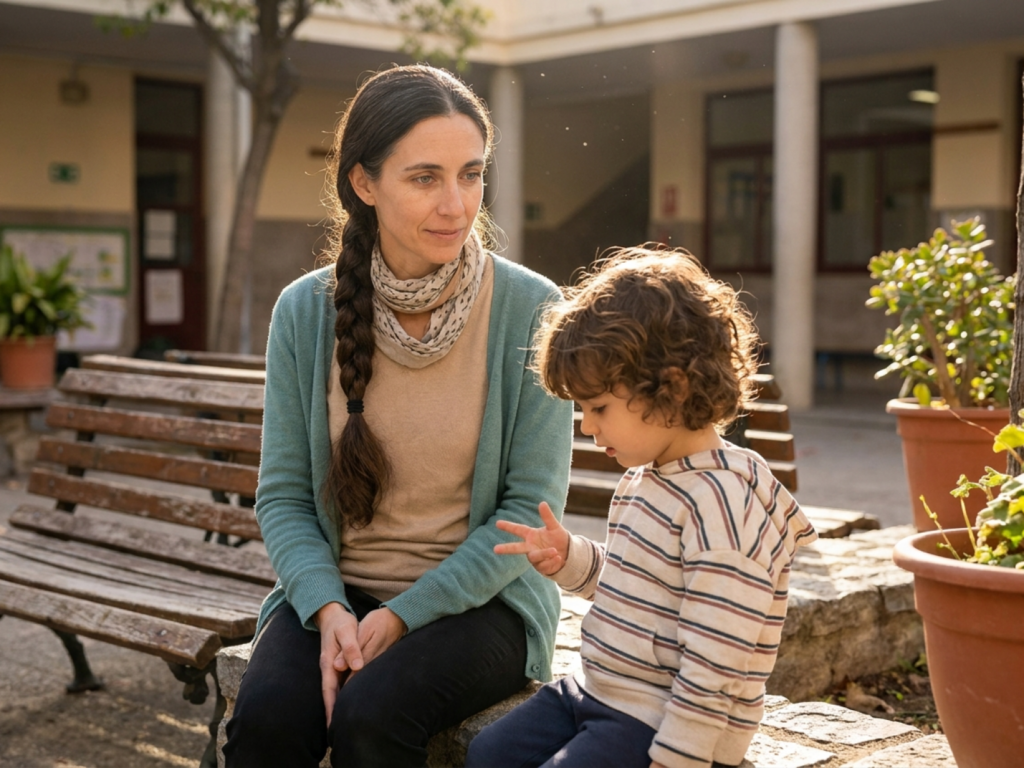
Intro
When a child and a friend drift apart, the ending can feel surprisingly painful, even when nothing dramatic happened. Adults may be tempted to reassure quickly by saying, “It was probably for the best,” but children usually need first to feel understood before they can make sense of what changed.
Friendship endings in childhood are often part of normal social development. Interests shift, classes change, families get busier, and children sometimes outgrow the rhythms that once held a friendship together. That does not make the loss trivial. It means the child is facing a real grief, and careful support can help them move through it without shame or alarm.
Highlights
A fading friendship can be a genuine loss even when there is no conflict, rejection, or wrongdoing.
Children usually cope better when adults validate the feeling first and solve the problem later.
The goal is not to replace one friend immediately, but to help the child widen their social world safely.
Persistent withdrawal, school distress, or hopelessness may signal that extra support is needed.
Why friendships sometimes fade naturally
Children do not form static social bonds. In middle childhood and adolescence, friendships often change as children develop different interests, move into new classrooms, join new activities, or become more selective about whose company feels comfortable. A friendship that once felt close can quietly loosen without either child doing something wrong. This is a normal part of peer relationships in child development.
For parents, the key distinction is between a natural drift and a relationship that has become hostile, controlling, or unsafe. A natural fade may include fewer invitations, less messaging, or a growing sense that the two children no longer fit each other’s routines. By contrast, bullying, humiliation, exclusion, or repeated relational aggression deserves a different response. Naming that difference early helps children avoid overpersonalizing every social change.
It can help to remember that a child is not only losing a playmate. They may also be losing daily rituals, shared jokes, and a sense of belonging. Even if the friendship was short-lived or not especially deep, the ending can still touch on identity: “If this friend is moving away from me, what does that say about me?” That question is often the emotional center of the experience.
Validate the grief before trying to fix it
The first therapeutic task is often emotional validation. Children tend to settle more easily when an adult can say, in effect, “I can see this hurts, and I’m glad you told me.” That response does not intensify sadness; it gives the child a reliable witness. In contrast, minimizing statements such as “You’ll find a new friend tomorrow” or “It was never a real friendship anyway” can make the child feel isolated with the pain.
Validation does not mean agreeing with every interpretation. A child may say, “No one likes me,” when the more accurate story is that one friendship faded naturally. Adults can reflect the feeling while gently correcting the conclusion: “It sounds like you feel left out, and that is hard. One friendship ending does not mean you are unlikeable.” This keeps the child’s emotional reality intact while protecting self-esteem.
Some children become tearful, some get irritable, and some look surprisingly flat or numb. Others alternate between sadness and relief, especially if the friendship had begun to feel effortful. Mixed feelings are normal. Parents do not need to force a single narrative or push the child to be “over it.” Calm, patient listening is often more healing than advice.
If appropriate, an adult can briefly share a personal experience of a friendship changing with age, but only if it is clearly age-appropriate and not a way of redirecting attention. The goal is to make the child feel less alone, not to turn their experience into a lesson for someone else.
Help your child tell the story accurately
Children cope better when they can organize an experience into a coherent story. That means helping them separate observable facts from assumptions. A parent can ask gentle questions: “What changed first?”, “How did you know they wanted space?”, or “Was there a particular moment that felt different?” These questions are less about investigation and more about meaning-making.
It is also useful to help children avoid catastrophic interpretations. A natural friendship shift can feel personal, but it may reflect developmental timing, social convenience, or changing interests rather than a defect in the child. Adults can model more balanced language: “You and this friend may simply be growing in different directions,” or “Sometimes people still care about each other and need less closeness.”
When children want to send a message or respond in person, practice can help them stay respectful. Simple scripts such as “I understand if you want space” or “I still wish you well” can reduce impulsive texts and preserve dignity. For older children, this is an opportunity to discuss boundaries, mutual respect, and how to step back without humiliation. Those are early exercises in long-term relationship skills.
Try not to overuse detective work on the other child’s motives. Repeated questioning can intensify rumination, and rumination often magnifies hurt. Instead, focus on what the child knows for sure, what they feel, and what they can choose next. That approach supports emotional regulation without pretending the loss did not matter.
Make room for new connections without forcing a replacement
A fading friendship does not need to be replaced immediately. In fact, pushing for a quick substitute can make children feel as though their grief is inconvenient. What helps more is a steady expansion of opportunities for contact with other children. A wider social network gives the child more chances for companionship, and it reduces the pressure placed on any one relationship to meet every need.
For school-age children, repeated low-pressure contact is often more helpful than searching for a single “best friend” straight away. Clubs, sports, arts groups, neighborhood play, lunch groups, and shared projects can all create the conditions for comfort and familiarity. Over time, these settings support healthy childhood friendships because children have space to practice joining in, taking turns, and leaving gracefully.
Adults can also pay attention to teacher observations of peer interactions. A teacher or after-school leader may notice which children seem interested in one another, which environments feel easiest, or whether the child is standing on the edge of group play. That information can guide gentle social opportunities without turning the process into a performance.
It is useful to frame this not as “finding a replacement friend,” but as building more places where the child can belong. Belonging is usually layered, not singular. When children understand that, they may feel less devastated by the loss of one connection and more hopeful about future connections.
Know when ordinary sadness may be turning into something bigger
Most children feel sad for a while and then gradually re-engage. But if the distress persists, deepens, or spreads into daily functioning, it deserves closer attention. Warning signs can include persistent social isolation, refusal to go to school, sleep or appetite change, frequent stomachaches or headaches without a clear cause, loss of interest in activities, or a marked drop in concentration and energy.
It is especially important to seek help if the child begins to sound hopeless, repeatedly blames themselves in an extreme way, or talks about self-harm or not wanting to be here. Even when the friendship issue is the visible trigger, ongoing emotional symptoms may indicate anxiety, depression, trauma-related stress, or another concern that should be assessed by a qualified professional. This is not something parents should have to decide alone.
Also watch for friendships that were never really safe. Some children call a relationship a friendship when it is actually controlling, highly critical, or linked to bullying. In those situations, the task is not simply mourning a fade; it is also helping the child recognize emotional safety, set boundaries, and recover confidence. A child who has been repeatedly excluded or manipulated may need more structured support to rebuild trust.
When in doubt, speak with a pediatrician, school counselor, or child mental health professional. Early support can prevent a temporary social loss from becoming a longer emotional shutdown.
What parents can do in the weeks that follow
In the days after a friendship fades, small routines matter. Keep mornings, meals, and sleep as predictable as possible. Predictability lowers stress and gives the child a stable base while their social world feels uncertain. Make time for talk, but do not require constant discussion; some children process best in short bursts or while doing another activity.
It can help to name the child’s strengths in a specific way: “You are thoughtful with younger kids,” “You notice when people feel left out,” or “You are good at joining new games.” Specific observations are more credible than broad praise and can protect self-esteem when a child is feeling rejected. The message is not that they must immediately feel better, but that their worth is not determined by one relationship.
Families with older children may also need to discuss digital habits. Social media can keep a friendship wound open through comparisons, silent monitoring, or reading too much into posts and stories. A brief conversation about digital boundaries, muted notifications, or taking a short break can reduce unnecessary stress.
Finally, leave room for the possibility that the friendship may come and go again. Childhood relationships are often seasonal. A child who learns that closeness can ebb without catastrophe is practicing flexibility, grief tolerance, and trust in future connection. That lesson can be painful in the moment, but it is also deeply protective over time.
Seek extra support if you notice:
- Persistent withdrawal, tearfulness, or irritability lasting more than a few weeks.
- School refusal, major sleep or appetite changes, or a clear drop in daily functioning.
- Talk of hopelessness, self-harm, or not wanting to live.
- Signs that the child is being bullied, excluded, or treated in a controlling way.
- Loss of interest in all peers, not just the one friendship that faded.
Tools & Assistance
- Pediatrician or family doctor for a first mental health check-in
- School counselor, teacher, or pastoral care staff for peer observations
- Child and adolescent therapist for persistent distress or anxiety
- Community sports, clubs, arts classes, or scouting groups for low-pressure social contact
- Crisis services or emergency care if there is any self-harm concern
FAQ
Should I encourage my child to keep trying with the same friend?
Only if the relationship still feels respectful and both children seem interested. If the friendship is clearly fading, it is usually kinder to support a graceful step back rather than pushing contact.
What if my child says no one likes them anymore?
Reflect the feeling first, then gently challenge the conclusion. A single friendship ending does not define a child’s likability or future social chances.
Is it normal for a child to seem relieved as well as sad?
Yes. Mixed feelings are common, especially if the friendship had become tiring or mismatched. Relief does not mean the child never cared.
When should I ask for professional help?
Seek help if distress is persistent, interferes with sleep, school, appetite, or daily life, or if the child shows hopelessness, self-harm talk, or severe withdrawal.
Sources
- Children’s National Hospital — Helping your child through a friendship breakup
- Child Mind Institute — How to Help Kids Through a Friendship Breakup
- Raising Children Network — 'Frenemies' and toxic friendships: pre-teens and teenagers
Disclaimer
This article is for general educational purposes and is not a diagnosis or substitute for individualized medical or mental health care. If a child has persistent distress, safety concerns, or self-harm thoughts, contact a qualified healthcare professional promptly.

















Please log in to leave a comment.