
Intro
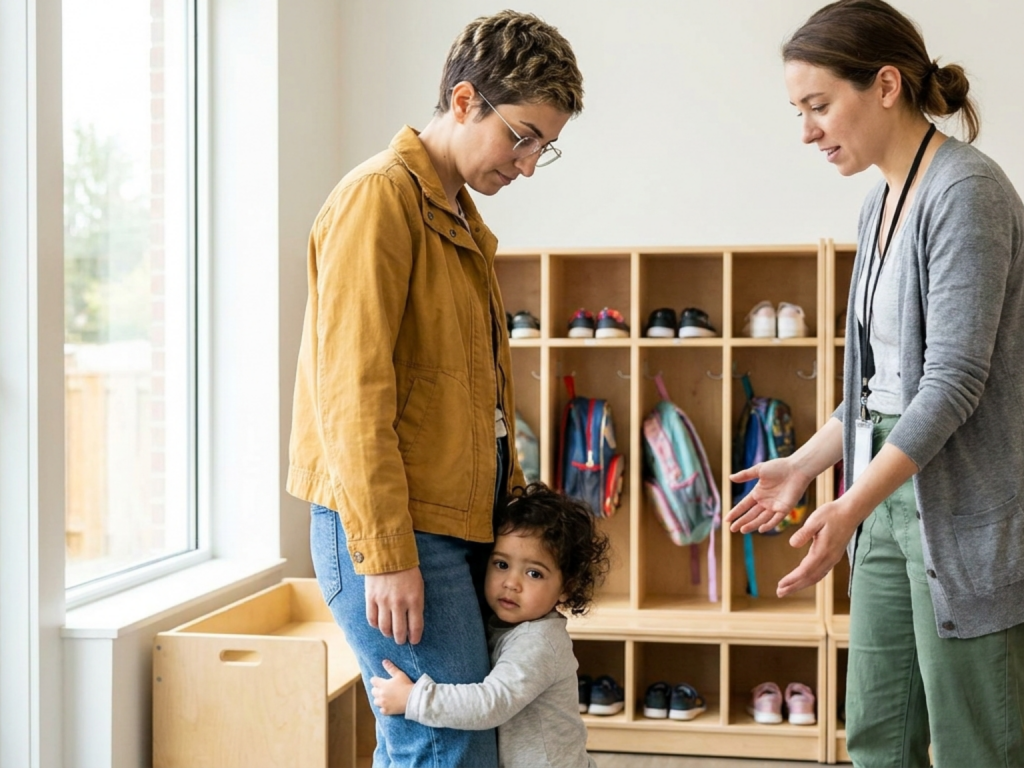
Clinginess at toddler age can be tender, exhausting, and confusing all at once. A child who suddenly wants to be carried, cries at drop-off, resists leaving the playground, or melts down when a parent steps into another room is not trying to manipulate the adults around them. Most often, they are signaling that a transition feels too big for their current nervous system, language skills, and coping capacity.
This article explains why clingy behavior and difficult transitions often travel together, how stress physiology and temperament can contribute, and what families can do while staying alert to situations that warrant professional support.
Highlights
Toddler clinginess is often a developmentally expected response to separation, novelty, fatigue, illness, or major routine changes.
Difficult transitions may reflect immature emotional regulation, limited cognitive flexibility, and a strong need for predictable caregiving cues.
Research links transition difficulty with toddler social fearfulness and parent distress, reminding families that both child and caregiver stress matter.
Gentle structure, preparation, co-regulation, and consistent goodbye rituals can reduce distress without dismissing the child’s need for connection.
Why clinginess and transitions are so closely connected
Toddlers live in a developmental zone between dependence and independence. They are mobile enough to explore, but their prefrontal systems for impulse control, planning, and flexible thinking are still immature. When an adult says, “It is time to go,” the child may understand the words but not yet manage the emotional shift from one state to another. The result can look like clinging, crying, running away, freezing, or collapsing.
A transition is not only a change in activity. For a toddler, it can be a change in sensory input, caregiver proximity, social expectations, and predictability. Moving from home to day care, from play to bath, from parent arms to a classroom, or from screen time to dinner all require the child to inhibit a current desire and tolerate uncertainty. That is a high-level neurodevelopmental task.
Clingy behavior is often the child’s attempt to borrow the adult’s nervous system. In developmental terms, this is co-regulation: the caregiver’s calm voice, body posture, predictability, and emotional availability help the child regain physiologic and behavioral organization. Toddler emotional regulation develops through repeated experiences of being supported, not through being forced to “toughen up” before the brain is ready.
What research suggests about stress, temperament, and parent perceptions
Research on toddlers and difficult transitions highlights that the pattern is not simply “bad behavior.” One study examining transition difficulty found associations with toddler social fearfulness, maternal depressive symptoms, and maternal distress. The study also examined cortisol, a glucocorticoid hormone used as a biological marker of hypothalamic-pituitary-adrenal axis activity during stress. Cortisol does not tell the whole story, but it reminds us that transitions can be physiologically activating for some children.
Temperament matters. A toddler with higher behavioral inhibition or social fearfulness may need more time to warm up in unfamiliar settings, may watch before joining, and may cling tightly when separation feels sudden. Another toddler may show distress as anger or defiance rather than tears. Both can be stress responses.
Parent well-being also matters, not because parents are to blame, but because toddlers are highly sensitive to emotional climate. A caregiver who is depressed, sleep-deprived, anxious, overwhelmed, or under-supported may have less emotional bandwidth for repeated transition struggles. The child may then sense tension, and the caregiver may interpret normal protest as evidence that something is going wrong. This reciprocal loop can intensify separation distress in toddlerhood.
The practical takeaway is compassionate: support the toddler and the caregiver. If transitions are becoming a daily crisis, the plan should include strategies for the child and realistic support for the adults implementing them.
Common transition triggers in toddler life
Some transitions are predictably harder because they combine separation, fatigue, novelty, or loss of control. Entry into out-of-home day care is a classic example. Studies following toddlers during the first months of day care show that distress and clingy behavior can be prominent early on, then often decrease as the child becomes familiar with caregivers, routines, and the environment. Settling is a process, not a single event.
Other common triggers include bedtime, morning departures, leaving the playground, ending screen time, moving from parent care to another caregiver, medical appointments, travel, a new sibling, parental separation, moving homes, or returning after illness. Even positive events can overload a toddler if they disrupt the expected sequence of the day.
Several everyday factors can lower a child’s transition tolerance:
- Hunger, thirst, constipation, pain, teething discomfort, or intercurrent illness.
- Insufficient sleep, irregular naps, or bedtime resistance that creates cumulative fatigue.
- Sensory overload, including loud rooms, bright lights, crowded hallways, or scratchy clothing.
- Too many verbal instructions without visual or physical cues.
- Unexpected changes in caregiver availability, such as a parent rushing out without a goodbye ritual.
For many families, the most effective first step is not a complex behavior plan. It is noticing patterns: time of day, setting, sleep status, hunger, who is present, and what happens immediately before and after the clingy episode.
How to respond in the moment without escalating distress
When a toddler clings or melts down, the adult’s goal is to be both warm and clear. Warmth tells the child, “You are safe.” Clarity tells the child, “The transition is still happening.” This combination is more effective than either harshness or endless negotiation.
Start with connection before correction. Get physically low, use a calm voice, and name the situation in simple language: “You want to stay. Leaving is hard.” This does not reward distress; it helps the child organize the feeling. Then give a brief, concrete next step: “Shoes on, then we go to the car.” Long explanations often exceed a distressed toddler’s processing capacity.
Useful in-the-moment strategies include:
- Offer limited choices: “Do you want to hold my hand or be carried to the door?”
- Use a transition object, such as a small comfort toy, family photo, or familiar blanket if allowed in the setting.
- Reduce language during escalation. Repeat one calm phrase rather than adding new demands.
- Use body-based co-regulation, such as a steady hug, slow breathing nearby, or firm but gentle hand-holding when safety requires movement.
- Avoid sneaking away at separations. It may stop crying in the moment but can increase vigilance later.
For tantrums during transitions, safety comes first. If the child drops to the floor in a parking lot, near stairs, or in a medical office hallway, move them to a safe place with as little drama as possible. After the child is calm, reconnect briefly rather than lecturing. Toddlers learn more from repeated, regulated routines than from post-event speeches.
Building predictable routines before the hard moments
Prevention is often more powerful than response. Predictable routines for toddlers reduce the amount of uncertainty the child must tolerate. A routine does not need to be rigid or elaborate; it needs to be recognizable. The same sequence repeated many times becomes a developmental scaffold.
Visual cues for toddler routines can be especially helpful because toddlers understand concrete information better than abstract time. A simple picture sequence might show breakfast, shoes, car, childcare, parent return. For bedtime, the sequence might be pajamas, teeth, books, song, lights out. The goal is not artistic perfection; it is externalizing the plan so the toddler does not have to hold it all in working memory.
Warnings can help, but they should be paired with action. “Two more slides, then stroller” is usually clearer than “Five more minutes,” because time is abstract. Timers may help some children, but others become distressed by the alarm. Watch your child’s response and adapt.
Practice transitions when the stakes are low. During play, rehearse “stop and go,” “clean up and come back,” or “parent leaves and returns” in tiny doses. Games that involve predictable endings, such as putting toys to sleep or driving cars into a garage, can help a toddler experience closure without threat.
For childcare drop-off, develop a consistent ritual: arrival, hang up bag, one hug, one phrase, handoff to caregiver, parent leaves. A short, confident goodbye is usually kinder than a prolonged uncertain one. Caregivers can support the bridge by offering a familiar activity immediately after separation.
When clinginess may signal that more support is needed
Most toddler clinginess improves with maturation, familiarity, adequate sleep, and consistent responses. Still, some patterns deserve closer attention. A pediatrician can help evaluate medical contributors such as sleep disorders, chronic pain, constipation, hearing or vision concerns, recurrent illness, developmental delays, or medication effects. A child psychologist, early childhood mental health clinician, or developmental specialist can help when emotional or behavioral distress is persistent and impairing.
Consider seeking guidance if clinginess is severe across many settings, lasts for months without improvement, prevents age-appropriate play, causes repeated vomiting or panic-like episodes at separation, or is accompanied by regression, loss of skills, persistent irritability, trauma exposure, or concerning aggression. Also seek help if caregiver stress, depression, anxiety, or burnout is making daily care feel unmanageable. Supporting the caregiver is part of supporting the child.
Developmental screening for behavior concerns can be useful when families are unsure whether a pattern falls within expected toddler variation. Screening is not a label; it is a structured way to decide whether more evaluation or support could help.
It is also important to avoid interpreting all clinginess as anxiety. Toddlers may cling because they are tired, hungry, overstimulated, under the weather, adjusting to a new environment, or seeking reconnection after a long day. The most accurate picture comes from observing patterns over time and discussing them with professionals who know child development.
Supporting parents through the emotional load
Repeated transition battles can leave caregivers feeling embarrassed, rejected, guilty, or trapped. A toddler may scream for one parent, push away another, or cry at every goodbye despite loving care. These behaviors can hurt, especially when adults are already stretched thin.
Try to separate the child’s distress from your worth as a caregiver. Clinginess often means the attachment system is activated; it does not mean you have failed. A child can be securely attached and still protest separation intensely. In fact, some children show strong protest precisely because the caregiver is their safe base.
Caregiver coping plans are practical, not indulgent. Prepare bags the night before, build a five-minute buffer into departures when possible, coordinate with childcare staff, and decide on the goodbye script before emotions rise. If two caregivers are involved, agree on a shared approach so the toddler receives consistent cues.
Finally, repair matters. If you raise your voice or a transition goes badly, return to connection: “That was hard. I got frustrated. I love you, and we are okay.” This models emotional recovery. Toddlers do not need perfect adults; they need adults who keep coming back with safety, boundaries, and warmth.
When to seek prompt professional advice
- Clinginess is accompanied by loss of language, motor, social, or self-care skills.
- Separation distress causes repeated vomiting, fainting, breathing difficulty, or panic-like episodes.
- The child seems persistently sad, fearful, irritable, withdrawn, or unable to play.
- There is concern for pain, sleep disorder, illness, trauma exposure, or unsafe caregiving conditions.
- Caregiver depression, anxiety, anger, or exhaustion is making it hard to respond safely.
Tools & Assistance
- A simple picture routine for morning, childcare drop-off, and bedtime
- A brief goodbye ritual practiced the same way each day
- A transition log noting sleep, hunger, setting, trigger, and recovery time
- Pediatric visit for developmental screening and medical review if concerns persist
- Early childhood mental health consultation or parent-child behavioral support when daily functioning is impaired
FAQ
Is toddler clinginess normal?
Often, yes. Clinginess is common during separation, fatigue, illness, new environments, and developmental leaps. The level of impairment, duration, and associated symptoms determine whether professional input is needed.
Should I leave quickly if my toddler cries at drop-off?
A brief, predictable goodbye is usually helpful, but avoid sneaking away. Tell the child you are leaving, use the same reassuring phrase, hand off to a trusted caregiver, and return when promised.
Do timers help with difficult transitions?
Sometimes. Timers can make endings predictable, but some toddlers become more distressed by alarms. Concrete cues such as “two more turns” or a visual routine may work better.
Can parent stress make transitions harder?
Yes, caregiver stress can influence the emotional climate and consistency of routines. This is not blame; it is a reason to support both the child and the adult.
When should I ask a pediatrician about clingy behavior?
Ask if the behavior is severe, persistent, worsening, associated with regression or physical symptoms, or interfering with childcare, sleep, eating, play, or family functioning.
Sources
- Frontiers in Psychology — Do toddlers' levels of cortisol and the perceptions of their parents predict difficult transitions?
- PubMed Central (National Institutes of Health) — Toddlers' transition to out-of-home day care: Settling into a new environment
- Child Mind Institute — Why Do Kids Have Trouble With Transitions?
Disclaimer
This article is for informational purposes only and is not a substitute for medical, developmental, or mental health evaluation. Consult a qualified healthcare professional for concerns about your child’s behavior, development, or safety.

















Please log in to leave a comment.