
Intro
Flying with a baby can feel logistically demanding, especially when you are trying to anticipate crying, feeding, sleep, ear discomfort, airport screening, and safety procedures at the same time. Most healthy, full-term infants can travel by air when their clinician considers them medically ready, but the appropriate timing depends on age, birth history, current health, and the destination.
Knowing what typically happens can make the experience more manageable. A baby may sleep through much of the flight, become unsettled during pressure changes, feed more often than usual, or need several changes of position and diaper. Preparation helps, but flexibility matters more than achieving a perfect routine.
Highlights
Healthy, full-term infants can often fly, but premature babies and very young newborns may need individualized medical clearance.
Crying during ascent or descent is common and may reflect pressure-related ear discomfort rather than illness.
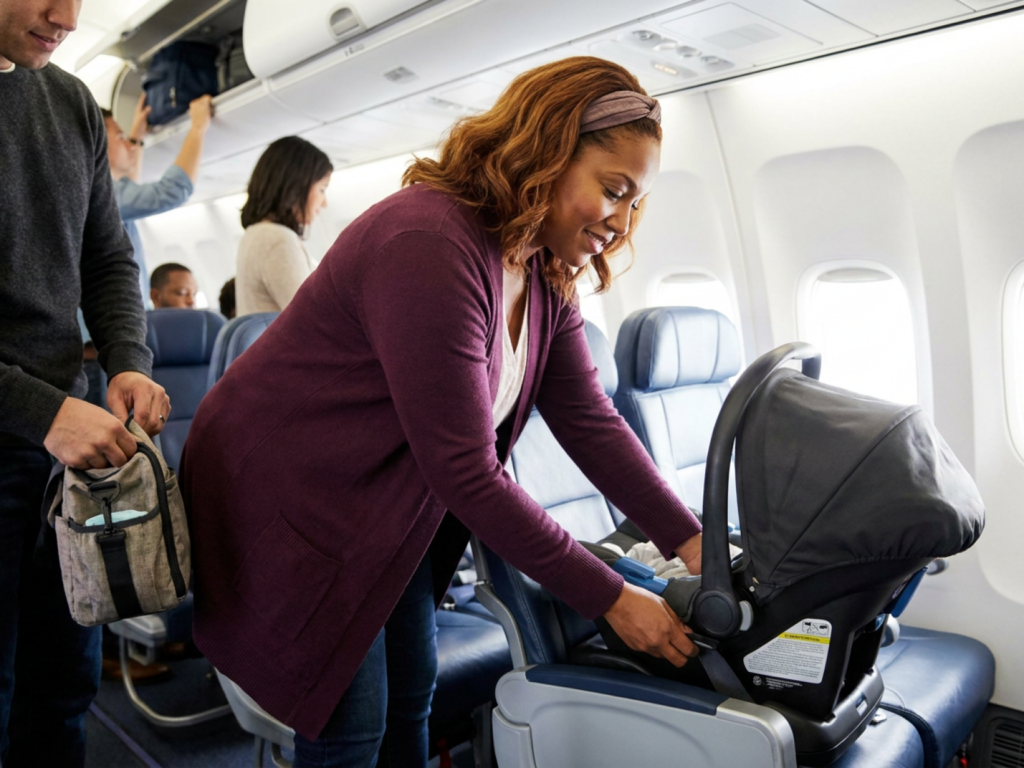
A properly installed, approved child restraint is the safest way for an infant to travel on board.
Pack more feeding, diapering, clothing, and cleaning supplies than the flight duration alone would suggest.
Before You Book: Assessing Your Baby's Readiness
For a healthy, full-term infant, air travel is generally considered possible once the baby is medically stable. Airlines may set their own minimum age requirements, and some require documentation for very young infants. Check the carrier’s policy before purchasing a ticket, particularly if your baby is only a few weeks old.
Medical advice is especially important after premature birth, because respiratory control, oxygenation, feeding coordination, and immune maturity may differ from those of a full-term infant. A baby with chronic lung disease, significant congenital heart disease, recent surgery, anemia, acute respiratory symptoms, or another active medical problem may need a more detailed risk assessment. A pre-travel pediatric visit can clarify whether the proposed itinerary is appropriate and whether any documentation is needed.
Postpone travel and contact a healthcare professional if your baby is acutely unwell, has breathing difficulty, is feeding substantially less, has repeated vomiting or diarrhea, or seems unusually difficult to arouse. Do not use an airplane trip as an opportunity to monitor a concerning illness from a distance. Cabin air is pressurized but contains less oxygen than air at sea level, and access to specialized pediatric care is limited during flight.
At the Airport: Screening, Queues, and Boarding
Airport procedures can take longer with an infant. Build in time for check-in, document checks, security screening, diaper changes, feeding, and unexpected delays. Keep essential supplies in your carry-on rather than checked luggage. This includes diapers, wipes, spare clothing, feeding equipment, expressed breast milk or formula, and any clinician-approved medical supplies your baby routinely needs.
Security rules vary by country, but many screening systems allow reasonable quantities of breast milk, formula, water for formula preparation, baby food, and related equipment when these items are declared for inspection. MedlinePlus recommends checking current airport and airline requirements because procedures can change. Keep liquids accessible and expect additional screening rather than assuming they will be treated like ordinary beverages.
A stroller may be used in parts of the airport but often must be screened at the gate or aircraft entrance. Ask the airline where it will be returned after landing. During boarding, one caregiver can organize documents and bags while the other focuses on holding or soothing the baby. If you are traveling alone, tell airline staff early that you may need practical assistance with overhead-bin storage or a stroller.
Boarding early is not always best for the baby. Early boarding provides time to install a restraint and settle supplies, but it also lengthens the period spent in the aircraft cabin. Some caregivers prefer to board early; others board near the end so the baby spends less time waiting in the seat. Choose the approach that fits your baby and your available help.
Takeoff and Landing: Ear Pressure and Crying
The most noticeable discomfort often occurs during ascent and descent. As cabin pressure changes, the middle ear must equalize through the eustachian tube. Infants may have difficulty coordinating swallowing and pressure equalization, so they may fuss, cry, pull away from feeding, or briefly appear uncomfortable. This is often described as ear pressure discomfort during takeoff, although discomfort can also occur during descent.
Breastfeeding, bottle-feeding, or offering a pacifier during takeoff and landing can encourage swallowing and may help equalize pressure. It is not necessary to force a feed, and a baby who is asleep may not need to be awakened solely for this purpose. Hold the bottle safely and avoid propping it. A caregiver should remain attentive to the infant’s position and breathing.
If your baby has a cold, nasal congestion, an ear infection, or a history of significant ear problems, ask a healthcare professional whether flying is advisable. Do not give decongestants, antihistamines, sedatives, or other medicines to make a baby sleep or prevent ear pain unless a qualified clinician has specifically advised their use for that child. These products can cause adverse effects and are not routine travel solutions.
Crying during pressure changes can be distressing to caregivers, but it is common and usually temporary. Use calm contact, feeding when accepted, and an organized response. If crying is accompanied by breathing difficulty, bluish or gray coloration, repeated vomiting, marked lethargy, or another concerning change, alert the cabin crew and seek urgent medical help.
Onboard Safety: Restraint, Holding, and Positioning
The safest arrangement is for the infant to have a separate seat with an approved child safety seat or other airline-accepted restraint installed according to both the manufacturer’s instructions and the carrier’s rules. A rear-facing restraint that is appropriate for the baby’s size can reduce injury risk during turbulence, abrupt deceleration, and other unexpected events. Confirm that the exact model is approved for aircraft use before travel.
Holding a baby on a caregiver’s lap does not provide the same protection. Turbulence can occur without warning, and an adult may be unable to maintain a secure hold during a sudden change in aircraft movement. Some airlines permit or require an infant restraint for specific seats or phases of flight, so review the policy and ask cabin crew for assistance if the installation is unclear.
A soft carrier may be convenient in the airport, but it should not replace an approved restraint during takeoff, landing, or turbulent conditions unless the airline and the carrier’s instructions explicitly allow it. Keep the baby’s face visible, the airway unobstructed, and the chin off the chest. Avoid bulky blankets, pillows, or clothing that can interfere with harness fit. A car seat should never be placed where it blocks emergency access or is incompatible with the aircraft seat.
During the flight, check the harness, temperature, diaper, and positioning regularly. Airplane cabins can feel cool or dry, but overheating is also possible when an infant is held against an adult for long periods. Use light layers that permit accurate harness adjustment and allow you to assess the baby’s skin and comfort.
Feeding, Diapers, Sleep, and Cabin Comfort
Expect the baby’s usual schedule to become less predictable. Feeding may occur more frequently because of altered timing, stimulation, or the need for comfort. Breastfeeding can usually continue during travel. For formula-fed infants, carry the supplies needed for safe preparation and follow the product instructions and advice from your healthcare professional. Bring more than the planned amount because delays, missed connections, or spilled supplies are realistic possibilities.
Use clean hands and clean feeding equipment as carefully as circumstances allow. If a bottle has been in the baby’s mouth, follow appropriate discard and storage guidance rather than keeping it indefinitely at room temperature. Cabin crew may help with hot water or disposal, but they cannot guarantee a sterile preparation area or a particular temperature.
Diaper changes may be needed at inconvenient times. Most aircraft lavatories have a fold-down changing table, but space is limited. Change the baby before boarding when possible, keep a compact diaper kit within reach, and pack at least one complete change of clothing for the baby and a spare top for the caregiver. A waterproof changing mat and sealable bags can make cleanup easier.
Sleep may be fragmented by engine noise, light, movement, and handling. Try to preserve familiar cues without compromising safety. Once installed, the infant restraint is the appropriate place for the baby during the flight. Never place an infant to sleep on the cabin floor, an adult tray table, or an improvised surface. Avoid covering the baby’s face with a blanket, especially when the baby is being held or sleeping in a carrier.
Reducing Stress and Handling Unexpected Problems
Many caregivers worry that other passengers will judge normal infant behavior. Babies cry on airplanes for many reasons, including fatigue, hunger, overstimulation, discomfort, and difficulty settling. A practical plan is to divide responsibilities: one adult monitors feeding and comfort while the other manages bags, documents, or communication with staff. If you are traveling alone, keep the most important supplies in a small accessible pouch rather than in an overhead bag.
Consider the whole itinerary, not only the time in the air. A long connection may be harder than a longer direct flight because of repeated transfers, missed naps, and additional opportunities for feeding and diaper changes. Choose seats and connections that leave room for movement and allow quick access to the lavatory when possible. Seat availability, restraint compatibility, and airline rules may limit these choices.
Ask the crew for help with practical matters, but remember that crew members are not a substitute for medical assessment. If your baby develops a concerning symptom, state clearly what you are observing, when it began, and whether the baby has a relevant medical history. Keep a concise baby medical summary for travel if your infant has ongoing conditions, specialist care, allergies, or regular treatments. Include clinician contact information and the generic names of prescribed medicines, while keeping medicines in their original labeled containers.
After landing, allow time for feeding, diapering, and a quiet transition before continuing the journey. Seek medical advice for persistent breathing problems, poor feeding, signs of dehydration, unusual sleepiness, fever in a very young infant, or symptoms that are severe or worsening. The appropriate response depends on age and clinical context, so use a local healthcare service rather than relying only on general travel advice.
When to seek medical help
- Do not fly without medical guidance if your baby was premature or has significant heart, lung, neurologic, or other chronic disease.
- Seek urgent help for breathing difficulty, blue or gray coloration, collapse, or inability to wake the baby normally.
- Contact a clinician for markedly reduced feeding, repeated vomiting, diarrhea, or possible dehydration.
- Do not give sedating medicines or decongestants for flight comfort unless specifically directed by a qualified healthcare professional.
- Follow airline and child-restraint requirements even if a lap-held infant appears calm.
Tools & Assistance
- Pre-travel pediatric appointment
- Airline infant and child-restraint policy
- Airport accessibility or family-assistance desk
- Local pediatric urgent-care or emergency service at the destination
- Written feeding, medical, and contact information
FAQ
Can a newborn fly on an airplane?
Some healthy full-term newborns can fly, but airlines may impose minimum-age rules and very young infants may have greater medical vulnerability. Ask the baby's clinician and check the airline policy before booking.
Will flying hurt my baby's ears?
Pressure changes can cause temporary discomfort, especially during ascent and descent. Breastfeeding, bottle-feeding, or a pacifier may encourage swallowing, but do not force a feed or use medication without professional advice.
Should my baby sit on my lap or in a car seat?
A separate seat with an approved child safety restraint is generally the safest option. Confirm that the restraint is accepted for aircraft use and install it according to the manufacturer's and airline's instructions.
How much baby milk or food can I take through security?
Rules vary by location, but breast milk, formula, water used for preparation, and baby food are often subject to special allowances. Declare these items and check current airport requirements before departure.
What if my baby cries for most of the flight?
Persistent crying is stressful but common and may reflect hunger, fatigue, overstimulation, or pressure discomfort. Check basic needs, offer feeding or soothing, maintain safe positioning, and notify crew if illness or severe symptoms are also present.
Sources
- Mayo Clinic — Air travel with infant: Is it safe?
- MedlinePlus — Traveling with children: MedlinePlus Medical Encyclopedia
- PubMed Central — Air travel and children
Disclaimer
This article provides general educational information and does not diagnose, treat, or replace advice from your baby's healthcare professional. Seek individualized medical guidance before flying, especially for premature infants, newborns, or babies with medical conditions.














Please log in to leave a comment.