
Intro
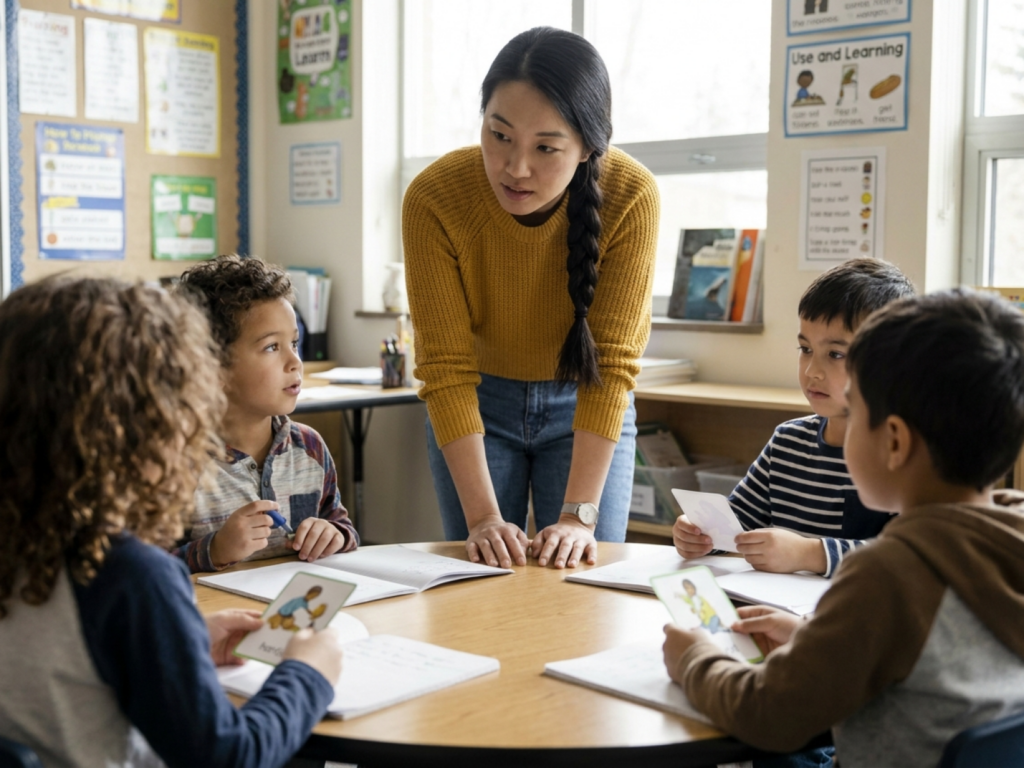
Teacher-student relationships are a central part of a child’s school experience. Beyond delivering academic content, teachers help create the interpersonal conditions in which children can feel safe, understood, motivated, and able to participate. Clear, respectful communication supports learning while also helping children navigate emotions, mistakes, conflict, and changing expectations.
A positive relationship does not require a teacher to be permissive or to avoid boundaries. It combines warmth with consistency, appropriate authority, cultural responsiveness, and fair limits. When communication is attentive and predictable, children are more likely to ask questions, seek help early, and experience school as a place where their voice matters.
Highlights
Warm, respectful communication can strengthen trust, engagement, motivation, and participation in learning.
Healthy relationships combine emotional connection with clear boundaries, consistent expectations, and professional conduct.
Children communicate through words, behavior, facial expression, silence, play, and changes in participation; adults should consider the whole context.
Families, teachers, school leaders, and healthcare professionals may need to collaborate when communication difficulties affect learning, safety, or well-being.
Why teacher-student relationships matter
A child learns most effectively when the classroom feels psychologically safe enough for curiosity, effort, and occasional failure. A teacher who greets students, listens attentively, explains expectations, and responds without humiliation communicates that each child has dignity and belongs in the learning community. Research reviewed in the educational and psychological literature links positive interpersonal communication behaviors with rapport, motivation, engagement, and learning-related outcomes.
The relationship is not simply about whether a teacher is liked. It includes trust, perceived fairness, responsiveness, and the child’s confidence that asking for clarification will not lead to ridicule. These factors can influence help-seeking and participation, particularly for children who are anxious, learning a new language, living with disability, or adjusting to a new school.
School belonging and mental well-being are also connected to daily interactions. A child may not describe these concepts directly, but may show them through willingness to attend, join activities, attempt challenging work, or talk about school. Conversely, withdrawal, frequent conflict, somatic complaints, or a marked change in classroom participation deserve compassionate attention rather than immediate assumptions about motivation or behavior.
Communication is verbal, nonverbal, and relational
Teacher communication includes spoken words, tone, pace, volume, facial expression, posture, eye contact, physical distance, timing, and the way feedback is delivered. A calm voice and open posture can reduce perceived threat, while public sarcasm, abrupt interruptions, or inconsistent responses may make a child reluctant to speak. Nonverbal signals should be interpreted cautiously, because culture, neurodevelopmental differences, sensory sensitivities, hearing or vision difficulties, and individual temperament can affect how a child communicates.
Effective teachers use language that is specific and understandable. Instead of saying, “You are careless,” they might describe the observable issue: “The instructions have three steps; let us check which step comes next.” This separates the child’s identity from a correctable task problem. It also gives the child a pathway to repair the situation.
Listening is an active skill. The adult can pause, reflect the child’s message, ask one question at a time, and check meaning before responding. Developmentally appropriate listening expectations are important: a young child may need visual cues, repetition, movement breaks, or additional processing time, while an older student may prefer a private conversation. Silence should not automatically be interpreted as defiance, agreement, or lack of understanding.
Building trust while maintaining professional boundaries
Trust grows through repeated, ordinary interactions rather than one dramatic conversation. Useful practices include learning and correctly pronouncing a child’s name, noticing effort, using predictable routines, acknowledging interests, and following through on reasonable commitments. Teachers can communicate high expectations while making clear that support is available. Statements such as “This is challenging, and we will identify the next step” promote persistence without minimizing difficulty.
Boundaries protect both children and educators. A supportive relationship should remain developmentally appropriate, transparent, and connected to the educational role. Communication should generally occur through approved school channels, during suitable times, and in ways that can be reviewed according to school policy. Private or secretive interactions, favoritism, personal disclosures that burden a child, and contact that bypasses safeguarding procedures are not appropriate substitutes for trust.
Out-of-class communication can be beneficial when it is structured. Brief conversations before or after class, supervised activities, school-approved digital platforms, and scheduled family meetings may help teachers understand barriers to learning. Research on out-of-class communication suggests that these interactions can support teacher-student relationships and the classroom environment when they are purposeful and professionally managed. The child’s privacy, safety, and consent-related considerations should remain central.
Feedback, conflict, and communication repair
Feedback is most useful when it is timely, specific, balanced, and directed toward an action the child can take. “Your explanation includes evidence from the text; now connect that evidence to your conclusion” is more informative than “Good job.” Corrective feedback should address behavior or work, not character. Whenever possible, teachers can offer a choice between two acceptable next steps, which preserves structure while supporting autonomy.
Misunderstandings are inevitable. A teacher may misread a child’s behavior, and a child may experience a neutral correction as rejection. Repair begins with slowing down and acknowledging the possibility of error: “I may have misunderstood what happened. Tell me your view.” The adult should listen without promising an outcome that cannot be guaranteed, clarify the expectation, and explain what will happen next. This models accountability and gives the child a safe way to re-enter the learning relationship.
Repairing communication breakdowns with children does not mean removing every consequence. It means distinguishing accountability from shame. A child can be expected to restore materials, apologize, complete missed work, or follow a safety plan while still being treated as capable of improvement. If conflict is recurrent, a private problem-solving meeting may be more constructive than repeated public corrections.
Adapting communication to individual needs
There is no single communication style that works for every student. Teachers may need to adapt instructions for children with language differences, developmental disabilities, attention difficulties, hearing or vision differences, anxiety, trauma exposure, or specific learning needs. Adaptations might include short verbal directions, written or pictorial steps, demonstration, repetition, extra processing time, preferential seating, predictable transitions, or a way to indicate confusion without speaking in front of peers.
Visual supports for classroom communication can make expectations more concrete. A visual schedule, first-then board, checklist, emotion scale, or assignment model may reduce cognitive load and support executive functioning. These tools should be used respectfully, not as a public label. The goal is access and independence, with adjustments reviewed as the child’s needs and skills change.
Communication should also account for multilingual development. A child who is learning the language of instruction may understand concepts more fully than they can express them. Teachers can use plain language, gestures, images, peer-supported activities, and appropriate opportunities to demonstrate knowledge in more than one way. Families can provide valuable information about the child’s communication strengths, cultural context, and preferred strategies.
Working with families and the wider school team
Family-school communication is strongest when it is two-way, specific, and not limited to moments of concern. Sharing a positive observation can build cooperation and provide a fuller picture of the child. When a problem arises, the conversation should describe patterns and contexts rather than assign blame: when the difficulty occurs, what has already been tried, what helps, and what the child says or does.
Families can ask for clarification about learning goals, classroom expectations, communication channels, behavior policies, and available supports. Teachers can ask families about routines, strengths, relevant changes, language preferences, and strategies that work at home, while respecting privacy and educational boundaries. Written summaries after meetings may reduce misunderstandings and make agreed actions easier to follow.
Some concerns benefit from a coordinated team that may include a school counselor, psychologist, nurse, special educator, speech-language pathologist, occupational therapist, pediatrician, or other qualified professional. For example, persistent difficulty understanding spoken instructions could reflect multiple possibilities, including language differences, hearing concerns, attention factors, or classroom mismatch. It should not be diagnosed from a single observation. A structured school-based assessment or healthcare consultation may help clarify needs and guide appropriate support.
Recognizing concerns and responding early
Occasional frustration, reluctance to speak, or conflict is part of childhood and classroom life. Concern increases when a pattern is persistent, worsening, occurs across settings, or interferes with attendance, learning, peer relationships, or safety. Examples include a sustained withdrawal from previously enjoyed activities, repeated fear of a particular interaction, unexplained physical complaints before school, frequent aggressive incidents, inability to communicate basic needs, or a sudden decline in academic participation.
Adults should respond with curiosity rather than interrogation. A calm private question such as “I have noticed mornings seem harder; what would help you feel ready?” may open conversation. The child should not be pressured to disclose more than they can manage, and allegations involving bullying, abuse, discrimination, or safety threats must be handled through the school’s safeguarding and reporting procedures.
If communication difficulties persist, families should consult the child’s teacher and appropriate school professionals. A healthcare professional can assess medical or developmental contributors when indicated, including hearing, vision, sleep, language, mood, attention, or stress-related factors. This article cannot determine the cause of a child’s behavior or recommend an individualized treatment plan. Early, collaborative support is usually more helpful than waiting for a problem to become severe.
Safety and professional boundaries
- Do not interpret a child’s silence, eye contact, activity level, or behavior as proof of a diagnosis or intention.
- Repeated humiliation, threats, discriminatory treatment, secrecy, or inappropriate private contact are safeguarding concerns.
- Follow school procedures for bullying, abuse disclosures, self-harm concerns, threats, or immediate safety risks.
- Seek qualified assessment when communication difficulties significantly affect learning, attendance, relationships, or daily functioning.
- Use approved school communication channels and protect the child’s confidentiality.
Tools & Assistance
- A brief daily check-in using a private question, emotion scale, or visual choice board
- A teacher-family communication log that records strengths, concerns, strategies tried, and agreed follow-up
- A predictable classroom routine with visual instructions and clearly stated transitions
- A school counselor, special education team, speech-language pathologist, or school nurse
- The child’s pediatrician or another qualified healthcare professional when medical or developmental concerns may contribute
FAQ
What does a healthy teacher-student relationship look like?
It is respectful, predictable, supportive, and professionally bounded. The teacher combines warmth with clear expectations, responds to the child’s communication, and treats mistakes as opportunities for learning rather than humiliation.
How can a teacher communicate with a child who rarely speaks in class?
Offer private and low-pressure ways to respond, allow processing time, use visual or written choices, and avoid forcing public participation. Persistent difficulty should be discussed with the family and relevant school professionals.
Should teachers communicate with students outside class time?
Structured out-of-class communication can support connection and learning when it uses approved channels, appropriate supervision, clear educational purposes, and professional boundaries. Secretive or personal communication is not appropriate.
When should families seek additional help?
Consider speaking with the school and a healthcare professional when communication or relationship difficulties are persistent, worsening, occur in more than one setting, or interfere with learning, attendance, safety, or well-being.
Sources
- Frontiers in Psychology — A Conceptual Review of Positive Teacher Interpersonal Communication Behaviors in the Instructional Context
- ERIC — Teachers' Perceptions of Out-of-Class Communication, Teacher-Student Relationship, and Classroom Environment
- Michigan Virtual — Starting Strong: Understanding Teacher-Student Communication
Disclaimer
This article provides general educational and health information and does not diagnose conditions or replace individualized advice. Consult qualified school or healthcare professionals about a child’s specific needs, and follow local safeguarding procedures for urgent safety concerns.


















Please log in to leave a comment.