
Intro
Digital media is now woven into childhood: school platforms, games, messaging, videos, creative tools, and family communication can all be part of a child’s day. For many caregivers, the goal is no longer simply “less screen time,” but a healthier pattern of use that protects sleep, learning, relationships, vision comfort, mood regulation, and physical activity.
A healthy tech routine is not a perfect plan. It is a flexible family system that helps children understand when, where, why, and how technology fits into daily life. With warmth, consistency, and age-appropriate collaboration, families can reduce conflict and help children build self-regulation skills that will matter long after a timer or parental control is removed.
Highlights
Healthy technology use is best built around family values, child development, sleep protection, and communication rather than a single universal screen-time number.
Parents’ and caregivers’ own digital habits strongly shape children’s routines, so modeling matters as much as rules.
Screen-free zones, screen-free times, and calming bedtime routines can support sleep, attention, and emotional regulation.
Co-viewing, shared problem-solving, and creative digital activities are generally more supportive than isolated passive scrolling.
Start with the child, not the clock
For children, technology is not one single exposure. A video call with a grandparent, a math app, a multiplayer game, short-form videos, and late-night messaging all have different developmental and physiological effects. This is why many pediatric and digital wellness frameworks now encourage families to look beyond total minutes and ask more precise questions: What is the child doing? With whom? At what time of day? What is being displaced?
A useful structure is the 5 C’s framework: Child, Content, Calm, Crowding Out, and Communication. “Child” means the plan should fit the child’s age, neurodevelopmental profile, temperament, sleep needs, and current stressors. A highly impulsive child, a child with attention difficulties, or a child recovering from bullying online may need more scaffolding than a peer of the same age. “Content” asks whether the media is educational, prosocial, creative, frightening, addictive in design, or inappropriate. “Calm” asks whether screens are being used as the only emotional regulator. “Crowding Out” asks whether technology is replacing sleep, movement, face-to-face connection, homework, outdoor play, or family responsibilities. “Communication” reminds caregivers to keep conversations open rather than relying only on surveillance or punishment.
This child-centered view is especially important because rigid rules can backfire. A blanket limit may be too strict for a teenager completing schoolwork online, yet too loose for a younger child who becomes dysregulated after fast-paced videos. The healthier question is: Does this pattern support the child’s functioning, relationships, and development?
Build routines around predictable family rhythms
Children often cooperate better when technology rules are attached to predictable routines rather than negotiated from scratch each day. Predictable routines reduce cognitive load and support executive function, the set of skills involved in planning, inhibition, working memory, and shifting attention. For example, a child may find it easier to accept “tablets charge after dinner” than “stop when I tell you,” because the routine is anchored to a visible event.
Start with the daily anchors your family already has: waking, meals, school or childcare, homework, outdoor play, chores, bathing, reading, and bedtime. Then decide where technology belongs and where it does not. Many families do well with a short list of non-negotiable zones and times, such as no devices at the dinner table, no entertainment screens during homework unless needed for the task, and no personal devices in bedrooms overnight.
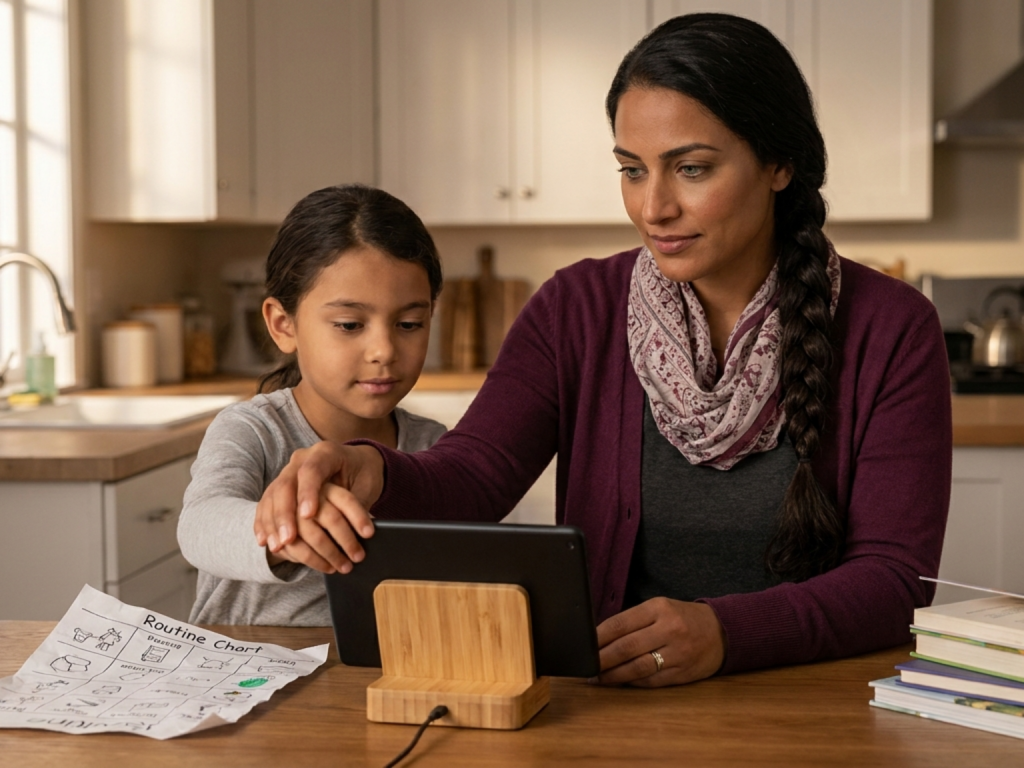
It helps to write the routine in simple, concrete language. For younger children, visual schedules can show “snack, outside play, screen time, bath, story, sleep.” For school-age children, a checklist may include “homework first, then 30 minutes of game time, then device returns to charging station.” For adolescents, collaborative planning is usually more effective: discuss school demands, social connection, sleep timing, and privacy while still protecting health basics.
Healthy tech routines should also include transition support. Many children struggle not because they are “addicted,” but because stopping a rewarding, interactive activity requires inhibition and emotional flexibility. Give warnings, use timers that the child can see, and preview the next activity. A transition such as “five minutes left, then we put the tablet on the charger and choose pajamas” is clearer than a sudden command.
Protect sleep as a medical priority
Sleep deserves special attention because insufficient or disrupted sleep is associated with impaired attention, emotional lability, learning difficulties, headaches, metabolic effects, and increased family conflict. Screens can interfere with sleep through several mechanisms: stimulating content increases arousal, notifications fragment rest, and evening light exposure may suppress or delay melatonin secretion, the hormone signal that helps regulate circadian timing.
A practical goal is a screen-free bedtime routine. Many families aim to stop recreational screens 30 to 60 minutes before sleep; some children, especially those with insomnia, anxiety, attention difficulties, or delayed sleep phase tendencies, may need a longer wind-down. The last hour can include bathing, reading, quiet music, stretching, drawing, or conversation. The key is not to replace screens with a battle, but with a predictable sequence the child’s nervous system can learn.
Charging devices outside the bedroom is one of the most effective environmental changes. It removes the temptation to check messages, reduces notification-related awakenings, and helps caregivers avoid repeated nighttime negotiations. If a phone is used as an alarm, consider a separate alarm clock. If a child needs a device for medical monitoring or safety communication, discuss a tailored plan with the relevant clinician.
Caregivers should also watch for sleep-related warning patterns: persistent difficulty waking, falling asleep in class, morning headaches, escalating irritability, or a strong dependence on screens to fall asleep. These patterns do not prove a diagnosis, but they may indicate that the routine needs adjustment or that a pediatrician, sleep specialist, mental health professional, or school support team should be involved.
Prioritize quality: content, context, and co-use
Not all screen time has the same developmental meaning. Passive scrolling through algorithm-driven short videos may affect attention and mood differently from building a digital animation, researching an interest, practicing a language, or video chatting with a relative. A healthy routine considers the “nutritional quality” of digital media, not just the portion size.
For younger children, co-viewing and co-playing are powerful. Sitting nearby, asking questions, and connecting media to real life can turn a screen from an isolated stimulus into a shared learning experience. Try comments such as “What do you think will happen next?” or “How could we build that with blocks?” This supports language, perspective-taking, and critical thinking.
For older children and adolescents, co-use may look different. It may involve asking them to show you a game, explain a meme, describe a creator they follow, or talk through how they decide whether information is trustworthy. The aim is not to interrogate, but to stay connected to their digital culture. Open communication makes it more likely that a child will disclose cyberbullying, sexual content exposure, scams, coercive messages, or distressing material.
Families can also promote active creation. Encourage children to use technology to compose music, code, design, photograph nature, edit a family video, write a story, or learn a practical skill. Creation tends to feel different from passive consumption because it involves agency, planning, and feedback. Still, even high-quality content can crowd out sleep, movement, or relationships if it has no boundaries.
Use tech-free zones and friction wisely
Healthy routines are easier when the environment supports them. Relying on willpower alone is difficult for children and adults because many apps are intentionally designed to capture attention through variable rewards, autoplay, streaks, alerts, and social feedback loops. Environmental “friction” reduces the number of decisions a child has to make.
Common supports include a family charging station, app limits, do-not-disturb settings, grayscale mode, disabled autoplay, and notification reduction. Built-in tools such as screen-time dashboards can help families notice patterns without turning every minute into a moral judgment. Some families use focus apps or shared digital wellbeing tools to create device-free blocks for meals, homework, and sleep.
Tech-free zones are particularly useful at the dinner table, in bedrooms overnight, during homework periods that do not require a device, and during short windows of family connection. These spaces give the brain and body a chance to practice boredom, conversation, sensory play, and sustained attention. Boredom is not harmful in itself; it can be the doorway to imagination, problem-solving, and self-directed play.
It is also important to replace, not merely remove. If the tablet disappears but nothing else is available, conflict is predictable. Prepare appealing alternatives: physical books, art supplies, puzzles, sports equipment, music, cooking tasks, building toys, outdoor time, or a short walk. For some children, especially those with sensory processing differences or high anxiety, offline alternatives need to be chosen carefully so they are genuinely regulating.
Model the routine you want to teach
Children learn digital norms by watching adults. If a caregiver checks messages during every conversation, scrolls through meals, or sleeps beside a buzzing phone, a child receives a strong lesson even if the spoken rule says otherwise. This does not mean parents must be perfect. Work, caregiving, emergencies, and social support may all require device use. The helpful step is to make adult use visible and understandable.
Narrate your choices: “I’m putting my phone on do-not-disturb while we eat,” or “I need 10 minutes to answer a work message, then I’m closing the laptop.” This teaches intentional use. Apologizing also matters: “I was distracted by my phone when you were talking. I’m putting it away now.” Such moments model repair, attention, and respect.
Family agreements work best when they include adults. A plan that says “no phones at dinner” should usually apply to caregivers as well, except for clearly explained safety or medical needs. Shared routines reduce the feeling that children are being controlled while adults are exempt.
For teenagers, modeling includes how adults handle online conflict, misinformation, privacy, and comparison. Discuss why you do not reply to hostile comments immediately, how you verify health information, or why you avoid posting private family details. These conversations build digital literacy and emotional safety more effectively than fear-based lectures.
Respond to conflict with curiosity and boundaries
Many families meet resistance when changing tech routines. Anger, bargaining, secrecy, or tears do not automatically mean the child has a pathological problem. Screens are rewarding, social, and often deeply integrated into identity and peer connection. A supportive response combines empathy with clear limits.
Start by naming the difficulty: “It is hard to stop when the game is exciting,” or “You are worried you’ll miss the group chat.” Then hold the boundary: “The phone still charges in the kitchen overnight.” This approach validates emotion without surrendering the health-protective routine.
If conflict is intense, reduce the size of the change. A “minimum viable routine” may be more sustainable than a dramatic reset. For example, begin with one screen-free meal daily, a 30-minute bedtime buffer, or notifications off during homework. Once the family experiences success, add another layer.
Watch for patterns that suggest more support is needed: severe aggression when screens stop, persistent school refusal linked to online activity, sleep loss due to gaming or messaging, exposure to self-harm content, compulsive use that crowds out eating or hygiene, or major mood changes. These signs warrant consultation with a pediatrician, child psychologist, psychiatrist, school counselor, or other qualified professional. The goal is not to label the child, but to understand whether anxiety, depression, ADHD, autism-related rigidity, trauma, bullying, or sleep disorders are contributing.
Adapt the plan by age and developmental stage
Healthy tech routines change as children grow. Preschoolers need simple rules, close supervision, and strong protection from fast, frightening, or highly commercial content. They also need abundant hands-on play, language interaction, sleep, and movement. A short, predictable media window with co-viewing is often easier than scattered access throughout the day.
School-age children can begin learning cause and effect: “When homework and outdoor play are done, entertainment screens may happen.” They benefit from visible schedules, consistent stopping cues, and conversations about advertising, kindness online, and privacy. This is also a good age to teach that devices are tools, not constant companions.
Adolescents need more autonomy, but not absence of boundaries. Their brains are still developing executive function and reward regulation, while social media and gaming can be strongly reinforcing. Collaborative teen routines should address sleep, school performance, mental health, driving safety, sexual safety, cyberbullying, and family trust. Rather than demanding full access to everything, caregivers can set health-based expectations: devices out of bedrooms overnight, respectful communication, no screen use while driving, and help-seeking if online experiences become unsafe.
Children with neurodevelopmental differences may need individualized plans. Visual timers, social stories, gradual transitions, sensory-friendly alternatives, and occupational or behavioral strategies can help. If a routine repeatedly fails despite consistency and warmth, it may be a signal to seek professional guidance rather than simply increasing consequences.
When to seek extra help
- Consult a healthcare professional if screen use is consistently associated with severe sleep loss, aggression, panic, or depressed mood.
- Seek urgent help if a child is exposed to coercion, exploitation, self-harm content, or threats of harm.
- Do not abruptly remove a device that is needed for medical monitoring, disability support, or safety planning without clinician input.
- Persistent headaches, eye strain, insomnia, or school impairment deserve evaluation rather than blame.
- If family conflict becomes unsafe, involve a pediatrician, mental health clinician, or local crisis support service.
Tools & Assistance
- Create a written family media plan with screen-free zones, screen-free times, and bedtime charging rules.
- Use built-in screen-time dashboards or digital wellbeing apps to observe patterns, not to shame the child.
- Set phones and tablets to do-not-disturb during meals, homework blocks, and the bedtime routine.
- Prepare an offline activity menu: books, art, sports, music, nature walks, cooking, or hands-on projects.
- Ask your pediatrician, school counselor, or child mental health professional for support if routines are repeatedly unmanageable.
FAQ
Is there one safe amount of screen time for every child?
No. Age, content, timing, sleep, temperament, school needs, and what screen use replaces all matter. A clinician can help individualize guidance when there are developmental, behavioral, or medical concerns.
Are parental controls enough?
Parental controls can reduce risk, but they work best alongside communication, modeling, co-use, and clear family routines. They should not replace trust-building conversations.
Why is bedtime screen use such a concern?
Evening screens can increase arousal, delay melatonin signaling, and expose children to notifications that fragment sleep. A 30 to 60 minute wind-down without recreational screens is a common practical target.
What if my child melts down when screens stop?
Use empathy, warnings, visual timers, and a predictable next activity. If reactions are severe, persistent, or unsafe, consult a pediatric or mental health professional to assess contributing factors.
Sources
- National Center for Biotechnology Information (NCBI) / PMC — Recommendations for Developing Healthy Digital Habits in Children and Adolescents
- Behavioral Health News — Digital Well-Being: Managing Screen Time and Promoting Healthy Tech Habits in Families
- Digital Wellness Institute — Healthy Tech Habits: How to Find Balance in the Digital Age
Disclaimer
This article is for informational purposes only and does not diagnose, treat, or replace medical care. Consult a qualified healthcare professional for concerns about sleep, behavior, mental health, development, or safety.


















Please log in to leave a comment.