
Intro
When children are tired, overstimulated, waiting, recovering from a busy day, or needing a calmer transition, screens can feel like the easiest tool available. Many caregivers use them thoughtfully and without guilt. The goal is not perfection or rigid avoidance; it is having a wider menu of developmentally supportive options so screen time is a choice rather than the only option.
Quiet, screen-free activities can support attention, self-regulation, fine motor skills, language, imagination, and family connection. Some children need more movement before they can settle; others need sensory-light, predictable routines. The best alternatives are realistic for your home, your child’s temperament, and your own energy level.
Highlights
Screen-free does not have to mean complicated. A few low-prep activity stations can make calm play easier to choose.
Quiet activities can build executive function, language, fine motor control, and emotional regulation while giving caregivers a needed pause.
Movement and outdoor play are often the best first step for children who cannot settle, especially after school or long periods indoors.
Children with neurodevelopmental, sensory, motor, anxiety, sleep, or medical concerns may need individualized adaptations from a pediatrician, occupational therapist, or other qualified clinician.
Start with the purpose, not the rule
Many families approach screen alternatives by asking, “What can I use instead?” A more useful first question is, “What need is the screen meeting right now?” Screens may provide sensory regulation, novelty, distraction during waiting, a break from sibling conflict, relief from boredom, or predictable comfort when a child is tired. Identifying the function helps you choose an alternative that has a better chance of working.
If a child is dysregulated after school, a quiet craft may fail because the nervous system needs proprioceptive and vestibular input first: pushing, carrying, climbing, spinning, walking, or dancing. If a child is anxious in a waiting room, a simple seek-and-find game, audiobook, or fidget-friendly object may work better than a complex board game. If a child is sleepy, a cozy reading nook or gentle music may be more appropriate than competitive play.
It is also helpful to distinguish between “quiet” and “passive.” A quiet activity can still be cognitively rich: building with blocks, drawing, sorting household objects, listening to stories, threading beads, folding paper airplanes, or pretend play with small figures. These activities often require sustained attention, planning, language, and fine motor coordination. They may look simple, but they can support important developmental domains.
A compassionate screen plan also leaves room for real life. Caregivers may use screens during illness, travel, work calls, breastfeeding an infant, or exhausted evenings. Framing alternatives as added tools rather than moral tests reduces shame and makes consistency easier.
Quiet indoor activities that actually hold attention
Quiet activities work best when they are visible, accessible, and not too adult-dependent. A child is more likely to choose drawing if paper and washable supplies are ready in a small bin than if an adult must search for materials. Rotation also matters: keeping a few activities out and storing the rest can preserve novelty without buying more.
Consider creating two or three low-prep “quiet zones.” A reading nook can be as simple as a cushion, blanket, basket of books, and soft lighting. Include picture books, early readers, comics, magazines, or wordless books depending on age and literacy level. For pre-readers, audiobooks paired with picture books can build narrative comprehension and vocabulary while allowing the body to rest.
Puzzles and building toys are strong screen alternatives because they combine problem-solving with fine motor practice. Choose developmentally appropriate difficulty: too easy becomes boring, while too hard can trigger frustration. Interlocking blocks, magnetic tiles, wooden blocks, pattern boards, and age-appropriate puzzles allow children to create independently or near a caregiver.
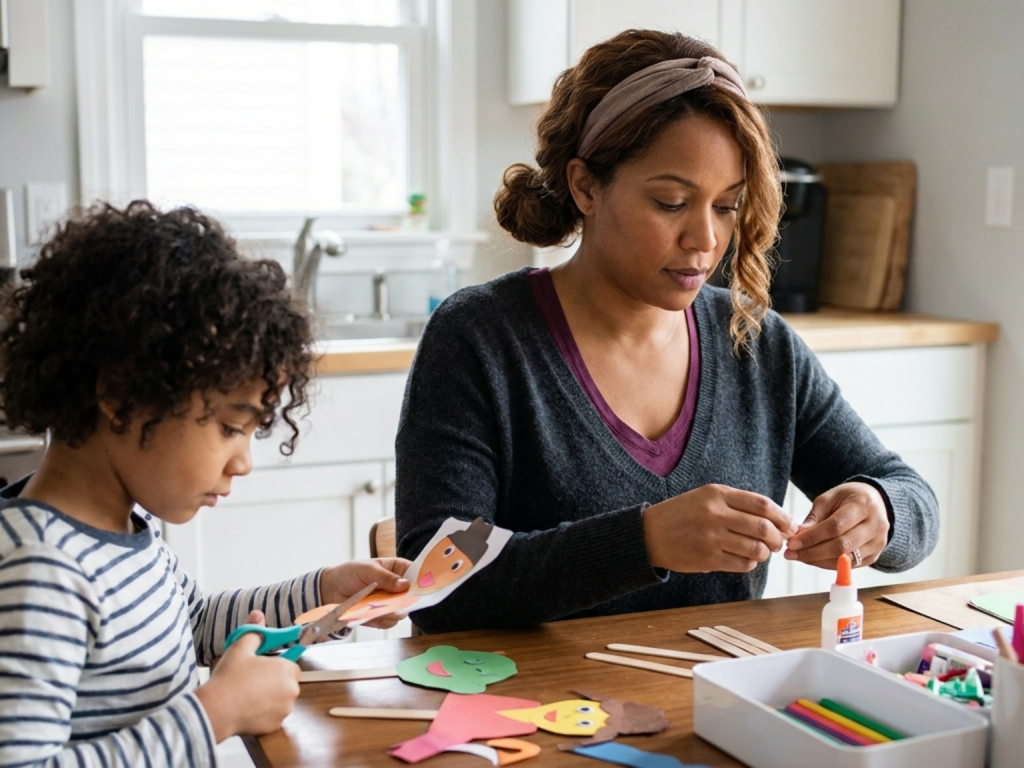
An art station can include coloring pages, blank paper, crayons, markers, stickers, child-safe scissors, glue sticks, collage scraps, or watercolor paints if supervision is available. Some children prefer structured prompts such as “draw your dream playground,” while others need open-ended exploration. Jewelry-making, friendship bracelets, sock puppets, paper airplanes, and simple origami are especially useful for older children who want a challenge.
For quieter imaginative play, try a small basket of animal figures, fabric squares, toy dishes, cardboard boxes, costumes, or household items for sorting and collecting. Make-believe play supports language, social cognition, flexible thinking, and emotional processing. A tea party, pretend store, veterinary clinic for stuffed animals, or costume play can be low-noise but deeply engaging.
Movement first: active alternatives that help children settle
Some children cannot move directly from a stimulating day into calm table work. Their bodies need discharge before quiet play is possible. Outdoor and active screen-free options include walking, biking, hiking, playground time, ball games, jump rope, hopscotch, scavenger hunts, and simple sports. These activities support cardiovascular fitness, coordination, balance, and mood regulation.
A movement-first approach does not require a long outing. Ten minutes of sidewalk chalk obstacle courses, animal walks down the hallway, a dance party, carrying groceries, sweeping leaves, or tossing rolled socks into a basket can shift a child’s arousal level. Heavy-work activities, such as pushing a laundry basket or helping move cushions, may be particularly calming for some children because they provide proprioceptive input to muscles and joints.
Scavenger hunts are flexible across ages. Younger children can search for colors, shapes, leaves, or household objects. Older children can look for signs of seasonal change, symmetrical objects, textures, or items beginning with specific letters. This combines movement with attention and language without feeling like homework.
Safety and medical context matter. Children with asthma, seizure disorders, hypermobility, cardiac conditions, recent concussion, orthopedic injuries, or significant motor delays may need modified activities and professional guidance. If exercise consistently causes chest pain, fainting, unusual breathlessness, or disproportionate fatigue, caregivers should consult a healthcare professional promptly.
After movement, transition into a quiet activity with a predictable bridge: water, snack if appropriate, bathroom, then reading, drawing, audiobook, or building. This sequence can be especially useful before a bedtime routine, when the goal is gradual downshifting rather than abrupt stopping.
Activity menus by situation
Different moments call for different kinds of alternatives. A useful family strategy is to create short menus for common pressure points so decisions do not have to be made during conflict.
- Waiting rooms or restaurants: small notebooks, sticker books, magnetic drawing boards, “I spy,” quiet fidgets, audiobooks with headphones at safe volume, mini puzzles, or sorting games with safe household items.
- After school: snack, outdoor walk, biking, ball play, scavenger hunt, then a calmer option such as drawing, building, or reading. Many children need decompression before conversation or homework.
- While a caregiver cooks: child-safe kitchen tasks, setting the table, washing produce, tearing lettuce, measuring dry ingredients, building with blocks nearby, or listening to music.
- Rainy days: blanket forts, paper airplanes, puppet shows, pretend camping, indoor obstacle courses, yoga-style stretching, puzzles, or collaborative drawing.
- Bedtime transitions: bath, pajamas, books, quiet music, breathing exercises, worry-writing for older children, or a screen-free bedtime routine that is brief and repeatable.
For sick days, low-demand options are often best: audiobooks, gentle music, sticker scenes, coloring, looking through photo albums, sorting collections, or being read to. Avoid turning recovery into a productivity project. A child who is febrile, nauseated, in pain, or sleep-deprived may not tolerate activities that require planning or frustration tolerance.
For travel, pack novelty in small doses. Wrap a few inexpensive items in paper, rotate them across the trip, or create a “travel only” pouch. Include items that do not roll away easily and do not require many loose pieces. If screens are part of travel, pair them with predictable breaks for movement, hydration, snacks, and eye rest.
Supporting different ages and temperaments
Toddlers and preschoolers usually need shorter activities, more sensory input, and closer supervision. They may enjoy water painting on cardboard, stacking cups, board books, chunky puzzles, pretend kitchens, animal figures, songs with actions, and simple sorting. At this age, repetition is not a problem; it is often how children consolidate learning.
School-age children can handle longer projects and more rules. They may enjoy Lego building, fairy houses, friendship bracelets, drawing challenges, cooking, nature journals, card games, scavenger hunts, simple science observations, and reading series. They often benefit from being offered two acceptable choices: “Would you like to build or listen to a story?”
Preteens may resist activities that feel childish, especially if screens are their main social connection. Offer autonomy and respect. Options may include sketching, music, baking, photography with non-networked devices if appropriate, model building, sports practice, journaling, complex puzzles, learning paper airplane designs, or helping plan a family meal. For some families, conversations about Late bedtime habits preteens and a digital curfew before bedtime are part of the same broader screen plan.
Temperament matters as much as age. A sensation-seeking child may need big-body play before sitting. A highly sensitive child may prefer a quiet corner, predictable materials, and reduced noise. A perfectionistic child may avoid art unless the emphasis is on process rather than outcome. A child with attention-deficit/hyperactivity traits may need brief, varied options with movement embedded. A child with autistic traits may prefer special-interest activities, visual schedules, and clear beginnings and endings.
If screen reduction repeatedly leads to prolonged meltdowns, aggression, self-injury, severe anxiety, sleep disruption, or major family impairment, it is reasonable to seek guidance. A pediatrician, child psychologist, occupational therapist, speech-language pathologist, or developmental specialist can help identify unmet sensory, communication, sleep, or mental health needs.
How to make screen-free choices easier at home
Environment design is more effective than willpower. Place high-interest alternatives where children can see and reach them. Keep screens out of default locations when possible, especially during meals and near sleep. Use baskets labeled by category: “build,” “draw,” “read,” “pretend,” “move,” and “listen.” A child who cannot yet read can use picture labels.
Start with small, predictable screen-free windows rather than sudden all-day restrictions. For example, protect the first 20 minutes after school for snack and movement, or the last hour before bed for a consistent sleep-wake routine. Sudden removal without replacement can escalate distress, particularly for children who use screens for regulation.
Modeling is powerful. Children notice when adults reach for phones during boredom, waiting, or emotional discomfort. Caregivers do not need to be perfect; simply narrating choices can help: “I’m putting my phone away while we eat,” or “I need five quiet minutes, so I’m going to read.”
Use collaborative planning when possible. Ask children to help create an “I’m bored” jar with activity cards. Include both independent and shared options. Shared activities such as cooking, tea parties, dance parties, board games, and walks strengthen connection, while independent options give caregivers breathing room.
Finally, protect sleep. Evening screen exposure can interfere with sleep onset in children through stimulating content, displacement of bedtime routines, and light exposure. A screen-free wind-down with books, quiet music, stretching, or relaxation techniques can support restorative sleep in school-age children. If a child snores habitually, has pauses in breathing, severe restless sleep, or marked daytime sleepiness, ask a clinician about possible sleep-disordered breathing in children rather than assuming screens are the only cause of fatigue or behavior changes.
When to be cautious
- Seek urgent medical care for fainting, chest pain, severe breathing difficulty, or seizure-like activity during play.
- Consult a healthcare professional if screen limits trigger self-injury, dangerous aggression, or prolonged inconsolable distress.
- Modify physical activities for children with cardiac, respiratory, neurologic, orthopedic, or post-concussion restrictions.
- Avoid small objects, beads, magnets, button batteries, and choking hazards for young children or children who mouth objects.
- Discuss persistent sleep problems, habitual snoring, or major daytime impairment with a pediatric clinician.
Tools & Assistance
- Create labeled activity baskets for reading, building, art, pretend play, movement, and listening.
- Prepare a small waiting-room kit with paper, stickers, a quiet fidget, and a compact puzzle.
- Use a visual schedule for screen-free transitions, especially before bedtime or after school.
- Ask a pediatrician, occupational therapist, or child psychologist for individualized support when regulation is difficult.
FAQ
Are screens always harmful for children?
No. Screens can be useful for education, connection, rest, and practical family needs. The goal is balanced use, developmentally appropriate content, and enough sleep, movement, play, and social interaction.
What quiet activity is best for a child who gets bored quickly?
Try short rotating stations: five to ten minutes of building, drawing, puzzles, audiobooks, or pretend play. Children who get bored quickly may need movement before quiet tasks.
How can I reduce screens without constant conflict?
Start with one predictable screen-free time, offer two acceptable alternatives, and prepare materials in advance. Sudden large restrictions are harder for many children.
What if my child only calms down with a screen?
This can happen, especially when screens have become the primary regulation tool. Gradually add other calming routines such as movement, sensory play, music, reading, or breathing exercises, and seek professional guidance if distress is severe.
Sources
- University of Illinois — Alternatives to Screen Times
- First 5 California — Alternatives to Screen Time When You Need to Entertain Your Child
- Sparkle Stories — 77 Things to Do Instead of Screens
Disclaimer
This article is for informational purposes only and does not replace medical, developmental, or mental health advice. Consult a qualified healthcare professional for concerns about your child’s behavior, sleep, development, or safety.
















Please log in to leave a comment.