
Intro
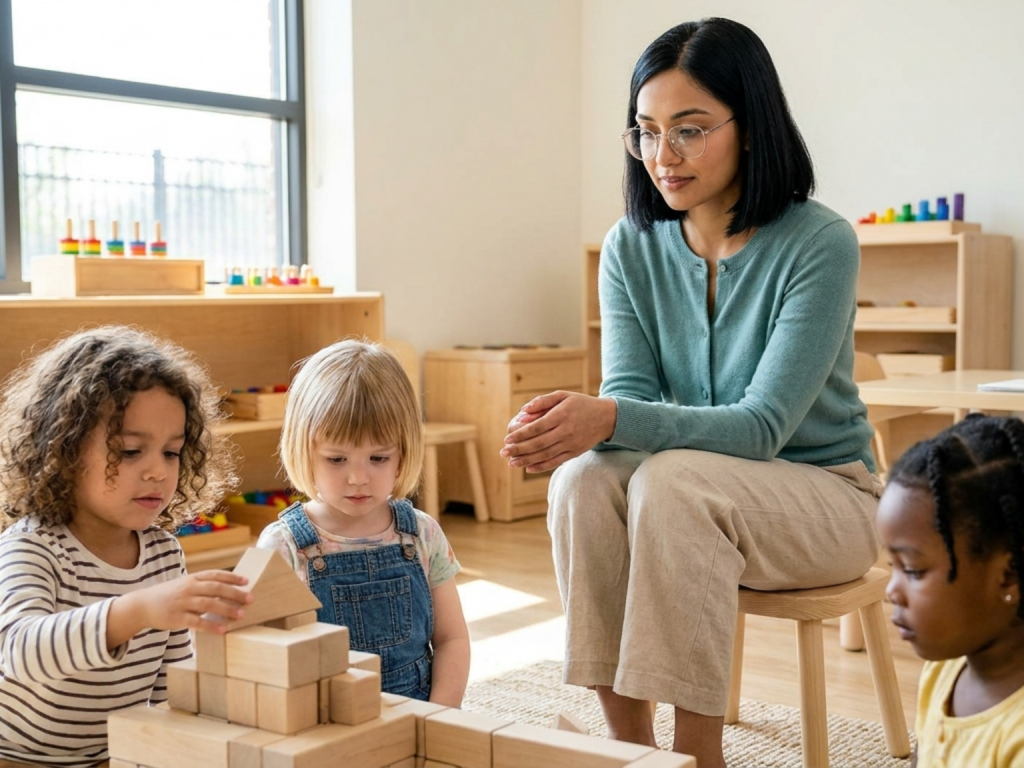
Social play is one of childhood’s most powerful learning environments. When children chase, pretend, negotiate rules, build together, or invent a story with peers, they are practicing communication, emotional regulation, perspective-taking, motor planning, and problem-solving in real time.
Highlights
Social play is not just recreation; it supports brain development, self-regulation, empathy, and peer relationships.
Children move through recognizable play patterns, but the pace varies with temperament, neurodevelopment, language skills, culture, and opportunity.
Difficulties in social play can be a clue to stress, anxiety, developmental differences, language delay, sensory needs, or psychosocial challenges, but they are not a diagnosis on their own.
Adults can support play best by offering safe environments, time, gentle coaching, and inclusive opportunities rather than controlling every interaction.
What social play means
Social play is play that involves attention to another person, even if the interaction is brief, uneven, or still developing. It includes peekaboo with a caregiver, toddlers playing side by side and watching each other, preschoolers pretending to run a clinic or restaurant, and school-age children organizing a team game with shared rules. The defining feature is not perfect cooperation; it is the child’s active engagement with the social world through playful behavior.
In developmental terms, social play sits on a continuum. A child may begin with solitary exploration, then observe other children, then engage in parallel play, associative play, and eventually cooperative play. These categories are helpful, but they should not be used rigidly. A four-year-old may still enjoy solitary play after a busy preschool morning, and a school-age child may move between independent construction and group negotiation during the same afternoon.
Social play can be physical, imaginative, verbal, constructive, sensory, or rule-based. Rough-and-tumble play may teach boundaries and body awareness when it is mutually enjoyable and safe. Pretend play allows children to test roles, emotions, and social scripts. Games with rules build inhibition, working memory, flexible thinking, and fairness. For many children, play is the language through which social development becomes visible.
Why social play matters for the developing brain
Play is sometimes described as a child’s work because it recruits many developing neural systems at once. During free play, children generate goals, shift strategies, monitor social feedback, regulate arousal, and tolerate uncertainty. These tasks rely heavily on executive functions: inhibitory control, cognitive flexibility, planning, emotional regulation, and working memory. In real life, these functions do not develop through lectures alone; they are repeatedly exercised in meaningful, emotionally engaging situations.
Neuroscience-informed discussions of play emphasize that free play supports neural plasticity, the brain’s capacity to form and refine connections. Social play is especially rich because children must integrate facial expression, tone of voice, body movement, language, memory, and emotion. A child deciding whether a peer is laughing with them or at them is performing complex social information processing, even if the moment looks simple to an adult.
Social play also builds empathy. In pretend scenarios, children try on perspectives: the patient, the parent, the superhero, the frightened animal, the shopkeeper, the frustrated friend. These roles help children connect actions with feelings. Over time, they learn that other people have preferences, limits, intentions, and emotions that may differ from their own.
Research in school-aged children has found associations between play performance factors and psychosocial functioning. In particular, executive functions during play are linked with psychosocial problems and prosocial behavior. This does not mean that play difficulties automatically indicate a disorder, but it does support what many clinicians, educators, and caregivers observe: play and mental health are closely intertwined.
The broad stages of social play
Many child development frameworks describe a progression in how children relate to others during play. The sequence is not a strict checklist, and children often revisit earlier forms of play when tired, overstimulated, stressed, or deeply focused. Still, the stages can help adults understand what they are seeing.
- Unoccupied or exploratory behavior: Infants and toddlers may move, look, touch, and repeat actions without an obvious play narrative. They are learning how bodies, objects, and people respond.
- Solitary play: The child plays independently. This is healthy and important, not a sign of poor social ability by itself.
- Onlooker play: The child watches others play, sometimes asking questions or standing close. Observation can be an active form of learning.
- Parallel play: Children play near each other with similar materials but limited direct interaction. Parallel play is common in toddlers and can remain soothing for older children too.
- Associative play: Children share materials, comment, imitate, or briefly coordinate, but the group may not have a shared goal.
- Cooperative play: Children organize around a shared purpose, role, structure, or rule set. This includes building a fort together, acting out a story, or playing a team game.
Cooperative play can be joyful and demanding. It requires waiting, listening, negotiating, coping with disappointment, and repairing conflict. A child who struggles in cooperative play may need practice, language support, emotional co-regulation, sensory accommodations, or smaller group settings rather than criticism.
What children learn during social play
Social play gives children repeated, low-stakes opportunities to practice skills that are later used in classrooms, friendships, family life, and community participation. These skills are developmental, not moral traits. A child who grabs a toy is not necessarily selfish; they may be overwhelmed by desire, have limited impulse control, or lack language for negotiation.
- Communication: Children practice requesting, refusing, explaining, joking, storytelling, and repairing misunderstandings.
- Emotional regulation: Play naturally produces excitement, frustration, surprise, jealousy, pride, and disappointment. With adult support, children learn to notice and manage these states.
- Perspective-taking: Children gradually learn that peers may want different roles, rules, or outcomes.
- Conflict resolution: Social play creates disagreements about turns, fairness, ownership, and rules. These conflicts can become learning moments when adults remain calm and coach solutions.
- Executive function: Children remember rules, inhibit impulses, switch plans, sequence actions, and adjust when play changes.
- Prosocial behavior: Helping, comforting, sharing, inviting, and including others can emerge when children experience connection and safety.
Importantly, social play is not only about extroversion. Quiet children, cautious children, and children who prefer one close friend can still develop strong social competence. The goal is not to make every child loud or constantly social; it is to help each child participate in relationships in ways that are safe, flexible, and meaningful.
How adults can support social play
Adults influence social play through the environment they create. Children need enough time, safe materials, and emotionally available adults. Overscheduling can reduce opportunities for unstructured negotiation, while overly directed activities can make children dependent on adult instructions. The most supportive adults often stay nearby, observe carefully, and intervene only when needed for safety, inclusion, or skill-building.
Useful support begins before conflict occurs. Offer play spaces with enough materials to reduce constant competition, but not so many that children never need to communicate. Pair children thoughtfully when one child is easily overwhelmed. Keep group sizes small for children still learning peer interaction. Use simple language: “You both want the truck. What can we try?” or “Maya said stop. That means the game changes.”
For younger children, narration helps connect actions and emotions: “You gave him a block, and he smiled,” or “You look upset that the tower fell.” For preschool and school-age children, adults can coach problem-solving: “Do you want to make a new rule, take turns, or choose a different game?” This approach supports autonomy while teaching structure.
Adults should also model repair. If a child hurts another child, the focus should be on safety, accountability, and reconnection rather than shame. A forced apology is less useful than helping the child notice impact and take a concrete repair step: returning an item, checking whether the peer is okay, rebuilding something, or choosing a safer way to play.
When social play is hard
Many children have periods when social play is difficult. Common reasons include fatigue, hunger, rapid transitions, language delays, sensory sensitivities, anxiety, impulsivity, trauma exposure, family stress, bullying, hearing or vision problems, sleep difficulties, or neurodevelopmental differences. Persistent social withdrawal in children can also reflect emotional distress, but it needs careful interpretation in context.
Some children want to play but do not know how to enter a group. They may hover, grab, interrupt, or act silly because they lack a more effective entry strategy. Others avoid peers because social situations feel unpredictable or threatening. Some children become dysregulated by noise, touch, or fast-moving games. Still others are highly imaginative alone but struggle when peers change the storyline.
It is helpful to observe patterns rather than focus on a single incident. Consider when difficulties occur, with whom, in what setting, and after what triggers. A child who plays well with one peer in a quiet room but melts down in a crowded playground may need environmental adjustments more than social instruction. A child who rarely responds to name, shows limited shared enjoyment, or has marked social communication differences may benefit from developmental surveillance and screening by qualified professionals.
Caregivers should avoid diagnosing a child based only on play style. However, if concerns persist across settings or interfere with learning, relationships, safety, or family functioning, consultation with a pediatrician, child psychologist, speech-language pathologist, occupational therapist, or early intervention team can be appropriate. Early support can reduce frustration and help adults understand the child’s needs more accurately.
Supporting different temperaments and neurodevelopmental profiles
Children vary widely in temperament. Some run toward new groups; others observe for a long time before joining. A slow-to-warm child may be socially interested but needs predictability. Pressuring them to “just go play” can increase anxiety. Instead, adults can preview the setting, identify one possible play partner, offer a role, and allow the child to enter gradually.
Children with language delays may benefit from visual supports, scripted phrases, gestures, or adult-mediated turn-taking. Children with sensory processing differences may need quieter areas, movement breaks, or alternatives to touch-heavy games. Children with impulsivity may need shorter games, clear rules, and immediate, calm feedback. Children with motor coordination challenges may prefer pretend, construction, or strategy play over competitive physical games.
Inclusive social play does not mean every child must play the same way. It means the environment flexes enough for different children to participate. A child can be the scorekeeper, builder, animal doctor, map designer, or rule maker. These roles are not consolation prizes; they are legitimate forms of group participation that can build confidence and peer connection.
Families and educators can collaborate by sharing what works. If a child uses emotion vocabulary in children at home but not at school, teachers may need cues that match the child’s familiar language. If school reports frequent conflict, caregivers can ask what happened before the conflict, how adults responded, and whether the child had a successful repair afterward. The aim is not blame, but shared understanding.
Balancing safety, freedom, and screen-based play
Children need freedom in play, but not absence of care. Safe boundaries allow children to take manageable risks: climbing within ability, negotiating rules, trying leadership, losing a game, or coping when a peer says no. Adults can distinguish between danger, which requires immediate intervention, and discomfort, which may be a chance to practice resilience with support.
Digital play can have social elements, especially for older children, but it should not fully replace face-to-face play. In-person play provides rich sensory and interpersonal feedback: posture, facial expressions, timing, physical space, tone, and shared attention. These cues are central to social learning. For younger children especially, hands-on play with real people and objects remains developmentally valuable.
A balanced approach might include outdoor movement, pretend play, construction materials, art, music, board games, and relaxed peer time. Children do not need expensive toys. Cardboard boxes, fabric, blocks, kitchen-safe utensils, chalk, puppets, and natural materials can invite collaboration. The adult’s calm presence, respect for the child’s pace, and willingness to coach gently often matter more than the toy itself.
When to seek extra help
- Social play concerns that persist across home, school, and community settings deserve professional discussion.
- Seek urgent help if a child’s behavior creates serious safety risks to self or others.
- Marked loss of previously acquired social, language, or play skills should be discussed promptly with a healthcare professional.
- Ongoing bullying, exclusion, or school refusal linked to peer situations requires adult intervention.
- Avoid labeling a child as antisocial, manipulative, or disordered based on play behavior alone.
Tools & Assistance
- Pediatrician or family doctor for developmental surveillance and referrals
- Speech-language pathologist for social communication and language concerns
- Occupational therapist for sensory, motor, and regulation support during play
- Child psychologist or licensed mental health clinician for anxiety, behavior, or psychosocial concerns
- Early intervention or school-based support team for coordinated assessment and accommodations
FAQ
Is solitary play a problem?
Not usually. Solitary play is a normal and valuable form of play. Concern increases if a child consistently avoids all shared enjoyment or peer interaction across settings.
At what age should cooperative play appear?
Many children show more cooperative play in the preschool years, but timing varies. Language, temperament, opportunity, and neurodevelopment all influence the pace.
Should adults step in every time children argue?
Not every time. Step in for safety, aggression, exclusion, or escalating distress. Otherwise, coach briefly and let children practice problem-solving.
Can social play help emotional regulation?
Yes. Social play gives children repeated practice with frustration, excitement, waiting, flexibility, and repair, especially when adults provide calm co-regulation.
When should I ask for a developmental evaluation?
Consider evaluation if play concerns are persistent, impairing, associated with language or communication differences, or accompanied by loss of skills, severe distress, or safety problems.
Sources
- National Institutes of Health / PubMed Central — A Comprehensive Analysis of the Relationship between Play Performance Factors and Psychosocial Problems in School-Aged Children
- Harvard Medical School — Free Play Shapes a Child's Brain — and Bestows a Lifetime of Benefits
- Building Brains Together — 6 Stages of Social Play
Disclaimer
This article is for informational purposes only and does not diagnose or treat any condition. Consult a qualified healthcare professional for concerns about a child’s development, behavior, mental health, or safety.

















Please log in to leave a comment.