
Intro
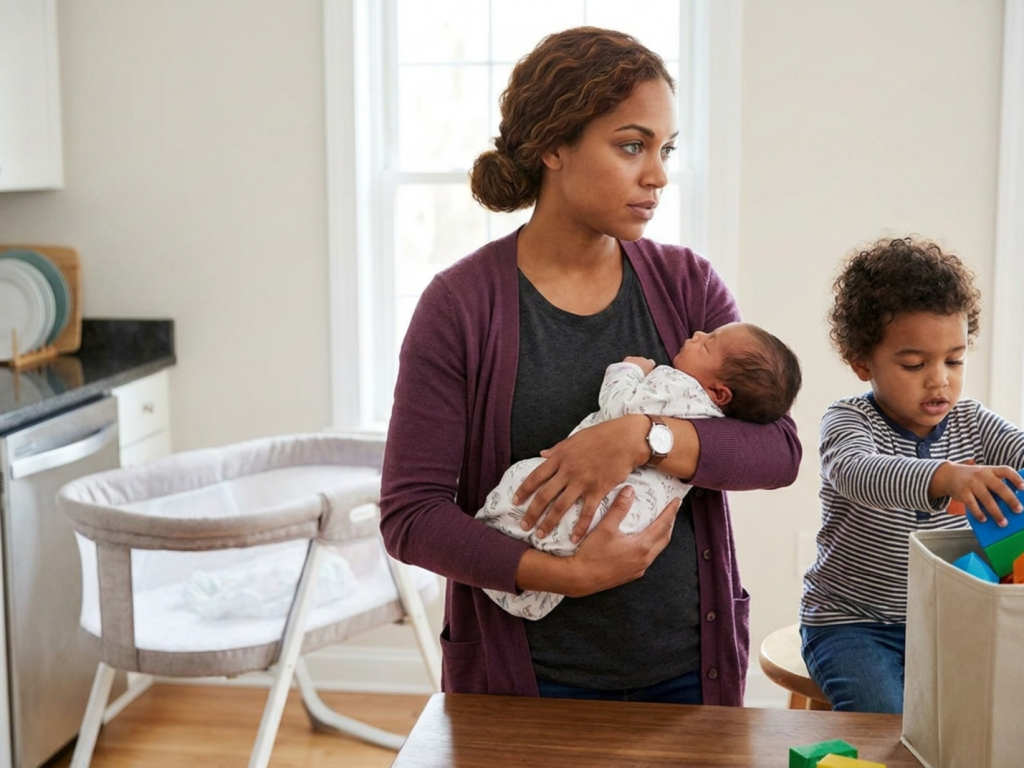
Bringing a baby into a home with older children can be deeply joyful and unexpectedly demanding. Alongside feeding, recovery, sleep disruption, and appointments, parents are helping siblings adapt to a new relationship and a household with different safety needs.
Children do not need to be perfectly calm or endlessly helpful to become caring siblings. Clear boundaries, realistic expectations, and repeated supervision make room for both the baby’s safety and each child’s emotional adjustment.
Highlights
Direct adult supervision is essential whenever a baby and young sibling are together, even when the older child is affectionate and well intentioned.
Giving older children small, developmentally suitable roles can build connection without making them responsible for the baby’s care.
Predictable individual attention and calm limits can reduce sibling distress while protecting the baby from unsafe handling or household hazards.
A refreshed home-safety plan matters because older children’s toys, food, and everyday routines may create risks for an infant.
Prepare Siblings for a Changing Family Rhythm
Older children often experience a new baby as both an exciting family event and a disruption. Their routines, access to caregivers, noise level at home, and expectations about independence may all change at once. Regression, clinginess, irritability, or renewed interest in baby behavior can be understandable adjustment responses rather than deliberate misbehavior. Naming the feeling without endorsing unsafe behavior helps: a child can be upset that feeding takes time, but cannot pull at the baby, throw objects nearby, or climb into the baby’s sleep space.
Use short, concrete explanations. Young children usually understand better when adults describe what they can see: the baby needs support for the head, cries to communicate, and cannot move away from rough handling. Avoid presenting the baby as an authority who “makes” the family miss an outing or delay a request. Instead, state the adult decision and offer a next step.
Before birth or as soon as practical after arrival, preserve familiar anchors such as school drop-off, a bedtime story, or a weekly activity. A flexible family rhythm is more sustainable than trying to reproduce every former routine. Tell children in advance when the plan may change, and identify another adult who can step in during feeding, medical appointments, or recovery periods.
Supervise Every Interaction With the Baby
A child’s affection does not eliminate the need for close supervision. Toddlers and preschoolers have limited impulse control, variable motor coordination, and little ability to recognize an infant’s vulnerability. An older child may hug too tightly, place a blanket over the baby, offer food or a small toy, or attempt to lift the baby while trying to help. School-age children generally have more control, but still need explicit instruction and adult monitoring, particularly when they are tired, excited, or playing with friends.
Make interaction rules simple and repeatable: touch feet or hands gently; use one finger for a soft stroke; sit down before holding the baby; and call an adult before picking up, feeding, moving, or covering the baby. Position the baby securely in an adult’s arms or on the floor in a protected area rather than leaving the baby on a sofa, bed, changing surface, or unsecured infant seat. Never leave the baby alone with a sibling, including for a brief errand to another room.
Observe the baby’s cues as well as the sibling’s behavior. Turning away, crying, stiffening, color change, coughing, or difficulty breathing means the interaction should stop promptly. Calmly separate the children, attend to the baby, and explain the boundary later in age-appropriate language. Shame can undermine connection; consistent supervision and immediate redirection are more protective.
Build Age-Appropriate Sibling Participation
Age-appropriate sibling participation can help older children feel included, but it should remain optional and supervised. The goal is belonging, not assigning a child the emotional or practical responsibilities of a parent. A sibling should never be expected to supervise the baby, respond alone to crying, prepare feeds, administer medication, or manage a sleep routine.
For toddlers and preschoolers, useful tasks may include choosing between two clean outfits, bringing a diaper to an adult, singing during a diaper change, or placing a used item in the laundry with guidance. Children in early school years may help fetch supplies, read quietly nearby, or assist an adult in tidying a designated play area. Older children may participate in household tasks that free caregiver time, but their own school, rest, friendships, and activities still matter.
Offer specific praise for safe behavior: “You waited for me before touching the baby’s face,” or “You put the blocks away so the floor is safer.” This is more useful than broad labels such as “good helper,” which can make a child feel responsible for maintaining adult approval. Let children decline a task when possible. Connection also comes from shared reading, music, conversation, and observing the baby, not only from helping work.
When an older child seems resentful, avoid forcing closeness. Keep the limit on behavior while allowing the emotion: “You do not have to love this right now. You do need to use gentle hands.”
Refresh Home Safety for a Mixed-Age Household
A home arranged for older children may contain hazards that are easy to overlook once an infant arrives. Small toy parts, marbles, button batteries, magnets, coins, craft materials, balloons, and food items can pose choking or ingestion risks. Create a routine for checking floors, low tables, car seats, and play areas before placing the baby down. Give older children a clear location for small-piece toys and explain that those items are used only in a separate supervised area.
Keep the baby’s sleep space clear and protected from siblings. Safe sleep practices for newborns include placing the baby on their back in a separate, firm, flat sleep surface designed for infant sleep, without loose bedding, pillows, soft toys, or sibling-added blankets. Do not allow an older child to join the baby in a bassinet, cot, or other sleep space. Explain that looking at the baby is welcome, while putting items into the sleep area is not.
Bathing also requires undivided adult attention. Gather towels and supplies beforehand, and do not ask a sibling to watch the baby while you leave the room. Older children can be invited to play nearby only if another adult is actively supervising them and the bathing adult can remain fully focused on the baby. Keep hot drinks, cords, medications, cleaning products, and sharp objects out of reach, especially during busy transitions such as school mornings and bedtime.
Protect Individual Attention and Emotional Safety
Sibling jealousy is often less about the baby than about uncertainty over access to caregivers. Predictable one-on-one time can reassure an older child that the relationship remains secure. The time does not need to be lengthy or elaborate. Ten focused minutes of drawing, reading, conversation at bedtime, or a walk around the block can be meaningful when it happens reliably and without multitasking.
During infant feeds or contact naps, prepare a small set of activities that the older child can choose independently, while remaining within sight when supervision is needed. Some families use this time for a special book, audio story, puzzle, or conversation. Avoid making every baby-care moment a demand for the older child to wait silently; acknowledge the wait and state when you will reconnect.
Try not to compare siblings or make the older child feel responsible for protecting adult emotions. Statements such as “You are the big one, so you should understand” can unintentionally dismiss genuine distress. Instead, set a clear standard: everyone in the family deserves care, and adults are responsible for keeping the baby safe. Invite the child to describe what feels hardest, then solve one practical problem together.
Changes in behavior may merit additional support when they are persistent, severe, or impairing daily life. Discuss intense aggression, repeated attempts to harm the baby, marked withdrawal, major sleep or eating disruption, or distress that does not improve with the child’s pediatric clinician or another qualified mental health professional.
Plan for Busy Moments and Ask for Support Early
The highest-risk moments are often predictable: preparing meals, answering the door, getting everyone into the car, bathing, bedtime, and periods of caregiver exhaustion. Build brief safety pauses into these transitions. Before attending to another child, place the baby in a safe location such as a cot, bassinet, or other appropriate infant sleep space. It is safer for a baby to protest briefly in a protected space than to be left on an elevated surface or in the care of an unprepared sibling.
Share a concise household plan with partners, relatives, and regular caregivers. It can cover who handles older-child routines during feeds, where small toys are stored, how visitors should approach the baby, and what to do if the baby is crying while another child needs urgent attention. Consistent caregiver communication routines reduce mixed messages and help siblings learn that safety rules apply with every adult.
Caregiver sleep deprivation can narrow attention and make conflict harder to manage. Accept practical help when available, especially help that gives older children focused attention or handles meals and transport. Contact a healthcare professional promptly for concerns about a baby’s breathing, color, responsiveness, injury, feeding, fever, or other acute symptoms. Seek urgent local emergency help after a suspected choking episode, serious fall, poisoning, significant head injury, or any event in which the baby appears unwell.
Safety Warnings
- Never leave a baby alone with a sibling, even for a short time.
- Keep small toys, button batteries, magnets, coins, and food choking hazards away from the baby.
- Do not allow siblings to share the baby’s cot, bassinet, or other sleep surface.
- Never leave a baby unattended in water or ask an older child to supervise bathing.
- Seek urgent medical assessment after choking, poisoning, a significant injury, breathing difficulty, unusual color, or reduced responsiveness.
Tools & Assistance
- Create a small-parts toy storage zone that is inaccessible to the baby
- Use a written household handoff for feeding, sleep, and sibling supervision routines
- Arrange brief predictable one-on-one time with each older child
- Ask the pediatric clinician for guidance after an injury or concerning sibling behavior
FAQ
Can my older child hold the baby?
Yes, when the child is willing, seated securely, and directly supervised by an adult who positions and supports the baby. Do not allow independent lifting or carrying.
What should I do when a sibling says they dislike the baby?
Acknowledge the feeling without judgment, maintain firm rules about gentle behavior, and create regular individual connection with the older child. Seek professional guidance if aggression is persistent or escalating.
How can I prevent older children’s toys from becoming a choking risk?
Store small-piece toys separately, check shared floors and low surfaces before floor time, and supervise play when toys contain small parts, magnets, batteries, or balloons.
Is it safe for a sibling to watch the baby while I answer the door?
No. Place the baby in a safe protected space and take the baby with you when feasible, or wait until another responsible adult is available.
Sources
- NHS — Baby and toddler safety
- Stanford Medicine Children's Health — Sibling Rivalry Toward a New Baby
- Avera — Welcoming
Disclaimer
This article is for general education and does not replace individualized medical advice. Consult a qualified healthcare professional for concerns about your baby or child.
















Please log in to leave a comment.