
Intro
Checking a baby's weight between pediatrician visits can provide useful information, especially during periods of feeding adjustment, recovery from illness, or close follow-up after birth. It can also create understandable anxiety when a single number seems different from what you expected. Home measurements are most helpful when they are collected consistently and interpreted as part of a broader clinical picture rather than treated as a diagnosis.
This guide explains when between-visit weight checks may be useful, how to measure as accurately and safely as possible, what other observations to record, and when to contact a healthcare professional. Your pediatrician or other qualified clinician should decide how often your baby needs to be weighed and how the results should guide care.
Highlights
A weight trend over time is generally more informative than one isolated home measurement.
Use the same calibrated digital scale, on a hard level surface, under similar conditions whenever possible.
Feeding quality, wet diapers, alertness, illness, and physical examination findings help clinicians interpret weight data.
Contact a healthcare professional promptly when weight concerns occur alongside poor feeding, reduced urination, unusual sleepiness, breathing difficulty, or other concerning changes.
Why Check a Baby's Weight Between Visits?
Infants can change rapidly, and a pediatrician may recommend additional weights when there are questions about feeding, hydration, recovery, or early growth. This may occur after hospital discharge, during the newborn period, following a feeding evaluation, or when a baby has a condition that warrants closer surveillance. Some healthy newborns may also participate in structured telemonitoring programs. Cleveland Clinic has described home weight telemonitoring as feasible in selected healthy newborns and reported that it may reduce some in-office visits when it is integrated into clinical follow-up.
Home weighing is not required for every family. Repeated measurement can become stressful, particularly when caregivers feel pressure to respond to every small fluctuation. Before starting, ask the child’s clinician whether home checks are appropriate, what schedule to use, and which result should prompt a call. The plan may differ for a term infant, a premature infant, a baby with feeding difficulties, or a child recovering from illness.
It is also useful to understand How pediatricians track growth: clinicians consider serial measurements, growth velocity, feeding history, developmental observations, and physical examination findings. A home scale cannot replace that assessment.
Preparing for an Accurate Home Measurement
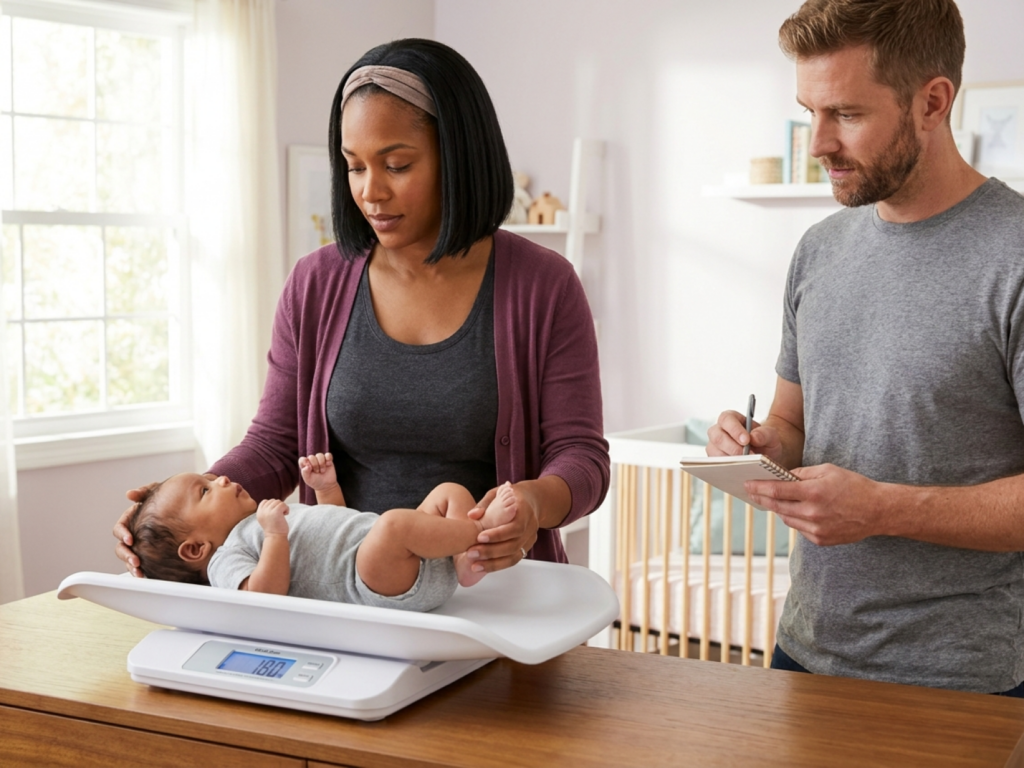
Measurement error can be larger than the change a caregiver is trying to detect. Choose a digital infant scale designed for babies when possible. Place it on a hard, level, stable surface, away from edges, stairs, water, pets, and other hazards. Soft flooring, an uneven surface, or a scale that moves during use can affect the reading.
Check the scale according to the manufacturer’s instructions. Confirm that the display returns to zero before placing the baby on it. If the scale has a tare function, use it only as directed. A household bathroom scale is usually less sensitive for small infants; do not improvise by holding a baby on an adult scale unless a clinician has specifically instructed you and the method can be performed safely.
For comparable measurements, use similar timing and clothing each time. Remove shoes, bulky clothing, blankets, and objects that are not part of the measurement. A dry diaper may be preferable for consistency, but follow the method recommended by your healthcare professional. Avoid weighing immediately after a feed if your clinician has not specified that timing, because recent intake and a wet diaper can temporarily affect the number.
Have another adult nearby if possible. Never leave a baby unattended on a scale, even for a few seconds.
A Step-by-Step Weighing Technique
Begin by placing the scale in a safe location and confirming that it is stable and set to the desired unit. Wash and dry your hands. Make sure the weighing surface is clean and that any removable tray or cover is correctly attached. If the scale requires calibration, complete that process before bringing the baby to it.
- Turn on the scale and wait for a stable zero reading.
- Place the baby gently in the center of the weighing tray, keeping one hand close without resting it on the baby or the scale.
- Keep loose blankets, clothing, and body parts from touching nearby furniture or the caregiver’s body.
- Wait until the display stabilizes. Read the measurement at eye level when possible.
- Remove the baby and repeat the reading if the result seems unexpected or the baby moved substantially.
- Record the date, approximate time, clothing or diaper conditions, scale used, and measurement.
The Leicester Hospitals NHS Trust advises repeatable setup and, when needed, multiple readings. If two measurements differ, do not average numbers automatically; check the scale’s position, the baby’s movement, and the measurement conditions, then follow your clinician’s preferred method. Stop immediately if the baby becomes unsafe or distressed. A weight check should never delay feeding, comforting, or necessary medical attention.
Recording Results Without Overinterpreting Them
A simple log can make home data more useful. Record the actual value shown by the scale rather than rounding it, along with the date and conditions. Note whether the baby was weighed before or after a feed, whether a diaper was present, and whether the baby was unusually active or unwell. Use one scale whenever possible, because different devices may produce different readings.
Also document relevant context: approximate feeding frequency and duration, expressed milk or formula volumes when applicable, vomiting or diarrhea, wet and soiled diapers, fever, and changes in alertness. A newborn feeding and diaper log may help a clinician see whether a weight concern is accompanied by possible intake or hydration concerns. Avoid making your own conclusions from a single day’s change. Fluid intake, stooling, urination, clothing, timing, and ordinary scale variability can all influence the result.
Share the log through the communication method approved by your pediatric practice. Ask whether the office wants individual readings, a series of measurements, or a scheduled virtual review. Do not change feeding amounts, dilute or concentrate formula, add supplements, or introduce new products based only on a home scale reading. Feeding plans should be individualized by a qualified clinician, particularly for newborns and premature infants.
How Clinicians Interpret Weight Trends
Pediatric clinicians place weight on an age- and sex-appropriate growth chart and evaluate the trajectory over time. They may consider percentile position, rate of change, birth history, gestational age, nutritional intake, hydration, stooling and urination, and the results of the physical examination. For babies born prematurely, corrected age may be relevant when growth and development are assessed. The clinician may also compare weight with length and head circumference, rather than examining weight in isolation.
A small difference between two home readings may have no clinical significance, while a persistent pattern may warrant a more detailed review. The meaning depends on the baby’s previous measurements and overall condition. Growth trends across multiple visits are usually more informative than comparisons with another child or with generalized online charts.
Weight is only one component of infant wellbeing. A clinician may ask about latch or bottle-feeding mechanics, swallowing, fatigue during feeds, milk transfer, formula preparation, reflux-like symptoms, illness, and family circumstances affecting feeding. A feeding specialist, lactation professional, dietitian, or other member of the care team may be involved when appropriate. The goal is to understand the whole pattern and provide individualized guidance, not to make caregivers responsible for diagnosing a growth disorder at home.
When to Call and When to Seek Urgent Care
Contact your pediatrician or designated after-hours pediatric triage line when you are concerned about a downward trend, repeated unexpected readings, difficulty feeding, markedly reduced intake, fewer wet diapers than usual, recurrent vomiting, diarrhea, fever, or a baby who is less alert than expected. Tell the clinician the baby’s age, gestational age if premature, recent measurements, measurement conditions, feeding pattern, and diaper history.
Do not wait for the next routine appointment if a baby appears acutely unwell. Seek urgent medical assessment for breathing difficulty, blue or gray discoloration, severe lethargy or inability to awaken normally, a seizure, signs of significant dehydration, persistent choking, or any rapidly worsening condition. For a young infant, fever can require prompt evaluation; follow the age-specific instructions provided by your healthcare professional or local emergency service.
Some families are understandably reassured by a stable number, but a normal-looking weight does not rule out illness. Conversely, one low or high reading does not establish a diagnosis. If your instincts tell you that your baby is significantly different from usual, describe the change to a clinician even when the scale appears reassuring. Keep the scale from becoming a substitute for observation, responsive care, and professional evaluation.
Contact a clinician promptly
- Repeated weight loss or unexpected measurements that persist after checking technique
- Poor feeding, tiring during feeds, persistent vomiting, or markedly reduced intake
- Fewer wet diapers than expected or other possible signs of dehydration
- Unusual sleepiness, difficulty waking, weak responsiveness, or a sudden change in behavior
- Breathing difficulty, blue or gray discoloration, choking, seizure, or rapid deterioration
Tools & Assistance
- A digital infant scale placed on a hard, level surface
- A dated weight, feeding, and diaper log
- The pediatric practice's nurse line or after-hours pediatric triage service
- A scheduled telehealth or in-office weight review when offered by the care team
- A lactation consultant, feeding therapist, or pediatric dietitian when referred
FAQ
How often should I weigh my baby at home?
There is no universal schedule. Weigh your baby only as often as the pediatrician recommends. Daily checks may create unnecessary anxiety when there is no clinical reason for them.
Should I weigh my baby before or after feeding?
Use the timing specified by your clinician and keep it consistent. A recent feed, wet diaper, clothing, and movement can affect the reading, so context should be recorded.
What if the home scale shows a lower weight than the clinic scale?
Different scales and conditions can produce different results. Do not compare them as if they were interchangeable. Share the readings and the scale details with your pediatrician.
Can home weighing tell me whether my baby is getting enough milk?
It can provide one piece of information, but it cannot independently assess milk transfer, feeding effectiveness, hydration, or illness. A clinician or feeding professional should interpret the full picture.
Is a single unexpected reading an emergency?
Usually, a single reading should be rechecked using consistent technique and discussed with the care team. Urgent assessment is appropriate when the reading is accompanied by serious symptoms or your baby appears acutely unwell.
Sources
- Cincinnati Children's Hospital Medical Center — How to Measure Height and Weight at Home
- Leicester Hospitals NHS Trust — Guide to weighing and measuring your child at home to ...
- Cleveland Clinic — Study: Telemonitoring Infants' Weight Reduces In-Office Visits
Disclaimer
This article is for general educational information and does not diagnose, treat, or replace advice from your child's pediatrician or another qualified healthcare professional. Seek urgent medical care for severe or rapidly worsening symptoms.

















Please log in to leave a comment.