
Intro
Play is often described as a child’s work, but for families it can also feel like a window into the child’s nervous system, relationships, language, motor planning, imagination, and emotional safety. Different types of play support different developmental domains, and children usually move among them rather than following a rigid sequence.
This article explains common types and stages of play in child development, how they contribute to learning, and when a parent or caregiver may want to discuss play concerns with a pediatrician, developmental specialist, occupational therapist, speech-language pathologist, or early childhood professional.
Highlights
Play supports brain wiring, motor coordination, communication, social cognition, self-regulation, and creativity.
Children do not all play in the same way or at the same pace; temperament, culture, disability, neurodevelopment, opportunity, and safety all matter.
Parten’s six social stages of play describe how children often progress from solitary activity toward cooperative group play.
Rough-and-tumble and risky play can be developmentally useful when they are supervised, consensual, and matched to the child’s abilities.
A lack of play variety, loss of acquired play skills, or persistent difficulty engaging with people or objects may warrant professional guidance.
Why play is biologically important
Play is not merely recreation. It is a major context for sensorimotor learning, social learning, language practice, emotional regulation, and executive function. During play, children repeatedly test cause and effect, adjust movements, interpret facial expressions, negotiate rules, and recover from frustration. These experiences help shape neural circuits involved in attention, planning, reward, motor control, and social cognition.
Medically literate caregivers may think of play as an observable developmental behavior, similar to sleep, feeding, mobility, speech, and adaptive skills. It is influenced by maturation of the central nervous system, sensory processing, musculoskeletal development, caregiver interaction, and the child’s environment. A baby mouthing a safe toy, a toddler lining up blocks, and a preschooler inventing a story about a dragon are all using play to organize information.
Importantly, there is no single “correct” play style. Some children are highly social; others prefer quiet, object-focused exploration. Some need movement before they can attend; others become overwhelmed by noisy group play. The goal is not to force a child into a template, but to offer varied, safe, responsive opportunities and to notice whether the child’s play is expanding over time.
The six social stages of play
One classic framework, associated with sociologist Mildred Parten, describes how children’s social participation in play often changes with age and experience. These stages are not a strict developmental ladder. A preschooler may still enjoy solitary play, and a toddler may briefly cooperate with another child. The stages are best understood as patterns that often become more complex over time.
- Unoccupied play: The infant or young child appears to move, observe, reach, or shift attention without an obvious play goal. This can still reflect early sensory exploration and motor rehearsal.
- Solitary play: The child plays independently, often absorbed in objects, movement, or sensory experiences. This supports attention, problem-solving, autonomy, and self-directed exploration.
- Spectator or onlooker play: The child watches others play, sometimes asking questions or moving closer without joining. This can be an important social learning period.
- Parallel play: Children play near each other with similar materials but limited direct interaction. Parallel play is especially common in toddlerhood and is a meaningful step toward peer awareness.
- Associative play: Children interact, share materials, imitate, comment, and exchange ideas, but the play may not yet have a shared plan or organized goal.
- Cooperative play: Children create shared roles, rules, goals, or narratives. Cooperative play often becomes more visible in the preschool years and supports negotiation, perspective-taking, and conflict repair.
Parents sometimes worry when a young child does not immediately “play with” peers. In many cases, observing, imitating, and playing side by side are typical precursors to richer interaction. Concerns are more significant when social engagement is persistently limited across settings, when joint attention is absent, or when a child loses previously acquired social or play skills.
Attunement play and early relationship-based play
Some of the earliest play is relational. Attunement play includes the back-and-forth exchanges between an infant and caregiver: eye contact, vocal turns, smiles, pauses, imitation, peekaboo, gentle touch, and shared delight. These interactions are small but neurodevelopmentally powerful. They teach the child that communication is reciprocal and that another person can respond predictably to their signals.
Attunement also supports co-regulation. Before children can independently manage arousal, frustration, or excitement, they borrow regulation from responsive adults. A caregiver who slows their voice, mirrors a baby’s sound, pauses when the baby looks away, and re-engages gently is helping the child’s autonomic nervous system practice modulation. This is relevant to later emotional regulation during preschool play, where children must manage waiting, losing, sharing, and disappointment.
For medically complex children, premature infants, children with sensory differences, and children with developmental disabilities, attunement play may need adaptation. Shorter play intervals, reduced sensory load, positioning support, alternative communication, or therapy-guided strategies can make play more accessible. If a caregiver feels rejected or unsure because the child does not respond as expected, this is not a failure. It is a good reason to seek supportive coaching from a pediatric clinician, early intervention team, or developmental therapist.
Object, exploratory, and constructive play
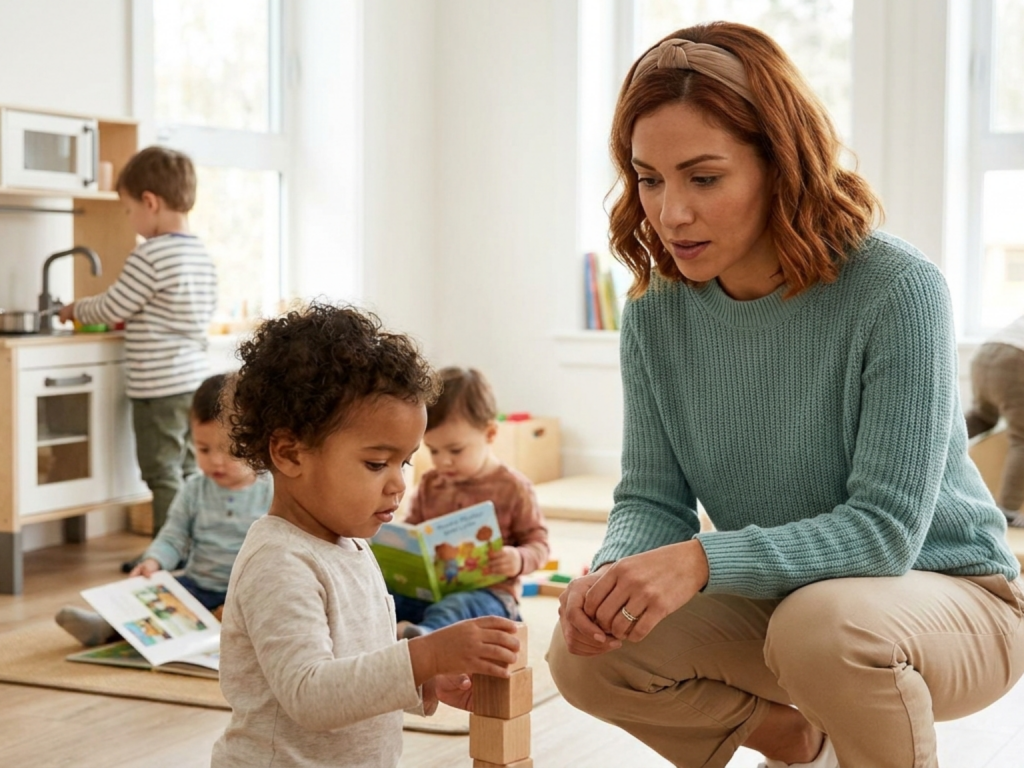
Object play begins when children examine what things are and what they can do. Infants may shake, mouth, bang, drop, or rotate objects. Toddlers may sort, stack, fill, dump, and combine materials. Preschoolers may use objects as tools within more complex plans. This type of play supports visual-motor integration, proprioception, bilateral coordination, attention, and early problem-solving.
Exploratory play is closely related. It is the “what happens if?” mode of childhood: What if I push this car down a ramp? What if water goes through a funnel? What if I mix sand and leaves? This repeated experimentation builds causal reasoning and flexible thinking. It also helps children tolerate uncertainty, because not every attempt works.
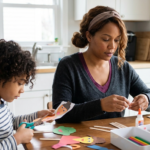
Constructive play occurs when a child uses materials to make something: a block tower, cardboard house, clay animal, train track, drawing, or blanket fort. It strengthens fine motor control, spatial reasoning, sequencing, persistence, and early engineering concepts. The finished product matters less than the process of planning, testing, revising, and trying again.
Caregivers can support these forms by offering safe open-ended toys and materials, such as blocks, containers, scarves, simple vehicles, art supplies, pretend food, cardboard tubes, and nature items appropriate for the child’s age and choking risk. Adult guidance is useful, but too much instruction can reduce exploration. A helpful stance is to narrate, wonder, and invite: “You made it taller,” “I wonder what will happen if the big block goes on top,” or “You found another way.”
Symbolic, fantasy, and pretend play
Symbolic play emerges when one object, action, or idea stands for another. A block becomes a phone, a banana becomes a spaceship, or an empty cup becomes tea. This is a major cognitive shift because the child is using representation. Symbolic play is linked to language development, narrative thinking, social understanding, and cognitive flexibility.
Fantasy and pretend play extend this capacity into imagined roles and stories. Children may become doctors, animals, parents, shopkeepers, astronauts, or superheroes. They may act out events they have seen, feared, enjoyed, or not fully understood. For many children, pretend play becomes a safe psychological space to rehearse emotions, power, caregiving, separation, bravery, and repair.
Adults do not need to control the story. In fact, child-led pretend play often reveals what the child is processing. A caregiver can join by following the child’s lead, accepting symbolic substitutions, and gently adding language. For example: “The teddy is sick. The doctor is listening to the heart. Now teddy needs rest.” This supports play-based language development without turning the moment into a test.
Pretend play can vary widely. Some children prefer realistic scripts; others invent elaborate worlds. Some neurodivergent children use repetitive themes or highly detailed interests in ways that are meaningful and regulating. The clinical question is not whether the play looks typical to an adult, but whether the child can access joy, communication, flexibility, and shared meaning, with appropriate support when needed.
Physical, body, and rough-and-tumble play
Physical play includes running, climbing, jumping, balancing, dancing, throwing, catching, crawling, and swinging. It supports gross motor strength, cardiovascular fitness, vestibular and proprioceptive processing, motor planning, coordination, and confidence. Body play begins even earlier, when infants discover hands, feet, rolling, rocking, and the pleasure of movement.
Rough-and-tumble play, such as playful wrestling, chasing, rolling, or mock fighting, can look chaotic, but when it is consensual and well supervised it may support emotional control, social signaling, and boundary awareness. Children learn to read facial expressions, modulate force, stop when someone says no, and distinguish play aggression from real aggression. Researchers in play science have emphasized that this kind of play is often important for social and behavioral development, especially when adults maintain safety without eliminating all energetic contact.
Risky play is another nuanced category. It may include climbing to an appropriate height, balancing on uneven surfaces, moving fast, exploring natural spaces, or using tools under supervision. The developmental value is not danger for its own sake. Rather, children gradually learn risk assessment, body limits, courage, and decision-making. The adult role is to reduce hazards that can cause serious harm while allowing manageable challenge.
Families should adapt active play to the child’s medical and developmental context. Children with seizures, syncope, musculoskeletal conditions, cardiopulmonary disease, low vision, balance impairment, or a history of significant injury may need individualized guidance. If a child has pain, frequent falls, marked asymmetry, regression, or exercise intolerance, consult a healthcare professional before increasing physical challenge.
Language, social, and creative play
Language play includes babbling games, rhymes, songs, silly sounds, word substitutions, jokes, riddles, and storytelling. It strengthens phonological awareness, vocabulary, turn-taking, auditory memory, and expressive confidence. Babies benefit from contingent vocal play; toddlers from naming, repetition, and simple choices; preschoolers from narrative play, sequencing, and humor.
Social play overlaps with nearly every category. It includes turn-taking games, peekaboo, shared building, chase, board games, pretend roles, and group projects. Through peer interaction, children practice reading cues, repairing misunderstandings, waiting, leading, following, and coping when the group does not accept their idea. These are demanding skills; adult scaffolding is often needed, especially for younger children.
Creative play is broader than art. It includes inventing movement, music, stories, structures, rules, recipes, and solutions. Creative play supports divergent thinking, emotional expression, and flexible problem-solving. A child who turns a cardboard box into a bus, a clinic, and then a cave is practicing cognitive flexibility and symbolic transformation.
To support these forms, caregivers can create a language-rich but low-pressure environment. Comment more than you quiz. Offer words for emotions and actions. Make room for silence and repetition. If a child uses gestures, signs, pictures, augmentative and alternative communication, or a speech-generating device, those communication modes can and should be included in play. Communication is the goal; speech is only one pathway.
How caregivers can support healthy play
The most helpful play environment is usually safe, responsive, varied, and not overly performance-driven. Children benefit from both free play and guided play. Free play allows autonomy and intrinsic motivation. Guided play adds gentle adult structure while preserving the child’s agency. For example, an adult may provide measuring cups at a water table, model a new word, or help two children negotiate turns without taking over the activity.
Useful caregiver strategies include observing before intervening, following the child’s interests, offering developmentally appropriate materials, rotating toys rather than overcrowding the space, and allowing repetition. Repetition is not wasted time; it is how children consolidate motor patterns, language, schemas, and emotional predictability.
It is also reasonable to set boundaries. Play should not involve coercion, humiliation, unsafe choking hazards, uncontrolled access to water or heights, or repeated distress that the child cannot recover from. Screens may contain playful content, but they do not replace embodied, relational, sensory, and imaginative play. When screens are used, co-viewing and conversation generally add more developmental value than passive use.
Seek professional guidance if you notice loss of acquired play skills, no interest in people or objects, persistent inability to imitate or share attention, extreme distress with ordinary sensory play, very limited functional use of toys, frequent injuries, or play dominated by themes that are frightening to the child and not improving with support. These signs do not automatically indicate a diagnosis, but they deserve thoughtful developmental surveillance and screening.
When to seek professional advice
- Loss of previously acquired language, motor, social, or play skills should be discussed promptly with a pediatric clinician.
- Persistent lack of joint attention, imitation, or interest in people or objects may warrant developmental evaluation.
- Frequent falls, pain, weakness, asymmetry, or exercise intolerance during active play should be medically assessed.
- Play that repeatedly causes intense distress, aggression, or inability to recover may need professional support.
- Children with complex medical conditions may need individualized guidance before high-intensity, climbing, or risky play.
Tools & Assistance
- Keep a brief play observation journal with dates, favorite activities, new skills, and concerns.
- Ask the child’s pediatrician about developmental surveillance and screening if play skills seem delayed or regressive.
- Consider early intervention services for infants and toddlers with developmental concerns.
- Consult an occupational therapist, physical therapist, or speech-language pathologist when motor, sensory, or communication barriers affect play.
- Share observations with childcare providers or teachers to compare play patterns across settings.
FAQ
Is solitary play a problem?
Not necessarily. Solitary play can support attention, independence, and problem-solving. Concern increases if a child rarely notices people, does not share attention, or loses social play skills.
At what age should cooperative play appear?
Cooperative play often becomes more visible in the preschool years, but timing varies. Parallel and associative play are common stepping stones.
Is rough-and-tumble play safe?
It can be beneficial when it is supervised, consensual, and matched to the child’s abilities. Adults should stop play if a child is frightened, hurt, overwhelmed, or unable to respect boundaries.
What toys are best for development?
Open-ended materials such as blocks, containers, pretend items, art supplies, books, balls, and safe household objects often support more flexible play than highly scripted toys.
When should I ask for an evaluation?
Ask a healthcare professional if play skills regress, remain very restricted, cause severe distress, or are accompanied by concerns in language, motor skills, social communication, feeding, sleep, or behavior.
Sources
- National Institute for Play — Types of Play: 9 Ways We Play
- MSU Extension — The power of play – Part 3: Types of play
- Pathways.org — How Kids Learn to Play: 6 Stages of Play Development
Disclaimer
This article is for informational purposes only and does not replace medical, developmental, or mental health care. Consult a qualified professional for concerns about your child’s development, behavior, or safety.














Please log in to leave a comment.