
Intro
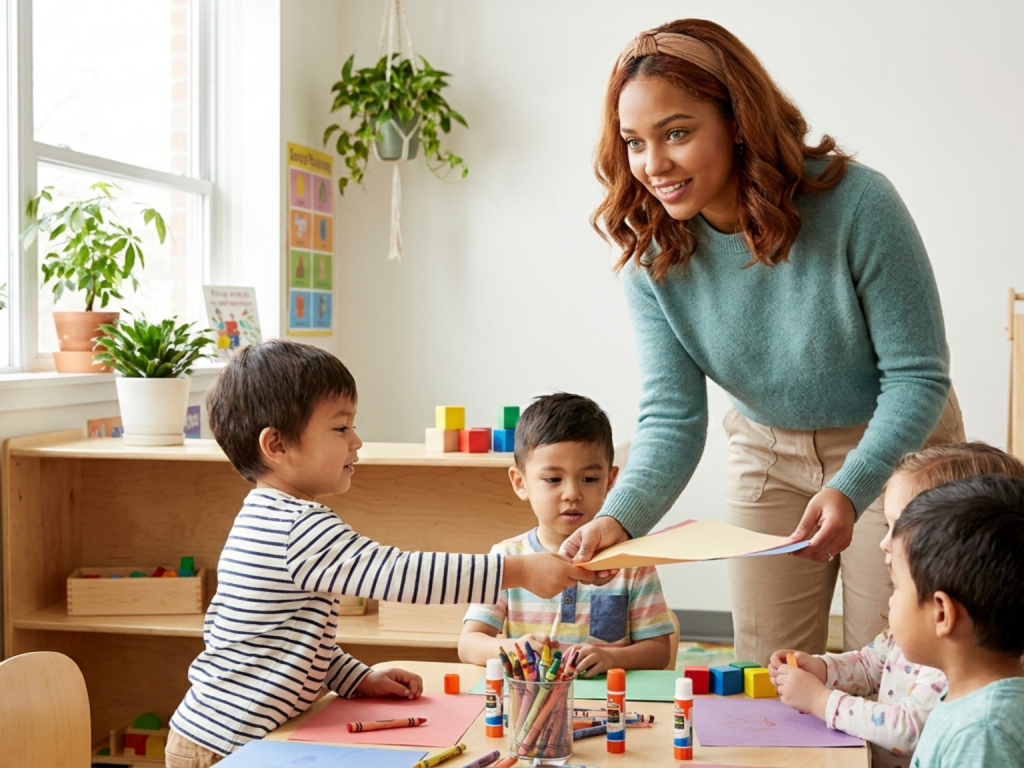
Children build confidence through repeated experiences of being seen, welcomed, and useful. Inclusion is not only about inviting a child into activities; it is also about communicating, through everyday interactions, that their presence matters and their contributions have value.
This article offers practical, developmentally sensitive ways to strengthen belonging and self-belief. It is not a substitute for assessment or care from a pediatrician, child psychologist, school counselor, occupational therapist, speech-language pathologist, or other qualified professional when concerns are persistent or impairing.
Highlights
A child’s confidence grows when adults notice their cues, respond warmly, and allow them to contribute in age-appropriate ways.
Specific praise, meaningful choices, and manageable challenges help children connect effort with progress rather than relying only on outcomes.
Inclusion is supported by representation, healthy peer relationships, and family or classroom routines that make every child feel expected and valued.
Ongoing withdrawal, distress, bullying, learning struggles, or major behavior changes deserve timely professional support.
Why inclusion and confidence develop together
A child’s sense of confidence is built inside relationships. From a developmental perspective, children learn whether they are safe, valued, and capable through thousands of small interactions: a caregiver’s eye contact, a teacher remembering their idea, a peer making room at the table, or an adult repairing after a tense moment. These experiences contribute to belonging, which is the felt sense of being accepted and expected in a group.
Confidence is not the same as being extroverted, constantly happy, or highly achieving. Healthy self-esteem in children means a child can think, “I am worthy, I can learn, and I can try again,” even when something is difficult. A child who feels included is more likely to take social and learning risks because exclusion activates threat responses: vigilance, shame, withdrawal, or defensive behavior.
The concept of “mattering” is helpful. Children do better when they experience that adults notice them, care what happens to them, and believe they can contribute. This can be as simple as asking a preschooler to hand out spoons, inviting a school-age child to help plan a weekend meal, or telling a teenager, “Your view changes how I’m thinking about this.” Inclusion becomes protective when it is specific, repeated, and sincere.
Start with connection before correction
Children are more receptive to guidance when they feel emotionally connected. This does not mean permissiveness; it means leading with attunement before teaching. Attunement includes noticing facial expression, posture, tone, energy level, and bids for attention. In early childhood, this is often described as serve-and-return interaction: the child “serves” through a sound, gesture, question, or behavior, and the adult “returns” with an appropriate response.
Practical connection habits include:
- Use the child’s name warmly. A name said with interest signals, “You are on my radar.”
- Make eye contact when culturally and developmentally appropriate. Some children, including some autistic children, may listen better without direct gaze; respect their communication style.
- Reflect what you notice. “You stayed close to the group today, even though it felt new.”
- Invite rather than interrogate. “I’d like to hear about one part of recess if you feel like sharing.”
- Repair after conflict. “I raised my voice. That was too much. I’m going to try again.” Repair teaches that relationships can survive mistakes.
Connection is especially important for children who often hear correction because of impulsivity, learning difficulties, language delays, anxiety, trauma exposure, or sensory sensitivities. A child who receives mostly negative feedback may internalize, “I am the problem.” Adults can interrupt that pattern by ensuring the child experiences frequent, genuine moments of competence and warmth.
Use praise that builds a realistic sense of capability
Praise can strengthen confidence when it is accurate, specific, and focused on effort, strategy, persistence, kindness, or courage. Global praise such as “You’re the best” may feel good briefly, but it can also create pressure to maintain an image. Effort-focused praise helps children understand what they can repeat: “You tried two ways to solve that problem,” or “You kept your voice calm when you were frustrated.”
Effective praise usually has three parts: what the adult observed, why it mattered, and how it connects to the child’s agency. For example: “You invited Sam to join the game. That helped the group feel more welcoming. You noticed someone who might have felt left out.” This builds social confidence and moral identity without exaggeration.
Children also benefit from learning self-praise. This is not arrogance; it is metacognition and emotional resilience. A child might say, “I was nervous and I still asked a question,” or “I practiced, and I improved.” Journaling can support this process for older children. Prompts such as “Something I handled today,” “A kind thing I did,” or “A mistake that taught me something” help the child encode positive experiences rather than remembering only criticism.
Be careful not to praise only compliance, performance, or appearance. Confidence becomes more stable when children are valued for curiosity, effort, humor, empathy, creativity, problem-solving, and repair. This is particularly important for children who compare themselves with siblings, classmates, or online images.
Offer meaningful choices and manageable challenges
Children feel included when their preferences influence real outcomes. Meaningful choices do not require giving a child full control. They require offering developmentally appropriate options and accepting the child’s answer when possible. A toddler might choose between two shirts; a preschooler might choose which book to read first; a school-age child might choose whether to start homework with reading or math; an adolescent might help set family rules about screen time.
Choice supports autonomy, one of the foundations of intrinsic motivation. It tells the child, “Your opinion matters here.” This can be especially powerful for children who experience many adult-directed demands, such as medical appointments, therapies, school interventions, or behavior plans.
Confidence also grows through manageable challenge for children. A task should stretch ability without overwhelming the nervous system. If a challenge is too easy, the child may not feel growth; if it is too hard, repeated failure can reinforce avoidance. Adults can scaffold by breaking the task into steps, modeling once, practicing together, then gradually reducing help.
Examples include asking a child to order their own snack with a caregiver nearby, letting them pour water into cups for dinner, encouraging them to ask a teacher one prepared question, or helping them join a playground game with a rehearsed phrase. Afterward, focus on the process: “You looked unsure at first, then you tried the first step.” Small mastery experiences are biologically meaningful; they teach the brain that effort can lead to tolerable discomfort and eventual success.
Create environments where every child can see a place for themselves
Inclusion is not only interpersonal; it is environmental. Children notice who is represented in books, classroom examples, toys, wall displays, media, leadership roles, and family stories. Positive representation of diverse children, including children with disabilities, different family structures, different languages, and varied cultural backgrounds, helps children understand that they are not exceptions to belonging.
Inclusive language also matters. Instead of “boys and girls,” adults might say “children,” “friends,” “team,” or “class.” Instead of assuming every child has a mom and dad at home, ask about “your grown-ups” or “the people in your family.” These adjustments may seem small, but they reduce the number of times a child has to mentally translate or wonder if they fit.
For a child who is shy or socially hesitant, inclusion should not mean forcing public performance. Social confidence in shy children often develops through low-pressure roles: handing out materials, partnering with one trusted peer, greeting a familiar adult, or practicing a short sentence before joining a group. The goal is participation with dignity, not making the child appear more outgoing.
If a child has learning, communication, sensory, or motor differences, inclusion may require explicit supports. Supporting child with learning difficulties can include school accommodations, assistive technology, individualized instruction, and emotionally safe feedback. A child who cannot access the activity in the same way as peers may need a different route to full participation, not lower expectations for belonging.
Support friendships, conflict repair, and emotional expression
Friendships are a major pathway to confidence, but children often need coaching to build and maintain them. Adults can teach concrete social skills without shaming: how to enter play, how to take turns, how to notice another child’s interest, how to say no, and how to apologize. Role-play can help because it lets the child practice before the emotional intensity of the real situation.
Conflict is not a failure of inclusion. In healthy groups, conflict becomes an opportunity to learn repair. Adults can guide children to identify what happened, how each person may have felt, what needs to be fixed, and what can change next time. Forced apologies are often less useful than supported accountability: “What can you do to help make this right?”
Understanding preschooler feelings is particularly important because young children may express exclusion, shame, or anxiety through behavior rather than words. A child who pushes into a game, hides under a table, complains of stomachaches before school, or becomes silly at group time may be communicating distress or uncertainty. Helping preschoolers express emotions through drawing, play, body-based language, and simple feeling words can reduce behavioral escalation.
Healthy friendships should not require a child to tolerate bullying, coercion, humiliation, or chronic exclusion. If a child repeatedly says they have no one to play with, is targeted online, is afraid to attend school, or shows sudden mood or sleep changes, adults should take it seriously and involve school and healthcare professionals as appropriate.
Know when extra support is needed
Many children go through temporary periods of low confidence, social worry, or feeling left out. Extra support is warranted when the pattern is persistent, worsening, or impairing daily life. Warning signs may include prolonged withdrawal, frequent tearfulness, irritability, school refusal, somatic complaints such as recurrent headaches or abdominal pain, loss of interest in usual activities, changes in sleep or appetite, self-deprecating statements, aggression, or talk of self-harm.
It is important not to diagnose a child based on one behavior. Anxiety disorders, depressive disorders, attention-deficit/hyperactivity disorder, autism spectrum differences, language disorders, trauma-related responses, learning disorders, sleep problems, bullying, and medical conditions can all affect confidence and inclusion. A pediatric clinician or qualified mental health professional can help clarify what is happening and recommend appropriate evaluation or support.
Families can prepare for a consultation by noting when difficulties occur, what seems to trigger them, what helps, and how the child functions across home, school, and peer settings. Teachers and caregivers can contribute observations. If school learning or participation is affected, ask about educational evaluation, counseling supports, or accommodations. Early, compassionate help can prevent a child from building an identity around “I don’t belong” or “I can’t.”
When to seek timely help
- A child talks about wanting to disappear, self-harm, or not wanting to live.
- Bullying, humiliation, discrimination, or coercion is suspected.
- Low confidence is accompanied by school refusal, panic symptoms, persistent sadness, aggression, or major sleep or appetite changes.
- A child’s learning, communication, sensory, or motor needs are preventing participation.
- Family conflict, trauma, bereavement, or major life changes are affecting the child’s functioning.
Tools & Assistance
- Schedule a check-in with the child’s pediatrician if mood, behavior, sleep, appetite, or school participation changes persist.
- Ask the teacher or school counselor for observations about peer inclusion, classroom participation, and possible supports.
- Create a daily contribution routine, such as setting the table, choosing a family question, or helping prepare materials.
- Use a simple confidence journal with prompts about effort, kindness, courage, and problem-solving.
- Consider evaluation by a child psychologist, speech-language pathologist, occupational therapist, or educational specialist when developmental or learning concerns are present.
FAQ
What is the simplest way to help a child feel included?
Notice them consistently and invite meaningful participation. Small roles, warm eye contact when appropriate, and specific comments such as “Your idea helped us” can be powerful.
Should I praise my child more often?
Praise can help when it is specific and truthful. Focus on effort, strategy, kindness, courage, and persistence rather than only results or appearance.
What if my child is shy and does not want to join group activities?
Avoid forcing performance. Offer low-pressure roles, rehearse social phrases, pair the child with one safe peer, and celebrate small steps toward participation.
Can low confidence be a sign of a mental health concern?
Sometimes. Persistent withdrawal, sadness, anxiety, self-critical statements, school refusal, or major behavior changes should be discussed with a pediatric or mental health professional.
How can schools support inclusion?
Schools can use inclusive language, positive representation, structured peer activities, accommodations, specific praise, and early response to bullying or exclusion.
Sources
- Harvard Graduate School of Education — When Kids Feel They Matter, They Do Better in Life
- Kids Mental Health Foundation — Building Self-Esteem Helps Your Child's Mental Health
- LENA Foundation — 5 Ways to Build Confidence in Early Childhood Classrooms
Disclaimer
This article is for educational purposes only and does not diagnose or treat any condition. Consult a qualified healthcare or mental health professional for concerns about a child’s mood, behavior, development, safety, or functioning.


















Please log in to leave a comment.