
Intro
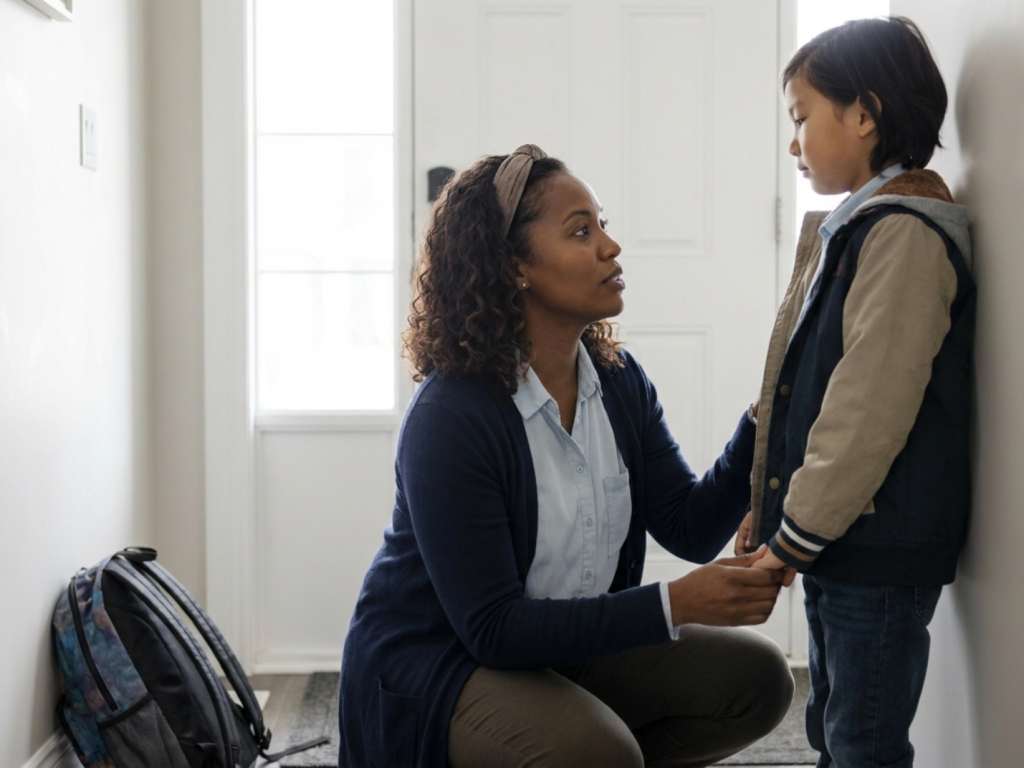
When a child refuses to leave the house, the situation can feel confusing, frightening, and exhausting. A parent may see panic, tears, aggression, stomachaches, bargaining, or complete shutdown just when it is time for school, childcare, appointments, family visits, or ordinary errands.
This behavior is rarely solved by simply being stricter or more permissive. A helpful response combines calm limits, careful listening, practical transition supports, and medical or mental health guidance when the refusal is persistent, severe, or linked to anxiety, mood changes, trauma, developmental differences, or physical symptoms.
Highlights
Refusing to leave home may reflect anxiety, separation distress, sensory overload, bullying, depression, illness, or a learned avoidance pattern, not just defiance.
The goal is to understand the function of the refusal while keeping daily expectations as predictable and non-rewarding as possible.
A gradual return plan, coordinated with school and healthcare professionals, can help children who are overwhelmed by leaving home.
Urgent support is needed if refusal is associated with self-harm talk, severe functional decline, abuse concerns, or acute medical symptoms.
Start with safety, calm, and connection
When a child refuses to leave the house, the first task is not to win an argument. It is to lower arousal enough to think clearly. A child in a fight-flight-freeze state may not process reasoning, consequences, or lengthy explanations. Use a steady voice, reduce the audience, and move away from time-pressured debating if possible.
Begin with a brief check for immediate risk: Is the child physically ill? Are they having trouble breathing, fainting, vomiting repeatedly, or expressing fear of being harmed? Are they saying they want to die, disappear, or hurt themselves? If any of these are present, the situation moves beyond routine refusal and requires urgent medical, mental health, or safeguarding support.
If there is no immediate danger, try a validating limit: “I can see leaving feels very hard right now. We are still going to work on getting to school, and I will help you take the next small step.” This communicates empathy without making staying home the default solution. Avoid labels such as lazy, dramatic, manipulative, or spoiled. These words often increase shame and resistance.
Keep directions short. Instead of “We are late and you always do this,” try one concrete instruction: “Put on your shoes.” If the child cannot do that, shrink the task: “Bring one shoe to the door.” A child who is overwhelmed may need co-regulation before compliance: slow breathing together, a drink of water, a quiet corner, or a two-minute reset. The reset should be brief and structured, not an open-ended escape.
Look for the function behind the refusal
Refusal to leave home is a behavior, not a diagnosis. The same outward behavior can have very different causes. One child may be terrified of separating from a parent; another may be avoiding bullying; another may be exhausted from poor sleep; another may feel physically unwell; another may be overwhelmed by noise, clothing, crowds, or unpredictable transitions.
Ask curious, specific questions when everyone is calm, not only during the crisis. Helpful prompts include: “What is the hardest part about leaving?” “Is it the destination, the journey, or saying goodbye?” “Does anything bad happen when you get there?” “Do you feel sick before leaving?” “Is there a person, place, sound, smell, or rule that worries you?” Some children answer better by drawing, rating fear from 0 to 10, pointing to pictures, or choosing from options.
Common contributors include:
- Separation anxiety: intense distress about being away from a caregiver, sometimes with fears that something terrible will happen to the child or parent.
- General anxiety or phobias: fear of vomiting, germs, crowds, transport, dogs, storms, or social judgment.
- School-related stress: bullying, academic pressure, learning difficulties, teacher conflict, tests, or somatic complaints before school.
- Sensory overload: distress triggered by bright light, loud streets, busy classrooms, scratchy clothing, smells, or crowded transport.
- Low mood or burnout: withdrawal, irritability, low energy, sleep disruption, or loss of interest in usual activities.
- Medical issues: pain, gastrointestinal symptoms, migraines, asthma symptoms, fatigue, medication effects, or other illness.
The aim is not to interrogate the child but to build a hypothesis. Once you know what leaving represents to the child, you can plan the right support.
Separate anxiety from ordinary reluctance
Most children occasionally resist leaving the house, especially when tired, absorbed in play, facing an unpleasant task, or adjusting to change. Concern rises when refusal is recurrent, intense, developmentally unusual, or causes functional impairment: missed school, missed medical care, family isolation, frequent lateness, or escalating distress.
Anxiety-driven refusal often has a recognizable pattern. The child may be relatively settled the night before, then develop stomach pain, headache, nausea, crying, clinginess, anger, or panic as departure approaches. Symptoms may improve rapidly once staying home is allowed. This does not mean the symptoms are fake. Anxiety activates the autonomic nervous system and can produce genuine gastrointestinal, cardiovascular, respiratory, and muscular sensations.
Separation anxiety can appear after stressful life events such as moving, family conflict, divorce, bereavement, trauma, illness, or changes in caregiving. Some children have a family vulnerability to anxiety. Others become fearful after a frightening event outside the home or after a long absence from school due to illness or holidays. The longer a child avoids the feared setting, the more threatening it can feel, because avoidance prevents corrective experiences.
At the same time, parents should be cautious about assuming “it is just anxiety.” A child refusing to leave for school might be responding to bullying, harassment, racism, humiliation, academic failure, unsafe transport, or an unmet learning or neurodevelopmental need. Anxiety may be the visible signal of a real environmental problem. A balanced approach validates distress, investigates context, and still supports gradual participation in daily life.
Respond in the moment: firm, brief, and supportive
During a refusal episode, long negotiations often strengthen the behavior because they delay departure and give the child intense attention around avoidance. A steadier plan is to prepare a simple script in advance. For example: “I know this is hard. The plan is shoes, coat, car. You do not have to feel ready; we will go one step at a time.”
Use transition supports for children who struggle with shifting from home to outside demands. A visual checklist, timer, first-then statement, or predictable goodbye ritual can reduce uncertainty. For some children, controlled choices during routines help preserve autonomy: “Do you want the blue jacket or the grey jacket?” “Walk to the car or hold my hand?” Choices should be real but limited; avoid choices that include whether to leave.
Do not make staying home more attractive than the planned activity. If a child stays home because of overwhelming distress or illness, keep the day quiet and low stimulation: no special treats, gaming marathons, or unlimited screens. This is not punishment; it prevents the nervous system from learning that refusal produces a more rewarding day. Maintain normal wake time, meals, schoolwork if appropriate, and contact with the school or clinician.
If the child becomes aggressive or destructive, prioritize safety. Move siblings away, reduce demands briefly, and avoid physical struggles unless immediate safety requires intervention. Later, when calm, review what happened and plan safer ways to signal distress. Recurrent aggression, severe panic, or shutdowns are signs that professional assessment is warranted.
Build a gradual leaving plan
For mild refusal, returning to the usual routine the next day may be enough. For severe anxiety or prolonged avoidance, a stepwise exposure plan may be safer and more effective. Exposure means gradually approaching the feared situation in planned, tolerable steps while learning that distress can rise and fall without escape. It should be collaborative and, for significant impairment, guided by a qualified mental health professional.
Create a fear ladder. The lowest step might be standing by the front door with shoes on for two minutes. Later steps might include walking to the mailbox, sitting in the car, driving past school, entering the playground after hours, meeting one trusted staff member, attending one lesson, then increasing time. Each step is repeated until it becomes manageable. The plan should be challenging enough to build confidence but not so hard that the child repeatedly panics and gives up.
Pair the plan with predictable but flexible routine. Prepare clothes, bags, food, and transport the night before. Reduce morning decisions. Use a visual schedule for younger children or children with executive function or language difficulties. Celebrate effort rather than perfect success: “You got to the car even though your worry was high.” Rewards can be modest and linked to brave behavior, not to avoidance.
Coordinate with the destination. If school is involved, ask about a soft landing: greeting by a familiar adult, entering through a quieter door, temporary reduced timetable, safe place to regulate, or a plan for missed work. The goal is reintegration, not indefinite exemption. Parents, school staff, pediatricians, and therapists should share consistent language so the child hears one calm message: adults believe the feeling is real, and adults also believe the child can return step by step.
Check school, social, sensory, and family stressors
A child may refuse to leave the house because the outside world has become predictably aversive. Speak with teachers, childcare staff, coaches, relatives, or transport supervisors. Ask about peer conflict, teasing, isolation, academic frustration, disciplinary incidents, toileting concerns, lunchtime difficulties, or changes in behavior. Some children hide these experiences because they fear retaliation or believe adults cannot help.
Consider learning and attention issues. A child who cannot read at grade level, follow multi-step instructions, tolerate handwriting, or keep up socially may experience school as daily failure. What looks like defiance can be avoidance of shame. Requesting an educational evaluation or school support meeting may be appropriate if there are persistent academic, attention, language, or executive function concerns.
For sensory-sensitive child profiles, leaving home may mean encountering unbearable input: seams in socks, bus noise, fluorescent lights, perfume, cafeteria smells, or crowded corridors. Occupational therapy advice, environmental adjustments, ear defenders in specific settings, clothing changes, movement breaks, or a quieter arrival route may help. Sensory support should not become total avoidance; it should make participation possible.
Family stress also matters. Children may become reluctant to separate during parental illness, conflict, bereavement, housing insecurity, or after frightening news. They may worry that a parent will be unsafe while they are gone. Reassurance alone may not be enough; the child may need repeated, concrete evidence of safety, predictable goodbyes, and sometimes family therapy or individual therapy.
When to seek professional help
Consult a pediatrician or primary care clinician if refusal is persistent, worsening, associated with physical symptoms, or causing significant impairment. Medical review can assess pain, sleep problems, gastrointestinal symptoms, headaches, asthma, medication effects, fatigue, neurodevelopmental concerns, and signs of anxiety or depression. The clinician may recommend mental health assessment, school collaboration, or specialist referral.
A child and adolescent mental health professional can help evaluate anxiety disorders, mood disorders, trauma responses, obsessive-compulsive symptoms, autism spectrum-related needs, attention-deficit/hyperactivity disorder, and family stress patterns. Evidence-informed approaches may include cognitive behavioral therapy, parent guidance, exposure-based work, school consultation, and treatment of co-occurring conditions. Medication decisions, if ever considered, should be made only by an appropriately qualified clinician after assessment.
Seek urgent help if the child talks about self-harm, suicide, feeling unsafe at home or school, abuse, severe bullying, hallucinations, extreme agitation, refusal to eat or drink, or if caregivers feel unable to keep anyone safe. Also seek prompt medical care for acute chest pain, breathing difficulty, fainting, dehydration, severe abdominal pain, neurological symptoms, or fever with concerning signs.
Parents often feel guilt when they cannot solve this alone. But refusal to leave the house can sit at the intersection of anxiety physiology, learning, relationships, sensory processing, and environment. Getting help is not overreacting; it is a way to shorten suffering and protect the child’s development.
Support the parent-child relationship while holding the boundary
Children who refuse to leave home often feel ashamed afterward, even if they seemed angry in the moment. Repair matters. Later in the day, say: “This morning was hard for both of us. I love you, and we are going to keep practicing.” Avoid lectures that revisit every mistake. Instead, identify one change for tomorrow.
Parents need support too. Repeated refusal can disrupt work, finances, siblings’ routines, and caregiver mental health. If two caregivers are involved, agree on a shared plan before morning. Inconsistent responses can accidentally intensify refusal because the child learns that escalating distress may change the outcome. Consistency does not mean harshness; it means the child can predict what adults will do.
Notice progress in small units: getting dressed, approaching the door, naming the worry, entering the car, staying at school for one hour, or returning after a difficult day. Confidence is built through repeated mastery, not one dramatic breakthrough. The message is: “Your fear is not a problem we dismiss, and it is not a boss we obey. We will help you face it safely.”
Seek urgent help if
- The child talks about suicide, self-harm, wanting to disappear, or being unable to stay safe.
- There are concerns about abuse, severe bullying, exploitation, or threats at school or in the community.
- Refusal is accompanied by severe pain, breathing difficulty, fainting, dehydration, fever with concerning signs, or neurological symptoms.
- The child stops eating or drinking, cannot sleep for prolonged periods, or becomes markedly withdrawn.
- Aggression, panic, or shutdowns make it unsafe for the family to manage at home.
Tools & Assistance
- A brief morning script with one-step instructions
- A visual leaving checklist or timer for predictable transitions
- A fear ladder for gradual return to school, childcare, or activities
- A meeting with the school or childcare team to identify stressors and supports
- Assessment by a pediatrician or qualified child mental health professional
FAQ
Should I force my child to leave the house?
Avoid physical battles unless safety requires immediate action. Use calm, firm limits and small steps, and seek professional help if refusal is severe or recurrent.
What if my child says they feel sick every morning?
Physical symptoms can be real even when anxiety contributes. A pediatric assessment is appropriate, especially if symptoms are persistent, severe, or new.
Is it okay to let my child stay home for a mental health day?
Occasional rest may be reasonable, but repeated avoidance can strengthen fear. If staying home happens, keep the day calm and structured, and plan the next step back.
How long should a gradual return plan take?
It depends on severity, triggers, and the child’s functioning. Some plans take days; others need weeks and professional coordination.
Could this be separation anxiety?
It could be, especially if distress centers on leaving a caregiver or fear that something bad will happen. A clinician can help distinguish normal separation distress from a disorder.
Sources
- HealthyChildren.org / American Academy of Pediatrics — School Avoidance: Tips for Concerned Parents
- Mayo Clinic — Separation anxiety disorder - Symptoms and causes
- NHS — Anxiety in children
Disclaimer
This article is for informational purposes only and does not replace medical, mental health, or safeguarding advice. Consult a qualified healthcare professional for concerns about a child’s symptoms, safety, or functioning.
















Please log in to leave a comment.