
Intro
Choosing sports equipment for a child can feel straightforward: find the right sport, select a familiar brand, and make sure the child can use it. In practice, equipment decisions involve fit, function, condition, developmental stage, and the rules of the activity. A helmet that is slightly loose, a mouthguard that is uncomfortable, or worn padding may reduce protection at the moment it is needed most.
Most parents are not careless. Gear mistakes often happen because children grow quickly, sports have different equipment standards, and busy families must make decisions under time or budget pressure. This guide explains common preventable errors and offers a practical, supportive framework for safer participation. It does not replace advice from a pediatrician, sports-medicine clinician, athletic trainer, or qualified coach.
Highlights
Correct fit is a safety feature, not merely a comfort preference.
Protective equipment should match the specific sport, position, rules, and level of play.
Damaged, modified, or heavily worn gear may not provide the protection parents expect.
Children need help learning when and how to use equipment consistently.
A pre-play equipment check can identify many problems before activity begins.
Mistake 1: Buying for growth instead of buying for fit
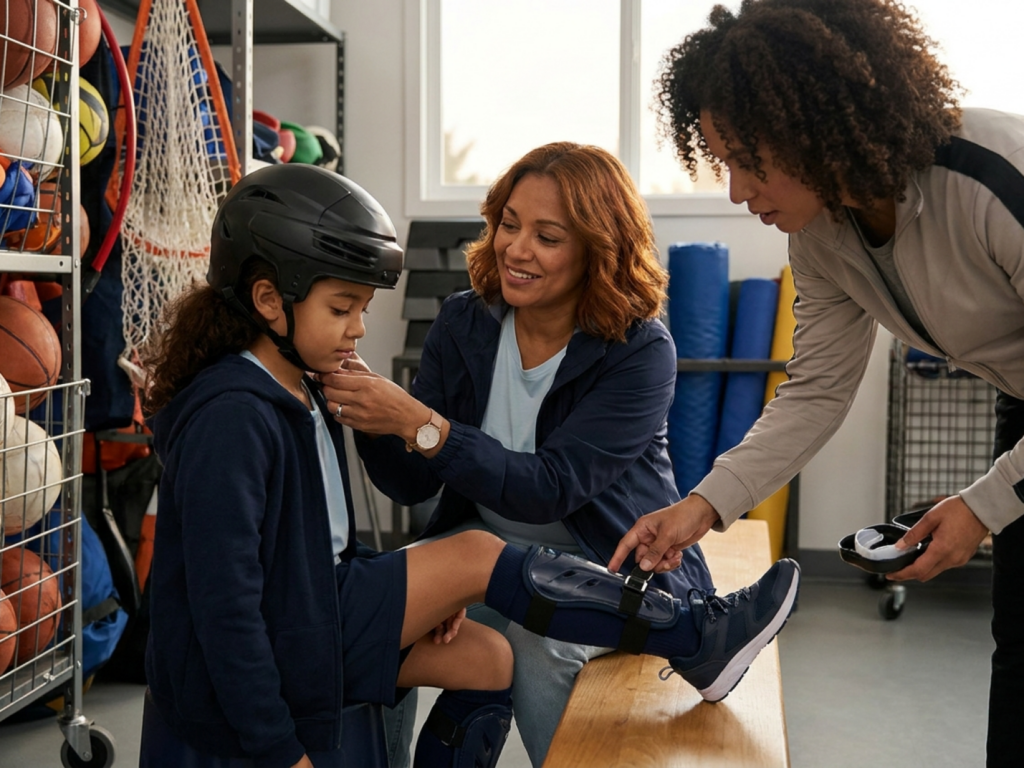
Children can outgrow equipment within a season, so buying a larger size may seem economical. However, protective equipment is designed to remain in a particular position during impact or rapid movement. A helmet that shifts, shoulder pads that slide, shin guards that leave exposed areas, or skates that allow excessive foot movement may fail to protect the intended body region. Properly fitted protective gear should be snug enough to stay in place without causing pain, numbness, restricted circulation, or impaired movement.
Fit is especially important for helmets. The helmet should sit level, cover the appropriate areas, and remain stable when the child moves. Straps should be adjusted according to the manufacturer’s instructions rather than left loose for convenience. A child’s hair, head shape, and use of another item underneath the helmet can also affect fit. Parents should not assume that an older sibling’s helmet or a single “youth” size will suit every child.
Growth does not always occur evenly. A child may need a different size in one piece of equipment before the rest of the set. Reassess fit periodically and whenever the child reports pressure points, slipping, restricted vision, tingling, or difficulty moving. A coach, athletic trainer, specialty retailer, or healthcare professional may be able to help evaluate fit when the equipment is complex or the child has a medical device, orthosis, or unusual anatomical concern.
Mistake 2: Choosing general gear for a specific sport
Sports equipment is not interchangeable simply because it looks protective. A bicycle helmet, for example, is not automatically appropriate for contact sports, and a recreational skate helmet may not meet the requirements of another activity. Different sports involve different forces, impact locations, movement patterns, and rules. Protective equipment should therefore be selected for the child’s sport, position, age group, and level of competition.
Parents may also overlook smaller but meaningful items. Depending on the activity, children may need a properly fitted mouthguard, eye protection, athletic cup, wrist guards, knee or elbow pads, shin guards, or sport-appropriate footwear. Some items are required by governing bodies; others are strongly recommended because they address predictable injury mechanisms. The coach or league should provide a current equipment list, but parents can also consult a pediatric sports-medicine service or established safety guidance when requirements are unclear.
Footwear deserves particular attention. Shoes should match the playing surface and provide suitable traction without being excessively worn. Cleats designed for one surface may be unsafe or prohibited on another. Shoes that are too small can cause blisters, nail trauma, and altered movement; shoes that are too large may increase instability. A child with flat feet, recurrent pain, a prior lower-limb injury, or a gait concern should be assessed rather than fitted solely by trial and error.
Mistake 3: Treating protective equipment as optional or occasional
Children often imitate teammates. If adults permit “just one drill” without a helmet, mouthguard, goggles, pads, or other required equipment, the child may learn that safety gear is negotiable. Protective equipment works best when it is used consistently and correctly, not only during games or when parents are watching. Coaches and caregivers should agree on which items are mandatory for practices, warm-ups, scrimmages, transportation, and informal play.
Comfort and communication strongly influence adherence. A child may remove gear because it pinches, overheats, obstructs vision, causes skin irritation, or interferes with hearing. Dismissing these complaints can lead to unsafe workarounds, such as loosening straps, cutting padding, or wearing the item incorrectly. Instead, treat discomfort as a signal to reassess the size, adjustment, material, ventilation, or model. A healthcare professional should review persistent skin problems, pressure-related pain, or symptoms such as numbness and weakness.
Parents can improve consistency by involving the child in the equipment routine. Let the child help identify each item, practice putting it on, and explain in simple terms what body area it protects. A calm pre-play safety check is more effective than a last-minute lecture. Consistent adult behavior matters too: adults should respect facility rules and avoid encouraging shortcuts when schedules are tight.
Mistake 4: Ignoring wear, damage, and product history
Equipment can look acceptable while its protective properties have deteriorated. Cracked shells, compressed foam, stretched straps, broken buckles, missing fasteners, torn stitching, detached padding, warped guards, and deeply worn soles are reasons to stop and assess the item. A helmet involved in a significant impact may require replacement even if no crack is visible, because internal materials may no longer manage force as intended. Parents should follow the manufacturer’s replacement and inspection guidance and ask the governing sport organization about applicable standards.
Secondhand gear can be useful, especially for families managing rapid growth or financial constraints, but its history must be known whenever possible. Avoid equipment with unknown impact history, missing parts, illegible safety information, or evidence of improper modification. Do not drill holes, remove padding, paint over safety markings, or combine components unless the manufacturer specifically permits it. A bargain is not economical if it creates a false sense of security or must be replaced after a preventable injury.
Cleaning also matters. Sweat, moisture, and shared use can contribute to odor, skin irritation, and material degradation. Clean and dry items according to manufacturer instructions, rather than using harsh chemicals or high heat that may weaken adhesives or foams. Store equipment in a dry, ventilated area away from direct heat and prolonged sunlight. Inspect gear before every use and conduct a more thorough review at the beginning and end of each season.
Mistake 5: Forgetting that equipment is only one part of prevention
Well-fitted gear reduces some risks, but it cannot compensate for unsafe conditions, inadequate supervision, or a child playing through concerning symptoms. Equipment should be part of a broader safety plan that includes sport-specific instruction, appropriate practice intensity, hydration, environmental awareness, and respect for rules. Children also benefit from a gradual increase in activity rather than an abrupt jump in training volume.
A dynamic warm-up for children can prepare muscles and joints for the movements required by the activity. It may include light activity, mobility exercises, and controlled sport-specific movements under qualified instruction. Warm-up is not a guarantee against injury, and parents should not use it to justify excessive workloads. Recurrent pain, swelling, limping, reduced performance, or unusual fatigue deserves attention rather than an equipment-only solution.
Parents should also know the sport’s emergency procedures. Ask who is trained in first aid, how injuries are evaluated, and how families are contacted. If a child has a head impact followed by confusion, worsening headache, repeated vomiting, unusual drowsiness, seizure, weakness, difficulty walking, or behavior that seems markedly abnormal, remove the child from play and seek urgent medical guidance. Do not rely on a helmet or other gear to rule out injury. A suspected concussion in children requires appropriate clinical assessment and individualized guidance about school, activity, and return to play.
A practical parent checklist for safer gear decisions
Families do not need perfect knowledge or expensive equipment to make meaningful improvements. A repeatable checklist can reduce rushed decisions and help children become active participants in their own safety. Before purchasing, identify the exact sport, playing surface, position, league requirements, and expected frequency of use. Check the manufacturer’s sizing instructions and, when possible, have the child try the item while moving in the way the sport requires.
- Confirm that the item is designed for the specific sport and age or competition category.
- Check that it stays in position during walking, running, jumping, turning, and sport-specific movements.
- Look for cracks, tears, deformation, loose fasteners, missing parts, and signs of impact.
- Verify that straps, closures, padding, and ventilation function as intended.
- Ask whether the child can see, breathe, hear instructions, and move comfortably while wearing it.
- Review cleaning, storage, replacement, and impact-related replacement instructions.
- Repeat the check after growth, a collision, a change in sport, or a complaint about discomfort.
When cost is a barrier, ask the league, school, community center, sports club, or pediatric practice about equipment-lending programs and local assistance. Saving money should not mean accepting unsafe or unverified gear. A knowledgeable professional may help prioritize the items that are most important for the child’s activity. If an injury occurs, equipment should be preserved for inspection when relevant, and the child should not return to play based only on symptom improvement or pressure from teammates.
When to stop play and seek help
- Remove a child from activity after a significant head impact or concerning neurologic change.
- Stop using equipment with cracks, broken closures, missing padding, or unknown impact history.
- Seek medical advice for persistent pain, swelling, numbness, weakness, limping, or reduced function.
- Do not modify protective equipment in ways that could alter its safety performance.
- Do not let a child return to play after a suspected concussion without appropriate clinical guidance.
Tools & Assistance
- A sport-specific equipment checklist from the child’s coach or governing organization
- A fitting appointment with a specialty sports-equipment retailer
- A pre-play inspection routine written on the family calendar or equipment bag
- A pediatrician, sports-medicine clinician, or athletic trainer for injury and return-to-play questions
- Local school, club, or community equipment-lending and financial-assistance programs
FAQ
Is buying one size larger always unsafe?
Not always, but protective equipment should never be loose enough to shift, expose body areas, or interfere with movement. Follow the manufacturer’s fit guidance and reassess as the child grows.
Can a child use the same helmet for several sports?
Usually not without checking the helmet’s intended use and the rules of each sport. Helmets are engineered for particular impact patterns and certification requirements.
When should sports equipment be replaced?
Replace equipment when it is damaged, no longer fits, has missing or failed components, reaches the manufacturer’s stated service limit, or has been involved in an impact that requires replacement.
What if my child refuses to wear protective gear?
Ask what feels uncomfortable and reassess fit, design, and adjustment. Explain the purpose without shaming the child, and involve the coach or a qualified professional if the problem continues.
Does good equipment prevent all sports injuries?
No. Equipment reduces selected risks but cannot eliminate injuries. Safe coaching, appropriate training progression, supervision, rules, rest, and timely medical assessment remain important.
Sources
- Nemours KidsHealth — Preventing Children's Sports Injuries
- Seattle Children's — Safety Gear for Sports and Play
- Nationwide Children's Hospital — Sports Safety for Kids
Disclaimer
This article provides general educational information and does not diagnose, treat, or replace advice from a qualified healthcare professional. Seek prompt medical care for urgent or concerning symptoms.













Please log in to leave a comment.