
Intro
Water can be joyful, calming, and developmentally enriching for children, but it also demands active prevention. Drowning can occur quickly and quietly, including in bathtubs, buckets, pools, lakes, rivers, and the sea. A thoughtful water-safety plan reduces risk while allowing children to enjoy swimming and play with confidence.
Highlights
Formal swimming and water-safety lessons can reduce drowning risk, but they never replace close adult supervision.
The safest approach layers protections: attentive supervision, barriers, life jackets, safe environments, and emergency readiness.
Children’s risk changes with age, mobility, neurodevelopment, swimming ability, fatigue, and water conditions.
After any concerning water incident, caregivers should seek urgent medical advice if there are breathing symptoms, altered behavior, persistent cough, or unusual tiredness.
Why water safety matters at every age
Water safety is not a single rule; it is a layered prevention strategy adapted to a child’s age, abilities, and environment. Drowning is a hypoxic injury: when the airway is submerged or water is aspirated, oxygen delivery to the brain and other organs can fall rapidly. Young children are especially vulnerable because they have large heads relative to body size, limited hazard awareness, and emerging motor control. A toddler can topple into a bucket, toilet, pond, or paddling pool and be unable to right themselves.
For infants and toddlers, the highest-risk situations are often domestic: bathtubs, unfenced pools, garden ponds, and water containers. Preschool and school-age children may face risks during pool play, parties, and lessons when adults assume someone else is watching. Older children and teenagers encounter additional hazards: peer pressure, diving, currents, cold water, fatigue, alcohol or drug use, and overconfidence after learning to swim.
A medically literate way to think about prevention is to reduce both exposure and vulnerability. Exposure is reduced through barriers, safe storage, and choosing safer swim locations. Vulnerability is reduced through swimming skills, water familiarization, appropriate flotation devices, supervision, and rapid emergency response. No single measure is sufficient, because real-life failures are usually multifactorial: a gate is left open, a caregiver is distracted, a child is tired, or water conditions change.
Active supervision: the non-negotiable layer
Supervision near water must be active, continuous, and close. “Watching” from a distance while texting, cooking, socializing, or drinking alcohol is not adequate. Drowning is often silent; children may not splash, shout, or wave. A safer model is to assign a “water watcher,” a responsible adult whose only task is observing the children in and around water for a defined period, then handing over clearly to another adult.
For infants and toddlers, supervision means being within arm’s reach whenever they are in or near water, including in the bath. A young child should never be left alone in a bathtub, even briefly, and bath seats or rings should not be treated as safety devices. If a caregiver must leave, the child should come too. Toilets, buckets, coolers, and containers should be emptied or secured after use because small amounts of water can be dangerous.
At pools and gatherings, supervision can become diluted because many adults are present. Before children enter the water, clarify who is responsible, which children are being watched, and what the boundaries are. Children who can swim still need monitoring, particularly in crowded pools, during rough play, or when using inflatables. Inflatables and pool noodles are toys, not protective equipment.
Caregivers should also avoid alcohol and impairing substances during water activities. Impairment affects attention, reaction time, judgment, and the ability to perform rescue or cardiopulmonary resuscitation. Teenagers need the same message framed respectfully: alcohol and drugs around water increase the risk of injury, submersion, and poor decision-making.
Swimming lessons and water-safety training
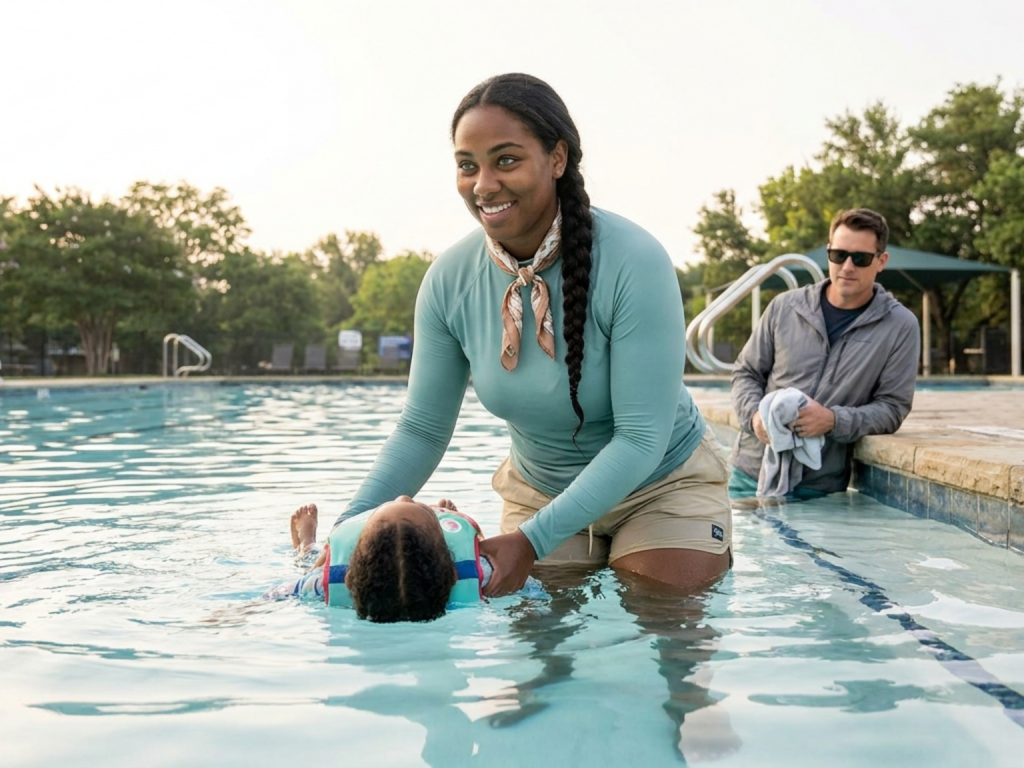
Evidence supports formal swimming and water-safety training as a meaningful part of drowning prevention. Systematic review evidence has found that basic swimming skills and isolated water-safety training can reduce drowning mortality and improve water-safety knowledge and behaviors in young children. Training that emphasizes familiarization, body orientation, floating, propulsion, safe entry and exit, and motor awareness appears especially relevant.
However, lessons are not an “immunity certificate.” A child who can swim in a warm, clear, shallow pool may not be competent in a lake, river, ocean, cold water, or a pool while fully clothed. Skills degrade with fatigue, fear, illness, and unexpected immersion. Children also vary widely in temperament and neurodevelopment; some are impulsive, sensory-seeking, or unaware of danger, while others panic easily. Instruction should be developmentally appropriate and emotionally safe.
Families can ask swim programs practical questions: Are instructors trained in child water safety and rescue? Are class sizes small enough for close supervision? Does the curriculum teach safe entry, floating, turning to the wall, exiting, and what to do after accidental immersion? Are children taught to ask permission before entering water? Programs should never rely on forced submersion or frightening methods, because fear can undermine learning and trust.
For children with medical conditions such as epilepsy, syncope, cardiac disease, significant asthma, neuromuscular disorders, autism, developmental delay, or a history of aspiration, individualized advice from a pediatrician or relevant specialist is prudent. This does not mean avoiding water automatically; it means planning supervision, rescue readiness, and reasonable accommodations.
Pool, home, and bath safety
Home pools require physical barriers because supervision can fail for ordinary human reasons. Four-sided fencing that separates the pool from the house and yard is more protective than fencing that uses the house as one side. Gates should be self-closing and self-latching, and latches should be out of reach of young children. Pool covers and alarms may add protection, but they should not replace fencing and supervision.
Remove toys from the pool area after swimming so children are not tempted to return. Keep furniture, planters, and climbable objects away from fences. After gatherings, check that gates are latched, doors are secured, and no child has wandered back outside. If a child is missing, the pool or nearest water source should be checked first, before other search areas.
Diving deserves specific caution. Children and teens should enter unknown water feet-first and avoid diving unless the area is clearly designated as safe. Shallow water, hidden steps, sloped pool bottoms, rocks, and submerged objects can cause catastrophic cervical spine injury. Some pediatric guidance advises that pool depth should be at least 9 feet before diving; local rules and signage should be followed, and conservative judgment is wise.
Bath safety is equally important. Gather towels, soap, and clothing before starting the bath so there is no need to step away. Drain the tub immediately after use. Set water heaters to safer temperatures where possible to reduce scald risk, and test water temperature before placing a child in the bath. Bath time should be calm and supervised, not delegated to an older sibling.
Open water, boats, weather, and life jackets
Natural water is less predictable than pools. Lakes, rivers, ponds, and oceans may have currents, drop-offs, weeds, rocks, cold layers, boat traffic, low visibility, and uneven surfaces. Children should swim only in designated areas when possible, ideally where lifeguards are present. Caregivers should explain that being able to swim in a pool does not automatically translate to safe open-water swimming.
Life jackets are central for boating and many open-water activities. Children should wear a properly fitted life jacket approved by the relevant safety authority, such as a U.S. Coast Guard-approved device in the United States. The jacket should match the child’s weight and activity, fasten securely, and not ride up over the chin or ears. Water wings, inflatable rings, and recreational floats are not substitutes for life jackets.
Weather and temperature matter. Swimming should stop during thunderstorms, and families should leave the water and open shoreline when lightning is possible. Cold water can impair muscle function and breathing control quickly, even in competent swimmers. Waves and currents can exhaust a child faster than expected. Teach children to swim parallel to shore if caught in a current where appropriate, but emphasize that prevention and lifeguard-supervised locations are safer than relying on self-rescue.
Teenagers need direct, nonjudgmental conversations about risk. They should swim with a buddy, avoid alcohol and drugs, avoid dares, enter water feet-first, and respect posted warnings. Adolescents may have adult-size bodies but still-developing executive function, particularly under peer influence. A family safety agreement can be more effective when it is specific: where they may swim, who must be present, whether life jackets are required, and when to call for help.
Emergency readiness and after-incident care
Even with excellent prevention, caregivers should be ready for emergencies. Adults who supervise children around water should consider training in cardiopulmonary resuscitation and basic first aid. Rapid recognition, rescue, emergency activation, and high-quality CPR can be lifesaving. Rescue should be performed safely; an untrained rescuer entering dangerous water can become a second victim. When possible, reach or throw a flotation aid rather than entering hazardous water.
Call emergency services immediately for a child found submerged, unresponsive, not breathing normally, cyanotic, confused, excessively sleepy, or persistently coughing after a water event. Other pediatric emergency warning signs include severe breathing difficulty, abnormal mental status, seizures, repeated vomiting, chest pain, or any deterioration after an apparent recovery. If in doubt, seek urgent medical assessment rather than waiting at home.
Caregivers sometimes hear terms such as “secondary drowning” or “dry drowning.” These phrases are used inconsistently and can cause anxiety. The practical point is simpler: after aspiration or submersion, respiratory symptoms may reflect airway irritation, bronchospasm, hypoxemia, aspiration pneumonitis, or evolving pulmonary edema. A child who is completely well after a brief splash is usually different from a child who had a true submersion event, coughing fit, breathing difficulty, or altered behavior. A healthcare professional can advise whether observation or evaluation is needed.
After any frightening incident, emotional recovery matters too. Children may become fearful, clingy, or reluctant to return to water. Caregivers may feel guilt or shock. Supportive discussion, gradual reintroduction, and professional help when anxiety is persistent can be appropriate. The goal is not blame; it is learning, prevention, and restoring safety.
Building a family water-safety plan
A practical plan turns general advice into habits. Start by mapping water hazards: bathtubs, toilets, buckets, fishponds, pools, drainage areas, nearby lakes, relatives’ homes, vacation rentals, and childcare settings. Ask caregivers, babysitters, and relatives about supervision rules before visits. If your child is impulsive, attracted to water, or prone to wandering, consider additional measures such as door alarms, higher latches, and explicit safety planning with schools or childcare providers.
Create simple, repeated rules for children: ask permission before going near water, never swim alone, stay where the supervising adult can see you, walk near pools, wear a life jacket when required, and stop when the adult says stop. Rules should be practiced, not only spoken. Rehearse safe pool entry and exit, turning around to return to the wall, and calling for help.
For travel, check pool fencing, balcony access, beach conditions, lifeguard availability, and whether properly sized life jackets are available. At parties, assign water watchers in shifts. At home, maintain fences, latches, drains, covers, and rescue equipment. Review the plan at the start of each swimming season and whenever a child gains new mobility, such as crawling, walking, opening doors, or riding a bike to nearby water.
Water safety can feel overwhelming because it asks caregivers to anticipate rare but high-consequence events. A layered plan is empowering: you are not relying on perfect attention or one device. You are creating multiple opportunities for prevention, early recognition, and rescue, while preserving the joy and confidence children can gain from safe water experiences.
Seek urgent help after water exposure if
- A child was submerged, unresponsive, blue, limp, or not breathing normally.
- There is persistent coughing, wheezing, chest discomfort, or shortness of breath in children after a water incident.
- The child is unusually sleepy, confused, irritable, vomiting repeatedly, or not acting normally.
- There was a seizure, loss of consciousness, suspected head or neck injury, or dangerous dive.
- You are unsure whether the event was significant; it is safer to contact emergency services or a healthcare professional.
Tools & Assistance
- Enroll children in developmentally appropriate swim and water-safety lessons.
- Assign a sober adult water watcher whenever children are in or near water.
- Install and maintain four-sided pool fencing with self-closing, self-latching gates.
- Use properly fitted, safety-approved life jackets for boating and appropriate open-water activities.
- Take pediatric CPR and first-aid training through a recognized community or healthcare organization.
FAQ
At what age should children start swimming lessons?
Readiness varies by child, but many families begin formal water-safety or swim instruction in early childhood. Ask your pediatrician if your child has medical, developmental, or behavioral factors that may affect timing or supervision needs.
Can I rely on floaties or water wings?
No. Water wings and inflatable toys can slip, deflate, or create false confidence. For boating or higher-risk water settings, use a properly fitted, safety-approved life jacket and maintain close supervision.
Is a lifeguard enough supervision?
A lifeguard is an important safety layer, but caregivers still need to watch their own children closely. Lifeguards supervise many people and may not immediately notice one child in difficulty.
What should I do if my child coughs after swallowing pool water?
Brief coughing that resolves quickly after a small splash may not be serious, but persistent cough, breathing difficulty, unusual sleepiness, vomiting, or behavior changes after a water incident need urgent medical advice.
How can I make water safety less frightening for my child?
Use calm, consistent rules and positive practice. Choose instructors who use developmentally appropriate, non-forced methods, and frame safety skills as part of enjoying water rather than as punishment or fear.
Sources
- PMC (National Center for Biotechnology Information) — Basic swimming or water safety skills training for drowning prevention in children: an updated systematic review and meta-analysis of case-control studies
- Centers for Disease Control and Prevention (CDC) — Preventing Drowning
- Nationwide Children's Hospital — Water Safety—Prevention
Disclaimer
This article is for general educational purposes and does not replace medical care. Seek urgent medical help after any significant submersion event or if a child has breathing difficulty, altered behavior, or other concerning symptoms.














Please log in to leave a comment.