
Intro
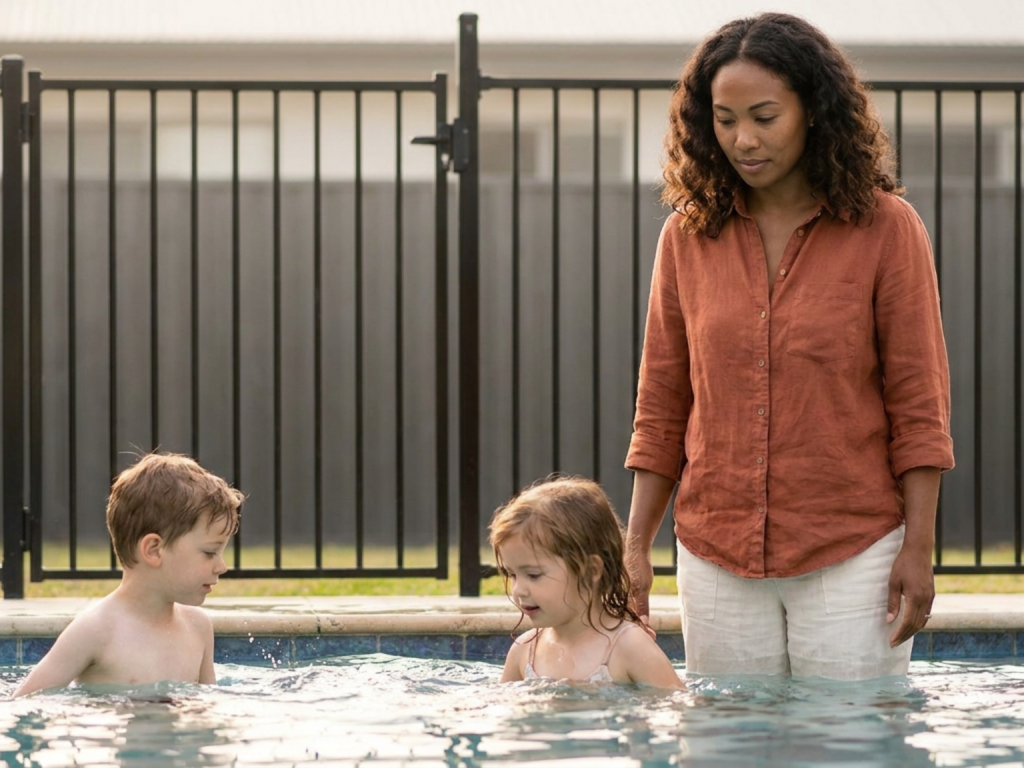
Drowning prevention can feel emotionally heavy because water emergencies are often sudden, silent, and fast. The goal is not to frighten families, but to create calm, repeatable routines that protect children while still allowing them to enjoy water play, swimming, and social time around pools.
Highlights
The safest pool plan uses layers of protection: physical barriers, active adult supervision, swimming ability, and emergency readiness.
A designated water watcher should be close, attentive, sober, and free from phone use or other distractions whenever children are in or near water.
Toddlers and preschoolers need especially close protection because curiosity, impulsivity, and limited motor skills can lead to rapid unsupervised water entry.
Pool covers, buckets, fountains, and shallow standing water can still be dangerous; drowning is not limited to deep pools.
Why drowning risk is different in children
Drowning is a process of respiratory impairment from submersion or immersion in liquid. In children, the risk is shaped by development as much as by swimming skill. Toddlers can move quickly, have a high center of gravity, and may not understand danger. Preschoolers may overestimate their abilities. Older children may take risks when excited, fatigued, or influenced by peers.
A critical point for caregivers is that drowning is often quiet. A child who is struggling may not be able to call out, wave, or splash dramatically because breathing becomes the urgent physiologic priority. Hypoxemia can develop rapidly when the airway is submerged or when laryngospasm, aspiration, or panic interferes with ventilation. This is why supervision has to be active, close, and continuous, not occasional glances from across the yard.
Prevention is most effective when families avoid relying on any single safeguard. Swimming lessons help, but they do not make a child drown-proof. A fence helps, but a gate can be left open. A life jacket helps in appropriate settings, but it does not replace adult attention. The safest approach is layered: prevent unsupervised access, supervise when water is present, teach water competence, and prepare adults to respond quickly.
The water watcher rule
Every pool gathering should have one clearly assigned water watcher. This adult’s only job is to watch the children in and around the water. The role should be handed off deliberately, not assumed silently. A practical handoff might be, “I am watching the pool until 2:30, then you take over.” This reduces the common problem of several adults being nearby while each assumes someone else is supervising.
The water watcher should avoid phones, reading, alcohol, sedating medications, prolonged conversations, and indoor tasks. Even a brief distraction can matter. Young children should remain within arm’s reach, often called touch supervision, especially infants, toddlers, and children who are weak swimmers. For older or more competent swimmers, the adult should still maintain continuous visual attention and be close enough to intervene quickly.
Useful household rules include:
- Children do not enter the pool area unless a designated adult says it is swimming time.
- No child swims alone, even if they are a strong swimmer.
- Adults count children frequently, especially during parties or transitions.
- Bathroom breaks, food breaks, and toy retrieval happen with supervision maintained.
- If visibility is poor, the pool is crowded, or adults are distracted, swimming stops.
These rules may feel strict, but they also reduce anxiety. Children learn that water play has predictable boundaries, and adults do not have to negotiate safety in the moment.
Pool barriers, gates, and the home environment
Residential pools should be enclosed by a four-sided fence that separates the pool from the house and yard. A fence that uses the house as one side is less protective because a child may exit through a door, pet door, or unlocked sliding door and reach the water without an adult noticing. The fence should be at least 4 feet high, difficult to climb, and equipped with a self-closing, self-latching gate. The latch should be out of a young child’s reach and checked regularly.
Barriers work best when combined with habits. Keep chairs, toys, planters, and storage boxes away from the fence so they cannot be used for climbing. Do not prop gates open. After storms, parties, maintenance visits, or landscaping, recheck that the gate closes and latches fully. Door alarms, pool alarms, and window locks can add another layer, but they should not replace a proper fence.
Pool covers require special caution. A child can drown in very shallow standing water on top of a cover, and a soft or poorly secured cover can trap a child. Remove toys from the pool and pool deck after swimming; floating balls and bright objects can tempt a toddler back toward the water. Empty kiddie pools immediately after use and store them upside down. Buckets, coolers, fountains, and decorative water features should also be considered potential hazards for infants and toddlers.
Swimming lessons, life jackets, and child readiness
Swimming instruction is an important layer of protection, particularly by age 4, when many children can begin learning coordinated swim and water survival skills. Some younger children may benefit from developmentally appropriate water competency programs, but readiness varies. Parents should discuss timing with a pediatrician if a child has developmental delays, seizures, cardiopulmonary disease, neuromuscular conditions, sensory differences, or significant anxiety around water.
Good swim programs teach more than strokes. They should include floating, turning to reach the wall, safe pool entry and exit, breath control, and what to do after an unexpected fall into water. However, even a child who can swim across a pool can become fatigued, startled, injured, entrapped, or overwhelmed. After lessons, caregivers should continue the same supervision and barrier rules.
Use a properly fitted life jacket approved for water safety when children are boating, near open water, or in situations where depth, currents, or crowding increase risk. Inflatable toys, water wings, and foam noodles are not safety devices. They can give adults and children a false sense of security and may slip off or place a child in an unsafe posture. For infants and toddlers, check that the device fits the child’s current weight range and keeps the airway positioned safely above water.
Rules children can understand and practice
Children follow safety rules more reliably when the rules are short, repeated, and practiced before the excitement of swimming begins. Instead of long warnings, use clear phrases: “Wait for an adult,” “Walk near the pool,” “Feet first,” and “Ask before touching the gate.” Children also learn from rehearsal. Practice stopping at the pool gate, waiting for permission, and climbing out using steps or a ladder.
Core pool rules for children include:
- Never go near water without an adult water watcher.
- Walk on the pool deck; do not run or push.
- Enter feet first unless an adult confirms the water is safe for diving.
- Stay away from drains, suction outlets, and pool equipment.
- Do not hold another child underwater, even as a game.
- Get out of the water when tired, cold, frightened, or told to stop.
For children with neurodevelopmental differences, impulsivity, wandering behaviors, or limited communication, families may need individualized plans. These can include door alarms, visual rules, adaptive swim instruction, identification bracelets, and direct coordination with therapists, schools, or respite caregivers. The aim is not to restrict joy, but to match supervision and environmental protection to the child’s actual risk profile.
Emergency readiness and after-water symptoms
Every adult who supervises children around water should know how to activate emergency services and should strongly consider pediatric CPR training. If a child is found in water and is not breathing normally, the priority is immediate rescue, calling emergency services, and starting CPR if trained to do so. Do not delay emergency response to search online or wait to see if the child “comes around.” A child not breathing emergency requires immediate action.
After any significant submersion event, medical evaluation is important, even if the child seems improved. Clinicians may need to assess oxygenation, respiratory effort, mental status, aspiration risk, hypothermia, trauma, or other contributing factors. Caregivers should be especially alert for persistent cough, vomiting, unusual sleepiness, confusion, chest discomfort, cyanosis, or severe breathing difficulty in children. These findings warrant urgent medical care.
Families sometimes hear the terms “dry drowning” or “secondary drowning.” These terms are imprecise and can create confusion. What matters clinically is whether a child has respiratory symptoms or abnormal behavior after a water event. If symptoms develop after submersion, treat them seriously and seek medical advice promptly. When in doubt, call emergency services or a pediatric clinician for guidance rather than trying to monitor a concerning situation alone.
Pool safety beyond swimming time
Many childhood pool incidents occur when no one planned to swim. A toddler slips outside during a family meal, a gate is left unlatched after yard work, or adults are cleaning up after a party. Prevention therefore has to include “not swimming time” routines. When swimming ends, everyone exits the pool area, the gate is latched, toys are removed, and children are accounted for before adults shift attention to food, cleanup, or conversation.
Visiting another home with a pool deserves the same scrutiny as using your own. Before a playdate or family gathering, ask whether the pool has a four-sided fence, a self-latching gate, and a plan for supervision. This can feel socially awkward, but it is a reasonable child safety question, similar to asking about car seats, medication storage, or firearms. If the environment is not adequately protected, keep young children physically close and consider declining unsupervised visits.
Shared pools, hotels, and vacation rentals bring additional challenges. Lifeguards, when present, are a backup layer, not a substitute for caregiver supervision. In unfamiliar settings, identify the deep end, drains, ladders, gates, emergency phone location, and any cloudy or poorly visible water. If the water is too cloudy to see the bottom clearly, children should not swim. Clear visibility is essential for rapid recognition and rescue.
Seek urgent help after any concerning water event
- Call emergency services immediately if a child is not breathing normally, is unconscious, or cannot be awakened.
- Urgent medical assessment is needed after submersion with persistent cough, vomiting, confusion, blue color, or breathing difficulty.
- Do not rely on flotation toys, water wings, or swim lessons as substitutes for adult supervision.
- Never leave toddlers unattended near pools, buckets, bathtubs, fountains, or water collected on pool covers.
- If you are unsure whether symptoms are serious, contact a pediatric clinician or emergency service promptly.
Tools & Assistance
- Post a rotating water watcher schedule during pool gatherings.
- Inspect the pool fence, latch, and gate closure weekly and after storms or parties.
- Enroll caregivers in pediatric CPR and basic water rescue training.
- Use properly fitted life jackets for boating, open water, and higher-risk water settings.
- Ask about pool barriers and supervision plans before playdates or vacation rentals.
FAQ
At what age should children start swimming lessons?
Many children are ready for structured swim instruction by age 4. Some younger children may benefit from water competency lessons, but readiness depends on development, health conditions, and comfort; discuss concerns with a pediatrician.
Is a lifeguard enough supervision at a pool?
No. A lifeguard is an important safety layer, but caregivers should still actively watch their own children, especially infants, toddlers, and weak swimmers.
Are water wings safe for children who cannot swim?
Water wings and inflatable toys are not safety devices. Use a properly fitted life jacket when flotation protection is needed, and continue close adult supervision.
Should a child see a doctor after briefly going underwater?
If the child had coughing, breathing difficulty, vomiting, confusion, unusual sleepiness, color change, or any significant submersion, seek medical advice promptly. When symptoms are severe, call emergency services.
What is the most important home pool safety feature?
A four-sided fence at least 4 feet high with a self-closing, self-latching gate is a key safety feature, but it works best alongside supervision, water competency, and emergency preparedness.
Sources
- American Academy of Pediatrics — Drowning Prevention and Water Safety
- HealthyChildren.org — Pool Dangers and Drowning Prevention―When It Is Not Swimming Time
- Seattle Children's Hospital — Water Safety for Children Birth to 5 Years
Disclaimer
This article is for informational purposes only and does not replace medical evaluation or emergency care. Consult a qualified healthcare professional for child-specific advice, and call emergency services for urgent symptoms after a water event.















Please log in to leave a comment.