
Intro
Keeping a baby hygienic outside the home is mostly about reducing exposure to contaminated hands, surfaces, water, and feeding equipment. The goal is not sterility, which is unrealistic in daily life, but a consistent routine that limits avoidable microbial exposure and protects delicate skin and mucous membranes.
That routine becomes especially important during errands, family visits, daycare drop-offs, travel, and medical appointments. A small, repeatable system for hand hygiene, diaper care, feeding-item cleaning, and safe water use can make outings much easier to manage and much less stressful.
Highlights
Outside the home, the main risks come from hands, surfaces, water, and feeding equipment. A portable routine lowers exposure without turning every outing into a project.
Hand hygiene is still the central defense. Soap and water are best when available; alcohol-based hand sanitizer is a practical backup when they are not.
Bottles, pacifiers, teething rings, and toys need the same disciplined cleaning standards you would use at home, especially when formula or saliva is involved.
Diaper care on the go works best when you plan for privacy, clean surfaces, and a clear place to dispose of waste.
When safe water is uncertain, breastfeeding when possible and using purified or otherwise safe water for infant feeding becomes more important.
Why hygiene outside home needs a different routine
At home, you can control the sink, the counter, the water supply, and the cleaning products. Outside the home, those variables change quickly. A diaper change may happen in a restroom with poor setup, a feeding may happen during a long drive, and a dropped pacifier may land on a surface you cannot judge. The answer is not to avoid normal life; it is to standardize the steps you can control.
Think in terms of contact points. Hands touch strollers, shopping carts, door handles, phones, money, railings, and baby equipment. Those hands then touch the baby’s mouth, eyes, nose, bottle, or skin. Hygiene outside the home is therefore a chain problem: if you interrupt the chain early with handwashing, cleaning, and good storage habits, you reduce the rest of the burden.
For many families, the most useful mindset is to prepare for the predictable events rather than the rare ones. Feeding, diaper changes, spit-up, pacifier drops, and sticky hands happen on every ordinary day. The routine you build around those moments matters more than trying to eliminate every environmental exposure.
Build a portable hygiene kit that actually gets used
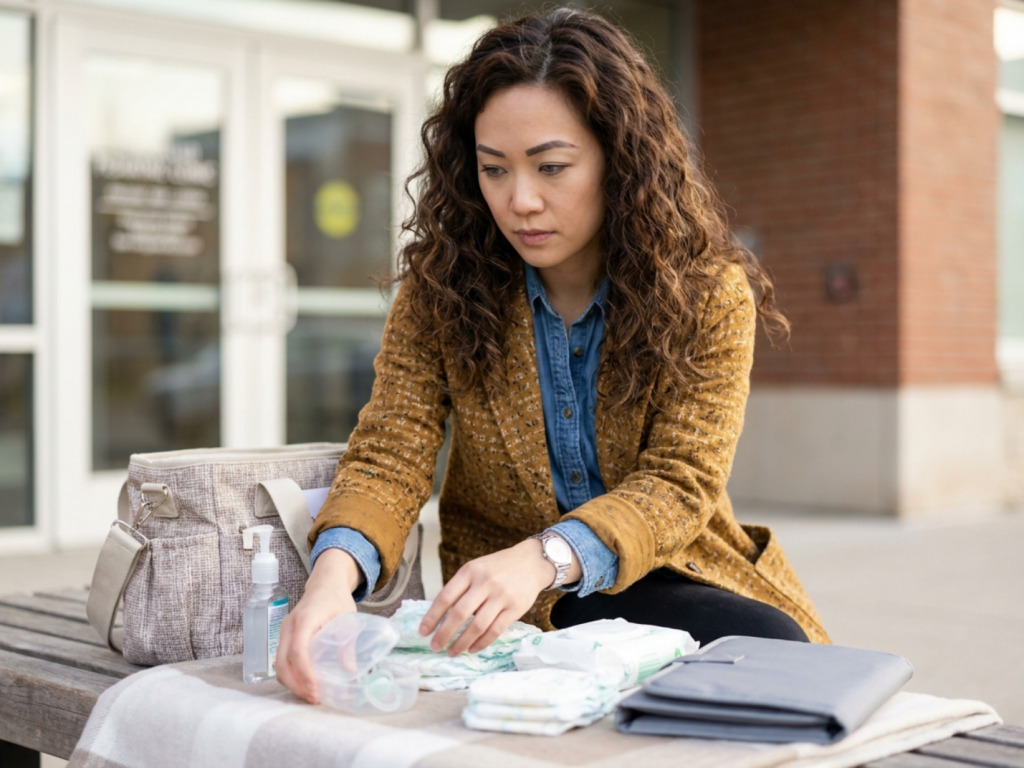
A good kit is small enough that you bring it every time, but complete enough that you do not improvise with questionable materials. The core items are simple: hand sanitizer with at least 60% alcohol for adults, clean water or a safe alternative for rinsing when needed, spare diapers, wipes, a changing pad, sealable waste bags, extra clothes, and a clean container for pacifiers or teething items.
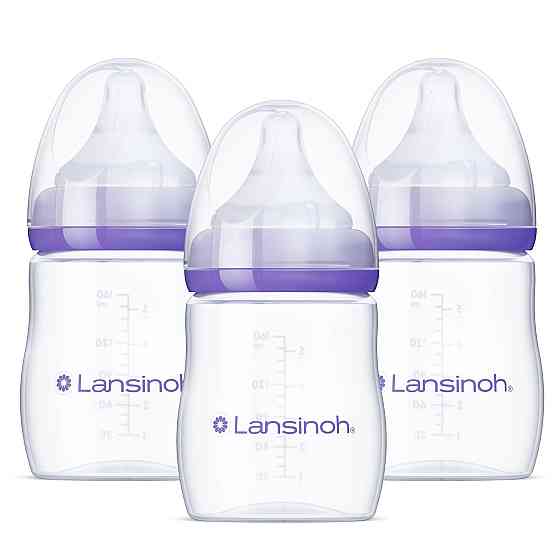
If your baby uses bottles or formula, include enough feeding supplies for the outing plus a backup. The same logic used in cleaning newborn feeding equipment applies here: the items that go into the baby’s mouth should not be stored loose in the diaper bag or wiped on whatever surface is nearby. A dedicated clean pouch or case keeps clean items separate from used ones.
It also helps to organize the bag so the most important items are easy to reach one-handed. If a parent or caregiver has to dig through layers of clothing and toys to find sanitizer or a clean nipple, the routine tends to fail in real life. Keep the system practical, not perfect. Practical systems get repeated.
Hand hygiene and surface cleaning matter most
Hand hygiene is the foundation of baby hygiene outside home because hands are the main vehicle for indirect contamination. Wash with soap and water whenever you can, especially before preparing feeds, after diaper changes, after using public toilets, and after touching visibly dirty surfaces. When soap and water are unavailable, alcohol-based hand sanitizer is a reasonable stopgap for adults, but it is not a replacement when hands are visibly soiled. Wash with soap and water as soon as possible.
Baby hands are not the only concern; caregiver hands transfer organisms to pacifiers, bottle parts, toys, and the baby’s face. Pay attention to high-contact items such as stroller handles, shopping cart grips, and phones. Wiping these surfaces will not make them sterile, but it can reduce visible dirt and some contamination before the baby touches them.
If a surface is obviously dirty or wet, do not let it become the resting place for a feeding item. A pacifier dropped on a restroom floor or public bench should be treated differently from one that slips onto a clean blanket. When in doubt, store the item and use a clean spare if you have one.
Feeding outside home: bottles, formula, pacifiers, and teething items
Feeding is where hygiene outside the home becomes most clinically relevant. Infants are more vulnerable to food- and water-borne illness because their immune systems are still developing, and because feeding equipment creates direct routes to the mouth. Breastfeeding, when possible, removes many of the cleaning and water-related challenges associated with formula preparation.
If formula is used, keep safe formula preparation hygiene at the center of the plan. That means using safe or purified water when preparing bottles, keeping clean and used parts separated, and washing bottles, nipples, pacifiers, teething rings, and toys with safe water as soon as you can. The Government of Canada and CDC travel guidance both emphasize that when disinfected or safe water is available, it should be used for cleaning infant items.
Pacifiers and teething rings deserve special attention because they go in and out of the mouth repeatedly. A pacifier should be stored in a clean container rather than in a pocket or open bag compartment. If a baby repeatedly drops feeding items while traveling, plan for replacements rather than trying to rescue every item with a quick wipe. That is a hygiene decision, not an overreaction.
For longer outings, the phrase feeding plan for baby outings is useful because it reminds you to think ahead: where the baby will feed, where clean water will come from, and how you will keep the clean and used items separate until you return home.
Diaper changes and skin care in public places
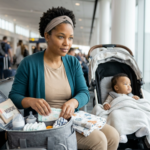
Public diaper changes are manageable when you prepare for them instead of trying to improvise. Bring a clean changing pad, disposable bags for soiled items, and enough wipes or cleansing materials for more than one change. Before touching the baby, clean your own hands. After the change, clean your hands again. That repeat hand hygiene matters because diaper care is one of the most predictable contamination events in a day.
If the environment allows, choose the cleanest flat surface available and use your changing pad every time. Keep the baby’s skin clean and dry, and use front-to-back wiping to reduce contamination of the genital area. If the area is visibly soiled, clean gently and avoid harsh rubbing. For babies with sensitive skin, prolonged contact with moisture and stool can trigger irritation quickly, so speed and thoroughness both matter.
Not every restroom or public space will be convenient. In those settings, the right answer is often to delay until you can find a better location rather than rushing through a poor setup. If the diaper area is repeatedly irritated, ask a clinician about skin care strategies rather than experimenting with products on your own. Hygiene and skin integrity are linked, and recurrent irritation can become a real comfort issue.
Travel, day trips, and when extra caution is warranted
Different settings create different risks. A short walk to the park and a long trip across town are not the same as flying, crossing borders, or visiting an unfamiliar caregiver. As the day gets longer, the chances of missed handwashing, dirty supplies, and poor water access increase. That is why the phrase baby outing diaper bag essentials is more than a packing list; it is a reminder that hygiene depends on availability, not intention.
Food and water safety deserve extra attention in travel settings. Avoid using questionable water for mixing formula or cleaning feeding equipment. If clean water cannot be confirmed, breastfeeding when possible is the simpler and safer path. Johns Hopkins Medicine and the CDC Yellow Book guidance both support using purified or safe water for infant feeding and cleaning where appropriate.
Environmental hygiene also includes the broader setting. Crowded indoor spaces, shared toys, and high-touch surfaces add to exposure. If the baby is ill, premature, medically fragile, or has a clinician-recommended feeding plan, it is reasonable to be more selective about outings and to ask a pediatric professional for tailored advice. The best hygiene plan is the one matched to the baby’s actual risk profile, not a generic rulebook.
When to be more cautious
- Do not use a dirty or visibly contaminated pacifier, bottle nipple, or teething ring.
- Do not mix infant formula with water of uncertain safety.
- Do not skip handwashing after diaper changes, even on short outings.
- Do not leave clean feeding items loose in the diaper bag with used items.
- Do not continue frequent public outings if a clinician has advised extra infection precautions.
Tools & Assistance
- Portable diaper bag with clean and used-item compartments
- Hand sanitizer with at least 60% alcohol for adult use
- Clean changing pad and sealable waste bags
- Clean spare pacifiers, bottle parts, and a storage case
- Safe or purified water source for feeding and cleaning when needed
FAQ
Is hand sanitizer enough when I am outside with my baby?
It helps when soap and water are unavailable, but wash with soap and water as soon as you can, especially if your hands are visibly dirty.
Can I rinse pacifiers or bottle parts with any water?
Use safe, clean, or purified water when possible. If the water source is uncertain, do not assume it is suitable for infant feeding items.
What is the most important hygiene step during outings?
Hand hygiene is the most important single step, followed closely by safe handling of feeding equipment and diaper changes.
Should I breastfeed instead of using formula when traveling?
Breastfeeding, when possible, can simplify hygiene and reduce water-related concerns, but the right feeding plan should be discussed with your clinician if there are specific medical needs.
What should I do if a pacifier falls on a public surface?
Use a clean spare if you have one. If not, clean the item properly before reuse rather than relying on a quick wipe.
Sources
- CDC Yellow Book / Stony Brook Medicine — Travelling Safely with Infants & Children - Chapter 7
- Johns Hopkins Medicine — Traveling With Children
- Government of Canada — Tips for healthy travel with children
Disclaimer
This article is for general informational purposes only and does not replace advice from a pediatrician or other qualified clinician. Seek medical care promptly if your baby has signs of illness, dehydration, skin breakdown, or feeding difficulties.











Please log in to leave a comment.