
Intro
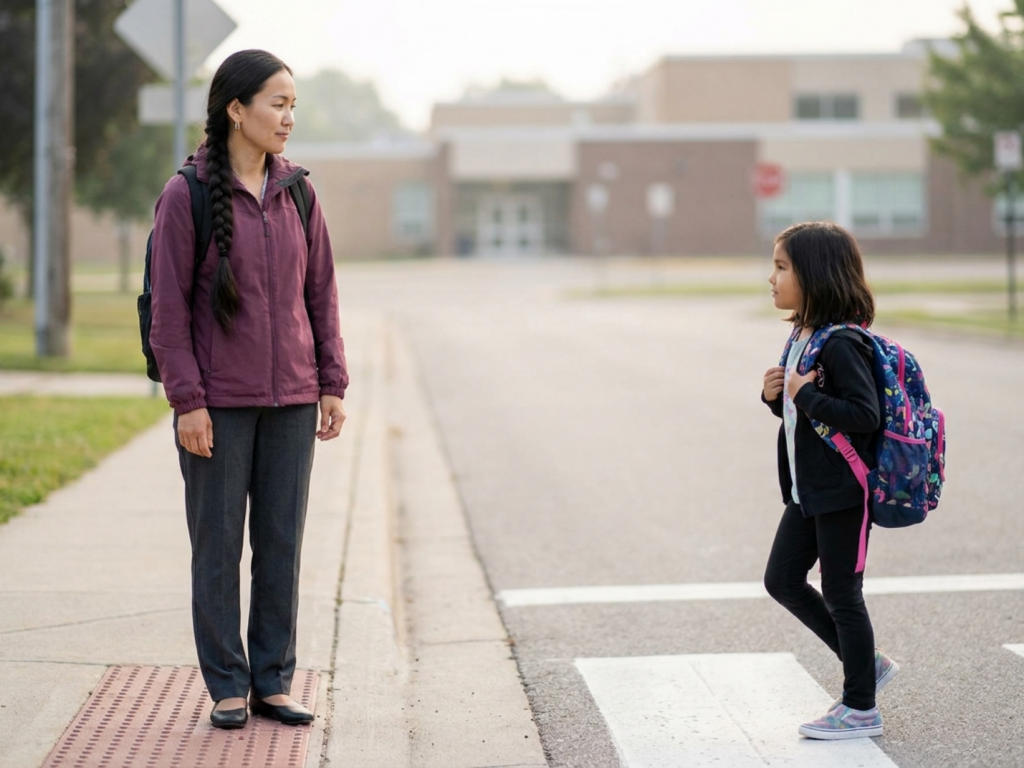
Letting a child walk to school alone can feel both hopeful and unsettling. It is a meaningful step toward independence, but it also asks a child to manage traffic, timing, decision-making, weather, social encounters, and unexpected changes without an adult beside them.
There is no single age at which every child is ready. Readiness depends on cognitive development, impulse control, route complexity, local traffic patterns, health needs, and the child’s confidence. A careful plan lets families support autonomy while keeping safety, communication, and emotional wellbeing at the center.
Highlights
Readiness is based on skills and context, not age alone. A simple route with practiced crossings may be appropriate sooner than a complex route with fast traffic.
Children need repeated, real-world practice before walking independently. Supervised rehearsal helps caregivers observe judgment, attention, and response to distractions.
A written route, check-in plan, and emergency contacts reduce ambiguity. Children do best when they know exactly what to do if something changes.
Health factors matter. Vision, hearing, neurodevelopmental conditions, anxiety, medication timing, allergies, or mobility differences may change the safety plan.
Start with readiness, not a birthday
Walking to school alone requires more than knowing the way. A child must sustain attention, inhibit impulses, interpret moving traffic, follow rules even when peers do not, and solve small problems without panicking. These executive function skills mature at different rates, so age is only a rough guide.
Look for consistent behavior in ordinary settings: does your child stop at curbs without reminders, wait for the walk signal, look left-right-left, and make eye contact with drivers when possible? Can they explain why they should not cross between parked cars or run across a street to avoid being late? Can they ignore a phone, toy, or friend long enough to monitor traffic?
Emotional readiness is equally important. Some children are eager but overconfident; others are capable but anxious. A child should be able to describe the route, state the rules, ask for help from a safe adult, and handle a minor change such as a blocked sidewalk. If your child freezes, becomes tearful, or tends to make impulsive decisions under stress, more practice or a buddy system may be safer for now.
Medical and developmental factors deserve thoughtful attention. Reduced visual acuity, hearing loss, seizure disorders, diabetes, severe asthma, food allergy risk, attention-deficit/hyperactivity traits, autism-related sensory overload, anxiety disorders, motor coordination difficulties, or medication adverse effects can affect route safety. These factors do not automatically prevent independent walking, but they may require accommodations, a shorter route, adult-supervised crossings, or consultation with your child’s clinician or school nurse.
Choose the route like a safety clinician
The shortest route is not always the safest route. A safer walking route usually has continuous sidewalks, lower traffic speed, fewer driveways, good lighting, predictable intersections, and marked crosswalks or crossing guards. Walk the possible routes at the same time of day your child would use them, because traffic volume, visibility, and driver behavior can change dramatically during school drop-off hours.
Map the route in concrete steps. Identify every crossing, driveway cluster, alley, construction area, bus stop, and place where the child could ask for help. Choose corners and marked crosswalks whenever available. If there is no sidewalk, teach your child to walk facing traffic and as far from vehicles as practical, consistent with local pedestrian rules.
Practice repeatedly before the first solo walk. At first, narrate your decisions aloud: “We stop here because the hedge blocks our view,” or “This car is turning, so we wait even though the signal changed.” Then switch roles and let your child lead while you observe silently. Afterward, ask open-ended questions: “What did you notice at that driveway?” and “What would you do if the crossing guard was absent?”
A staged plan often works best. Week one may involve walking together. Week two may involve you following at a distance. Week three may involve the child walking with a sibling or neighbor. Independent walking becomes the next step only when the child demonstrates the route safely several times in real conditions, not just in conversation at home.
Teach traffic rules as automatic habits
Children often understand rules verbally before they can apply them reliably in a busy sensory environment. The goal is to make key behaviors automatic. Use short, repeated phrases that your child can remember under pressure.
- Use sidewalks whenever available.
- Stop at every curb, driveway, and alley.
- Cross only at corners or marked crosswalks when possible.
- Look left, right, and left again before crossing; keep looking while crossing.
- Obey crossing guards, school patrols, traffic lights, and walk signals.
- Never assume a driver has seen you, even if you have the right of way.
- Do not run into the street for a dropped item, a friend, or a late bell.
Distraction is a major safety issue. A child walking independently should not use headphones in both ears, watch videos, text while crossing, or play games on the route. If the child carries a phone, agree that it stays in the backpack or pocket except at designated check-in points or in an emergency.
Visibility matters, especially in early morning, rain, fog, or winter darkness. Bright clothing, reflective strips, and a well-fitted backpack with reflective details can help drivers notice a child sooner. The backpack should not obstruct arm movement, balance, or peripheral vision. If a child uses glasses or hearing aids, confirm they are worn and functioning before departure.
Teach children to be predictable pedestrians. Sudden darting, weaving around other children, or stepping behind parked cars increases risk. Practice “pause points” along the route where your child always stops and scans, even when walking with friends.
Build personal safety without fear
Personal safety planning should be calm and specific. The message is not that the world is full of danger; it is that children have the right to protect their bodies, refuse unsafe requests, and seek help quickly. These child personal safety skills are most effective when practiced through brief role-play rather than a single serious lecture.
Set clear rules about adults and older youth. A child should not accept rides, gifts, food, or invitations from someone unless the caregiver has explicitly approved that person and situation. If an unknown person asks for help, offers a ride, says a parent sent them, or asks the child to keep a secret, the child should move away, find a safer public place, and contact a caregiver or trusted adult.
Develop a trusted-adult network. This might include the school office, a crossing guard, a known shop worker, a neighbor previously approved by the family, or another parent walking the same route. Children should know that a uniform alone is not the whole safety test; they should seek help in places with other people around when possible.
Use simple scripts. For example: “No, I have to go now,” “I need to call my parent,” or “I don’t know you.” Practice using a strong voice and moving toward school, home, or a designated safe place. If someone follows, threatens, touches, or tries to force the child into a vehicle, the plan should be to yell, run toward people, and tell a trusted adult immediately.
Also discuss peer situations. Children may feel pressured to take shortcuts, cross unsafely, tease others, or stop at a store without permission. Make the family rule explicit: staying on the agreed route is more important than pleasing a friend.
Create a communication and emergency plan
A good plan reduces the cognitive load on a child. Instead of improvising, the child follows a rehearsed sequence. Decide when the child leaves, the latest acceptable arrival time, and what happens if they are delayed. If phones are used, keep the plan simple: a departure check-in, an arrival check-in, or a call only if something changes. Avoid creating constant surveillance anxiety; the purpose is safety, not mistrust.
Your child should carry essential information in a developmentally appropriate way. A family emergency contact card can include caregiver names, phone numbers, school contact details, an address, and critical medical information such as severe allergies or emergency medication needs. For privacy, include only what is necessary and teach the child when to show it.
Plan for common disruptions. What if it rains heavily? What if a dog is loose? What if construction blocks the sidewalk? What if the crossing guard is not there? What if the child feels ill? For each scenario, identify one or two safe actions, such as returning home, going to the school office, calling a caregiver, or using a pre-approved alternate route.
Children with medical conditions may need a more formal plan involving the school nurse, pediatrician, or relevant specialist. For example, a child at risk of hypoglycemia may need guidance on recognizing adrenergic or neuroglycopenic symptoms and when to seek help; a child with asthma may need clarity about exertional symptoms and school medication rules; a child with anaphylaxis risk may need an allergy action plan. Caregivers should not change treatment plans or medication access without professional guidance.
Support confidence, routine, and review
Independent walking is part of broader child adaptation to school routines. Morning fatigue, separation stress, time pressure, and after-school emotional depletion can all affect safety. A child who walks safely on a calm morning may struggle when rushed, hungry, upset, or sleep-deprived.
Prepare the night before when possible: pack the bag, check weather, choose visible clothing, charge the phone if used, and confirm the route. Build in enough time so the child does not feel tempted to run, cut across traffic, or accept a ride because they are late. A predictable departure routine supports emotional regulation and executive function.
Review without shaming. After the walk, ask neutral questions: “Was anything different today?” “Did any crossing feel hard?” “Did you stay with the route?” Praise specific safety behaviors, such as waiting for a turning car or refusing a shortcut. If a rule was broken, pause independence briefly if needed, practice again, and explain that the goal is safety rather than punishment.
Reassess whenever conditions change. A new school year, different daylight hours, roadworks, a move, bullying concerns, new medication, worsening anxiety, injury, or a change in peer group can alter readiness. Walking alone is not an all-or-nothing milestone. Many families use flexible options: solo walking on clear mornings, buddy walking in winter darkness, adult escort across one difficult intersection, or pickup during severe weather.
If your caregiver instincts remain uneasy, take them seriously. Seek input from the school, other local families, a pediatrician, an occupational therapist, or a child psychologist when relevant. The safest plan is one that respects the child’s growing independence while acknowledging their current developmental and health needs.
Pause solo walking and reassess if
- Your child repeatedly crosses unsafely, runs into the road, or ignores crossing signals.
- The route includes fast traffic, poor visibility, no safe crossings, or frequent construction changes.
- Your child is being followed, threatened, bullied, or pressured to take unsafe shortcuts.
- A medical condition, medication effect, injury, or sensory difficulty affects alertness, mobility, vision, hearing, or judgment.
- Your child becomes highly distressed, disoriented, or unable to follow the agreed plan.
Tools & Assistance
- Walk the route together during actual school commute time and document every crossing.
- Ask the school about crossing guards, walking school buses, arrival supervision, and safe-route programs.
- Create a small emergency contact card and place it in the backpack.
- Practice role-play for refusing rides, handling detours, and seeking help.
- Review medical safety needs with your child’s pediatrician, school nurse, or relevant specialist.
FAQ
What age can a child walk to school alone?
There is no universal safe age. Readiness depends on maturity, attention, traffic skills, route complexity, local laws or school policies, and health needs.
Is walking with a friend safer than walking alone?
Often, yes, if both children follow the rules. A buddy can provide support, but peer distraction or risk-taking can make the walk less safe.
Should my child carry a phone?
A phone can help with check-ins or emergencies, but it can also distract. If used, set clear rules that it is not used while crossing streets.
What if my child has ADHD, anxiety, autism, or another health condition?
Many children can still build independence, but the plan may need extra practice, accommodations, a buddy, or professional input from healthcare and school teams.
How often should we review the walking plan?
Review whenever the route, season, daylight, traffic, peer situation, school schedule, or your child’s health changes. A brief weekly check-in is useful early on.
Sources
- HealthyChildren.org / American Academy of Pediatrics — Walking and Biking to School: How to Keep Kids Safe
- Raising Children Network — Going out independently: kids & pre-teens
- Centers for Disease Control and Prevention — Kidswalk-to-School
Disclaimer
This article is for general educational purposes and is not a substitute for medical, developmental, legal, or safety advice. Consult your child’s healthcare professional, school, and local authorities for guidance tailored to your child and community.















Please log in to leave a comment.