
Intro
Children do not learn relationships all at once. Social skills emerge through attachment, brain maturation, language, emotional regulation, temperament, family culture, peer opportunities, and the child’s health and neurodevelopmental profile. A baby who turns toward a caregiver’s voice, a toddler who says “mine,” a preschooler who negotiates turns, and a school-age child who repairs a friendship are all practicing different layers of social competence.
This guide reviews social skills development by age children in a practical, medically cautious way. Age ranges are approximate, not pass-fail tests. If a child’s social behavior changes suddenly, causes persistent distress, or is paired with language, hearing, motor, sensory, sleep, or learning concerns, it is wise to discuss it with a pediatrician, child psychologist, developmental-behavioral specialist, or other qualified clinician.
Highlights
Social development is age-related and gradual; younger children usually need adult co-regulation before they can cooperate independently.
Early social competence, including sharing, helping, and communicating needs, is associated with better long-term educational and adult outcomes.
Individual variation is expected, but loss of skills, persistent isolation, or severe aggression deserves professional attention.
Parents and caregivers support social growth best through responsive interaction, predictable limits, play, modeling, and developmentally appropriate expectations.
Why social skills develop in stages
Social skills are not simply manners. They include joint attention, attachment behaviors, emotional expression, receptive and expressive language, impulse control, theory of mind, empathy, cooperative play, conflict resolution, and the ability to follow group expectations. These abilities depend on the developing nervous system, especially networks involved in attention, reward, language, executive function, and emotional regulation.
Because these systems mature at different rates, social expectations must be matched to developmental age. A 15-month-old who grabs a toy is usually acting from immature impulse control, not malice. A 4-year-old may understand “take turns” but still need adult scaffolding when excited or tired. A 7-year-old can often consider another child’s perspective but may struggle when shame, competition, or exclusion is involved.
Research in children aged 4 to 8 years supports a clear age-related progression: social skills generally improve as children grow older, with older children within age bands showing stronger skills than younger peers. Some studies also find average differences by sex, with girls showing stronger progress in certain measured social skill domains. These findings describe group trends, not destiny for an individual child. Temperament, language exposure, family stress, disability, culture, sleep, and educational context all influence how social competence appears.
Birth to 12 months: attachment, regulation, and early communication
During the first year, the central social task is bonding with caregivers. Infants learn that people are sources of comfort, food, warmth, rhythm, and safety. Social development begins with eye contact, calming to a familiar voice, social smiling, turn-taking sounds, facial imitation, and pleasure in back-and-forth interaction. These behaviors are early building blocks for later conversation and friendship.
Babies also develop co-regulation. They cannot soothe themselves reliably, so a responsive adult nervous system helps organize the infant’s sleep-wake cycles, arousal, and stress response. Predictable soothing does not “spoil” an infant; it teaches the body that distress can be met and recovered from. Over time, this supports secure attachment and trust.
Useful caregiver strategies include talking during routines, responding to babbles as if they are conversation, playing peekaboo, naming emotions, and giving the baby safe opportunities to observe other children. If an infant rarely responds to sound, does not visually engage, has feeding or growth problems, or loses previously acquired social responses, families should seek medical assessment. Hearing, vision, neurologic, and developmental factors can affect early social communication.
12 to 36 months: needs, boundaries, parallel play, and cooperation
In the second year, children increasingly express needs, preferences, and protest. “No,” “mine,” clinging, separation distress, and tantrums often reflect rapid growth in autonomy combined with limited language and immature frontal-lobe control. Toddlers are learning that they are separate people with desires, but they cannot yet consistently manage frustration.
Between ages 1 and 2, many children begin simple helping, imitation of household tasks, pointing to share interest, bringing objects to adults, and checking a caregiver’s face in uncertain situations. These are meaningful social-cognitive achievements. At the same time, toy conflicts and impulsive grabbing are common. Most toddlers play near other children rather than truly with them, a pattern called parallel play.
From ages 2 to 3, cooperation becomes more visible. Children may take simple turns, join short pretend-play sequences, show concern when someone cries, and practice separation from caregivers in brief, supported settings. They still need repeated scripts: “You can say, ‘my turn please,’” or “I won’t let you hit; you can stomp your feet.” This approach combines empathy with a firm boundary.
Developmental caution is appropriate when a toddler has very limited social engagement, does not use gestures such as pointing or showing, has minimal functional communication, shows extreme sensory distress that prevents ordinary routines, or has frequent aggressive behavior that is dangerous or not improving with support. These signs do not prove a diagnosis, but they justify developmental surveillance, hearing assessment, and professional guidance.
Ages 3 to 5: pretend play, empathy, and preschool friendships
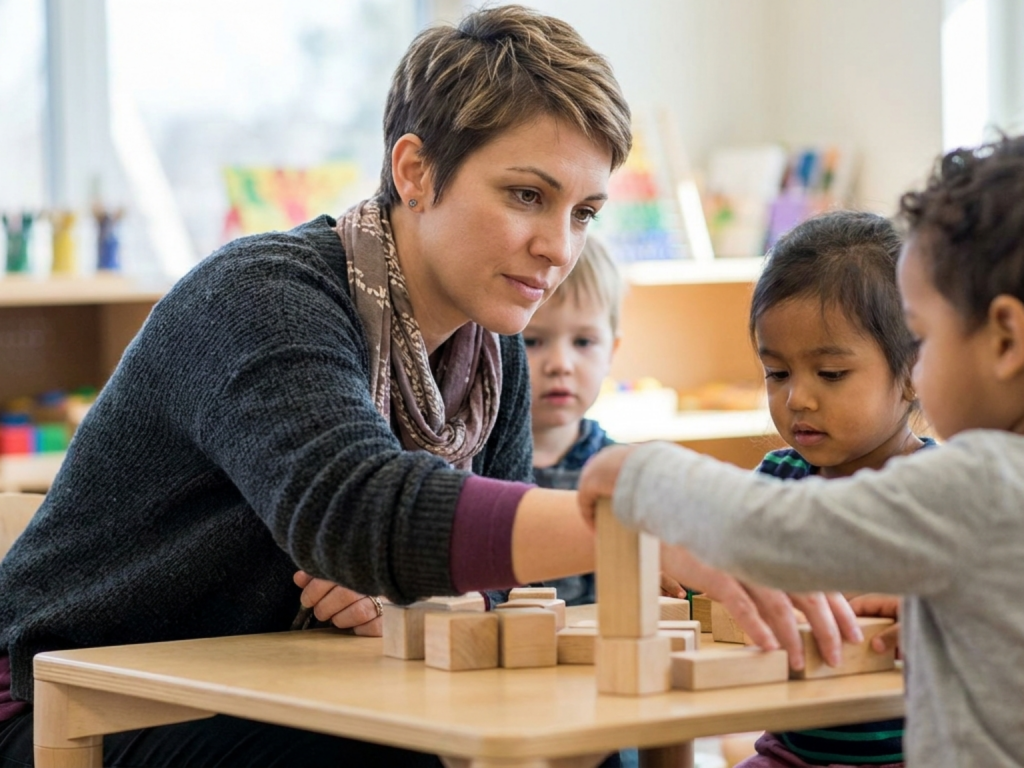
Preschool is a major period for social-emotional development in children. Language expands, symbolic play becomes richer, and children begin to understand that other people have feelings and ideas that may differ from their own. They may create pretend roles, negotiate rules, invite peers into play, and experience the joy and pain of first friendships.
However, preschool social competence is still fragile. A child may share well in the morning and collapse over a turn-taking game after a poor night’s sleep. Aggression, whining, exclusionary comments, and “you’re not my friend” statements often occur when children lack better tools for jealousy, disappointment, or group entry. Adults can teach replacement behaviors rather than relying only on punishment.
Helpful supports include play-based preschool learning, emotion labeling, visual routines, short practice sessions for greetings and asking to join, and adult narration of social problem-solving. For example: “Maya is using the truck. You want it. Let’s ask when she is finished, or choose the blocks while you wait.” Children also benefit when adults model apologies and repair: “I spoke too sharply. I’m sorry. I will try again.”
By the later preschool years, many children can follow simple group rules, participate in cooperative pretend play, comfort a peer, and begin to tolerate losing a game with help. If a child is persistently unable to engage in reciprocal play, seems highly fearful or withdrawn across settings, has marked language delays, or is repeatedly expelled from childcare for behavior, a pediatric or developmental evaluation can identify supports without blaming the child or family.
Kindergarten to age 8: cooperation, friendship skills, and school readiness
Kindergarten and early elementary years place social skills under new pressure. Children must share adult attention, wait, follow multi-step routines, manage transitions, work in groups, and read social cues from both peers and teachers. This is why school readiness in early childhood includes far more than letters and numbers; it includes the ability to participate in a community.
Longitudinal research has linked stronger kindergarten social competence, such as sharing, helping, cooperating, and resolving peer problems, with better outcomes in adolescence and adulthood. One widely cited report found that children with stronger kindergarten social skills were more likely to complete high school and college, while lower social competence was associated with greater risk for later arrest, substance misuse, and unemployment by age 25. These findings do not mean a 5-year-old’s future is fixed. They do mean early social support is a public health opportunity.
From ages 6 to 8, children usually become more capable of perspective-taking, rule-based games, stable friendships, and simple moral reasoning. They can often understand fairness, intentions, secrets, teasing, and loyalty, although they may still need adult coaching when conflicts become emotionally intense. Peer comparison in middle childhood can also increase sensitivity to embarrassment and rejection.
Families can help by practicing specific skills: entering a game, accepting “no,” making a repair after hurting someone, noticing body cues of anger, and using calm problem-solving steps. Teachers and clinicians may use social stories, structured peer activities, occupational therapy strategies for sensory regulation, or speech-language support when pragmatic communication is difficult. The goal is not to make every child highly outgoing; it is to help each child participate, connect, and feel safe.
Individual differences, culture, and temperament
Children vary widely in sociability. Some are exuberant and seek groups; others are slow-to-warm and prefer one familiar friend. Shyness is not automatically a disorder, and quiet children may have strong empathy and observational skills. Similarly, high activity level is not automatically misbehavior. Social expectations should consider temperament, sleep, hunger, sensory load, language ability, family transitions, and cultural norms around eye contact, adult-child conversation, independence, and physical affection.
Culture shapes how children are taught respect, cooperation, assertiveness, and emotional expression. In some families, speaking confidently to adults is encouraged; in others, listening quietly is considered socially skilled. Clinicians and educators should ask about family values before labeling a behavior as delayed or inappropriate.
Neurodevelopmental differences can also shape relationships. Children with language disorders may want friends but be unable to negotiate play fluently. Children with attention or executive function difficulties may interrupt, intrude, or miss cues despite caring about others. Children with sensory processing differences may avoid noisy groups. Autistic children may communicate and connect in ways that differ from typical peer expectations. Support is most effective when it reduces barriers and teaches skills respectfully, rather than forcing a child to mask distress or imitate peers at all costs.
How adults can support social growth day to day
Social learning is strongest when it is repeated in ordinary routines. Children need warm relationships, predictable limits, and chances to practice with coaching. Lectures after conflict are usually less effective than brief, concrete guidance in the moment, followed by repair when everyone is calm.
- Model the behavior you want. Let children hear respectful disagreement, apologies, gratitude, and boundary-setting.
- Name feelings and needs. Phrases such as “You wanted a turn and felt angry” connect emotion with language.
- Teach scripts. Young children often need exact words: “Can I play?” “Stop, I don’t like that,” or “Can we trade?”
- Arrange manageable practice. Short playdates, small groups, and structured games can be easier than long, unstructured peer time.
- Protect sleep and routine. Fatigue, hunger, pain, and overstimulation reduce social capacity.
- Use repair, not shame. A child who hits or excludes another child needs accountability, but also a path back: check on the hurt child, help fix the problem, and practice a safer response.
When concerns persist, caregivers do not have to wait for a crisis. A pediatrician can screen hearing, vision, sleep, development, and mental health. Depending on the pattern, referral to speech-language pathology, occupational therapy, child psychology, early intervention, school support services, or developmental-behavioral pediatrics may be appropriate.
When to seek professional guidance
- Loss of previously acquired social, language, or play skills should be discussed promptly with a healthcare professional.
- Persistent lack of response to name, limited gestures, or minimal reciprocal interaction warrants developmental and hearing evaluation.
- Aggression that is frequent, dangerous, or escalating needs support rather than waiting for the child to “grow out of it.”
- Severe anxiety, withdrawal, school refusal, or distress around peers should be assessed, especially if it affects daily functioning.
- Concerns are more urgent when social difficulties occur with sleep problems, seizures, developmental delays, trauma exposure, or significant family stress.
Tools & Assistance
- Schedule a pediatric well-child visit to discuss social, language, hearing, sleep, and developmental questions.
- Ask the child’s teacher or childcare provider for specific observations across routines, not just general impressions.
- Use brief play-based practice at home for turn-taking, greetings, asking to join, and repairing conflict.
- Consider early intervention, school-based evaluation, speech-language pathology, occupational therapy, or child psychology when concerns persist.
- Keep a simple behavior and context log noting sleep, transitions, peer setting, triggers, and what helped the child recover.
FAQ
Should my child have a best friend by preschool?
Not necessarily. Some preschoolers form favorite play partnerships, while others move among peers. More important signs are interest in interaction, growing pretend play, and the ability to engage with support.
Is it normal for toddlers not to share?
Yes. Toddlers have limited impulse control and are still learning ownership, waiting, and language for negotiation. Adult modeling and short, supported turns are more realistic than expecting independent sharing.
Does being shy mean a child has poor social skills?
No. Shy or slow-to-warm children may have strong social understanding but need more time, predictability, and smaller settings. Concern rises if fear or withdrawal consistently prevents participation.
When should social difficulties be evaluated?
Seek guidance if difficulties are persistent across settings, cause significant distress, interfere with learning or family life, involve loss of skills, or occur with language, hearing, sensory, or behavioral concerns.
Sources
- NIH National Center for Biotechnology Computing (NCBI) - PMC — Social skills development in children aged 4–8 years
- Robert Wood Johnson Foundation — Social Skills in Kindergarten Help Children Thrive as Adults
- Michigan State University College of Agriculture and Natural Resources — Avoid frustration, know how your child develops: Social skills
Disclaimer
This article is for educational purposes only and is not a diagnosis or treatment plan. Consult a qualified healthcare professional for concerns about a child’s development, behavior, or mental health.

















Please log in to leave a comment.