
Intro
Bullying can leave a child feeling frightened, ashamed, isolated, or powerless, and it can also unsettle the whole family. A calm, structured response from caregivers can reduce harm, restore a child’s sense of safety, and help adults work effectively with the school or activity setting where bullying occurs.
Highlights
Bullying is not a normal rite of passage; it is repeated aggressive behavior involving a real or perceived power imbalance.
Children often need adults to notice indirect signs, because fear, embarrassment, or loyalty to peers may stop them from disclosing what is happening.
The most effective response usually combines emotional support at home, practical safety planning, documentation, and collaboration with school staff.
Persistent bullying can affect sleep, mood, somatic symptoms, attendance, learning, and self-esteem, so professional support may be appropriate.
Understanding what bullying is
Bullying is typically defined as intentional aggressive behavior that is repeated, or has the potential to be repeated, and involves a power imbalance. The imbalance may be physical strength, age, popularity, social status, access to embarrassing information, disability, race, religion, sexuality, gender expression, neurodevelopmental differences, or simply group size. This distinction matters: a one-time disagreement between equal peers is painful but not necessarily bullying; repeated intimidation, exclusion, humiliation, threats, or coercion is different and requires adult intervention.
Bullying can be physical, verbal, relational, sexual, discriminatory, or digital. Relational bullying may include exclusion, rumor-spreading, social manipulation, or pressuring others not to be friends with the child. Cyberbullying can happen through messages, group chats, gaming platforms, images, or social media. Because digital content can be shared rapidly and repeatedly viewed, its psychological impact may be intense even when the original incident occurs outside school hours.
A helpful first step is to explain to the child, in developmentally appropriate language, that bullying is never their fault. Children who are bullied may believe they caused it by being “too sensitive,” “different,” or unable to fight back. Clear adult reassurance helps counter shame and self-blame. At the same time, caregivers can acknowledge the child’s real feelings: fear, anger, grief, confusion, embarrassment, or even loyalty to the child who is harming them.
Recognizing signs when a child does not tell you
Many children do not disclose bullying directly. They may worry adults will overreact, take away their phone, contact the school before they are ready, or make peer retaliation worse. Some children also normalize bullying after repeated exposure. For caregivers, the goal is not to interrogate but to notice patterns and gently open a door.
Possible warning signs include unexplained injuries, lost belongings, damaged clothing, sudden reluctance to attend school, frequent requests to stay home, headaches or abdominal pain without a clear medical cause, sleep disruption, appetite changes, irritability, tearfulness, declining grades, avoidance of the bus or playground, or sudden withdrawal from friendships and activities. Younger children may regress, become clingy, or have new toileting or sleep difficulties. Adolescents may appear numb, angry, secretive, or unusually distressed after using a device.
These signs are not specific to bullying and can also reflect anxiety, depression, medical illness, learning difficulties, family stress, trauma, or other causes. A medically cautious approach is to ask open-ended questions while also considering a pediatric or mental health evaluation if symptoms persist, worsen, or interfere with daily functioning. Examples include: “Who do you sit with at lunch?” “What happens on the way to class?” “Are there places at school where you feel unsafe?” “Has anyone been unkind online?” Such questions invite detail without implying blame.
Responding in the first conversation
When a child tells you they are being bullied, your first response can shape whether they continue to seek help. Try to remain steady, even if you feel furious or frightened. Thank them for telling you. Say clearly: “I’m glad you told me,” “You did not cause this,” and “We will work on this together.” Avoid minimizing comments such as “just ignore it,” “they are only teasing,” or “fight back,” because these can make a child feel alone or responsible for stopping the harm.
Listening does not mean doing nothing. It means gathering enough information to act wisely. Ask what happened, who was involved, where it happened, how often, whether adults witnessed it, whether there were threats, and what the child wants you to understand before you contact anyone. If the bullying includes physical assault, sexual harassment, stalking, hate-based threats, extortion, weapons, or coercion to share images, treat this as a safety concern and seek urgent support from the school, appropriate safeguarding channels, healthcare professionals, or emergency services depending on immediacy and local procedures.
Children often fear loss of control. Where safe, involve them in the next steps: “Would you like me to email your teacher first, or should we write down what happened together?” “Which adult at school feels safest to you?” “What would help tomorrow morning feel manageable?” This collaborative stance supports autonomy and reduces helplessness.
Creating a practical safety plan
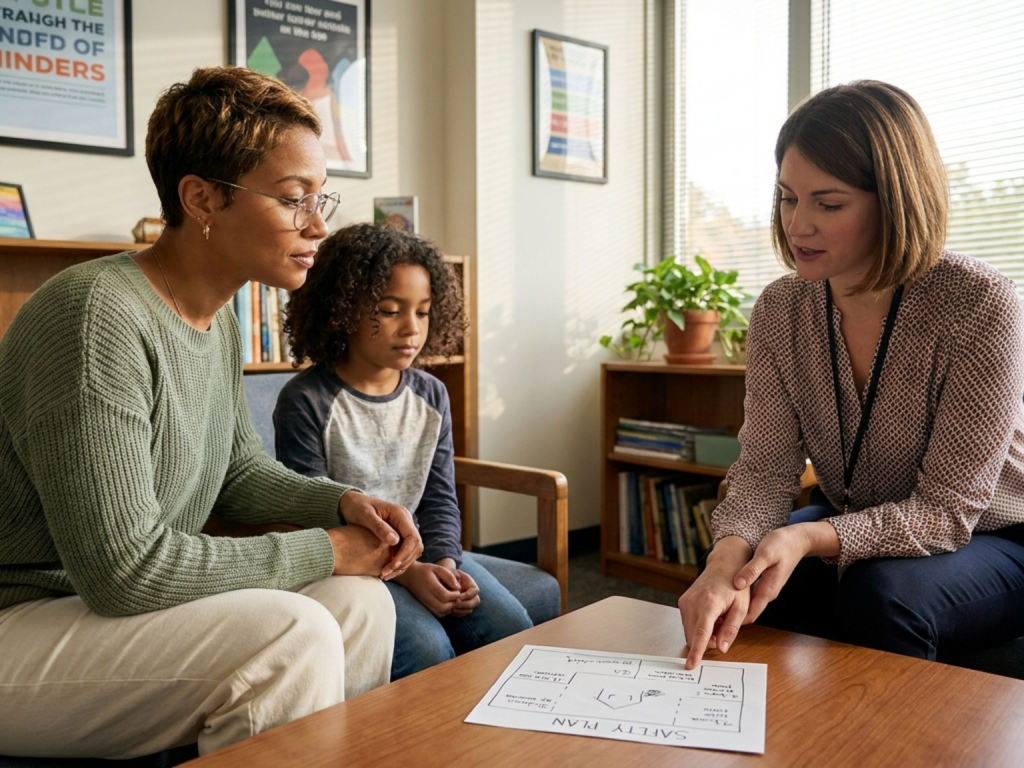
A safety plan is a concrete set of steps that reduces exposure to bullying and identifies who will help. It should not place the burden on the child to solve adult supervision failures, but it can give the child immediate tools while the adults address the problem. The plan should be simple enough for a distressed child to remember.
- Identify safe adults at school, on transport, in clubs, and online spaces.
- Map high-risk locations such as bathrooms, locker areas, corridors, playground corners, lunch lines, buses, or group chats.
- Agree on how the child can ask for help discreetly, such as a pass, phrase, office check-in, or planned seating change.
- Document incidents with dates, times, locations, names, screenshots, injuries, damaged property, and adult responses.
- Review device privacy settings, reporting tools, group chat membership, and evidence preservation before deleting content.
For cyberbullying, it is usually better to save evidence, block or mute when appropriate, and report through the platform and school if school relationships or learning are affected. Caregivers should avoid retaliatory messages to other children or public posts about the incident; these can escalate conflict and complicate school investigations.
Safety planning can also include peer support. A trusted classmate walking with the child, a supervised club, or structured activities may reduce isolation. Helping child build friendships is not a quick fix for bullying, but supportive peer relationships can be protective and can restore a sense of belonging.
Working with school or activity staff
Bullying is most effectively addressed when home, school, and community adults coordinate. Start with a written, factual communication to the relevant teacher, pastoral lead, counselor, principal, coach, or safeguarding lead. Include what happened, when, where, who was involved, the impact on your child, and what you are requesting: supervision changes, investigation, safety plan, check-ins, protection from retaliation, and follow-up dates.
Ask for the school’s bullying policy, reporting procedure, and documentation process. If your child has disability-related needs, chronic illness, neurodevelopmental differences, language needs, or learning support, ask how the school will ensure equal access to safety and education. Bullying may intersect with learning difficulties, social communication differences, or medical vulnerabilities, and the response may need to include school accommodations for learning difficulties or other individualized supports.
Meetings are often more productive when caregivers bring notes and remain focused on safety, behavior, and accountability rather than labels. Useful questions include: “Who will supervise the high-risk area?” “How will staff monitor retaliation?” “When will we review progress?” “How will my child know whom to approach?” “What support is being offered to the child who bullied, so the behavior changes?” Evidence-based approaches emphasize that bullying is not solved by a single lecture; children who bully may need behavioral intervention, empathy-building, supervision, consequences, and sometimes assessment for their own unmet needs.
If the response is inadequate, follow the school’s escalation pathway and keep records of all communications. Depending on the nature of the bullying, families may need to contact district leadership, safeguarding authorities, civil rights or disability support bodies, or law enforcement. Seek local advice because policies and legal duties vary by location.
Supporting emotional and physical health
Bullying can affect the child’s nervous system and daily physiology. Stress responses may appear as insomnia, nightmares, hypervigilance, irritability, concentration problems, abdominal pain, headaches, appetite changes, fatigue, panic symptoms, low mood, or avoidance. These reactions are understandable, but they deserve attention, especially when they persist after safety measures begin.
Maintain predictable routines: regular sleep and meals, calm morning planning, limited late-night device exposure, and protected time for enjoyable activities. Encourage movement, creative expression, and connection with safe people. Confidence-building routines for children can include practicing assertive phrases, role-playing how to leave unsafe situations, celebrating small acts of courage, and keeping the child involved in interests outside the bullying environment. Activities where the child feels competent, such as sport, music, coding, art, volunteering, faith groups, or clubs, can reduce the feeling that bullying defines their identity.
Some children benefit from therapy, particularly if there are symptoms of anxiety, depression, trauma, self-harm thoughts, school refusal, eating changes, or severe withdrawal. A pediatrician can assess somatic complaints and help determine whether referral to a psychologist, counselor, psychiatrist, or other specialist is appropriate. If the child expresses suicidal thoughts, says they cannot stay safe, gives away possessions, searches for self-harm methods, or appears acutely at risk, seek emergency mental health help immediately.
Caregivers also need support. It is emotionally painful to watch a child suffer, and adults may feel guilt or rage. Getting advice from a school counselor, pediatric clinician, family therapist, or trusted advocacy organization can help you respond firmly without becoming reactive.
Helping a child regain confidence and agency
After bullying, children may need time to rebuild trust. Even when the incidents stop, they may scan for danger, avoid peers, or interpret neutral behavior as threatening. This is not overreaction; it may be a learned protective response. Gentle, repeated experiences of safety help the brain and body recalibrate.
Teach assertiveness without implying the child is responsible for stopping aggression. Assertive responses are brief, calm, and safe: “Stop. That is not okay,” “I’m leaving now,” or “I’m going to an adult.” Practice tone, posture, and exit strategies, but also emphasize that walking away and seeking help are strengths, not weakness. Peer pressure refusal skills may be useful when bullying includes coercion to break rules, share images, exclude others, or join harmful group behavior.
Help the child name qualities that are bigger than the bullying: kindness, humor, persistence, curiosity, creativity, loyalty, or courage. Use specific praise: “You told me even though it was hard,” “You saved the screenshot instead of replying,” “You went to the counselor when you felt unsafe.” Over time, these messages rebuild self-efficacy.
Finally, keep checking in after the visible crisis seems to pass. Ask about lunch, transitions, online spaces, friendships, sleep, and mood. Celebrate progress but remain alert to recurrence. A child does not need a perfect world to recover; they need consistent adults who believe them, protect them, and help them experience belonging again.
Seek urgent help if safety is at risk
- Any suicidal thoughts, self-harm behavior, or statements that the child cannot stay safe need immediate professional help.
- Physical assault, sexual harassment, weapons, stalking, extortion, or threats should be escalated urgently through appropriate safety channels.
- Do not advise a child to retaliate physically or online; this can increase danger and disciplinary consequences.
- Persistent headaches, abdominal pain, sleep disturbance, panic, low mood, or school refusal warrant medical or mental health assessment.
- Save evidence of cyberbullying before blocking or deleting when it is safe to do so.
Tools & Assistance
- A written incident log with dates, locations, names, screenshots, and adult responses.
- A school safety plan naming safe adults, high-risk areas, supervision changes, and review dates.
- Pediatrician or child mental health consultation if symptoms persist or functioning declines.
- Privacy and blocking settings on phones, social media, messaging apps, and gaming platforms.
- Supportive extracurricular activities that help the child build competence and safe peer connection.
FAQ
Should I contact the other child’s parents directly?
It is often safer to start with the school or activity leader, especially if emotions are high or there is a risk of retaliation. Direct contact can sometimes escalate conflict.
What if my child begs me not to tell the school?
Acknowledge their fear and involve them in planning, but explain that adults must act when safety or wellbeing is at risk. Choose the least exposing, most protective first step.
Is telling a child to ignore bullying helpful?
Ignoring may occasionally reduce minor provocation, but repeated bullying needs adult intervention. The child should not be made responsible for stopping harm alone.
When should therapy be considered?
Consider professional support if the child has persistent anxiety, low mood, trauma symptoms, sleep problems, school refusal, self-harm thoughts, or physical complaints linked to stress.
Sources
- PubMed Central (National Institutes of Health) — Understanding and Addressing Bullying in Children and Adolescents
- Nationwide Children's Hospital — Bullying Information for Parents
- Anti-Bullying Alliance — How can I help my child if they are being bullied?
Disclaimer
This article is for general informational purposes and does not replace medical, mental health, legal, or safeguarding advice. If a child may be at immediate risk, contact emergency or crisis services in your area.

















Please log in to leave a comment.