
Intro
School success is shaped by much more than grades, test scores, or a child’s apparent motivation. Academic progress reflects the interaction of neurodevelopment, health, emotional wellbeing, relationships, family circumstances, teaching quality, and the wider school environment. These influences also change as children grow, so a factor that matters strongly in early primary school may look different in adolescence.
A child does not need every advantage to do well, and difficulty in one area does not determine future achievement. Understanding the factors associated with success can help families and schools respond with practical, compassionate support rather than blame.
Highlights
Cognitive skills, language, self-regulation, physical health, and school readiness all contribute to learning.
Warm relationships with caregivers, teachers, and peers can strengthen attendance, engagement, confidence, and persistence.
High expectations are most helpful when they are realistic, clearly explained, and paired with appropriate support.
Family resources and parental education can influence opportunity, but they do not define a child’s potential.
Persistent academic or behavioral changes deserve a collaborative review of learning, health, emotional, and environmental factors.
What school success means
School success is broader than achieving high marks. It may include acquiring literacy and numeracy, participating in lessons, attending regularly, developing executive functions, forming relationships, managing frustration, and becoming increasingly independent. A child may be progressing meaningfully even when their attainment is not yet at the expected level.
Academic achievement is influenced by many correlated factors, including measured cognitive ability, previous learning opportunities, years of schooling, school type, and parents’ education. Correlation does not mean that one characteristic causes an outcome or that it can be used to predict an individual child’s future. Research findings describe patterns across groups; they do not replace assessment of a particular child’s strengths and needs.
A balanced definition therefore includes both attainment and wellbeing. A child who learns in a psychologically safe setting, feels belonging, and develops confidence may be building foundations for longer-term success even if progress is gradual.
Cognitive and non-cognitive foundations
Cognitive skills include language comprehension, working memory, processing efficiency, reasoning, and the ability to retrieve and apply knowledge. These skills help children follow multistep instructions, understand texts, solve problems, and connect new information with prior learning. Early language and school readiness can be particularly important because classroom teaching often assumes that children can communicate needs and understand increasingly complex vocabulary.
Non-cognitive skills are equally relevant. They include self-regulation, persistence, attention control, planning, adaptability, and the capacity to tolerate manageable frustration. These abilities are not fixed personality traits. They develop through maturation, practice, predictable routines, responsive relationships, and appropriately scaffolded tasks.
When attention, memory, language, or regulation is difficult, adults should consider the context. Fatigue, anxiety, sensory overload, hearing or vision problems, language differences, an unsuitable task level, and limited prior instruction can all affect performance. Attention difficulties in the classroom should not automatically be interpreted as laziness or a specific disorder. If concerns persist across settings, families can discuss them with the child’s teacher and an appropriate healthcare or educational professional.
Physical health, sleep, and attendance
Learning depends on the brain and body being sufficiently ready to participate. Adequate sleep supports attention, memory consolidation, emotional regulation, and daytime alertness. Regular meals, hydration, physical activity, and opportunities for movement can also support concentration and stamina. Physical health conditions, pain, fatigue, untreated sensory problems, or medication effects may interfere with learning and should be considered sensitively rather than moralized.
Attendance matters because frequent absence reduces exposure to instruction, peer relationships, routines, and feedback. However, attendance should be understood in context. Recurrent illness, disability, anxiety, bullying, caring responsibilities, transport barriers, or unmet learning needs may contribute to absence. A punitive response alone can worsen disengagement. Schools and families can instead identify barriers, plan safe reintegration when needed, and coordinate with healthcare professionals or attendance services.
Changes in achievement alongside headaches, sleep disruption, weight change, persistent tiredness, pain, marked anxiety, or other concerning symptoms warrant medical discussion. This article cannot determine whether a health condition is present, and no child should be pressured to ignore significant symptoms in order to attend school.
Family circumstances and positive childhood experiences
Children learn more effectively when basic needs and emotional security are supported. Housing stability, access to books and technology, time for homework, predictable routines, nutrition, caregiver availability, and freedom from violence or chronic conflict can all influence educational opportunity. These circumstances are shaped by social and economic conditions; families should not be blamed for barriers they cannot easily control.
Parental education is associated with school achievement in population research, partly because it may affect familiarity with school systems, access to educational resources, and confidence navigating support. Yet caregivers do not need advanced academic knowledge to help. Showing interest, asking the child to explain what they learned, reading together, praising effort and strategies, and communicating with teachers can be valuable at every education level.
Positive childhood experiences, such as supportive relationships, after-school activities, and safe, connected neighborhoods, have been associated with lower absenteeism and less grade repetition. These experiences provide belonging, practice with cooperation, trusted adults, and opportunities to discover competence beyond formal lessons. Community programs, libraries, youth groups, sports, arts, and mentoring can therefore be meaningful parts of a child’s educational ecology.
Relationships, belonging, and emotional safety
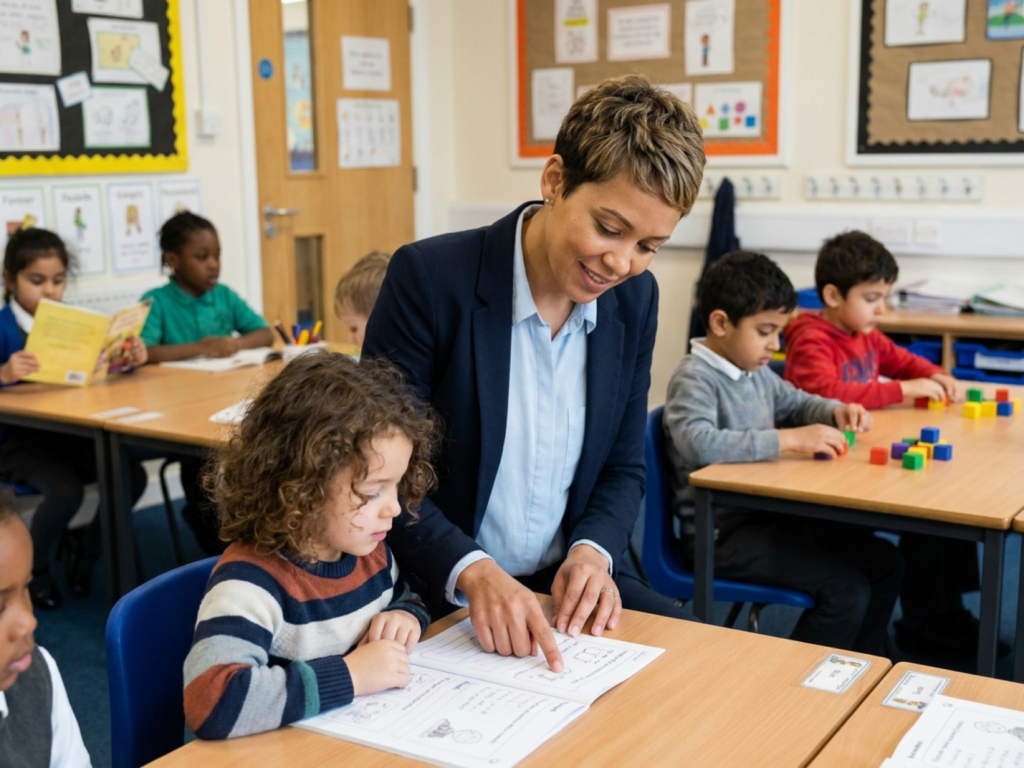
Children are more likely to engage when they feel known, respected, and safe to make mistakes. Positive teacher-student relationships can support communication, motivation, behavioral regulation, and persistence. Consistent boundaries are most effective when they are paired with warmth, explanations, and a belief that skills can improve.
Teacher-student relationships and classroom climate influence whether children ask questions, attempt challenging work, and recover from setbacks. Peer acceptance also matters. Bullying, discrimination, isolation, or repeated humiliation can activate threat responses that compete with attention and memory. A child who appears oppositional or withdrawn may be communicating distress, unmet needs, or a lack of psychological safety rather than simply choosing poor behavior.
School belonging and mental well-being are closely connected. Adults can support belonging by learning correct names and pronunciations, including varied interests and identities in teaching, noticing strengths, providing structured peer opportunities, and responding promptly to exclusion. Persistent sadness, severe worry, self-harm thoughts, or a sudden loss of functioning require prompt professional attention and should never be treated as merely an academic issue.
School quality and effective teaching
School characteristics influence how well children can use their individual abilities. Evidence reviews identify leadership, teaching quality, positive relationships, clear routines, and an orderly but inclusive climate as relevant factors. Effective teaching typically includes explicit explanation, guided practice, retrieval of prior knowledge, feedback that tells the child what to do next, and adaptation to different levels of readiness.
High expectations can encourage effort when they communicate confidence in a child’s capacity to grow. They become harmful when they are vague, humiliating, inflexible, or disconnected from available support. Teachers can make goals observable: for example, completing a defined number of problems, using a reading strategy, or contributing one idea to a discussion. Progress should be monitored over time rather than judged from a single test.
School-wide systems also matter. A child may need differentiated instruction, assistive technology, a quieter workspace, movement breaks, language support, additional practice, or a planned transition between activities. These supports are not unfair advantages; they can provide equitable access to the curriculum. School-parent communication is most productive when it is regular, specific, and focused on shared solutions.
Recognizing learning barriers without labeling a child
When progress stalls, adults should avoid jumping to a diagnosis or a character judgment. A careful review asks when the difficulty occurs, which tasks are affected, whether it appears at home and school, what helps, and whether there have been changes in health, sleep, family life, peer relationships, or teaching arrangements. Hearing and vision screening, developmental history, educational assessment, and mental-health evaluation may be relevant depending on the pattern.
Executive function support at school may include visual schedules, one instruction at a time, checklists, timers, modeled organization, brief work periods, and feedback delivered soon after the task. Language or literacy difficulties may call for structured teaching and assessment by qualified education professionals. Emotional distress may require pastoral support, school counseling where available, or evaluation by a licensed mental-health clinician.
Support should be individualized and reviewed. A strategy that helps one child may overwhelm another, and accommodations should not lower meaningful learning goals without careful consideration. Families can request a meeting with the teacher or school support team, bring examples of work and observations, and ask how progress will be measured. Healthcare professionals can help evaluate medical contributors, but educational decisions generally require collaboration with the school.
Practical ways adults can strengthen success
Small, consistent actions often have more value than intense short-term pressure. At home, establish a predictable sleep and homework routine, reduce distractions, keep tasks manageable, and schedule time for play and connection. Ask open questions such as “What felt easy today?” or “Where did you get stuck?” This invites problem-solving without turning every conversation into a performance review.
Adults can reinforce specific behaviors rather than giving only global praise: “You checked your work carefully,” or “You used a new strategy when the first one did not work.” Encourage reading and conversation around the child’s interests. Protect downtime, movement, friendships, and creative activities; these are not distractions from development but opportunities to build language, regulation, confidence, and motivation.
Work with the school on one or two clearly defined goals. Review attendance, completed work, emotional state, and the child’s own perspective. If improvement does not occur, ask whether the plan needs adjustment or whether further educational or clinical assessment is appropriate. A supportive team treats the child as a participant in the plan, not as a problem to be fixed.
When to seek additional help
- A sudden or sustained decline in learning, attendance, mood, or daily functioning deserves timely discussion with the school and a healthcare professional.
- Urgent help is needed for self-harm thoughts, suicidal statements, abuse, immediate danger, or severe behavioral escalation.
- Do not assume that persistent inattention, reading difficulty, or disruptive behavior has one cause or confirms a diagnosis.
- Significant sleep problems, pain, fatigue, hearing or vision concerns, or medication-related changes should be medically reviewed.
- Avoid shaming, excessive comparison, or punishment for difficulties that may reflect unmet developmental, educational, or health needs.
Tools & Assistance
- A weekly home-school communication note recording strengths, barriers, attendance, and agreed next steps
- A simple visual routine, task checklist, or timer matched to the child’s developmental level
- A quiet homework space with planned movement and hydration breaks
- A meeting with the classroom teacher, special educational needs coordinator, school counselor, or pastoral team
- A primary-care clinician, pediatrician, audiologist, optometrist, psychologist, or other qualified professional when health or development is a concern
FAQ
Is intelligence the main factor in school success?
Cognitive ability is associated with achievement, but it is only one factor. Teaching quality, language exposure, health, attendance, relationships, emotional safety, learning opportunities, and appropriate support also influence progress.
Can a child succeed if their family has limited educational resources?
Yes. Family resources can affect opportunity, but they do not determine potential. Caring relationships, school support, community activities, accessible learning materials, and targeted teaching can provide important protective factors.
How can parents help without creating academic pressure?
Use predictable routines, show interest, praise strategies and persistence, protect sleep and play, and ask about barriers. Focus on achievable goals and wellbeing rather than constant comparison or results.
When should school difficulties be medically assessed?
Consider professional advice when difficulties are persistent, occur across settings, cause distress, or accompany changes in sleep, appetite, mood, energy, pain, sensory function, or daily functioning. A clinician can help assess possible health contributors without assuming a diagnosis.
What should a school support plan include?
It should identify strengths, specific barriers, measurable goals, agreed classroom strategies, responsible adults, a review date, and the child’s perspective. The plan should be adjusted according to observed response.
Sources
- PubMed Central — Factors associated with school achievement of children
- PubMed — Positive Childhood Experiences Promote School Success
- National Centre for Social Research — What factors impact attainment during the primary school years?
Disclaimer
This article is for general educational information and does not diagnose, treat, or replace advice from a qualified healthcare or education professional. Seek prompt medical or emergency support when a child has severe symptoms, safety concerns, or sudden loss of functioning.

















Please log in to leave a comment.