
Intro
Safe sleep guidance can feel emotionally loaded, especially when families are exhausted, recovering from birth, or trying to balance cultural traditions with current medical recommendations. In the United States, safe sleep guidelines are designed to reduce the risk of sleep-related infant deaths, including sudden infant death syndrome, accidental suffocation, and strangulation in bed. These deaths are uncommon, but they are devastating, and many risk-reduction steps are practical and repeatable.
The core message is consistent across the American Academy of Pediatrics, the CDC, and the NIH: place infants on their backs for every sleep, use a firm, flat infant sleep surface, keep the sleep area bare, and practice room-sharing without bed-sharing. These recommendations apply to naps and nighttime sleep, at home and away from home, unless a clinician gives specific medical instructions for an individual baby.
Highlights
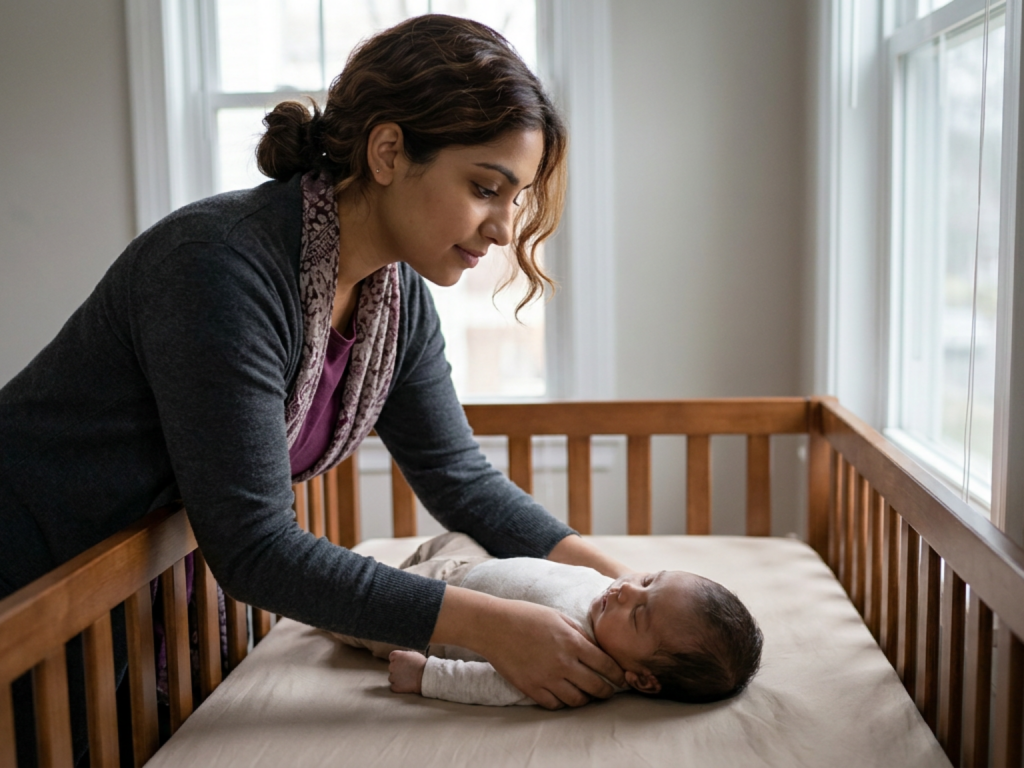
The safest position for infant sleep is supine, meaning on the back, for every nap and nighttime sleep.
A safe sleep space is firm, flat, level, and covered only with a fitted sheet; pillows, blankets, toys, and bumpers do not belong in the sleep area.
Room-sharing without bed-sharing is recommended because it keeps the baby nearby while avoiding the hazards of an adult sleep surface.
Car seats, swings, loungers, nursing pillows, and other sitting or inclined devices are not safe places for routine infant sleep.
Why safe sleep guidelines matter
Sleep-related infant deaths include sudden infant death syndrome, often called SIDS, and deaths related to suffocation, entrapment, or strangulation in the sleep environment. The exact mechanism of SIDS is not fully understood, but risk appears to involve a vulnerable infant, a critical developmental period, and external stressors such as prone positioning, soft bedding, overheating, or airway obstruction.
U.S. guidance focuses on modifiable risk factors. This does not mean every tragedy is preventable or that parents are to blame when something happens. It means that population-level evidence has identified safer patterns of infant sleep. The recommendations are intentionally simple because exhausted caregivers need rules that can be followed at 3 a.m.: back, firm surface, bare space, close but separate.
Safe sleep habits are most important during infancy, especially the first months of life, when infants have immature arousal responses and limited motor control. However, the American Academy of Pediatrics recommends continuing safe sleep practices throughout the first year.
Back to sleep, every time
Infants should be placed fully on their backs for every sleep, including naps. The supine position is safer than side or stomach sleeping. Side sleeping is unstable because babies can roll from the side onto the stomach, which increases risk.
Some caregivers worry that a baby sleeping on the back may choke if they spit up. For healthy infants, the airway anatomy and protective reflexes make back sleeping safe. If a baby has a specific medical condition, such as certain airway disorders or complex gastrointestinal problems, the sleep plan should be individualized by the baby’s healthcare team rather than changed at home without guidance.
Once a baby can roll independently from back to stomach and stomach to back, caregivers should still start every sleep on the back. If the infant rolls during sleep, the baby does not need to be repeatedly repositioned, as long as the sleep space is safe, firm, flat, and free of soft objects or loose bedding.
Use a firm, flat infant sleep surface
A safe infant sleep surface should be firm, flat, level, and designed for infant sleep, such as a safety-approved crib, bassinet, or play yard. The mattress should fit the product snugly and be covered only by a fitted sheet. A firm and flat infant mattress should not indent deeply under the baby’s weight.
Inclined sleepers, wedges, positioners, couches, armchairs, adult mattresses, waterbeds, air mattresses, and soft cushions are unsafe for infant sleep. Incline can allow the head to flex forward, potentially narrowing the airway, and soft surfaces can conform around the face. If a baby falls asleep in a car seat, stroller, swing, carrier, or sling, move the baby to a safe, flat sleep surface as soon as practical, especially when the device is not being used for travel or supervised transport.
Parents often receive baby products marketed as soothing, cozy, or breathable. Marketing language is not the same as safety evidence. For sleep, the simplest environment is the safest: an approved product, a firm level mattress, and a fitted sheet.
Keep the sleep space bare
A bare sleep environment means no pillows, quilts, comforters, loose blankets, sheepskins, stuffed animals, sleep positioners, weighted products, or bumper pads in the crib or bassinet. This includes mesh bumpers and decorative padding. These items can increase the risk of suffocation, entrapment, or rebreathing exhaled air.
If warmth is needed, use appropriately sized infant sleep clothing or a wearable blanket for newborn sleep rather than loose bedding. Clothing should not cover the baby’s face or head. Avoid hats indoors during sleep unless a clinician specifically recommends them for a medical reason, because head covering can contribute to overheating.
Swaddling safety for newborns requires particular attention. If swaddling is used, it should be snug around the arms but allow hip flexion and movement, and the baby must always be placed on the back. Swaddling should stop when the infant shows signs of attempting to roll, because a swaddled baby who rolls onto the stomach may be unable to reposition safely. Weighted swaddles, weighted sleep sacks, and weighted blankets are not recommended for routine infant sleep.
Room-sharing without bed-sharing
U.S. recommendations support room-sharing without bed-sharing, ideally for at least the first 6 months. This means the baby sleeps in the caregiver’s room, close to the bed, but on a separate, safe sleep surface. Room-sharing can make feeding, comforting, and monitoring easier while avoiding the hazards of an adult bed.
Bed-sharing is not recommended because adult sleep surfaces often contain pillows, loose bedding, soft mattresses, gaps, pets, or other people. The risk is higher if a caregiver is very tired, has used alcohol, cannabis, opioids, sedating medications, or other substances that impair arousal. Risk is also higher on sofas and armchairs, which are especially dangerous places to fall asleep with an infant.
Night feeding safety matters because many bed-sharing episodes begin unintentionally during feeds. If you bring the baby into bed to feed, plan ahead: remove pillows and loose bedding from the immediate area, avoid couches and chairs when drowsy, and return the baby to the separate sleep surface after feeding. If you think you may fall asleep unintentionally, discuss realistic harm-reduction strategies with your pediatrician, especially if your household is under significant sleep deprivation.
Temperature, pacifiers, feeding, and smoke exposure
Overheating during infant sleep is a recognized concern. A baby should be dressed for the room temperature, generally in no more than one additional layer compared with what an adult would wear comfortably. Signs of possible overheating include sweating, flushed skin, damp hair, or a hot chest. Hands and feet can feel cool normally and are not the best guide to core temperature.
Offering a pacifier at nap time and bedtime is associated with a reduced risk of SIDS. If breastfeeding, many clinicians suggest waiting until feeding is well established before introducing a pacifier, though timing can be individualized. If the pacifier falls out after the baby falls asleep, it does not need to be reinserted. Do not attach pacifiers to strings, clips, stuffed animals, or cords during sleep.
Human milk feeding is associated with a lower risk of sleep-related infant death, and exclusive breastfeeding appears especially protective. Still, safe sleep recommendations apply to all babies, regardless of feeding method. Smoke-free newborn sleep environment practices are also important: avoid prenatal and postnatal exposure to tobacco smoke, nicotine, and other inhaled substances. No one should smoke or vape around the baby or in the baby’s sleeping area.
Special situations and real-life challenges
Safe sleep can be harder during illness, travel, prematurity, reflux concerns, or periods of intense caregiver fatigue. Premature or low-birth-weight infants may have higher baseline vulnerability, making consistent safe sleep particularly important after discharge unless the neonatal team provides different instructions.
For reflux, families may hear advice to elevate the mattress or use an inclined product. In general, elevation is not recommended for routine infant sleep because it can create sliding, chin-to-chest positioning, or airway compromise. If reflux symptoms are severe, involve the pediatrician rather than modifying the sleep surface independently.
When traveling, bring or borrow a safe sleep product such as a portable crib or play yard that meets current safety standards. Avoid improvising with adult beds, couches, cushions, laundry baskets, or padded nests. At childcare, with relatives, or during postpartum support visits, clearly explain that the baby should be placed on the back in a bare, firm, flat space every time. Consistency across caregivers protects the baby and reduces confusion.
Seek urgent guidance for unsafe or concerning situations
- Call emergency services if a baby is not breathing normally, is blue or gray, limp, or unresponsive.
- Do not place an infant to sleep on a couch, armchair, pillow, lounger, or inclined sleeper.
- Avoid bed-sharing if any caregiver has used alcohol, cannabis, opioids, sedating medications, or is extremely fatigued.
- Stop swaddling when the baby shows signs of rolling or attempting to roll.
- Ask a pediatrician before changing sleep position for reflux, prematurity, airway concerns, or other medical conditions.
Tools & Assistance
- Ask your pediatrician to review your baby’s sleep setup at a newborn or well-child visit.
- Use a safety-approved crib, bassinet, or play yard with a firm, flat mattress and fitted sheet.
- Create a nighttime plan for feeds so the baby returns to a separate sleep surface after feeding.
- Share safe sleep instructions with grandparents, babysitters, childcare providers, and overnight helpers.
- Contact local public health or community programs if you need help obtaining a safe sleep space.
FAQ
Is it safe for my baby to sleep on the side?
No. Side sleeping is not recommended because it is unstable and the baby can roll onto the stomach. Place the baby on the back for every sleep.
Can I use a blanket if it is tucked in tightly?
Loose bedding is not recommended for infant sleep. Use suitable sleep clothing or a wearable blanket instead, and keep the crib or bassinet bare.
What if my baby falls asleep in a car seat?
Car seats are for travel, not routine sleep. When you arrive or when travel is over, move the baby to a firm, flat sleep surface as soon as practical.
Do babies with reflux need to sleep elevated?
Most infants should still sleep flat on their backs. Do not elevate the mattress or use wedges unless your baby’s healthcare professional gives specific instructions.
When can my baby have a pillow or stuffed animal in bed?
Safe sleep guidance keeps the sleep area bare throughout infancy. Ask your pediatrician about age-appropriate transitions after the first year.
Sources
- American Academy of Pediatrics — Sleep-Related Infant Deaths: Updated 2022 Recommendations for Reducing Infant Deaths in the Sleep Environment
- Centers for Disease Control and Prevention — Providing Care for Babies to Sleep Safely | SUID and SIDS
- National Institutes of Health — Safe Sleep Environment for Baby
Disclaimer
This article is for general educational purposes and is not a substitute for medical advice. Always consult your pediatrician or qualified healthcare professional about your baby’s individual sleep needs and health conditions.














Please log in to leave a comment.