
Intro
The first hours after a cesarean birth combine postpartum physiologic changes with recovery from major abdominal surgery and anesthesia. It is normal to need substantial assistance while the clinical team monitors bleeding, pain, vital signs, movement, bladder function, and the surgical incision.
Recovery varies according to the type of anesthesia, whether the operation was planned or urgent, blood loss, pregnancy complications, and individual medical needs. Your own obstetric and anesthesia teams are the best sources of guidance because hospital protocols and personal risk factors differ.
Highlights
Close monitoring is routine during the first hours and helps clinicians identify bleeding, infection, anesthesia complications, or blood clots promptly.
Multimodal pain control, gentle movement, hydration, nutrition, and breathing exercises can support recovery when the clinical team confirms they are safe.
Skin-to-skin contact and infant feeding may begin early, but they can be adapted around pain, fatigue, monitoring, and the need for assistance.
Increasing pain, heavy bleeding, breathing difficulty, chest pain, or a new painful swollen leg requires urgent clinical assessment.
The first hours in the recovery area
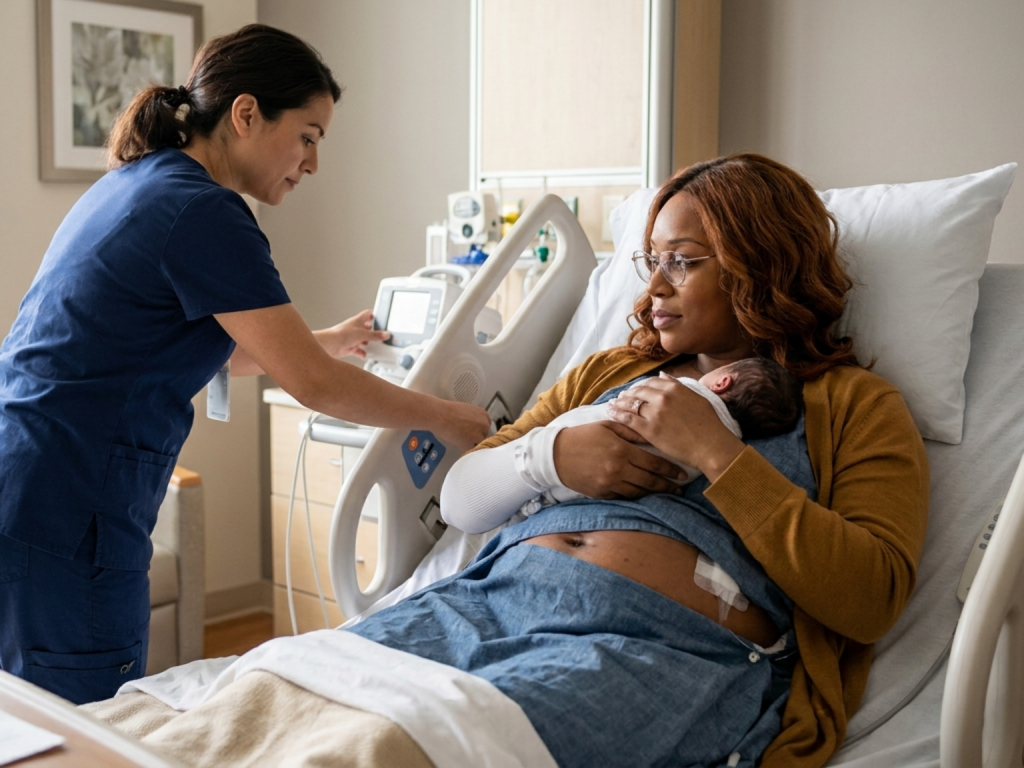
Immediately after surgery, you will usually move to a post-anesthesia care area or a maternity recovery room. A clinician will regularly check your blood pressure, pulse, breathing, oxygen level, temperature, alertness, pain, vaginal bleeding, and uterine tone. The uterus must contract after birth even though the baby was delivered through an abdominal incision. Staff may press on the abdomen to assess firmness and bleeding; this can be uncomfortable, so tell them if you need additional support.
Post-anesthesia recovery after cesarean can include shivering, itching, nausea, drowsiness, thirst, or temporary heaviness and numbness in the legs. These effects often improve as spinal or epidural medication wears off, but severe or persistent symptoms should be reported. If general anesthesia was used, monitoring may focus more closely on breathing, wakefulness, nausea, and airway symptoms.
Compression devices may be placed around the lower legs to encourage venous blood flow while mobility is limited. Depending on individual risk, clinicians may also recommend medication to reduce the likelihood of venous thromboembolism. Do not take additional medicines or supplements without checking with the care team.
Pain control and physical comfort
Postoperative cesarean pain control commonly uses a multimodal approach: medications with different mechanisms are combined to improve comfort while limiting reliance on any single drug. Treatment may include medication given through spinal or epidural anesthesia, scheduled non-opioid analgesia, and stronger medication when needed. The exact plan depends on allergies, bleeding risk, kidney or liver conditions, other medicines, breastfeeding considerations, and local protocols.
Good pain control is not only about comfort. It can make deep breathing, coughing, feeding the baby, sleeping, and early mobility more manageable. Tell the nurse whether pain is aching, burning, cramping, sharp, or rapidly worsening, and whether treatment is providing enough relief to move safely. Uterine cramping, sometimes stronger during breastfeeding, can occur alongside incisional pain.
Support the abdomen with a pillow or folded blanket when coughing, laughing, or changing position. Use the bed controls and ask for help before sitting up. Rolling onto your side and pushing upward with your arms may place less strain on the abdominal wall than attempting a straight sit-up.
Bleeding, the incision, and bladder care
Vaginal postpartum bleeding, called lochia, is expected after both vaginal and cesarean birth. Staff will assess its amount, color, and presence of clots. A sudden increase, rapidly saturated pads, very large clots, faintness, a racing heartbeat, or worsening weakness requires immediate assessment because postpartum hemorrhage can occur after surgery.
The abdominal dressing is checked for bleeding, drainage, or separation. Early incision care after C-section is generally simple: avoid unnecessary touching, follow the team’s instructions about the dressing, and keep the area protected as directed. Do not apply powders, oils, antiseptics, or unapproved creams. Increasing redness, warmth, swelling, discharge, unpleasant odor, fever, or escalating localized pain may indicate a complication and should be reported.
A urinary catheter usually remains in place for a period after surgery and is removed according to the clinical plan, often once you can begin mobilizing safely. After removal, staff may ask about the timing and amount of urination. Difficulty passing urine, bladder pressure, burning, or very low urine output deserves attention. Temporary fluid retention and swelling can occur, but sudden or one-sided swelling needs assessment.
Getting up and moving safely
Evidence-based postoperative care supports early ambulation when medically appropriate. Movement promotes circulation, supports bowel function, reduces stiffness, and is one component of blood-clot prevention. Early does not mean rushing or walking alone. Your first attempt should occur with staff approval and assistance, particularly while anesthesia is wearing off or if you feel weak, dizzy, or nauseated.
The usual sequence is gradual: raise the head of the bed, sit upright, move to the edge, place both feet securely on the floor, stand with help, and then take a short walk. Pause at each stage. Your legs must have adequate strength and sensation, and the catheter, intravenous line, and compression equipment may need to be managed by a clinician.
Take short, frequent walks rather than pushing through exhaustion. Stand as upright as comfort permits, without forcing your posture. Continue any recommended leg and ankle movements while in bed. If you develop chest pain, sudden breathlessness, coughing blood, collapse, or a newly painful, red, warm, or swollen leg, stop and seek emergency assessment immediately.
Drinking, eating, and bowel function
Fluids and food are often reintroduced relatively early after an uncomplicated cesarean, but timing depends on nausea, alertness, surgical events, and hospital policy. Begin according to your team’s instructions. Small amounts and a gradual pace may feel easier if you are nauseated. Report repeated vomiting, worsening abdominal distension, severe pain, or inability to tolerate fluids.
Intravenous fluids may continue until you are drinking adequately. Once regular food is appropriate, balanced meals containing protein, fiber, and nutrient-rich carbohydrates can support healing and bowel function. Adequate fluid intake is also helpful unless a clinician has advised fluid restriction for a medical reason.
Gas discomfort and constipation after cesarean surgery are common because abdominal surgery, reduced movement, pregnancy-related changes, and some pain medicines can slow the bowel. Gentle walking can help. Your team may suggest a bowel regimen based on your circumstances; do not self-treat without checking, particularly if you have significant pain, vomiting, abdominal swelling, or another medical condition. Passing gas is generally a reassuring sign that intestinal activity is returning.
Contact, feeding, rest, and emotional recovery
If you and the baby are clinically stable, skin-to-skin contact may be possible in the operating or recovery area. Monitoring, nausea, shaking, pain, or urgent care can delay contact, and this is not a personal failure. A partner, support person, nurse, or midwife may help hold the baby securely while your movement remains limited.
Breastfeeding after a C-section may be easier in positions that reduce pressure on the incision, such as side-lying or holding the baby alongside the body. Because residual anesthesia, weakness, and medication can affect safe handling, ask for hands-on help and avoid holding or feeding the baby alone if you feel sleepy or unsteady. Feeding support is also available for expressing colostrum or using formula when needed or chosen.
Emotional recovery after cesarean birth can include relief, joy, disappointment, fear, numbness, or grief, sometimes simultaneously. An urgent or complicated birth may be especially difficult to process. Rest where possible and consider asking the obstetric team for a clear explanation of what happened. Persistent distress, intrusive memories, panic, hopelessness, or thoughts of harm require prompt professional support.
The hospital stay and preparation for discharge
Many people remain in the hospital for approximately two to three days after a cesarean, although the stay may be shorter or longer depending on recovery, complications, the baby’s needs, and local practice. Before discharge, clinicians generally assess vital signs, bleeding, pain control, mobility, eating and drinking, urination, bowel symptoms, and the incision. They may also review blood test results when clinically indicated.
Ask for written guidance about prescribed medicines, wound care, bathing, lifting, driving, exercise, compression stockings or anticoagulant medication, infant feeding, and follow-up. Confirm whom to contact during office hours and where to seek help overnight. Medication instructions should be followed exactly; check before combining prescriptions with over-the-counter products because ingredients can overlap.
Arrange practical help with lifting, meals, transport, household tasks, and infant care. Before leaving, make sure you can get into bed, rise from a chair, use the toilet, and walk a short distance with manageable discomfort. Recovery after C-section continues for weeks, so discharge does not mean healing is complete. New or worsening symptoms deserve advice rather than waiting for a routine appointment.
Seek urgent medical help
- Call emergency services for sudden breathing difficulty, chest pain, collapse, confusion, or coughing blood.
- Request immediate assessment for heavy or rapidly increasing bleeding, very large clots, faintness, or a racing heartbeat.
- Seek prompt care for a painful, red, warm, or swollen leg, especially when symptoms affect one side.
- Contact the maternity team urgently for fever, worsening abdominal pain, foul-smelling discharge, or increasing redness, swelling, drainage, or separation at the incision.
- Obtain immediate help for thoughts of harming yourself or the baby, severe agitation, hallucinations, or marked confusion.
Tools & Assistance
- Use the bedside call button before your first attempt to stand or whenever symptoms change.
- Ask the maternity team for a written medication and wound-care plan before discharge.
- Request lactation or infant-feeding support for positioning and safe handling.
- Save the maternity triage number and identify the nearest emergency service.
- Arrange practical support for transport, meals, lifting, and nighttime infant care.
FAQ
When can I first get out of bed?
Many patients begin assisted movement within hours, once leg strength, sensation, vital signs, and bleeding are satisfactory. Follow your clinical team's timing and do not stand alone initially.
Is vaginal bleeding normal after a cesarean?
Yes. Lochia occurs because the uterus is healing after pregnancy. Rapidly increasing bleeding, very large clots, faintness, or soaking pads quickly requires immediate assessment.
When can the urinary catheter be removed?
Timing varies with mobility, anesthesia, urine output, and clinical circumstances. Staff will monitor whether you can urinate adequately after removal.
Can I hold and feed my baby in recovery?
Often yes, if both of you are stable. Ask for assistance because numbness, weakness, nausea, monitoring equipment, and sedating medication can affect safe positioning.
How long will I stay in the hospital?
A stay of about two to three days is common, but individual recovery, complications, hospital practice, and the baby's health may alter the timing.
Sources
- PubMed — Evidence-based cesarean delivery: postoperative care
- MedlinePlus — After a C-section - in the hospital
- NHS — Caesarean section - Recovery
Disclaimer
This article provides general medical information and is not a substitute for individualized advice, diagnosis, or treatment. Follow your obstetric team's instructions and seek urgent care for warning signs.


















Please log in to leave a comment.